


Short answer: 24/7 HVAC repair is for urgent safety or property risks like gas odor, electrical arcing, flooding, or total loss of cooling or heat. In Las Vegas, extreme temperatures can make loss of HVAC life-threatening for vulnerable residents. Expect an emergency dispatch fee and premium labor rates; ask for ETA, fees, and EPA 608/NATE credentials before the tech rolls.
Key Takeaways
- Know true emergencies: gas leak, fire, heavy water, or spoiled refrigeration.
- Expect triage, safety-first fixes, and temporary climate control when needed.
- After-hours work has dispatch fees and higher hourly rates.
- Ask for EPA 608 and NATE credentials when outside our service area.
Local essentials and challenges in Las Vegas
Las Vegas emergencies often include rooftop units, attic equipment, and desert dust that can clog coils quickly. Heat waves push indoor temperatures up fast, while winter cold snaps can expose weak ignition systems and gas valve issues. Condos, casinos, and HOA communities may require access permissions, so have gate codes and roof access details ready when you call. Local essentials to share include your neighborhood, unit location (roof, closet, attic), and any vulnerable occupants or critical equipment like walk-in coolers or medical devices. Clear details help dispatch send the right tech and parts the first time.
Is this an HVAC emergency?
An HVAC emergency is any failure that threatens health, safety, or critical property. That covers obvious dangers like a strong gas smell, visible electrical arcing, major flooding from HVAC equipment, or complete loss of refrigeration for perishables or medical supplies. In Las Vegas, where summer highs often top 100°F, loss of cooling can quickly become life-threatening for infants, older adults, and people with medical conditions.How to decide fast
- Describe the people affected - infants, elderly, immunocompromised, or residents with medical equipment increase priority.
- Identify at-risk equipment - freezers, walk-in coolers, server rooms, or oxygen concentrators mean immediate action.
- Look for hazard signs - strong gas odor, smoke, sparks, or waist-deep water are immediate emergencies.
Quick checklist to give dispatch
- Location and unit type (central AC, rooftop unit, split system)
- Smell of gas - yes or no
- Active water - yes or no and approximate volume
- Critical equipment affected (servers, medical devices, food storage)
- Number and age of people at risk
What to expect from 24/7 contractors
A professional 24/7 contractor follows a safety-first workflow, clear communication, and temporary stabilization when full repairs are not immediately possible.Typical arrival and first steps
- Dispatcher triages and sends a tech with PPE, meters, and common emergency parts.
- On arrival the technician performs a safety sweep - gas meters, electrical checks, leak isolation, and photos for documentation.
- Expect a short verbal scope of work and a written estimate for any repairs beyond a safety fix.
- If a permanent part is not available after-hours, the tech should explain temporary measures and the timeline for permanent repair.
What you should expect in the service report
- Clear description of hazard found and steps taken to secure the site
- Parts installed or temporarily bypassed
- Immediate recommendations and estimated timeline and cost for permanent repair
How are after-hours rates calculated?
After-hours rates include a dispatch or emergency fee plus higher hourly labor. Travel, parts markup, and specialty tools add to final cost. Urgency and geography push prices up. Request a clear written estimate before work begins to avoid surprises and to document costs for insurance. Some contractors use flat emergency fees like $150 to $400 for dispatch. Others itemize time, travel, and parts. For large parts like compressors expect higher total costs. Compare estimates and ask whether temporary fixes will be replaced later under normal rates.Cost drivers for 24/7 HVAC repairs
Emergency pricing changes based on access, parts, and urgency.- Time and holiday status: Nights and holidays add premium labor and dispatch fees.
- Access and safety: Rooftops, tight attic spaces, or flooded areas require more setup.
- Parts availability: After-hours sourcing or temporary fixes increase costs.
- Equipment type: Commercial units and refrigeration loads require specialized parts.
- Refrigerant type: Older systems with R-22 cost more to service.
What typical after-hours fees apply?
Emergency dispatch fees commonly fall in a $150–$500 range, depending on the company and time. Hourly labor after hours often runs $100–$250 per hour. Parts and travel are added. Always ask for a written estimate before you agree to repairs.How are parts and labor billed for emergencies?
Technicians usually bill parts at cost plus a markup or at an emergency rate. Labor is often billed in minimum increments, typically one hour blocks. Ask for a detailed invoice showing parts, labor hours, and travel time after the job is done.Will insurance cover emergency HVAC repairs?
Documenting Emergencies for Insurance and Faster Claims
Proper documentation at the time of emergency improves your chances of insurance reimbursement and accelerates claims.- Take time-stamped photos and short videos of damage, affected equipment, and serial/model numbers.
- Keep the technician’s written report, itemized invoice, and any dispatch ticket number.
- Note the time you discovered the problem, steps taken, and any communications with emergency services.
- Call your insurer immediately to report the loss and ask about pre-authorization for emergency repairs.
- - Photograph unit labels and damage
- - Keep all receipts and the technician’s report
- - Save communications - emails, texts, and dispatch numbers
- - Ask your insurer for their preferred vendor list or pre-approval steps
Which temporary safety steps help now?
Emergency Cooling Options for Las Vegas Homes
When central AC fails during Las Vegas heat, quick temporary cooling can protect health and reduce losses.- Portable AC and evaporative coolers - Rent or buy units sized to the room. For humid-free Las Vegas summer, portable ACs are effective for small rooms; confirm the unit’s BTU rating matches your space.
- Generator-backed temporary power - If power outages coincide with AC loss, a licensed electrician can provide temporary generator connections for essential loads.
- Community cooling centers and hotels - The City of Las Vegas and Clark County operate cooling centers during heat waves. For immediate relief, many hotels on and off the Strip offer day-use rooms.
- Commercial options for businesses - Rent refrigerated trailers for perishables or use short-term walk-in cooler rentals for restaurants and grocery stores.
- Measure the room size (square feet) to choose a portable AC with the right BTU capacity.
- Prioritize moving infants, elderly, and those on medical equipment to cooled locations.
- Call our Same Day AC Repair Las Vegas team for rapid evaluation and temporary cooling advice: /blog/same-day-ac-repair-las-vegas/.
Immediate safety actions
- If you smell gas or see smoke, evacuate immediately and call 911 before calling an HVAC technician.
- If you see live electrical sparking, keep clear and call emergency services. Do not touch wiring.
- For heavy water from HVAC, shut off power to the affected area only if you can do so from a safe location (breaker box outside wet area). If unsure, wait for the technician.
H4 Temporary action checklist
- - Evacuate if gas or smoke present
- - Photograph damage and affected equipment for insurance
- - Note temperatures in affected rooms and critical loads (freezers, servers)
- - If safe, move perishable items to a cooler or shaded area; use dry towels to limit water spread
- - Do not operate HVAC equipment that shows signs of electrical failure or burning
How to choose a qualified 24/7 provider?
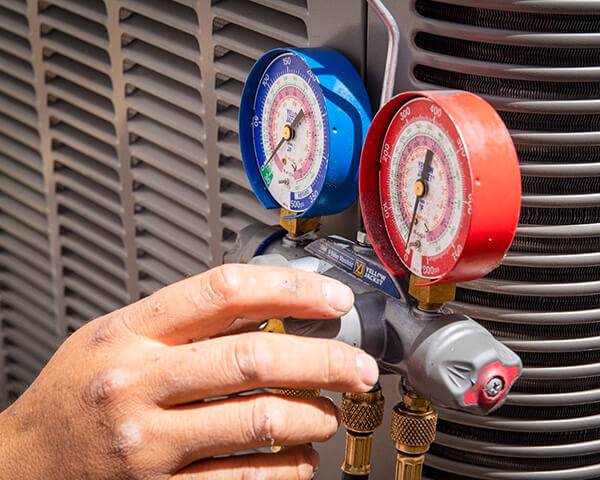
Pick a company with after-hours staff, proof of insurance, and clear service terms. Look for transparent pricing and written estimates. A good provider will document work and explain the temporary fix and the recommended permanent repair the next day. Check for spare-part inventory and technician experience with your equipment brand. Ask how they manage surge events, like heat waves. Ask for references or reviews that mention emergency response times and cleanup after the job.Which licenses and certifications matter most?
EPA 608 is required for refrigerant work and shows safe handling. NATE certification indicates technician skill. For electrical or gas jobs, confirm local contractor licenses and gas appliance credentials. These credentials protect safety and help with warranty compliance.What questions should I ask when calling?
Ask about ETA, emergency dispatch fee, technician certifications, and parts availability. Confirm whether a temporary fix will be used, and if you will get a written estimate for major repairs. Record the dispatcher name and ticket number for follow up.Is a service level agreement right for my property?
An SLA is helpful for properties with critical loads like restaurants or data centers. SLAs can include guaranteed response times, spare-part plans, and discounted after-hours rates. Compare SLA cost to your risk of lost revenue or spoiled goods before deciding.Decision guidance during an emergency
If you have to decide fast, use a simple framework.- Proceed with emergency repair: Safety risk exists, critical equipment is affected, or temperatures are unsafe.
- Stabilize and schedule: Temporary fix is possible and permanent parts can be installed during normal hours.
- Plan replacement: Repeated failures, major compressor damage, or obsolete refrigerant types.
What are common emergency scenarios and fixes?
HVAC systems fail in predictable ways. Common emergencies include compressor burnout, large refrigerant leaks, frozen coils, and drain pan overflows. Quick triage can often limit damage until a full repair is done. Knowing common fixes helps you ask the right questions. Technicians often use temporary fixes like bypassing a failed fan motor to restore airflow or setting up temporary cooling with portable units. For refrigerant leaks they may secure valves and add temporary charge. Permanent repairs usually follow once parts arrive and safety checks are done.Loss of cooling on a heat wave: quick fixes?
Check circuit breakers and thermostat settings first. Change the air filter and clear outside unit debris. If the compressor runs but airflow is low, inspect the evaporator and condenser coils for frost or dirt. Portable AC or rental chillers can help until full repairs are done.Major water leak from HVAC: immediate steps?
Turn off power to the unit if safe and accessible. Contain water with buckets and towels and move valuables away. If the leak is from a condensate line, a tech can clear the drain or install a safety switch. For leaks tied to refrigerant or plumbing, wait for the pro.Ready to call for 24/7 HVAC help?
Las Vegas area readers: Call The Cooling Company now at (702) 567-0707 for 24/7 emergency HVAC dispatch. We serve Las Vegas, Henderson, and North Las Vegas and send EPA 608 and NATE-level technicians for urgent gas, electrical, refrigeration, and heating failures. Ask for immediate priority dispatch when needed. If you are outside our area, ask any emergency provider for NATE-certified technicians and EPA Section 608 certification. These credentials help ensure safe refrigerant handling and quality repairs. For Las Vegas area service call The Cooling Company at (702) 567-0707 and request priority emergency dispatch.Schedule emergency dispatch now Las Vegas area readers: Call The Cooling Company at (702) 567-0707 for 24/7 emergency HVAC dispatch across Las Vegas, Henderson, and North Las Vegas. We dispatch EPA 608 and NATE-level technicians for urgent gas, electrical, refrigeration, and heating failures. Ask for immediate priority response.
When you call, have the equipment model, symptoms, and any error codes ready. This speeds diagnosis and helps dispatch the right parts. Save The Cooling Company number (702) 567-0707 in your phone and keep photos of the affected equipment handy to speed service when seconds matter.Contact information and hours
The Cooling Company answers 24/7 at (702) 567-0707 for emergency service in Las Vegas, Henderson, and North Las Vegas. Outside our area, ask providers for NATE-certified technicians and EPA Section 608 credentials. Keep emergency numbers and your equipment model handy to speed dispatch.Prevention to reduce emergency HVAC calls
Consistent maintenance helps avoid after-hours failures.- Filter changes: Every 30-60 days in high dust seasons.
- Annual tune-up: Check ignition, airflow, and refrigerant levels.
- Condensate drain care: Flush lines to prevent overflow damage.
- Electrical inspection: Catch weak capacitors and burned contacts early.
- Thermostat check: Verify schedules and sensor accuracy.
Las Vegas neighborhoods we serve
Emergency coverage includes Downtown Las Vegas, Paradise, Winchester, Sunrise Manor, Summerlin, Spring Valley, Enterprise, and Henderson. Share cross streets or gated entry instructions to speed dispatch.Trust and guarantees
Local homeowners and businesses rely on The Cooling Company for transparent emergency service.- Serving Las Vegas since 2011
- 55+ years combined experience
- Licensed, EPA-certified, and NATE-trained technicians
- 100% satisfaction guarantee
- BBB A+ rated
- Lennox Premier Dealer
Visit our Las Vegas location
Related reading: what to explore next?
- Emergency AC repair in Las Vegas
- 24 hour AC repair in Las Vegas
- AC troubleshooting: quick fixes
- Furnace troubleshooting in Las Vegas
- Emergency heating and cooling: 7 quick fixes
About The Cooling Company
- Phone: (702) 567-0707
References
- U.S. Department of Energy (Energy.gov) (accessed 2025-12-31)
- U.S. Environmental Protection Agency (EPA) (accessed 2025-12-31)
- ASHRAE (Standards and guidance) (accessed 2025-12-31)
- ENERGY STAR (Heating & cooling) (accessed 2025-12-31)
Need HVAC Service in Las Vegas?
The Cooling Company provides expert HVAC service throughout Las Vegas, Henderson, and North Las Vegas. Our licensed technicians deliver honest assessments, upfront pricing, and reliable results.
Call (702) 567-0707 or visit AC repair, maintenance, heating, or installation for details.