
AC Repair Scams in Las Vegas: How to Avoid Them
Short answer: AC repair scams in Las Vegas often target homeowners during heat waves with lowball quotes that balloon into expensive bills, phantom repairs without proof, and high-pressure tactics. Protect yourself by requiring written itemized estimates, verifying Nevada contractor licenses through the state board, checking EPA Section 608 certification for refrigerant work, and setting clear approval limits before any work begins. Legitimate Las Vegas HVAC contractors provide transparent pricing, show failed parts, and explain repairs in plain language.
What can increase scam risk
- Same‑day pressure during heat waves
- Vague estimates without itemized parts and labor
- Claims that you must replace the whole system immediately
- Refusal to show test results or old parts
- Cash‑only demands without documentation
Common AC Repair Scams
- Lowball then upsell: A cheap service call becomes a large, unexpected bill.
- Phantom repairs: Parts replaced without proof or old parts shown.
- Cash-only pressure: Demands for payment before work is done.
- Fake urgency: Claims your system is “unsafe” without evidence.
AC Repair Scam Red Flags in Las Vegas
Watch for these warning signs that indicate a potential AC repair scam in the Las Vegas area:
- No written estimate or scope of work: Legitimate contractors provide itemized estimates listing parts, labor, and fees before starting work.
- Refuses to provide license or insurance details: Nevada requires HVAC contractors to hold state licenses. Scammers avoid providing license numbers because they can't be verified.
- Won't explain diagnosis in plain language: Honest technicians explain what's wrong and why, using test results and visual evidence.
- Won't show old parts after replacement: If a contractor claims to replace parts but can't produce the failed components, the repair may be fake.
- Pressure to decide immediately: Scammers use urgency tactics like "today only" pricing or claims that your system is unsafe to force quick decisions.
- Cash-only demands without documentation: Legitimate contractors accept multiple payment methods and provide receipts for warranty purposes.
- Unmarked vehicles or no company identification: Professional HVAC companies in Las Vegas clearly identify themselves with uniforms, branded vehicles, and company credentials.
- Vague or non-itemized estimates: A single lump-sum price without breakdowns hides what you're paying for and makes comparison impossible.
- Claims you must replace the whole system immediately: While replacement may be recommended, legitimate contractors explain repair options and show why replacement is necessary.
- No local address or references: Fly-by-night operators may not have a physical location in Las Vegas or local references you can verify.
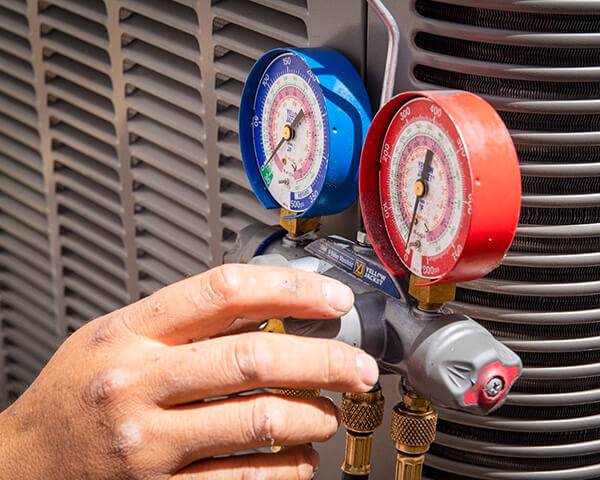
- Refusal to show test results: Real diagnostics include airflow measurements, temperature splits, electrical testing, and refrigerant pressure readings that can be demonstrated.
- Demands payment before work is completed: While deposits are normal for large jobs, paying in full before completion is a red flag.
How to Vet HVAC Contractors in Las Vegas
Before hiring an AC repair contractor in Las Vegas, follow these verification steps to protect yourself from scams:
1. Verify Nevada Contractor License
- Ask for the contractor's Nevada state license number
- Verify the license is active and in good standing through the Nevada State Contractors Board
- Confirm the license covers HVAC work (mechanical contractor classification)
- Check for any complaints or disciplinary actions against the license
2. Confirm Insurance Coverage
- Request proof of general liability insurance (minimum $500,000 recommended)
- Verify workers' compensation insurance if they have employees
- Contact the insurance company directly to confirm policies are current
3. Check EPA Section 608 Certification
- For refrigerant work, technicians must hold EPA Section 608 certification
- Ask to see certification cards (Type I, II, III, or Universal)
- Verify certification status through the EPA's certification database
4. Review Local Reviews and References
- Check Google Reviews, Yelp, and BBB ratings for Las Vegas area service
- Look for patterns in reviews—multiple complaints about pricing surprises or poor workmanship are red flags
- Ask for 3-5 recent local references in Las Vegas neighborhoods
- Contact references to ask about pricing transparency, work quality, and follow-up service
5. Verify Local Presence
- Confirm the company has a physical address in the Las Vegas Valley
- Check that service areas include your specific neighborhood
- Verify they've been operating in Las Vegas for at least 2-3 years (scammers often change names frequently)
6. Request Written Documentation
- Ask for a written, itemized estimate before any work begins
- Require a written warranty for parts and labor
- Insist on documentation of test results and before/after measurements
- Get a written scope of work that includes what will and won't be done
Protect Yourself With a Written Estimate
A fair estimate lists parts, labor, and fees before work starts. Ask for approval limits on any additional charges.
What a legitimate diagnostic should include
- Airflow or temperature split testing when applicable
- Electrical testing for capacitors and contactors
- Clear explanation of the failure and options
- Photos or evidence of failed parts when possible
Questions That Stop Scams Fast
- Can you show me the failed part and explain the test results?
- Is this a repair or a replacement recommendation? Why?
- What warranty applies to parts and labor?
- What can change the final price, and how will I approve it?
Safe Payment Practices
- Pay after work is completed or by clear milestones
- Use a method with receipts and dispute options
- Never pay in cash without documentation
Las Vegas-Specific Scam Prevention Tips
Las Vegas homeowners face unique challenges when avoiding AC repair scams, especially during the intense summer heat:
- Heat waves create urgency: Scammers exploit 110°F+ days when AC failures feel like emergencies. Pause and verify before approving major work, even if it's uncomfortable. A legitimate contractor understands you need time to review estimates.
- Same-day service with documentation: Many reputable Las Vegas HVAC companies offer same-day or emergency service. However, insist on written scope, itemized pricing, and photos of failed parts before work begins—even for urgent repairs.
- Verify service area coverage: Local companies should clearly list service areas across the Las Vegas Valley (Henderson, Summerlin, North Las Vegas, etc.). Be wary of contractors who claim to serve "all of Las Vegas" but can't provide local references.
- Beware of door-to-door solicitors: During peak summer months, scammers may go door-to-door claiming to be "in your neighborhood" or offering "free inspections." Legitimate contractors don't typically solicit door-to-door.
- Check for local business registration: Verify the company is registered with the Nevada Secretary of State and has a valid business license for Clark County.
- Understand Las Vegas AC load requirements: Scammers may claim your system is "too small" for Las Vegas heat. A legitimate contractor uses Manual J load calculations specific to our desert climate, not generic rules of thumb.
- Watch for "refrigerant leak" scams: During Las Vegas summers, some scammers claim your system is "low on refrigerant" and needs expensive recharges. Legitimate contractors find and repair leaks first, then recharge—they don't just add refrigerant repeatedly.
Helpful resources for Las Vegas homeowners
- What’s included in an AC diagnostic
- How to choose the right AC contractor
- AC estimates: what to look for
- Repair or replace decision guide
- AC repair
Las Vegas Heat Wave Protection Checklist
- Get a written scope before approving any “emergency” work.
- Ask for test results on electrical or refrigerant claims.
- Set a not-to-exceed limit in writing for parts and labor.
- Request photos of failed components for your records.
Proof You Should Receive From Any Repair
- Before/after readings for airflow or temperature split.
- Photos of failed parts and serial numbers when replaced.
- Written warranty terms for parts and labor.
- Clear invoice with itemized parts and labor.
Repair Authorization Checklist
- Scope of work and total price in writing.
- Approval required for any add-on charges.
- Estimated completion time and test results promised.
- License number and company contact details listed.
FAQs About AC Repair Scams
Should I pay in full before work begins?
No. Pay after work is completed or in clear milestones.
Can I ask for old parts back?
Yes. Legitimate contractors will show or return replaced parts.
What if I think I was scammed?
Document everything and dispute charges quickly.
Do you provide written estimates?
Yes. We provide clear, itemized estimates.
Do you offer same-day repair?
Yes. Same-day service is available across the valley.
How can I verify a license?
Ask for the license number and verify it through Nevada’s contractor licensing portal.
Is a “whole system replacement” always necessary?
No. A legitimate contractor explains repair options and shows why replacement is recommended.
Need HVAC Service in Las Vegas?
The Cooling Company provides expert HVAC service throughout Las Vegas, Henderson, and North Las Vegas. Our licensed technicians deliver honest assessments, upfront pricing, and reliable results.
Call (702) 567-0707 or visit AC repair, maintenance, heating, or installation for details.
Share This Page
Need Trusted AC Repair in Las Vegas?
Don't fall victim to AC repair scams. The Cooling Company provides transparent, licensed AC repair service throughout the Las Vegas Valley with:
- Written, itemized estimates before any work begins
- Nevada-licensed and EPA-certified technicians you can verify
- Transparent pricing with no hidden fees or surprise charges
- Proof of repairs including photos of failed parts and test results
- Warranty protection on all parts and labor
- Same-day service available across Las Vegas, Henderson, Summerlin, and North Las Vegas
Call (702) 567-0707 for a free diagnostic and written estimate, or Schedule Now. We've been serving Las Vegas homeowners since 2011 with honest, reliable HVAC service.