

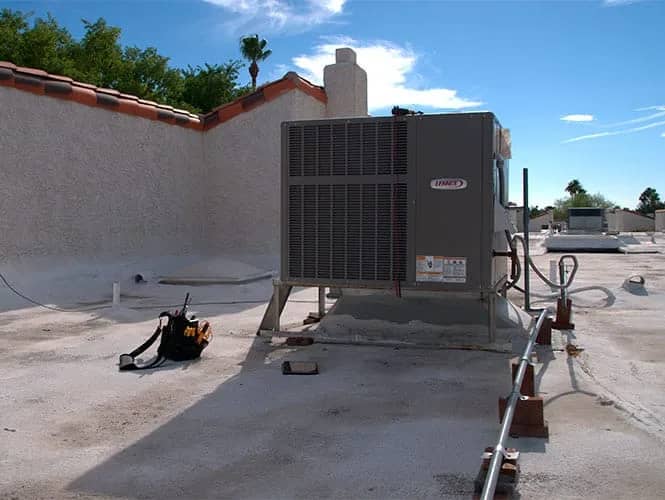
Average Cost to Install HVAC in New Construction (Las Vegas)
Short answer: New‑construction HVAC pricing depends on system type, home size, duct complexity, and efficiency targets. Manual J sizing is non‑negotiable.

What can change total install cost
- System type, staging, and efficiency levels
- Duct layout, zoning, and return sizing
- Electrical and gas service requirements
- Permit timelines and inspection scope
- Builder allowances vs. upgraded equipment
Biggest Cost Drivers
- System type: heat pump vs furnace + AC
- Duct layout and number of zones
- Efficiency ratings (SEER2/HSPF2)
Las Vegas New Construction HVAC Context: Why It's Different Here
Las Vegas's extreme climate and unique building conditions create specific challenges for new construction HVAC installations. Understanding these factors helps you make informed decisions and avoid costly mistakes.
Extreme Heat and Cooling Demands
Las Vegas summers regularly exceed 110°F, with systems running 18+ hours per day for months:
- Design temperatures: Cooling load calculations must account for 115°F+ design temps, not standard 95°F
- Extended runtime: Systems that might run 6-8 hours elsewhere run 18+ hours here, requiring higher capacity
- Attic installations: Many Las Vegas homes place units in attics where temperatures exceed 150°F, requiring specialized equipment and installation techniques
- Energy efficiency: Higher SEER2 ratings pay back faster due to extended cooling season
Desert Environment Challenges
Desert conditions affect HVAC design and installation:
- Dust infiltration: Fine desert dust requires better filtration systems and sealed ductwork
- Low humidity: While reducing some issues, dry air increases static electricity and dust accumulation
- Monsoon season: July-September humidity spikes add cooling load and require systems sized for peak conditions
- UV exposure: Intense sunlight degrades outdoor unit components faster, requiring UV-resistant materials
Temperature Swings and Energy Bills
Las Vegas experiences dramatic day/night temperature swings:
- Winter nights can drop to 30-40°F while days reach 65-70°F, requiring efficient heating
- Systems cycle frequently between heating and cooling modes
- Proper sizing prevents short cycling and reduces energy bills
- Zoning becomes critical for multi-story homes to manage temperature differences
Typical Cost Ranges for New Construction
Budget ranges help you plan and evaluate quotes:
Check our AC repair cost guide for current cost estimates.
- Basic system (builder grade): $8,000-$12,000 (14-16 SEER2, single zone)
- Mid-range system: $12,000-$18,000 (16-18 SEER2, basic zoning)
- High-efficiency system: $18,000-$25,000 (18-20+ SEER2, multi-zone, advanced controls)
- Premium system: $25,000-$35,000+ (20+ SEER2, full zoning, smart controls, premium ductwork)
These ranges assume standard 2,000-3,000 sq ft homes. Larger homes or complex layouts add 20-40%.
Detailed Cost Drivers
- System type: Heat pumps ($10K-$20K) vs. furnace + AC ($8K-$18K) - heat pumps often better for Las Vegas efficiency
- Efficiency ratings: Each SEER2 point adds $500-$1,500, but pays back faster in Las Vegas
- Ductwork complexity: Multi-story, zoning, or custom layouts add $2,000-$8,000
- Electrical upgrades: New service or panel upgrades add $1,500-$4,000
- Permits and inspections: $500-$1,500 depending on jurisdiction
- Builder allowances: Standard allowances often cover only basic systems; upgrades are change orders
Pre-Installation Checklist: What to Require
Never approve HVAC installation without these documents:
- Manual J load calculation: Proper sizing based on Las Vegas design temperatures (not generic estimates)
- Manual D duct design: Properly sized and balanced ductwork for your home's layout
- Equipment specifications: Exact model numbers, not just "16 SEER" or "3-ton unit"
- Warranty details: Parts and labor coverage, transferability, and exclusions
- Commissioning checklist: Startup procedures, testing, and performance verification
- Duct leakage testing: Verification that ducts meet energy code requirements
- Permit documentation: Proof of permits and scheduled inspections
Common Budget Mistakes to Avoid
- Accepting vague allowances: Insist on specific model numbers, not just "16 SEER system"
- Skipping Manual J: Rule-of-thumb sizing leads to oversizing and higher costs
- Ignoring duct design: Poor ductwork negates efficiency gains from premium equipment
- Oversizing "just in case": Oversized systems short cycle, waste energy, and reduce comfort
- Deferring upgrades: Post-closing upgrades cost 30-50% more than during construction
- Not planning for zoning: Two-story homes often need zoning; retrofitting is expensive
Las Vegas-Specific Installation Considerations
- Attic installations: Require proper ventilation, insulation, and access for future maintenance
- Dust filtration: Specify MERV 11+ filters and sealed ductwork to handle desert dust
- Return air sizing: Las Vegas homes need larger returns due to extended runtime
- Condensate drainage: Proper drainage prevents water damage during high-humidity periods
- Smart thermostats: Consider smart controls for better efficiency and energy bill management
Maintenance Planning for New Systems
Plan ahead to protect your investment:
- Filter replacement schedule: Monthly during peak season due to desert dust
- Annual maintenance: Schedule tune-ups in spring (before cooling season) and fall (before heating season)
- Duct cleaning: Every 3-5 years to remove dust accumulation
- Warranty registration: Complete manufacturer registration to activate full warranty coverage
Builder Allowances vs. Actual Costs: What You Need to Know
New construction buyers often discover that builder HVAC allowances cover only basic systems. Understanding allowances helps you budget for upgrades and avoid surprises at closing.
Typical Builder Allowances in Las Vegas
Standard new home HVAC allowances typically cover:
- Equipment level: 14-16 SEER2 systems (minimum code requirement)
- Basic ductwork: Standard flex duct without sealing or balancing upgrades
- Single zone: No zoning controls for multi-story homes
- Standard thermostats: Programmable, not smart controls
- Typical allowance amount: $8,000-$12,000 for 2,000-3,000 sq ft homes
Upgrade Costs Beyond Allowances
Common upgrades and their typical add-on costs:
- 16 to 18 SEER2: $1,500-$3,000 upgrade
- Two-zone system: $2,500-$5,000 additional
- Smart thermostat: $300-600 per zone
- Better ductwork (sealed metal): $1,500-$3,500
- UV air purifier: $800-$1,500
- Whole-home humidifier: $600-$1,200
These upgrades are change orders paid at closing or directly to the builder. Negotiating upgrades early in the contract process sometimes secures better pricing than adding them later.
The Commissioning Process: Why It Matters
Many new construction buyers don't realize their HVAC system needs proper commissioning after installation. This critical step ensures the system performs as designed.
What Commissioning Includes
- Airflow verification: Each room receives designed airflow (measured in CFM)
- Temperature split testing: Confirms proper refrigerant charge and coil performance
- Duct leakage testing: Ensures ducts meet energy code requirements (typically less than 6% leakage)
- Thermostat programming: Proper setup and user training
- Safety checks: Gas connections (if applicable), electrical, and combustion testing
- Documentation: Written report of all tests and settings for warranty purposes
Red Flags During New Construction HVAC Installation
Watch for these warning signs during construction:
- Ductwork installed before framing inspection (risk of damage)
- Outdoor unit placed in direct afternoon sun without shade
- Supply vents pointed at thermostats
- Missing return air grilles in bedrooms
- Flex duct with visible kinks or compression
- No duct sealing visible at joints and connections
- Undersized return ducts (common cost-cutting measure)
Catching these issues before drywall goes up saves thousands in post-closing corrections. Consider hiring an independent HVAC inspector for a pre-drywall walkthrough ($200-400).
Related service: Considering a heat pump for your Las Vegas home? Explore our heat pump installation and heating services services for Las Vegas homeowners.
Need HVAC Service in Las Vegas?
The Cooling Company provides expert HVAC service throughout Las Vegas, Henderson, and North Las Vegas. Our licensed technicians deliver honest assessments, upfront pricing, and reliable results.
Call (702) 567-0707 or visit AC repair, maintenance, heating, or installation for details.