

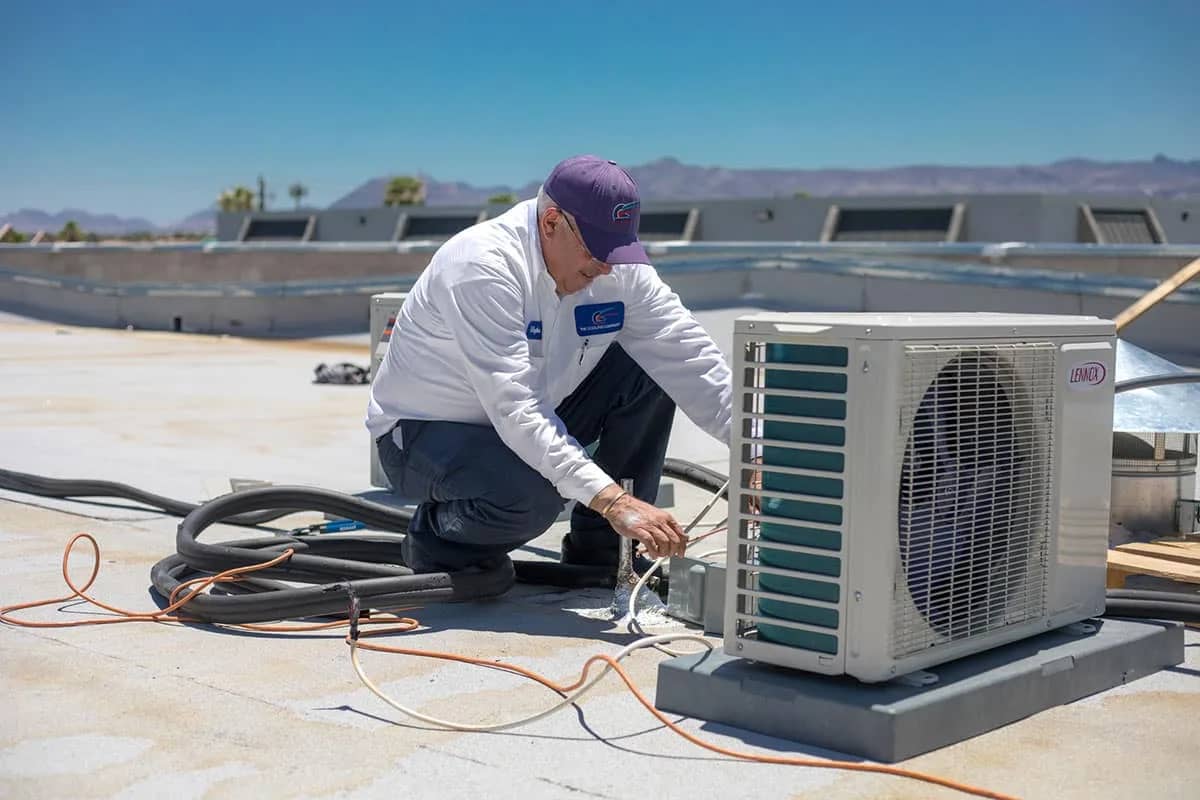
Short answer: For the Las Vegas desert, the best HVAC brands are Lennox, Carrier, and Trane at the premium tier, with Rheem and Goodman offering strong mid-range desert performance. The desert climate demands specific engineering: high-ambient operating ratings above 115 degrees Fahrenheit, corrosion-resistant coils, dust-tolerant cabinet designs, and compressors that maintain capacity when outdoor temperatures are at their worst. Not every brand builds for these conditions equally. We install all 10 major brands and recommend based on your home, budget, and priorities. Call (702) 567-0707 for a free assessment.
Key Takeaways
- Desert performance is not the same as rated efficiency: A system rated 24 SEER2 in a test lab may lose 15-25% of its capacity at 115 degrees Fahrenheit. The brands that perform best in Las Vegas are engineered to minimize that capacity loss.
- Coil technology separates the best from the rest: Lennox's Quantum Coil (all-aluminum alloy), Trane's Spine Fin (corrugated aluminum), and Carrier's WeatherArmor Ultra coating each address desert corrosion differently. All three outperform standard uncoated copper-aluminum coils.
- Max ambient operating temperature matters: Las Vegas regularly hits 115-118 degrees Fahrenheit in July and August. Systems rated for 125 degrees Fahrenheit have meaningful headroom; systems rated for only 115 degrees Fahrenheit are operating at their published limit.
- Dust resistance is underrated: Las Vegas dust contains alkaline minerals that accelerate coil corrosion. Systems with louvered cabinets and accessible coils for cleaning last longer than sealed designs that trap dust.
- Budget brands can work in the desert: Goodman and other value brands will cool your home. They will not last as long or maintain efficiency as well as premium brands in extreme heat, but the price difference is significant and may be the right trade-off for some homeowners.
What the Las Vegas Desert Demands From an HVAC System
Las Vegas is one of the most punishing climates for HVAC equipment in the United States. The combination of factors that stress air conditioning systems here is more severe than almost any other major city.
Extreme peak temperatures. Las Vegas averages 70 days per year above 100 degrees Fahrenheit and 10-15 days above 110 degrees. The record high is 118 degrees (2017 and 2024). During these peaks, your air conditioner's outdoor condenser unit is sitting in direct sunlight at temperatures that exceed most systems' rated operating conditions. The compressor must work harder to reject heat, capacity drops, and mechanical stress increases.
Extended cooling season. Las Vegas cooling season runs from mid-April through mid-October — roughly 180 days. Your AC runs approximately 2,500-3,500 hours per year, compared to 1,000-1,500 hours in most U.S. markets. This means 2-3 times the mechanical wear, 2-3 times the thermal cycling, and 2-3 times the electrical stress on components.
Daily temperature swings. Summer daily temperature swings of 30-40 degrees (75 degrees Fahrenheit at dawn, 115 degrees by afternoon) cause metal components to expand and contract daily. Over years, this thermal cycling creates fatigue at joints and connections — especially in coils where tubes meet fins.
Alkaline dust. Las Vegas desert dust is not ordinary dirt. It contains high levels of calcium carbonate and other alkaline minerals from the surrounding desert. When this dust settles on a wet coil surface (condensation from the cooling process), it creates an alkaline solution that accelerates corrosion — especially at dissimilar metal junctions like copper tube-to-aluminum fin connections.
UV exposure. Las Vegas receives approximately 294 sunny days per year with intense UV radiation. UV degrades plastic components, rubber seals, wire insulation, and unprotected paint finishes on outdoor units faster than almost any other U.S. market.
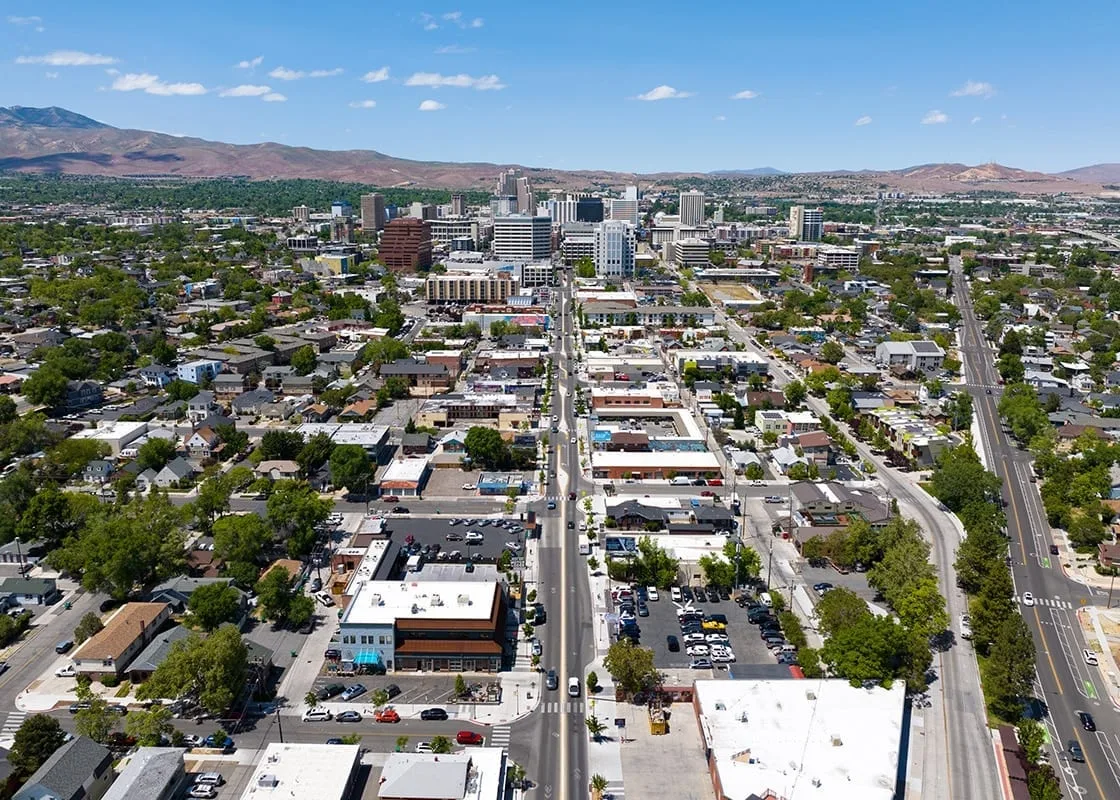
Brand-by-Brand Desert Performance Ranking
Tier 1: Purpose-Built for Extreme Heat
Lennox — Lennox's Quantum Coil is the single most significant coil technology advantage for desert environments. The all-aluminum alloy construction eliminates the galvanic corrosion pathway that destroys traditional copper-aluminum coils. The SL28XCV achieves up to 28.0 SEER2, operates to 125 degrees Fahrenheit, and runs at just 51 dB — the quietest in the industry. The Dave Lennox Signature Collection and Elite Series both use the Quantum Coil. Lennox is our top recommendation for Las Vegas homeowners who want the longest-lasting system. See our Premier Dealer page for more on what our Lennox expertise means for you.
Carrier — Carrier's Infinity series with WeatherArmor Ultra cabinet protection and 125 degrees Fahrenheit ambient rating makes it one of the best-performing brands in extreme heat. The Infinity 26 (24ANB6) reaches 26.0 SEER2, and Carrier's Greenspeed variable-speed compressor maintains capacity better at high temperatures than most competitors. Carrier has the largest dealer network in the Las Vegas Valley, which means competitive pricing and excellent parts availability. The coil uses a coated copper-aluminum design that holds up well in desert conditions, though not as resistant to galvanic corrosion as Lennox's Quantum Coil.
Trane — Trane's Spine Fin coil uses a corrugated aluminum fin design that provides greater rigidity and resistance to thermal fatigue than standard flat fins. The XV20i's variable-speed TruComfort compressor has the best longevity track record in the industry, and the lifetime compressor warranty (registered, original owner) backs that claim. Trane's rated ambient operating temperature of 115 degrees Fahrenheit is lower than Lennox and Carrier's 125 degrees, but Trane systems have a strong field performance record at Las Vegas peak temperatures. The XR series offers excellent value at the mid-range tier.
Tier 2: Strong Desert Performance
Rheem — Rheem's Prestige series (RA20) reaches 20.0 SEER2 with a variable-speed inverter compressor rated for operation at 125 degrees Fahrenheit. The Prestige line uses a PlusOne copper-tube aluminum-fin coil with corrosion-resistant coating. Rheem offers the best combination of mid-range pricing and premium features in our market. The Classic Plus series (RA17) provides strong two-stage performance at accessible pricing. Rheem systems are built in the same Fort Smith, Arkansas facility as Ruud systems, with different external branding.
Goodman — Goodman's GSXC18 series uses a two-stage Copeland compressor and reaches 18.0 SEER2 with a rated ambient of 115 degrees Fahrenheit. While Goodman's standard copper-aluminum coils lack the proprietary corrosion treatments of premium brands, the price advantage is substantial — 30-40% less installed than comparable Lennox or Carrier systems. Goodman's parts availability in Las Vegas is excellent due to widespread dealer support, and the 10-year registered warranty provides solid coverage. For homeowners who want reliable desert cooling without the premium price tag, Goodman delivers strong mid-range value. See our Goodman vs. Lennox comparison for details.
Daikin — Daikin is the world's largest HVAC manufacturer by revenue and has a strong reputation for inverter compressor technology, developed primarily for the demanding Japanese market. The Daikin DX20VC reaches 24.5 SEER2 with a variable-speed compressor and is rated for 125 degrees Fahrenheit ambient. Daikin acquired Goodman in 2012 and shares manufacturing facilities, but Daikin-branded systems use different compressor technology and higher-grade components. Dealer availability in Las Vegas has expanded significantly since 2024.
Tier 3: Capable Desert Performance
York — York (owned by Johnson Controls) offers the Affinity series with up to 20.0 SEER2 and Climatuff compressors rated for high-ambient operation. York's MicroChannel coil provides good corrosion resistance due to all-aluminum construction, similar in concept to Lennox's Quantum Coil. However, MicroChannel coils have a documented history of higher leak rates at brazed joints compared to round-tube-plate-fin designs, and field repair of a MicroChannel coil leak is more difficult than traditional coil repair. York's dealer network in Las Vegas is smaller than the top-tier brands.
Amana — Amana (owned by Daikin/Goodman) is positioned as the premium tier of the Goodman family. The AVXC20 reaches 24.5 SEER2 and comes with a lifetime compressor warranty — one of the most generous in the industry. The coil and cabinet construction are similar to Goodman's but with upgraded components and better finish quality. Amana systems use Copeland scroll compressors, which have a strong reliability record. The value proposition is strong for homeowners who want premium features at a price point below Lennox, Carrier, and Trane.
Tier 4: Budget Desert Performance
Goodman — Goodman is the value leader. The GSXC18 reaches 18.0 SEER2 with a two-stage Copeland compressor. Goodman's coils use standard copper-tube aluminum-fin construction without proprietary corrosion treatments, which means shorter expected coil life in the Las Vegas desert — typically 8-12 years versus 15+ years for premium brands. Goodman systems cost 30-40% less installed than comparable Lennox or Carrier systems. For homeowners on a tight budget or planning to move within 5-7 years, Goodman delivers adequate cooling at the lowest upfront cost. See our Goodman vs. Lennox comparison for a detailed breakdown.
Payne/Day & Night — These are Carrier-owned value brands that use simplified versions of Carrier's technology. They offer basic cooling performance at budget pricing but lack the WeatherArmor Ultra protection, advanced compressor technology, and smart thermostat integration of Carrier's Infinity line. They are functional for Las Vegas but represent a significant step down in desert durability from their parent brand's premium offerings.
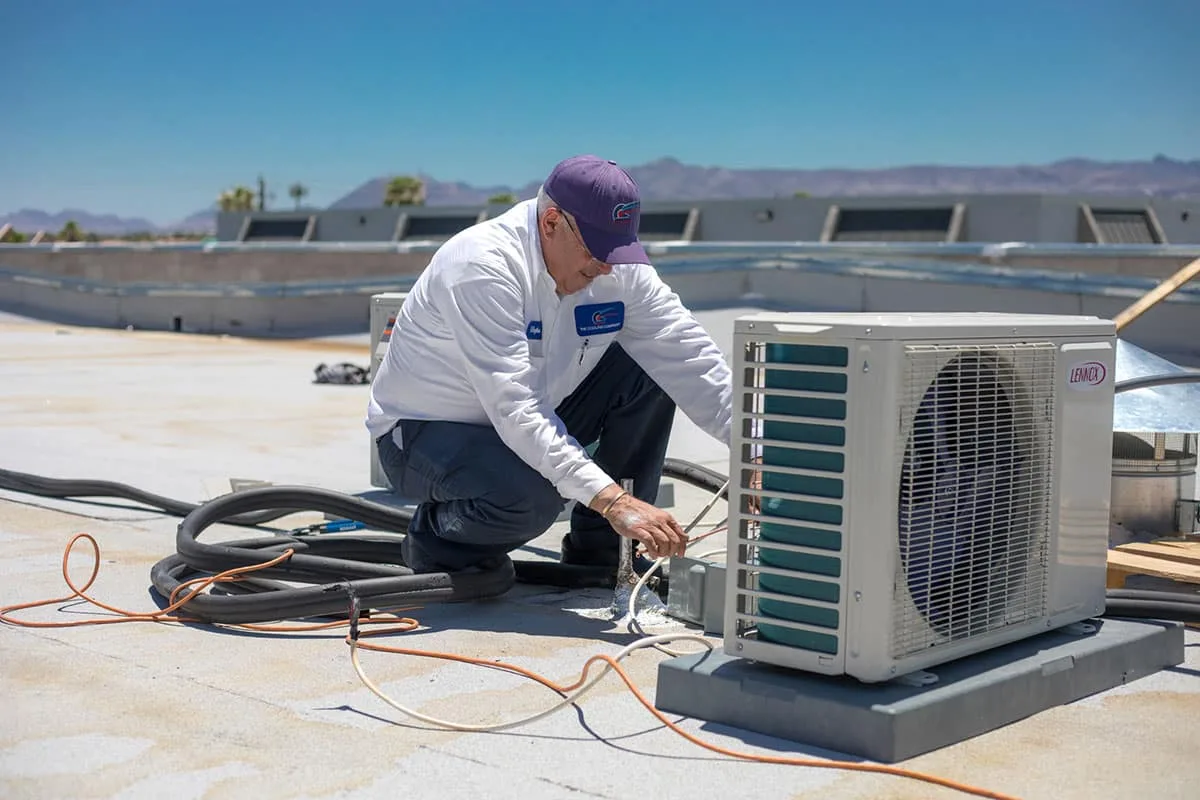
Desert Performance Comparison Table
| Brand | Top SEER2 | Max Ambient | Coil Type | Compressor Warranty |
|---|---|---|---|---|
| Lennox SL28XCV | 28.0 | 125 degrees F | Quantum (all-aluminum alloy) | 10 years (registered) |
| Carrier Infinity 26 | 26.0 | 125 degrees F | Coated copper-aluminum | 10 years (registered) |
| Daikin DX20VC | 24.5 | 125 degrees F | Copper-aluminum | 12 years (registered) |
| Amana AVXC20 | 24.5 | 120 degrees F | Copper-aluminum | Lifetime (registered) |
| Trane XV20i | 22.0 | 115 degrees F | Spine Fin (corrugated aluminum) | Lifetime (registered) |
| Rheem Prestige RA20 | 20.0 | 125 degrees F | PlusOne coated copper-aluminum | 10 years (registered) |
| York Affinity YXV | 20.0 | 120 degrees F | MicroChannel (all-aluminum) | 10 years (registered) |
| Goodman GSXC18 | 18.0 | 115 degrees F | Standard copper-aluminum | 10 years (registered) |
What Matters Most: The Three Desert Killers
1. Coil Corrosion
Coil failure is the leading cause of premature system replacement in Las Vegas. The brands that address coil corrosion with engineered solutions — Lennox's Quantum Coil, Trane's Spine Fin, Carrier's WeatherArmor Ultra coating, Rheem's PlusOne coating — consistently outlast brands using standard uncoated copper-aluminum coils. When choosing a brand, ask specifically about the coil construction and what corrosion protection is included. This single factor has more impact on system longevity in Las Vegas than SEER2 rating, compressor type, or any other specification. For a deep dive on coil technologies, see our coil type comparison.
2. Compressor Capacity at Extreme Temperatures
Every air conditioner loses cooling capacity as outdoor temperature rises. At 95 degrees Fahrenheit (the AHRI test condition), a 3-ton system produces approximately 36,000 BTU of cooling. At 115 degrees, that same system may produce only 27,000-31,000 BTU — a loss of 14-25% depending on the brand and model. The brands with the smallest capacity loss at high ambient temperatures use variable-speed inverter compressors that ramp up to compensate. Lennox, Carrier, and Daikin lead this category. Goodman and basic single-stage systems from any brand show the largest capacity loss at extreme temperatures.
3. Component UV and Heat Degradation
Las Vegas UV exposure degrades capacitors, contactors, wire insulation, and control boards faster than almost any other market. Premium brands use UV-stabilized components, sealed control board housings, and higher-temperature-rated capacitors. Budget brands often use standard components that may need replacement 2-3 years earlier. This does not make budget brands non-functional — but it does mean higher maintenance costs over time and a shorter overall system life.
Frequently Asked Questions
Which HVAC brand lasts longest in the Las Vegas desert?
Based on our service data across thousands of systems in the Las Vegas Valley, Lennox and Trane consistently show the longest average system life. Lennox's advantage comes from the Quantum Coil's resistance to desert corrosion. Trane's advantage comes from compressor durability — their variable-speed compressors have the lowest failure rate at the 12-18 year mark. Carrier is close behind both, with excellent overall reliability. The typical premium system from any of these three brands lasts 15-20 years in Las Vegas with proper maintenance, compared to 10-14 years for budget brands.
Is the most efficient HVAC brand always the best choice for Las Vegas?
No. Efficiency (SEER2) is measured at 95 degrees Fahrenheit — a temperature Las Vegas exceeds for 70+ days per year. The brand with the highest SEER2 rating is not necessarily the brand that performs best at 115 degrees. High-ambient capacity retention, coil durability, and compressor reliability matter more for long-term Las Vegas performance than peak SEER2 numbers. That said, the premium brands that lead in efficiency (Lennox, Carrier, Daikin) also tend to lead in high-ambient performance because they use the most advanced compressor and coil technology.
Can a budget HVAC brand handle Las Vegas summers?
Yes. Goodman, Payne, and other budget brands will cool your home effectively, including during peak summer heat. The trade-off is longevity: budget brands typically last 10-14 years in Las Vegas versus 15-20 years for premium brands. They also lose more cooling capacity at extreme temperatures, run less efficiently (higher electricity bills), and have higher maintenance costs in the second half of their life. If your budget is constrained or you plan to move within 5-7 years, a budget brand can be a reasonable choice. See our budget vs. premium comparison.
How often should I clean my outdoor condenser coil in Las Vegas?
At least twice per year — once in spring before cooling season begins and once in mid-summer to remove accumulated dust. Las Vegas desert dust is more corrosive than ordinary dirt due to its alkaline mineral content. Letting dust accumulate reduces efficiency, increases compressor stress, and accelerates coil corrosion. Use a garden hose (not a pressure washer, which can bend coil fins) and spray from the inside out. For thorough cleaning, schedule a professional maintenance visit that includes coil cleaning with appropriate cleaner and fin straightening.
Does the brand of AC affect my NV Energy electricity bill?
Yes, significantly. The difference between a 15.0 SEER2 system and a 24.0 SEER2 system on a typical Las Vegas home (2,000 square feet, 3-ton system, 3,000 cooling hours per year at NV Energy's approximate $0.12/kWh rate) is roughly $400-$600 per year in cooling electricity costs. Over a 15-year system life, that is $6,000-$9,000 in energy savings — often enough to offset the higher upfront cost of a premium, high-efficiency system. See our SEER2 ratings guide for detailed calculations.
Our Recommendation
For Las Vegas homeowners who want the best long-term value, we recommend Lennox as the overall best brand for desert performance. The Quantum Coil's corrosion resistance, the SL28XCV's efficiency and quiet operation, and our Premier Dealer expertise create the strongest combination of product quality and installation quality available in the Las Vegas market.
For homeowners who prioritize compressor durability above all else, Trane's lifetime compressor warranty and documented longevity record make it the best choice. For the largest dealer network and strongest smart home integration, Carrier leads. For mid-range budgets, Rheem's Prestige series offers premium features at a more accessible price point.
Call (702) 567-0707 or request a free quote for a personalized brand recommendation based on your home, budget, and priorities.
Related Brand Guides
- HVAC Brand Comparison Hub — All brands, side-by-side
- Lennox AC Systems for Las Vegas
- Carrier AC Systems for Las Vegas
- Trane AC Systems for Las Vegas
- Rheem AC Systems for Las Vegas
- Goodman AC Systems for Las Vegas
- HVAC System Cost by Brand
- HVAC Warranty Comparison Guide