

Key Takeaways
- Insist on a Manual J load calculation, AHRI certificate, and an itemized written quote.
- Budget $500 to $3,000 extra for duct or electrical work when needed.
- Higher SEER and variable-speed components raise upfront cost but often save 10 to 40 percent on cooling energy.
- Rebates and tax credits can shorten payback periods.
Las Vegas replacement tip
Short answer: In Las Vegas, extreme summer heat (105°F+ days) and rapid temperature swings stress AC systems more than in moderate climates. Desert dust loads filters faster and can clog coils, reducing efficiency by 10-30%. Monsoon season (July-September) adds humidity load, forcing systems to work harder and increasing energy bills. Peak demand charges during afternoon hours (2-6 PM) can double energy bills if systems aren't properly sized or controlled. When replacing your AC, prioritize high ambient-rated equipment (125°F+), variable-speed compressors for better humidity control, proper duct sealing to maximize efficiency, and smart thermostats to manage peak demand charges. Budget 10-20% more for desert-rated equipment and factor in higher maintenance costs due to dust and long cooling seasons.
How much does it cost to replace an air conditioner?
Expect a full central AC replacement to run roughly $3,000 to $12,000 for most homes, with many homeowners paying $5,000 to $9,000. Final cost depends on system size, efficiency, labor, ductwork, refrigerant, local permits, and upgrades like a heat pump or zoning. (Source: ASHRAE Technical Resources)Typical price bands by home size?
- Small home (about 1,000 sq ft; 1.5 to 2 ton): $3,000 to $5,500
- Medium home (1,600 to 2,000 sq ft; 2.5 to 3.5 ton): $6,000 to $12,000
- High-efficiency or heat pump upgrade (matched system, 16 to 20+ SEER/SEER2): $6,000 to $15,000+
Line-item cost examples?
Outdoor condensing unit plus matched indoor coil/air handler: $1,800 to $8,000+. If your quote includes an indoor unit swap, see air handler installation cost so you know what’s normal and what should be itemized. Labor and basic materials: $1,200 to $4,000. Duct repairs, sealing, or insulation: $500 to $3,000. Electrical upgrades: $200 to $1,500. Permits and disposal: $100 to $500. Thermostat: $100 to $400.Typical timeline?
Most straight replacements take one to two days. Complex installs with duct redesign or electrical upgrades can take several days to a week.What factors drive the price?
Price drivers are mostly predictable. Know them before you get quotes.System capacity and tonnage?
Larger homes need higher capacity. A 5-ton unit costs more than a 2.5-ton unit.Efficiency ratings: SEER and SEER2?
Higher SEER models use more advanced components. They cost more but reduce energy use. Installation quality affects real-world savings.Compressor types?
- Single-stage compressors are least expensive.
- Two-stage or variable-capacity compressors add $500 to $2,000 but improve comfort and humidity control.
Matched components?
A matched indoor coil and air handler matter. Mismatched parts can cut performance and may void warranties.Ductwork condition
Leaky or undersized ducts reduce system effectiveness. Plan $200 to $6,000 depending on whether you seal or replace ducts.Refrigerant and regulations
If your unit uses R-22, refills are costly and phased out. Most replacements use R-410A or new low-GWP refrigerants. Certified technicians are required for refrigerant handling.Installation complexity
Multi-level homes, hard-to-access attic or roof mounts, long refrigerant lines, and crane work increase labor time and cost.Brand, warranty, and contractor markup
Premium brands and longer warranties raise equipment cost. Contractor experience and local markup also change the final price.When is repair cheaper than replacement?
Deciding between repair and replacement depends on age, condition, and cost of the repair.Repair makes sense when
- The unit is under 8 to 10 years old.
- The system is in decent condition and the repair is under 30 to 40 percent of replacement cost.
- The fault is isolated and uses inexpensive parts like a capacitor or contactor.
Consider replacement when
The unit is older than about 12 years. Repair costs approach or exceed 50 percent of replacement cost. The system uses R-22 and needs frequent refrigerant top-offs. (Source: ASHRAE Technical Resources). Comfort issues persist after prior repairs.How does system age affect cost?
Older systems typically have lower SEER ratings and may use phased-out refrigerants. A failing compressor or a rusty evaporator coil on a 15-year-old unit usually points to replacement. New equipment costs more up front but reduces operating cost and often qualifies for rebates.Typical lifespan
Expect 12 to 20 years depending on maintenance, climate, and equipment quality. Regular maintenance helps reach the higher end.Which efficiency upgrades save energy?
Upgrades vary in cost and payback. Some deliver faster returns.High-ROI upgrades
Move from 13 to 16 SEER to cut cooling energy by a significant percent depending on climate and runtime. Duct sealing and insulation often deliver the fastest payback. Sealing can reduce heating and cooling losses by 10 to 30 percent in leaky systems. Variable-speed blower and compressor add $500 to $1,500 but improve humidity control and comfort. Smart thermostats cost $150 to $400 and can reduce runtime. Proper system matching and commissioning ensures rated efficiency.Are heat pumps a viable replacement option?
Yes. Modern heat pumps cool and heat efficiently and can replace a separate furnace plus AC in many homes.Heat pump cost and benefits
- Cost: $6,000 to $12,000+ depending on size and cold-climate capability.
- Climate fit: In mild climates, heat pumps often save money versus gas or oil heating.
- Rebates: Many utilities offer rebates for heat pump installations.
How do duct repairs change the estimate?
Duct repair cost depends on the scope.Typical ductwork price ranges
- Minor sealing or mastic: $200 to $800
- Moderate repairs (some sheet metal, insulation): $800 to $2,000
- Major replacement or redesign: $2,000 to $6,000+
Do refrigerant changes add cost?
Yes. Refrigerant type influences parts, labor, and future service cost.Key refrigerant points
- R-22 systems: R-22 is phased out and expensive. Most replacement is preferred to refilling.
- New refrigerants: R-410A is common. Lower-GWP refrigerants like R-32 and R-454B are entering the market and may be regional.
- Retrofitting old equipment to new refrigerants is often costly and not recommended.
What permits or inspections are required?
Most jurisdictions require a permit for HVAC replacement. Typical permit costs: $100 to $400, sometimes included in the contractor quote. Inspections verify electrical safety, proper refrigerant handling, and code compliance. Ask if permits and inspections are included in the quote.How are replacement quotes calculated?
Contractors base quotes on load calculations, equipment price, labor, materials, and adjustments for ducts, electrical work, refrigerant, and optional upgrades.What to require in a quote
Manual J load calc to size the system. Itemized equipment list with model numbers and SEER/SEER2. AHRI reference or certificate for proposed models. Labor and material line items. Optional items like duct sealing, zoning, and thermostat upgrades. Always get a written, itemized quote.How should homeowners compare SEER ratings?
SEER or SEER2 measures seasonal cooling efficiency. Higher numbers are better for energy use but realize that installation quality matters as much as rating.Simple payback method
Use your current SEER, estimated annual cooling kWh, and local electricity rate to estimate savings. Higher SEER gives diminishing returns in low-use climates.Which brands and contractors matter most?
Pick manufacturers with local support and parts availability. For contractors, prioritize licensed and insured companies with NATE-certified technicians.Contractor credentials to check
NATE certification for lead technicians. Local license and liability insurance. Willingness to perform Manual J and Manual S. Will provide AHRI certificate and itemized quote. (Source: ASHRAE Technical Resources)What warranty options reduce risk?
- Manufacturer parts warranties: 5 to 10 years; compressors often 10 years with registration.
- Contractor labor warranties: 1 to 5 years. Get this in writing.
- Extended plans: cost more but lower future repair bills for some homeowners.
How do add-ons like smart thermostats affect price?
- Basic programmable thermostat: $50 to $150
- Smart thermostat: $150 to $400 plus $75 to $200 for setup if needed
Which upgrades give the best ROI?
Duct sealing and insulation: often the fastest payback. Proper sizing with a two-stage or variable-speed compressor: better humidity and long-term savings. Smart thermostats: moderate payback. Very high-SEER units: longer payback unless rebates or heavy cooling hours justify them.Is a variable-speed blower worth it?
Yes in many homes. Benefits include quieter operation, even temperatures, better humidity control, and improved part-load efficiency. Added cost typically $500 to $1,500.Can zoning solve uneven cooling?
Yes. Zoning uses motorized dampers and multiple thermostats to control airflow. Typical cost: $1,500 to $4,000. Best used when ductwork is in good condition and rooms have different needs.When should I upgrade ductwork?
Upgrade ducts when leakage is high, ducts are undersized, crushed, or located where insulation is inadequate. If Manual J shows supply or return imbalance, include duct work in the contract.Do ENERGY STAR systems qualify for rebates?
Many utilities and states offer rebates for high-efficiency systems, heat pumps, and duct sealing. Rebates range widely. Check local utility programs and federal incentive portals before purchase.Which refrigerant is more future-proof: R-410A or R-32?
R-410A is common now. Regulators are moving toward lower-GWP refrigerants like R-32. Availability and code acceptance vary by region. Ask your contractor about local trends and serviceability.How does insulation affect system sizing?
Better insulation reduces required tonnage and runtime. Upgrading attic or wall insulation can let you downsize equipment and save equipment cost. Include an insulation check in the pre-installation review.Are heat pump rebates available?
Yes. Many utility and federal programs incentivize heat pump installations. Rebates and tax credits can materially reduce net cost.How do I select a trustworthy contractor?
Ask for references and documentation. Use this vetting checklist.Vetting questions to ask
Will you run a Manual J and provide the report? Can you show AHRI certificates for the exact models? Are your technicians NATE-certified and locally licensed and insured? What is included in the written labor warranty? Do you handle permits and inspections? Use local reviews and ask for recent local references.How can I budget and finance a replacement?
Pricing by home size appears earlier. Financing options include home equity loans, personal loans, contractor financing, utility on-bill financing, and federal or state incentive programs.Financing tips
Compare APR, term, and total interest paid. Watch deferred-interest offers. Check for prepayment penalties. Factor rebates and tax credits into net cost before committing. Get at least three bids. Large differences in scope or price usually indicate different assumptions.Common red flags in quotes
No Manual J, Manual D, or model numbers listed. Vague tonnage with no AHRI certificate. No itemized labor and material line items. Large unexplained markups or bundled fees with unclear coverage. Push to oversize the unit to avoid duct work. Ask for clarification and written change orders.Pre-installation checklist for homeowners
Confirm the written itemized quote and AHRI certificate. Verify permits and start/finish dates. Clear work areas and confirm access to attic or crawlspaces. Have filters ready and identify thermostat location. Confirm debris staging and parking for contractor vehicles. (Source: ASHRAE Technical Resources)Post-installation checklist and commissioning
Ask the contractor to demonstrate these at hand-off.Commissioning items to verify
Thermostat operation and programming. Airflow balance: installed CFM per ton target ~350 to 450 CFM/ton. Measured temperature split across supply and return: typical 14 to 22 F. Proof of correct refrigerant charge and startup sheet. Condensate drain flows and has a trap. Electrical disconnects labeled and secure. Do a quick homeowner check: measure temperatures in several rooms, listen for unusual noises, and ensure no short cycling.Prevention and maintenance: Protecting your investment
Proper maintenance extends equipment life and prevents costly repairs. In Las Vegas, these steps are especially critical:
- Regular filter changes: Desert dust loads filters faster. Change filters monthly during peak season (May-September) to maintain efficiency and prevent coil fouling. Dirty filters reduce airflow and can cause frozen coils.
- Coil cleaning: Schedule professional coil cleaning every 3-4 months. Dirty coils reduce efficiency by 10-30% and increase energy costs, especially during Las Vegas summers when systems run 8-12 hours daily.
- Annual tune-ups: Professional inspections catch refrigerant leaks, electrical issues, and airflow problems early. Annual service costs $100-300 but prevents $500-2,000+ emergency repairs. Tune-ups should include refrigerant charge verification, electrical amp draws, and airflow testing.
- Duct maintenance: Inspect ducts annually for leaks, damage, or insulation gaps. Sealing leaks can improve efficiency by 10-20% and reduce energy bills significantly.
- Thermostat programming: Use setback schedules to reduce runtime during unoccupied hours. Smart thermostats can save 5-15% on energy bills and help manage peak demand charges.
- Outdoor unit care: Keep outdoor unit clear of debris, vegetation, and dust buildup. Maintain 2-3 feet clearance for proper airflow. In Las Vegas, check for dust accumulation weekly during peak season.
- Condensate drain maintenance: Clean condensate drains quarterly to prevent clogs and water damage. Clogged drains can cause system shutdowns and indoor humidity problems.
A maintenance agreement can cost $100 to $300 per year and may include priority service, discounted repairs, and seasonal tune-ups. Many contractors offer maintenance plans that help preserve warranties and catch problems early.
How to compare financing offers
- Compare APR, monthly payment, loan term, and total interest
- Watch deferred-interest and balloon payment traps
- Consider term length vs total interest paid
Sample contractor email to request quotes
Hello [Contractor name], I am requesting a written, itemized quote to replace my central air system. My home is [square footage], built in [year], with an existing [make/model if known] AC that is approximately [age] years old. Current issues: [humidity/even cooling/high bills/other]. Please include: Manual J load calculation and proposed Manual S equipment selection. AHRI certificate or model data sheet for proposed equipment. Itemized labor and materials, permit costs, and any optional upgrades (duct sealing, smart thermostat, zoning). Project timeline and warranty details. Available times to inspect: [dates/times]. Please call with any questions: (702) 567-0707. Thank you, [Your name]Decision checklist: Choosing the right AC replacement
Use this checklist to evaluate your AC replacement options:
- Sizing verification: ✓ Manual J load calculation completed
- Efficiency rating: ✓ SEER2 ratings compared (aim for 16+ SEER2 in Las Vegas)
- System matching: ✓ Indoor and outdoor units matched per AHRI certificate
- Ductwork assessment: ✓ Ducts inspected and tested for leaks
- Electrical capacity: ✓ Panel capacity verified for new system
- Contractor credentials: ✓ NATE certification, licensing, and insurance verified
- Warranty coverage: ✓ Parts and labor warranty terms reviewed
- Rebate eligibility: ✓ Federal, state, and utility rebates checked
- Financing options: ✓ Payment plans and financing terms compared
- Installation timeline: ✓ Project schedule and permit timeline confirmed
- Las Vegas considerations: ✓ High ambient-rated equipment (125°F+) selected
- Peak demand management: ✓ Smart thermostat or controls to manage peak hours
Final checklist before signing
Get three itemized bids and compare AHRI certificates and Manual J results. Confirm permits, warranty lengths, and labor warranty coverage in writing. Verify duct condition or include ductwork if testing shows problems. Check rebate eligibility and factor rebates into net price. Request an on-site walkthrough with the proposed lead technician and ask for references for similar installs.
Choose the installer who demonstrates correct sizing, quality components, and clear documentation. In Las Vegas, prioritize contractors familiar with desert conditions, high ambient ratings, and peak demand management strategies.
Sources and compliance notes:
- ASHRAE technical resources: ASHRAE Technical Resources
- Regulatory note: EPA Section 608 requires certified technicians for refrigerant handling
Related reading: what to explore next?
- Air Handler Installation Cost: What to Budget Before Buying
- Furnace Types: Fuel, Technology, Efficiency
- Cost to Add HVAC to An Old House: Real Prices And Retrofit Factors
- Furnace Prices: Total Cost to Buy and Install in Las Vegas
- Furnace: How It Works, Common Problems, Costs
- Furnace Size: Why Sizing
- HVAC Financing Near Me: Fast Approval In Las Vegas
- Service Finance: HVAC Financing In Las Vegas
- Hot Water Heater Financing Near Me: Fast Approval, Same-Week Service
- HVAC Financing Calculator: Estimate Your Monthly Payment In Seconds
Need HVAC service help in Las Vegas?
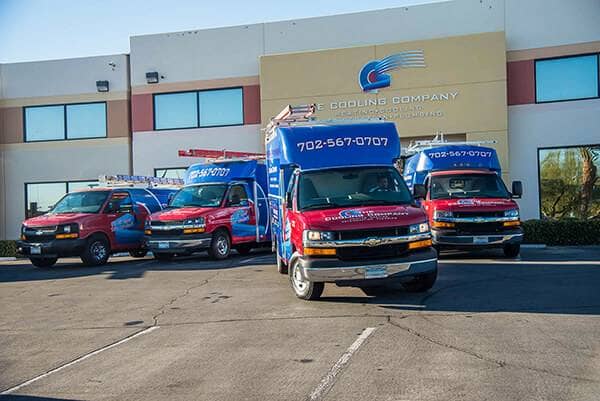
If you're facing an AC replacement decision in Las Vegas, Henderson, or North Las Vegas, The Cooling Company offers fast, reliable service from licensed, NATE-certified technicians. We understand that HVAC emergencies don't wait for business hours, and we're here to help you make informed decisions about your AC replacement.
Call us now at (702) 567-0707 for a professional assessment and itemized quote. Our team provides Manual J load calculations, AHRI-certified system matching, and transparent pricing to help you choose the right system for your home and budget.
We serve Las Vegas, Henderson, and North Las Vegas with professional AC installation, maintenance, and repair services. Whether you need routine maintenance, emergency repairs, or a complete system replacement, our licensed technicians deliver quality work backed by a satisfaction guarantee. Ready to get started? Call (702) 567-0707 or Schedule Now.
Need HVAC Service in Las Vegas?
The Cooling Company provides expert HVAC service throughout Las Vegas, Henderson, and North Las Vegas. Our licensed technicians deliver honest assessments, upfront pricing, and reliable results.
Call (702) 567-0707 or visit AC repair, maintenance, heating, or installation for details.