

Short answer: DIY heating repair is safe for simple tasks like filter changes and thermostat checks, but gas lines, electrical work, and combustion adjustments require professional service. In Las Vegas, cold snaps expose ignition and airflow issues quickly—if you smell gas or see repeated breaker trips, call a licensed technician immediately. Professional repairs average $294-$419 in Las Vegas, but DIY mistakes can void warranties and create safety hazards.
Understanding DIY vs Professional Heating Repair
Before touching a furnace panel or thermostat wire, it helps to draw a clear line between homeowner maintenance and professional repair. DIY work focuses on simple checks and cleaning tasks that do not expose a person to gas leaks, combustion chambers, or high‑voltage electrical components. Professional repair, by contrast, involves diagnostic tools, code knowledge, and licensing requirements designed to protect both occupants and property.What Counts as DIY
DIY heating work covers low‑risk, surface‑level tasks. Swapping an air filter, confirming that the thermostat is set to “heat,” making sure vents are open, or resetting a tripped breaker all fall in this category. These activities do not require specialized instruments, do not involve opening sealed combustion or electrical compartments, and can usually be completed with basic household tools and common sense safety-power off when in doubt, and no contact with gas piping.What Counts as Professional
Professional repair begins the moment work involves gas lines, burner assemblies, control boards, or rewiring. Anything that alters how fuel is delivered or burned, how exhaust is vented, or how high‑voltage power reaches the equipment belongs in the hands of a licensed HVAC technician. Those tasks often require combustion analyzers, manometers, electrical meters, and training on local codes and manufacturer specifications to avoid dangerous operating conditions.Risks Overview
The main risks of stepping beyond DIY limits cluster into four areas: personal safety, property damage, legal or insurance problems, and system reliability. A miswired control can short an expensive circuit board, a loose gas fitting can create a fire hazard, and an incorrectly adjusted burner can produce carbon monoxide. Even if the system appears to “run” after a DIY fix, hidden issues can shorten equipment life or create chronic comfort problems.When This Topic Applies
The DIY versus professional decision matters any time a Las Vegas homeowner faces no‑heat situations, weak airflow, frequent cycling on and off, abnormal noises, burning or chemical smells, or unusually high utility bills in the heating season. It is especially important for gas furnaces and gas‑fired package units, which combine combustion and electricity in a compact space. Understanding which tasks are safe to handle and which demand a qualified technician can prevent small issues from escalating into emergencies. Not sure whether the system causing the problem is a furnace, heat pump, or boiler? Our what type of heating you have guide walks you through easy visual clues to identify your equipment before you decide your next step.
Safety and Risk Realities
Heating equipment sits at the intersection of fuel, flame, and electricity, all enclosed in metal cabinets and threaded through walls and ceilings. When repairs go wrong, the consequences can be severe even if the initial symptom seemed minor. The decision to DIY should always be filtered through a clear understanding of gas behavior, carbon monoxide risks, and the dangers of high‑voltage power inside furnace and air handler cabinets.Gas and Carbon Monoxide Hazards
Natural gas and propane are odorized to make leaks easier to detect, but small leaks or incomplete combustion are not always obvious. A burner that is dirty, misaligned, or starved for air can produce carbon monoxide, a colorless, odorless gas that interferes with the body’s ability to transport oxygen. Adjusting gas valves, modifying burners, or tinkering with pressure regulators without training can turn a previously safe system into a dangerous source of invisible pollution.High Voltage Electrical Risks
Many homeowners assume the furnace is “low voltage” because the thermostat runs on small control wires. Inside the cabinet, though, blower motors, inducer fans, and electric heating elements use household line voltage. Misidentifying live conductors, bypassing safety switches, or probing components with improvised tools can result in severe electric shock or arc faults. Even when the system is switched off at the thermostat, power can still be present at the unit unless the breaker or service switch is off.Fire and Explosion Risks
Loose electrical connections can overheat and arc, igniting nearby dust or insulation. Gas accumulations inside a heat exchanger or burner compartment can flash when the igniter sparks, potentially damaging equipment or surrounding structures. Seemingly small shortcuts-using non‑rated tape on wiring, ignoring scorch marks on a panel, or failing to secure a gas union-can all raise the odds of a fire event when the system cycles repeatedly during cold nights.Injury Statistics Snapshot
Nationwide, building fires and accidental poisonings are often traced back to malfunctioning or improperly serviced heating appliances, though many incidents never make headlines. While exact numbers vary by year and jurisdiction, fire marshals and code officials consistently flag do‑it‑yourself work on gas and electrical systems as a recurring factor. The point is not that every DIY task is dangerous, but that the wrong task, done once, can have consequences disproportionate to the original problem.Liability and Insurance Issues
Home insurance policies typically expect that gas and electrical work will be done according to code, often by licensed professionals. If an investigation after a fire or explosion reveals unpermitted or non‑code alterations, a claim can become more complicated. Landlords face additional exposure because they owe tenants a safe, habitable space; undocumented DIY furnace repairs can become a legal liability if a heating failure or safety incident occurs later.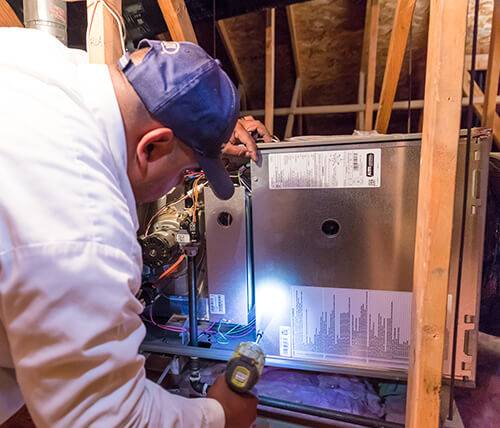
Safe DIY Tasks
There is still meaningful, low‑risk work homeowners can do to keep heating systems running more smoothly between professional visits. These tasks focus on airflow, basic controls, and visual checks-no tools inside gas compartments, no rewiring, and no component disassembly. Done regularly, they can reduce the frequency of breakdowns and complement professional tune‑ups, which in Nevada typically cost between $80 and $150 according to HVAC Laboratory’s reported tune‑up price range.Filter Replacement
A clean air filter protects both the blower and the heat exchanger by maintaining proper airflow through the system. When filters are neglected, airflow drops, the furnace can overheat, and safety switches may shut the burner down, leaving the home without heat. Replacing the filter on a regular schedule-based on the manufacturer’s guidance and household conditions-requires no specialized tools and is one of the most effective DIY steps available.Thermostat Checks
Many “no heat” calls trace back to thermostat settings rather than failed equipment. Verifying that the thermostat is set to “heat,” that the temperature setpoint is above current room temperature, and that any programmable schedule matches the household’s routine can resolve simple issues. If the thermostat uses batteries, replacing them when the display dims or behaves erratically is a safe, inexpensive task that can prevent nuisance shutdowns.Vent and Register Clearing
Blocked supply registers and return grilles can create comfort complaints that mimic more serious problems. Furniture pushed against a supply vent, a rug covering a return grille, or heavy dust accumulation can all starve the system for air. Walking the home, opening closed registers, and gently vacuuming grilles helps restore designed airflow. This step also reduces strain on the blower motor and can improve temperature consistency room to room.Breaker and Switch Checks
Before calling for service, it is reasonable to confirm that the furnace or air handler has power. Locating the dedicated breaker in the electrical panel, making sure it is in the “on” position, and identifying any nearby service switch that might have been bumped off are straightforward checks. The key is to avoid repeated breaker resets; if a breaker trips more than once, that usually signals an underlying electrical problem that needs professional diagnosis.Visual Inspection Basics
A careful visual sweep around the equipment can reveal early warning signs. Homeowners can look for water on the floor near the furnace, rust streaks on exterior panels, dangling wires outside the cabinet, or soot stains on walls near vents. Standing back and listening for new rattles, grinding noises, or harsh vibration can also guide the conversation with a technician. What should not happen in DIY mode is opening combustion compartments or removing burner access covers.Do Not DIY Tasks
Some heating problems are tempting to tackle with online videos and a tool bag, but they sit firmly on the professional side of the line. These repairs often involve specialized measurements, manufacturer‑specific procedures, and a clear understanding of both fuel and electrical systems. They also tend to be the ones where a mistake can sharply increase repair costs, which is notable given that the average furnace repair in Las Vegas is reported between $294 and $419, with a typical range from $107 to $861 by Homeyou’s furnace repair cost data.Gas Piping and Leak Repairs
Any work involving gas piping-adding a new shutoff valve, replacing a flex connector, tightening unions, or applying pipe dope-belongs to licensed professionals. Gas lines must be sized and supported correctly, leak‑tested under pressure, and installed in accordance with fuel gas codes. Homeowners should limit their involvement to recognizing signs of a leak (strong gas odor, hissing, dead plants near buried lines), evacuating the area, and contacting the gas utility or emergency services immediately.Combustion and Burner Adjustments
Burner tuning is not a matter of simply turning a screw until the flame “looks right.” Technicians use combustion analyzers to measure oxygen, carbon monoxide, and flue gas temperature, adjusting gas pressure and primary air to reach safe, efficient operation. DIY attempts to clean or realign burners without this instrumentation risk creating unstable flames, delayed ignition, or excessive soot, any of which can damage the furnace or increase carbon monoxide production.Heat Exchanger Issues
The heat exchanger forms the barrier between the combustion gases and the indoor air stream. Cracks or holes can allow combustion products, including carbon monoxide, to mix with supply air. Inspecting for these defects often requires mirrors, cameras, or manufacturer‑approved test methods. Any suspicion of a compromised heat exchanger-based on visual signs, combustion readings, or repeated rollout switch trips-should trigger an immediate shutdown and professional evaluation, not patchwork fixes.Control Board and High Voltage Wiring
Modern furnaces and heat pumps rely on printed circuit boards to coordinate inducer fans, igniters, gas valves, and safety switches. These boards are sensitive to static discharge, incorrect wiring, and voltage spikes. Misidentifying a neutral, landing a wire on the wrong terminal, or bypassing a safety switch can quickly destroy a control board and create unsafe operating conditions. High‑voltage wiring changes, including adding new circuits or modifying disconnects, should always be assigned to qualified personnel.Flue and Venting Modifications
Venting systems carry combustion gases out of the home and must be sized and routed carefully to avoid back‑drafting. Changing vent pipe diameter, adding elbows, or rerouting through a different wall or roof can alter draft characteristics. High‑efficiency furnaces that use plastic venting have their own rules about slope, joints, and termination clearances. Errors here can send exhaust back into living spaces or cause corrosive condensate to damage the heat exchanger.Ignition and Flame Sensor Repairs
Igniters and flame sensors sit directly in the burner flame and are integral to the furnace’s safety logic. While cleaning a gently removable flame sensor might seem simple, it is easy to damage the component, misalign it, or overlook the larger combustion or grounding issue that caused the failure. Ignition components also operate at high temperatures and, in some designs, high voltages. Diagnosing repeated ignition failures requires understanding of the entire ignition sequence, not just the part that appears dirty.Cost and Warranty Considerations
For many Las Vegas homeowners, the choice between DIY and professional repair ultimately comes down to money: not only what is paid today, but also what those decisions mean for long‑term operating costs and equipment lifespan. Labor in the area can vary widely, with Forbes reporting that most HVAC companies in Las Vegas charge between $27 and $150 per hour for labor depending on the project, which makes it tempting to shave costs with do‑it‑yourself efforts. Yet unauthorized work can void manufacturer warranties or create bigger problems that cost more to fix later. Cost‑effectiveness also includes energy efficiency over the life of the system. A study by the Southwest Energy Efficiency Project compared a ductless heat pump system with a traditional air conditioner and gas furnace in Las Vegas and found that the heat pump system had a net present value of $21,230 versus $16,833 for the traditional system, indicating higher long‑term cost‑effectiveness for the heat pump option according to SWEEP’s comparative NPV study. This kind of analysis highlights how professional guidance can help homeowners choose systems and settings that pay back through lower utility bills and fewer repairs, something ad‑hoc DIY fixes rarely address.Ready for Professional Heating Repair? Call The Cooling Company!
See why homeowners trust us — view our industry awards and certifications.
You may qualify for federal tax credits that reduce your upfront cost.
Share This Page
Related service: Dealing with a heating issue? Explore our heating repair and heating services services for Las Vegas homeowners.
Need HVAC Service in Las Vegas?
The Cooling Company provides expert HVAC service throughout Las Vegas, Henderson, and North Las Vegas. Our licensed technicians deliver honest assessments, upfront pricing, and reliable results.
Call (702) 567-0707 or visit heating, furnace repair, heat pump installation, or heating maintenance for details.