

Key Takeaways
- Use a room-by-room Manual J load calculation (not a square-foot rule).
- Select equipment with Manual S and verify ducts with Manual D for comfort and efficiency.
- Avoid oversizing: short-cycling wastes fuel and can create uneven temperatures.

Why upgrade ductwork in Las Vegas?
Las Vegas has a hot, dry climate where cooling dominates home energy use. Ducts that leak into a hot attic or across roof decks add heat to the cooled air stream. That forces the air conditioner to run longer and harder. The result is higher bills and more wear on equipment. Beyond energy, upgraded ducts improve comfort and indoor air quality. Sealed ducts prevent dusty attic air from entering living spaces. Properly sized and balanced systems reduce hot or cold spots. When contractors document work with tests and photos, those deliverables lower buyer concern and can improve resale outcomes.How much can leaks raise bills?
Duct leakage in desert climates commonly increases cooling energy use by 20 to 30 percent when a system leaks into an attic. That is because cooled air is lost before it reaches conditioned rooms and the system runs longer to compensate. A duct‑blaster CFM25 baseline test quantifies leakage so you can estimate potential savings. Older homes and DIY installations often show higher leakage. Measuring leakage before work gives a realistic baseline for payback math and contractor guarantees.What is Manual D and why care?
Manual D is the ACCA method for duct design. It sizes trunks and branches to meet the Manual J loads and to match the system blower curve. A properly produced Manual D reduces static pressure, keeps designed room CFM, and limits noisy airflow. Ask contractors for the Manual D report showing trunk diameters, branch sizes, and friction rates. If a bidder will not provide the report, treat that as a red flag. You should be able to compare proposed sizes to Manual D output when reviewing quotes.Can sealing save 20 to 30 percent?
Sealing can deliver large savings when baseline leakage is very high. Many older systems start with 20 to 30 percent system leakage. Quality repairs using mastic and mesh aim for post‑work leakage in the 6 to 10 percent range or better. Savings depend on home size, runtime, local rates, and climate. Use measured pre‑ and post‑work CFM25 numbers to estimate real energy savings. Require contractors to show example calculations tied to actual test data.Which insulation R values cut cooling loss?
For ducts in unconditioned attics in Las Vegas, R-6 is the minimum baseline. R-8 is recommended for rooftop or fully exposed ductwork. The higher R value reduces heat gain during peak hours and lowers runtime. Factory‑insulated spiral or double‑wall ducts work better on rooftop installs where physical damage and solar load are highest. For long exposed runs or rooftop curbs, require R-8 or higher and document the installed R value in the bid.Which upgrades save the most energy?
Start with sealing and insulation. Those two upgrades usually yield the fastest payback in Las Vegas homes. Sealing reduces lost CFM and stops hot attic air from entering cooled spaces. Insulation reduces heat gain to the duct and lessens peak demand. After sealing and insulating, focus on duct layout improvements driven by Manual D sizing. Then perform system balancing so each room receives the designed airflow. A combined package of sealing, insulation, resizing, and balancing usually gives a larger combined benefit than any one action alone.Is sealed flex duct worth the cost?
Flex duct can perform well when installed correctly. Keep flex runs short and straight. Avoid compressions and large bends. Proper support spacing prevents sagging that increases resistance. Seal flex connections with mastic and mesh at collars. Foil tape alone is not a durable long‑term seal. Use flex where rigid sheet metal is impractical and minimize its length to control static pressure rise.Can high MERV filters reduce strain?
Higher MERV filters trap more particles but can increase static pressure across the filter. That pressure drop may reduce system CFM and increase fan energy. If you need higher filtration for health reasons, consider an extended media filter or a multi‑stage solution that maintains higher efficiency with lower pressure drop. Ask installers to measure supply and return CFM and fan amps after any filter upgrade.Do bigger trunks improve airflow?
Larger trunks reduce friction and static pressure so the system can deliver designed airflow more easily. Correct trunk sizing is an outcome of Manual D. Undersized trunks are a common cause of poor airflow and noisy grilles. Oversized trunks add cost and space but rarely harm airflow if sized sensibly. Trust Manual D calculations rather than rule‑of‑thumb guesses for trunk diameters.Will insulated ducts lower peak load?
Yes. Insulation reduces heat gain during the hottest hours and cuts peak cooling demand. For homes with demand charges or time‑of‑use rates, lower peak runtime can reduce peak costs. The largest benefits come from rooftop ducts and long attic runs. Combine insulation with sealing for the most effective peak‑load reduction.How to prioritize 5 smart upgrades?
Begin with Manual J and a duct‑blaster baseline test to quantify the problem. Use those numbers to prioritize work. First, seal major leaks with mastic and mesh. Next, insulate ducts in unconditioned spaces to at least R‑6, using R‑8 on rooftop ducts. Then, if Manual D shows undersized trunks or branches, resize trunks or add proper paths. Finish with airflow balancing to get each room within ±10 percent of design CFM. Document each step with pre‑ and post‑work test reports and photos. Require those deliverables in the contract before releasing final payment.How to vet contractors for ductwork installation las vegas jobs?
Vetting contractors reduces the risk of poor work and unexpected costs. Start by verifying Nevada C‑21 licensing and local insurance. Ask for local references and recent photos of comparable jobs that show attic access, rooftop runs, and finished connections. Insist that the contract lists deliverables: Manual J and Manual D reports, a duct‑blaster pre‑and post‑test, insulation R values, sealing method, balancing reports, permits, and a signed commissioning report. Put leakage targets and testing responsibilities in writing.What licenses and permits matter?
A Nevada C‑21 license covers many HVAC installations in the state. Local jurisdictions may require additional registration or contractor bonds. Always ask to see the license and confirm it is active. Major duct replacements often need mechanical permits from Clark County or the City of Las Vegas. Permit pulls protect you and ensure inspections occur. Require the contractor to include permit fees and pulls in the proposal.Which questions to ask installers?
Ask if they will perform Manual J and Manual D on site or rely on existing plans. Request a duct‑blaster baseline test and a written balancing report. Confirm the R‑value for insulation and which sealing method will be used. Also ask for warranty terms, start and finish dates, and three local references. Confirm insurance coverage and ask for photos of similar local work. Clear answers and written deliverables indicate a professional approach.How to read a ductwork installation quote?
Look for itemized costs: ducts, insulation, sealing, labor, permits, testing, and balancing. A good quote lists duct type, gauge, insulation R‑value, and lead times. It also names exclusions like asbestos removal or roof curb modifications. Compare line items across bids rather than choosing by total price alone. Check payment milestones and withhold final payment until the commissioning report and post‑work tests satisfy the contract.What red flags appear in low bids?
Vague scopes, missing Manual J or Manual D, and no test requirements are major red flags. Extremely low bids may skip permits, use inferior materials, or rely on temporary fixes like foil tape instead of mastic. If a bidder refuses pre‑ and post‑work testing or will not provide references, walk away. Low price is not a bargain if the work does not meet code or documented performance targets.Should you require CFM25 duct‑blaster testing?
Yes. CFM25 testing documents baseline leakage and post‑work performance. Include a target such as ≤10 percent system leakage or a specific CFM number tied to system airflow. Require signed test reports and photos before final payment. Treat guarantees and warranties as contingent on meeting the specified CFM25 results, and put remedy steps in writing if targets are missed.What are local code and permit rules?
Local codes govern safety, ventilation, and energy performance for ductwork projects. Clark County and the City of Las Vegas follow adopted mechanical and energy codes with local amendments. Codes change over time, so verify the edition in force for your permit. Permits ensure inspections occur and that work meets minimum standards. Permit fees and plan review times can affect schedules. Require contractors to include permit pulls and coordination in their proposals to avoid delays.Does Las Vegas require duct permits?
Most duct replacements and significant modifications need mechanical permits in Las Vegas. Minor repairs may sometimes qualify for exemptions, but rules vary by jurisdiction. Always check with the local building office if unsure. Putting permit responsibility in the contract prevents surprises and ownership disputes later in the job. A contractor that refuses to pull permits may leave you liable for corrections.Which inspections will inspectors check?
Inspectors typically check duct connections, insulation R‑values, fire and smoke dampers where required, and mechanical clearances. They may verify support details and that installed materials match the permit documents. Final inspections often require visible work and documentation such as test reports and photos. Keep paperwork available to speed approval and avoid rework.Are energy codes different in Nevada?
Nevada adopts versions of the IECC and ASHRAE codes with state or local amendments. Specific R‑value, sealing, and commissioning requirements can change by jurisdiction and year. Ask contractors to list the code edition they follow in the proposal. This helps inspectors and avoids rework if the wrong code is applied.
How much will upgrades cost and save?
Costs vary by home size, access, and scope. A full trunk and branch replacement for an 1,800 ft² home in Las Vegas often ranges from $3,000 to $6,000. Simple sealing and insulation can be a few hundred to a few thousand dollars depending on access and condition. Savings depend on baseline leakage, runtime, local rates, and repair effectiveness. If sealing reduces leakage by 20 percent, payback can be one to four years in many local situations. Always get three itemized bids and compare scopes.How to calculate payback period?
Estimate annual energy savings from measured leakage reduction. Divide installed cost by annual savings to find years to payback. Use realistic runtime hours for your cooling season and current electric rates. Include non‑energy benefits - comfort, humidity control, and extended equipment life - when judging value. These factors can shorten effective payback even if pure energy savings look marginal.Get quotes and schedule a consult
Timing affects cost and contractor availability in Las Vegas. Spring and fall often give faster booking and lower prices for non‑urgent work. Urgent cooling problems should be handled immediately to avoid system damage and higher repair costs. Expect an on‑site Manual J/D review, a duct‑blaster baseline test, and a written, itemized bid with permits included. Keep deliverables clear and legal: test targets, warranty terms, and payment milestones.How to request a local bid?
When you call, ask specifically for an on‑site Manual J and a duct‑blaster baseline test. Request three local references and proof of Nevada C‑21 licensing. Ask to see sample commissioning reports from recent jobs. Get a written timeline and clear payment milestones in the estimate. Confirm who pulls permits and who is responsible for inspections so there are no surprises.What to expect at the on‑site visit?
A technician will inspect equipment, attic and rooftop runs, return paths, and register locations. They will either perform Manual J and Manual D or confirm existing reports. Expect photos, a baseline duct‑blaster test, and a written estimate with line items and permit fees. Ask to review the proposed Manual D trunk sizes and the target post‑work leakage.How to request service if outside our area?
If you are outside our service area, ask for NATE‑certified technicians and written Manual J and Manual D reports. Insist on CFM25 duct‑blaster testing and a signed commissioning report before final payment. For Las Vegas area work contact The Cooling Company at (702) 567-0707 for local licensed service. Local inspections and in‑person tests ensure accurate estimates and verifiable results.How to inspect attic ducts yourself?
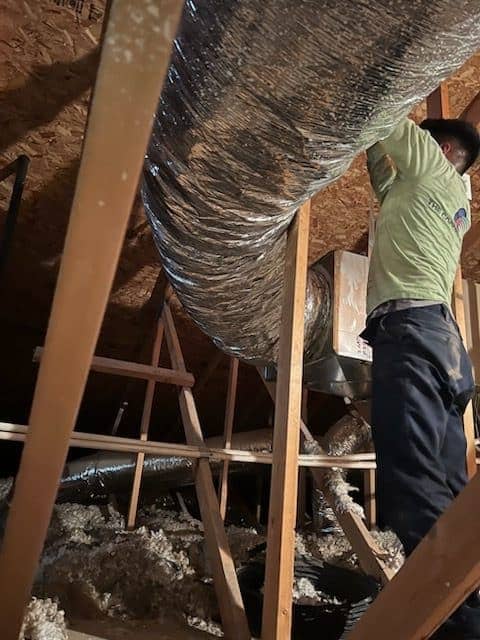
Use a flashlight and a checklist to spot visible leaks, disconnected joints, sagging flex, and missing insulation. Look for torn insulation, foil tape at seams, and large gaps at collars. Take photos and mark suspect locations for the contractor. Do not step between joists in unsafe areas. Small visible holes can be temporarily sealed, but leave major repairs, rooftop work, and commissioning to licensed professionals.What should a final commissioning report show?
A commissioning report should show baseline and final CFM25 leakage, register CFM readings, temperatures, and balancing notes. It must include test conditions, signed technician notes, and photos of critical connections. Keep the report with permit paperwork and warranties. Treat the report as proof that the contractor met the contract's performance targets before you release final payment.Related reading: what to explore next?
Expand your knowledge with these related guides from our experts. Each article provides in‑depth information to help you make informed decisions about your HVAC system and home comfort needs.- Ductwork Installation Costs: Get Accurate Commercial Estimates Now
- Ductwork Cost Per Linear Foot Guide for Las Vegas
- Ductwork Troubleshooting: 5 Fast Checks to Fix Leaks Now
- Ductwork Replacement Cost: Estimate Your Bill
Need ductwork installation las vegas help in Las Vegas?
If you're facing an HVAC emergency in Las Vegas, Henderson, or North Las Vegas, The Cooling Company offers fast, reliable service from licensed technicians. We understand that heating and cooling emergencies don't wait for business hours. Call us now at (702) 567-0707 for emergency service. Our team is ready to help restore your comfort quickly and safely.Las Vegas Ductwork Installation Decision Checklist
Short answer: Use this checklist when planning ductwork installation in Las Vegas:
- Pre-Project Planning: Get Manual J load calculation, Manual D duct design, and baseline duct blaster test before requesting bids
- Material Selection: Choose R-6 minimum insulation for attic ducts, R-8 for rooftop exposure; prefer sealed metal ducts over flex in unconditioned spaces
- Contractor Vetting: Verify Nevada C-21 HVAC license, request local references, require itemized bids with separate line items
- Testing Requirements: Require pre/post duct blaster tests, TAB (testing, adjusting, balancing) reports, and leakage class specifications
- Las Vegas-Specific: Account for rooftop crane access, extreme heat protection, and seasonal demand premiums in summer months
- Maintenance Planning: Schedule annual duct inspections, keep filters clean, and seal visible leaks promptly to prevent energy waste
Prevention and Maintenance Tips for Las Vegas Ductwork
Proper maintenance extends ductwork life and prevents costly replacements in Las Vegas homes:
- Annual Inspections: Have ducts inspected every 1–2 years, especially in attics and crawlspaces where heat and pests cause damage
- Filter Maintenance: Change filters every 1–3 months during peak cooling season to reduce strain on ducts and improve indoor air quality
- Seal Visible Leaks: Use mastic or UL-181-rated foil tape to seal visible gaps at joints, boots, and plenum connections
- Insulation Checks: Inspect insulation annually for compression, damage, or missing sections, especially on rooftop and attic runs
- Professional Cleaning: Schedule professional duct cleaning every 3–5 years to remove dust, debris, and potential allergens
- Monitor Energy Bills: Rising cooling costs without equipment changes often signal duct leakage or insulation problems
Las Vegas homeowners should prioritize duct sealing and insulation upgrades before replacing equipment. Many homes see 20–30% energy savings from proper duct repairs alone, which often pay back faster than new HVAC equipment.
For comprehensive duct installation, sealing, replacement, and indoor air quality services, contact The Cooling Company or call (702) 567-0707. We serve Las Vegas, Henderson, and North Las Vegas with duct blaster testing, Manual D design, and written performance reports.
(ASHRAE Technical Resources)About The Cooling Company
The Cooling Company has been serving the Las Vegas valley with professional HVAC services for over a decade. Our team of licensed, NATE-certified technicians specializes in air conditioning repair, heating system maintenance, and complete HVAC installations. We're committed to providing honest, reliable service with upfront pricing and a 100% satisfaction guarantee on all work performed.- Phone: (702) 567-0707
- Reviews: 4.8/5 stars (780+ reviews) - See reviews
Service Areas
We proudly serve homeowners and businesses throughout the Las Vegas metropolitan area, including Las Vegas, Henderson, and North Las Vegas. Our service technicians are available for same-day appointments in most areas, with emergency service available 24/7 for urgent HVAC issues.Share This Page
Need HVAC Service in Las Vegas?
The Cooling Company provides expert HVAC service throughout Las Vegas, Henderson, and North Las Vegas. Our licensed technicians deliver honest assessments, upfront pricing, and reliable results.
Call (702) 567-0707 or visit ductwork, duct repair, duct cleaning, or duct inspection for details.