

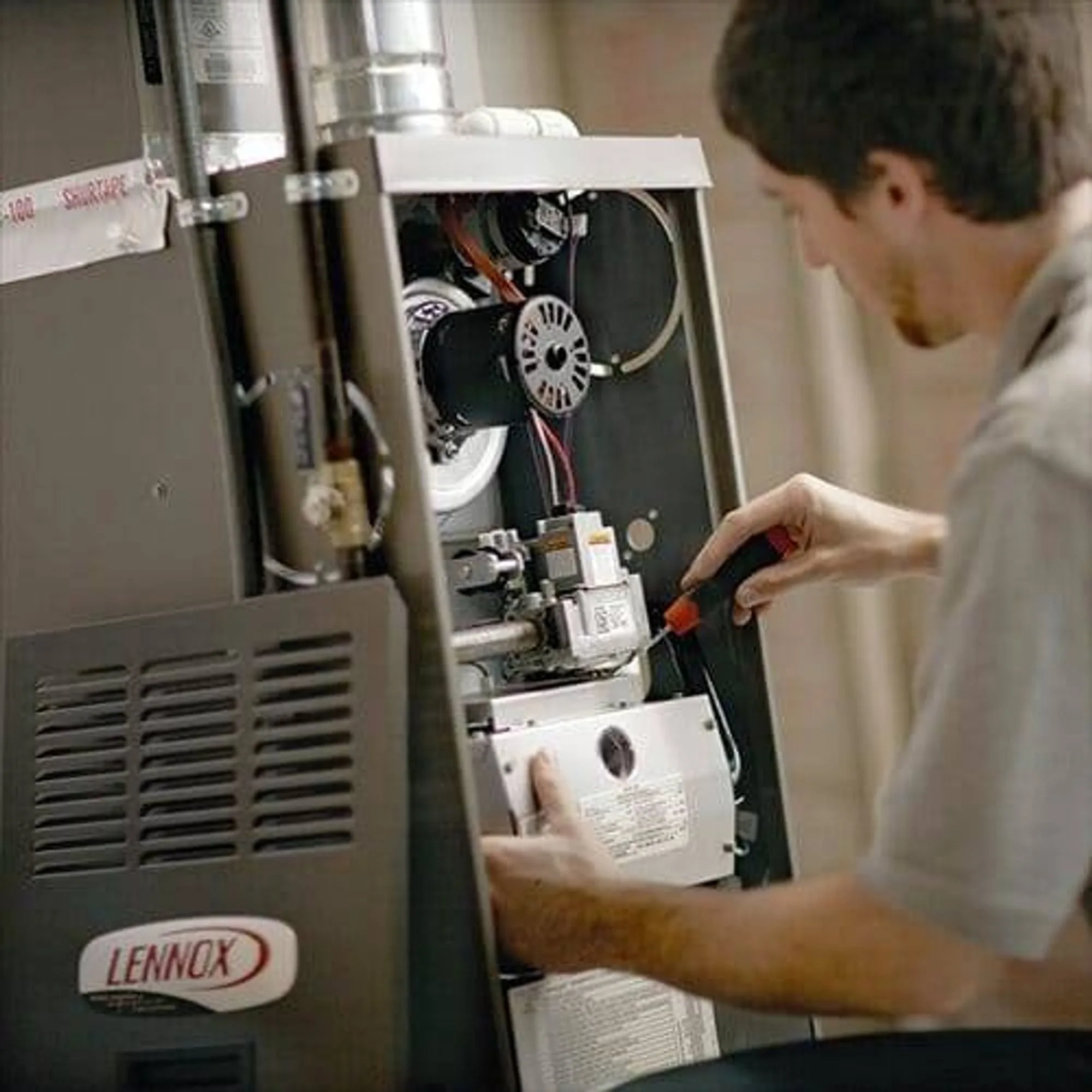
Essential Guide to Your Gas Heater Pilot Assembly
Short answer: The pilot assembly is a small module at the base of your gas furnace or heater that creates the initial flame to ignite the main burners. It consists of four components: a thermocouple, a thermopile, a pilot tube, and an ignitor. In Las Vegas, these parts fail predictably due to desert dust contamination and heat-cycling degradation. When the pilot assembly fails, your heater will not light, will not stay lit, or will fail to call for heat at all. Most pilot assembly repairs run $150-$400 depending on the component, and a qualified technician can diagnose the exact failure point in under 30 minutes.
Need pilot assembly repair? Call (702) 567-0707 or Schedule Now.
What a Pilot Assembly Actually Does
The pilot assembly has one job: prove that a flame exists before allowing gas to flow to the main burners. This is a safety function. Without it, raw natural gas would flood the combustion chamber with no ignition source, creating an explosion hazard. The pilot assembly lights a small flame, verifies that flame is present, and only then signals the gas valve to open the main burners. In older standing-pilot systems (common in Las Vegas homes built before 2000), a small flame burns continuously. In newer intermittent-pilot or direct-spark systems, the pilot lights only when the thermostat calls for heat. Both designs rely on the same core components, and both fail in the same ways in the desert. The pilot assembly connects directly to the gas valve, which is the brain of your furnace's fuel system. The gas valve will not open for the main burners unless the pilot assembly sends a signal confirming flame presence. No signal, no heat. This is the engineered safety that keeps your home from filling with unburned gas.The Four Components of a Pilot Assembly
Every gas heater pilot assembly contains four parts. Each does something different, and each fails in a distinct way.Thermocouple
The thermocouple is a bimetallic sensor — two dissimilar metals joined at a tip — that sits directly in the pilot flame. When heated, it generates a small DC voltage (typically 20-30 millivolts) that holds the gas valve electromagnet open. If the pilot flame goes out, the thermocouple cools, voltage drops to zero, and the gas valve snaps shut within 30-60 seconds. This is the primary safety device on standing-pilot systems. A functioning thermocouple generates 25-35 millivolts when heated by a properly adjusted pilot flame. Below 20 millivolts, most gas valves will not stay open. At 10 millivolts or less, the valve closes immediately. Technicians measure this with a multimeter to determine whether the thermocouple is the failure point or whether the pilot flame itself is inadequate.Thermopile
A thermopile is essentially a stack of thermocouples wired in series. Where a single thermocouple produces 20-30 millivolts, a thermopile generates 250-750 millivolts — enough to power the gas valve's main operator and, in many systems, a wall-mounted thermostat or electronic control module. Thermopiles are standard on millivolt-rated gas furnaces, wall heaters, and gas fireplaces. The thermopile's higher voltage output means it powers more of the system, which also means its failure affects more functions. A weak thermopile does not just prevent the main burners from firing — it can prevent the thermostat from communicating with the gas valve entirely. The heater appears completely dead even though the pilot is lit.Pilot Tube
The pilot tube is a small-diameter aluminum or copper tube (typically 1/8 to 3/16 inch) that carries gas from the gas valve to the pilot burner orifice. The orifice at the end of the tube has a precisely sized opening (usually 0.010 to 0.018 inches in diameter) that meters gas flow to produce a pilot flame of the correct size and shape. This is where Las Vegas conditions become directly relevant. That orifice is smaller than the tip of a sewing needle. Desert dust, calcium deposits from hard water exposure, and insect debris (spider webs in particular) partially or fully block it. A restricted orifice produces a weak, yellow, or intermittent pilot flame that cannot properly heat the thermocouple or thermopile — causing secondary failures that mask the real problem.Ignitor
The ignitor creates the initial spark or hot surface that lights the pilot gas. In standing-pilot systems, this is a piezoelectric ignitor — press a button, it generates a spark. In intermittent-pilot systems, an electronic spark module sends repeated sparks to a ground electrode near the pilot orifice until flame is detected. Direct-ignition systems skip the pilot entirely and use a hot surface ignitor (HSI) — a silicon carbide or silicon nitride element that glows at 1,800-2,500 degrees F to ignite the main burners directly. Hot surface ignitors are fragile. They crack from thermal cycling, from physical contact during filter changes, and from voltage spikes. A cracked HSI will glow unevenly or not at all. An electronic spark module can fail from corroded connections or a damaged spark electrode. Piezoelectric ignitors are the most durable of the three but still wear out after thousands of clicks.Why Pilot Assemblies Fail in Las Vegas
Las Vegas imposes two specific stresses on pilot assemblies that accelerate failure beyond what manufacturers design for: dust contamination and extreme thermal cycling.Dust Contamination
The Mojave Desert generates fine particulate dust that infiltrates every mechanical system in a Las Vegas home. Windstorms in spring and fall deposit caliche dust, calcium carbonate particles, and fine sand into furnace compartments, even with filters in place. This dust accumulates on the pilot orifice, thermocouple tip, thermopile sensor rods, and ignitor surfaces. A thermocouple coated in dust insulates the bimetallic junction from the pilot flame. It still gets hot, but not hot enough to generate adequate voltage. The millivolt reading drops from a healthy 28 mV to 18 mV — technically producing current, but not enough to hold the gas valve open reliably. The furnace lights, runs for a few minutes, then shuts down when the marginal thermocouple signal drops below the valve's holding threshold during a gust of wind or slight gas pressure fluctuation. Pilot orifice contamination is equally insidious. A partially blocked orifice changes the pilot flame from a crisp blue cone to a lazy yellow flame that drifts away from the thermocouple tip. The thermocouple reads low not because it is failing, but because the flame is not reaching it. Replacing the thermocouple — the most common DIY response — does not fix the problem. The new thermocouple reads the same weak flame and produces the same low voltage.Thermocouple and Thermopile Degradation
Thermocouples and thermopiles degrade through oxidation of the bimetallic junction. Every heating cycle exposes the junction to direct flame, which gradually oxidizes the metal surfaces and reduces their ability to generate voltage. In climates with long heating seasons, thermocouples last 8-12 years. In Las Vegas, where the heater sits idle from April through October, the thermal shock of the first lighting in November — from ambient temperature to 1,200 degrees F at the thermocouple tip — accelerates oxidation. Las Vegas thermocouples and thermopiles typically last 5-8 years before output drops below reliable operating thresholds. The months of inactivity also allow moisture from monsoon season (July-September) to corrode connections between the thermocouple lead and the gas valve terminal. Corrosion on a thermocouple connection adds resistance to the circuit, which reduces the already-small millivolt signal. A technician testing the thermocouple at the tip may read 28 mV (good), but testing at the gas valve terminal reads only 15 mV because 13 mV is being lost across a corroded connection.Hard Water and Mineral Deposits
Las Vegas has some of the hardest municipal water in the country — 278 ppm average hardness according to the Las Vegas Valley Water District. While this does not directly affect furnace pilot assemblies, it impacts gas water heater pilot assemblies significantly. Water heaters in Las Vegas develop heavy calcium scale on the pilot assembly components, particularly the thermocouple and thermopile, from condensation and proximity to the tank. Scale buildup on sensor rods reduces heat transfer and causes intermittent failures that are difficult to diagnose without removing and inspecting the assembly.
Troubleshooting Your Pilot Assembly
Before calling for service, there are a few safe checks a homeowner can perform. These do not require opening the gas valve or working on gas lines.Visual Inspection
- Check the pilot flame color and shape. A healthy pilot flame is mostly blue with a small yellow tip. It should be steady, not flickering wildly, and it should directly contact the thermocouple tip. A yellow, orange, or wavering flame indicates a dirty orifice, insufficient gas pressure, or combustion air problems.
- Look for visible dust or debris around the pilot assembly through the furnace viewing window. Heavy dust accumulation on the burner tray and pilot area suggests the orifice is likely contaminated as well.
- Check for soot. Black soot on the pilot assembly or surrounding surfaces indicates incomplete combustion — the pilot is burning rich, which means either too much gas or not enough air. This is not a DIY fix.
Basic Relight Procedure
If your standing pilot has gone out (common after a power outage, gas supply interruption, or strong downdraft through the flue), the relight procedure is printed on the furnace's instruction plate. The general steps are:- Turn the gas valve knob to OFF and wait five full minutes for residual gas to dissipate.
- Turn the knob to PILOT, press and hold the knob down (this manually opens the pilot gas port).
- While holding the knob, press the piezoelectric ignitor button repeatedly until the pilot lights.
- Continue holding the knob for 30-60 seconds after the pilot lights. This gives the thermocouple time to heat up and generate enough voltage to hold the gas valve open on its own.
- Release the knob slowly. If the pilot stays lit, turn the knob to ON. If it goes out, wait two minutes and try again.
What NOT to Do
- Do not attempt to clean the pilot orifice with a needle or wire. The orifice is precision-drilled to a specific diameter. Poking it with metal enlarges the opening, changes the flame characteristics, and creates a safety hazard. Orifice cleaning requires compressed air or replacement.
- Do not bypass or jump the thermocouple connection. The thermocouple is a safety device. Bypassing it means the gas valve will stay open whether or not a flame is present. This is how gas explosions happen.
- Do not use the furnace if you smell gas. If you smell rotten eggs (the mercaptan odorant added to natural gas) near the furnace, turn off the gas supply at the manual shutoff valve, leave the home, and call Southwest Gas at 877-860-6020 or 911.
When to Call a Professional
Pilot assembly diagnosis is straightforward for a trained technician with a multimeter and gas pressure gauge. The following conditions warrant a service call rather than continued troubleshooting:- Pilot lights but main burners do not fire. This indicates a thermopile output issue, a gas valve problem, or a control board failure. Diagnosis requires millivolt testing under load.
- Pilot will not stay lit after 60 seconds. The thermocouple is not generating adequate voltage, the thermocouple connection is corroded, or the gas valve's electromagnet is failing. All three require professional testing to isolate.
- Pilot flame is yellow, orange, or excessively large. Combustion air problems, a cracked heat exchanger drawing flue gas into the burner compartment, or gas pressure issues. A cracked heat exchanger is a carbon monoxide hazard that requires immediate professional evaluation.
- Repeated pilot outages. If the pilot goes out more than twice in a heating season, something is causing it — downdraft from an improperly terminated flue, gas pressure fluctuations, or a degrading thermocouple. A technician can identify the pattern.
- Any gas odor. Gas leaks at the pilot assembly, gas valve, or supply line connections require professional leak testing with a combustible gas detector. Never attempt to tighten gas fittings without proper tools, thread sealant rated for gas, and a leak test afterward.
- The furnace is more than 15 years old. Pilot assembly components on aging furnaces often fail in cascading fashion — one repair leads to another within weeks. A technician can assess whether individual component replacement makes sense or whether the system has reached the point where a new furnace is the better investment. Visit our furnace repair page for more on diagnostic and repair services.
Repair Costs for Pilot Assembly Components
Pilot assembly repairs in Las Vegas typically fall into these ranges:- Thermocouple replacement: $100-$200 (part is $15-$40; labor and diagnostic fee make up the balance)
- Thermopile replacement: $150-$300 (parts are more expensive, and thermopile systems require load testing to confirm the valve is not also failing)
- Pilot orifice cleaning or replacement: $100-$175 (usually included in a diagnostic/tune-up visit)
- Hot surface ignitor replacement: $125-$250 (the part itself runs $30-$80 depending on the furnace model)
- Complete pilot assembly replacement: $200-$400 (when multiple components have failed or the assembly is corroded beyond individual repair)
- Gas valve replacement: $300-$600 (if testing reveals the gas valve itself is the failure point rather than the pilot assembly)
Prevention: Keeping Your Pilot Assembly Reliable in the Desert
- Schedule a heating tune-up every fall. October or November, before the first cold night. The technician will clean the pilot assembly, test component output, and catch problems while scheduling is flexible rather than during a January cold snap when every furnace company in the valley is booked out three days.
- Change your air filter every 30-45 days during heating season. A dirty filter does not directly affect the pilot assembly, but it restricts airflow, causing the heat exchanger to overheat and the high-limit switch to cycle the furnace off and on. This rapid cycling accelerates thermal stress on the thermocouple and thermopile.
- Keep the furnace compartment clean. If your furnace is in the garage (common in Las Vegas), sweep or vacuum around the unit regularly. Dust, leaves, and debris from the garage floor get pulled into the burner compartment through the combustion air opening.
- Run a heating cycle in early October. Do not wait for the first freezing night to find out the pilot assembly failed. Switch the thermostat to heat, set it a few degrees above current room temperature, and verify that the heater lights and runs a full cycle. If it does not, you have weeks to schedule service instead of hours.
Frequently Asked Questions
How long does a thermocouple last in a Las Vegas furnace?
Typically 5-8 years in the Las Vegas valley, shorter than the 8-12 year national average. The combination of 6-7 months of inactivity followed by rapid heating in fall, plus desert dust accumulation on the bimetallic junction, accelerates oxidation and voltage degradation. If your thermocouple is more than 5 years old and your pilot has become unreliable, replacement is the most cost-effective fix — the part itself costs $15-$40, and replacement takes about 20 minutes.
Why does my pilot light keep going out when it is windy?
Wind-related pilot outages in Las Vegas usually point to a flue termination problem rather than a pilot assembly failure. If the furnace flue cap is damaged, missing, or improperly installed, wind can push a downdraft into the combustion chamber and blow out the pilot. High winds during Las Vegas spring windstorms (40-60 mph gusts are common in March and April) can overwhelm even properly terminated flues. A technician can evaluate the flue termination and, if the pilot flame itself is weak due to a dirty orifice or degraded thermocouple, address both issues to prevent future outages.
Can I replace a thermocouple myself?
Physically, thermocouple replacement is straightforward — it is held in place by a bracket and connects to the gas valve with a compression fitting. However, working near gas connections carries risk if you are not experienced. An improperly seated thermocouple will read low and cause the same pilot failure you are trying to fix. An overtightened or cross-threaded compression fitting at the gas valve can crack the valve body and create a gas leak. If you are comfortable working around gas appliances and own a multimeter to verify the replacement output, it is a reasonable DIY task. If you have any doubt, the $100-$200 for professional replacement buys a leak test and confirmed millivolt reading.
What is the difference between a thermocouple and a thermopile?
A thermocouple is a single bimetallic sensor that generates 20-30 millivolts — just enough to hold the gas valve's safety electromagnet open. A thermopile is a series of thermocouples bundled together that generates 250-750 millivolts, enough to power the gas valve's main operator and often the thermostat or control circuit as well. Standing-pilot furnaces with basic gas valves use a thermocouple. Millivolt-rated wall heaters, fireplaces, and furnaces with electronic controls use a thermopile. The diagnostic approach is the same (measure voltage output), but thermopile replacement costs more because the part is more expensive and the system requires load testing after installation.
My pilot is lit but the furnace will not kick on. What is wrong?
If the pilot is burning but the main burners do not ignite when the thermostat calls for heat, the most likely cause is a weak thermopile that cannot generate enough voltage to open the main gas valve under load. A thermopile may produce adequate voltage at open circuit (no load) but drop below the gas valve's operating threshold when the valve's electromagnet draws current. This is diagnosed by measuring thermopile output with the gas valve connected (under load). Other possibilities include a failed thermostat, a broken wire between the thermostat and gas valve, or the gas valve's main operator itself. A technician can isolate the failure point in about 15-20 minutes with a multimeter.
Keep Your Heater Reliable This Winter
The Cooling Company provides complete furnace repair and heating services throughout the Las Vegas valley. Our NATE-certified technicians diagnose pilot assembly failures with millivolt testing and gas pressure measurement — not guesswork. We carry the most common thermocouples, thermopiles, ignitors, and pilot assemblies on our trucks so most repairs are completed in a single visit.
As a Lennox Premier Dealer and BBB A+ rated company serving Las Vegas since 2011 with 55+ years of combined technician experience, we provide honest assessments, upfront pricing, and a 100% satisfaction guarantee on all work.
We serve Summerlin, Henderson, North Las Vegas, Green Valley, Centennial Hills, Mountains Edge, Aliante, Anthem, Southern Highlands, Skye Canyon, Cadence, and all Las Vegas valley communities.
Call (702) 567-0707 to schedule a heating diagnostic or fall tune-up, or visit our maintenance plans page to protect your system year-round.