


Short answer: Regular filter changes, seasonal tune-ups, keeping the outdoor unit clear, and scheduling professional maintenance extend your AC's life by years and reduce repair costs. In Las Vegas, where systems run 6+ months per year, proactive care is essential.
Replace Filters as Needed
Switching out your air conditioner’s filters regularly is a swift yet critical task that can significantly improve the unit’s efficiency. A clean filter ensures an unimpeded airflow, enabling your unit to work less strenuously and thereby avoiding early repairs. Your air filter must be inspected monthly and replaced as necessary. Generally, air filter replacements are conveniently available at your local grocery store at a small cost.
Clean Air Ducts and Other Components Regularly
Dirty air ducts or evaporator coils can create inefficiency, causing your air conditioner to drain more electricity than needed to maintain your optimal temperature. By monthly cleaning your air ducts, coils, and fan blades, you can prolong the life of your air conditioner and save money on your energy bills. On top of this, ensure to lubricate mechanical parts and tighten any loose electrical connections to keep your device running smoothly.Trim Bushes and Shrubs Around the Unit & Regular Maintenance
In the case of a central air conditioning unit, the external portion should be kept clear of any obstructions like shrubs or debris that may hinder effective airflow and cause the unit to overheat. Also, ensure to regularly check the condensate drain to prevent any water accumulation. Over time, poor insulation and the accumulation of condensate can cause damage to your air conditioner resulting in unnecessary repair costs. Once you’ve successfully followed all the recommended steps and find you’re still in need of maintenance, basic A/C repair or replacement, work on your air conditioning system contact The Cooling Company online today or at (702) 567-0707.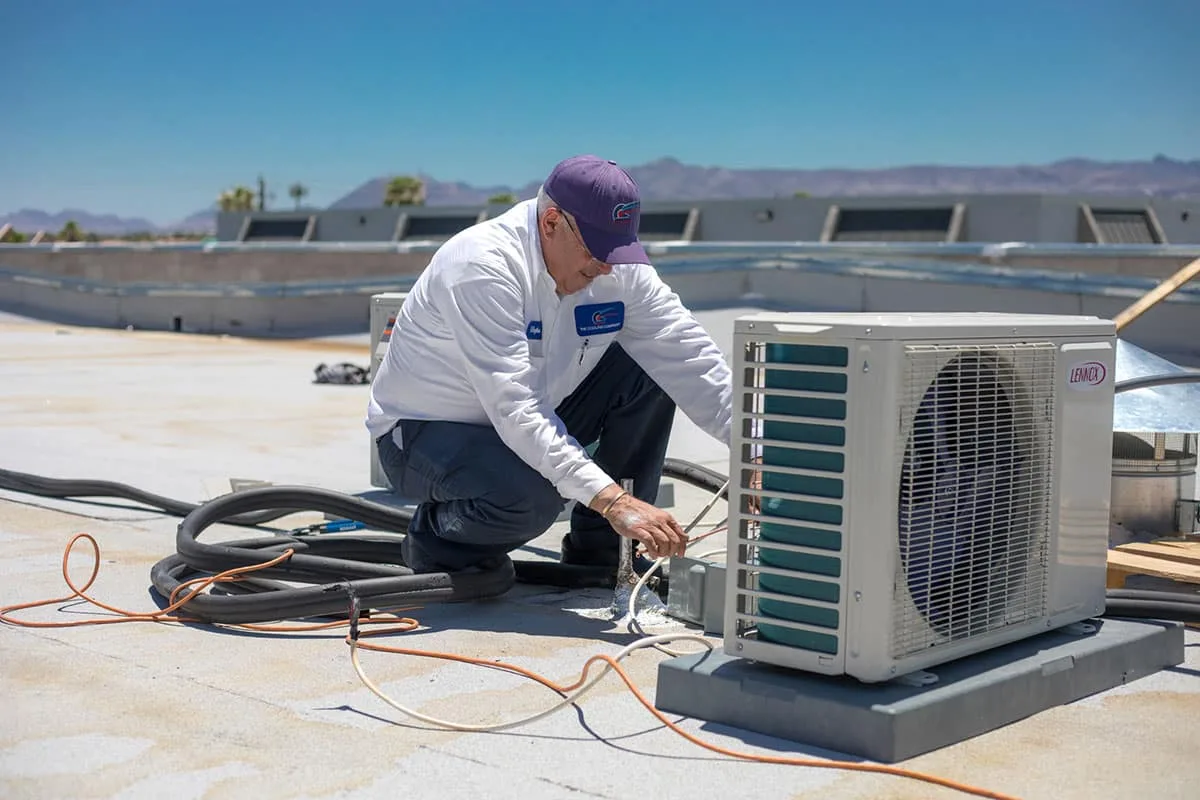
Seasonal AC Maintenance Checklist for Las Vegas Homeowners
Las Vegas has long, hot summers and dusty conditions that require a seasonal approach. This checklist helps you prepare for peak cooling months and protect your system year-round.- Spring (March–May)
- Schedule professional tune-up and refrigerant check
- Clean condenser fins and clear debris from outdoor unit
- Replace filters and test thermostat programming
- Summer (June–September)
- Inspect filters monthly; replace more often during peak heat
- Keep blinds and shades closed during hottest hours to reduce load
- Use ceiling fans to raise thermostat setpoint without losing comfort
- Monsoon and Fall (July–October)
- Inspect for dust and water intrusion after storms
- Clean or replace filters immediately after heavy dust events
- Check condensate drains after heavy rains
- Winter (November–February)
- Turn off outdoor condensate and cover unit only if recommended by technician
- Run system briefly monthly to keep parts lubricated on mild days
- Plan any major repairs or replacements before spring
- Keep a simple maintenance log with dates for filter changes, service visits, and unusual performance notes. This log helps technicians diagnose long-term issues and preserves warranty documentation.
- If you live in a newer development or a high-dust area, consider upgrading to higher-efficiency filters and scheduling more frequent checks.
For guidance on duct upgrades that improve airflow and longevity, see our ductwork installation guide.
Keeping filters clean is one of the fastest, cheapest ways to reduce wear on your AC and improve indoor air quality. In Las Vegas, seasonal dust, desert pollen, and occasional wildfire smoke mean filters clog faster than in many other climates. A clogged filter forces the blower motor to work harder, raises energy use, and shortens component life.How often to check and replace
- Inspect monthly during summer and monsoon months (June through September), and at least every 2-3 months the rest of the year.
- Replace disposable fiberglass or pleated filters every 1 to 3 months depending on:
- Home size and occupancy
- Pets that shed
- Recent dust or construction
- Filter MERV rating (higher MERV traps more particles but can restrict flow if not sized correctly)
Choosing the right filter
- Use the manufacturer-recommended filter size and MERV rating. For most Las Vegas homes, a MERV 8 to 11 balances filtration and airflow.
- For households with allergy sufferers or smoke exposure, consider higher MERV or HEPA in whole-house systems, but consult a pro first to avoid airflow restriction.
Quick filter checklist
- Check filter visually each month.
- Replace if discolored, dusty, or airflow looks restricted.
- Write the replacement date on the filter frame to track life.
- Keep 2–3 replacement filters on hand during summer.
Expert tip and safety note
- If you find your filter needs replacement every few weeks, there may be an underlying airflow or duct issue. Consider a duct inspection or professional tune-up.
- Always turn off the HVAC power at the breaker before accessing internal components or changing deep-mounted filters.
For issues that might point to thermostat or sensor problems, see our AC sensor troubleshooting guide for same-day repair options.
Clean Air Ducts and Other Components Regularly
Clean ducts and key components keep your system efficient and protect indoor air quality. In Las Vegas, dust, sand, and seasonal pollen can settle in ductwork and on coils, especially in neighborhoods with frequent construction like Summerlin and Henderson.What to clean and when
- Evaporator coils: Inspect and clean at least once per year. Dirty coils reduce heat transfer and raise run time.
- Condenser fins: Clear debris and straighten bent fins in spring and after storms.
- Blower wheel and cabinet: Clean during annual tune-ups to remove dust build-up that stresses the motor.
- Ducts: Consider professional duct cleaning every 3–5 years, or sooner with pets, smoke, or recent remodeling.
DIY vs professional cleaning
- DIY: You can gently clean accessible return grilles, replace filters, and vacuum visible dust in vents.
- Professional: Hire a certified duct cleaning service when you suspect mold, heavy dust, or persistent odors. Professionals use tools that protect duct seals and airflow.
Local climate note
- Las Vegas monsoon season (July-August) can deposit fine sand and pollen into outdoor units and return vents. Schedule a post-monsoon inspection to remove stubborn deposits.
Safety and efficiency tips
- Always shut off power before reaching into vents or the indoor unit.
- Avoid high-pressure washing indoor coils unless handled by a technician; improper cleaning can damage fins and coatings.
- If refrigerant performance seems low after cleaning, contact a pro - refrigerant handling requires EPA-certified technicians.
If you suspect airflow or duct problems, read our duct cleaning guide for Las Vegas homeowners.
When to Call a Pro: Signs You Need Repair or Replacement
Even with great maintenance, some problems require a licensed technician. In Las Vegas heat, acting quickly can prevent a failed compressor or costly emergency replacement.- Call now if you notice:
- Warm air from vents during a cooling cycle
- Strong buzzing or grinding noises from the outdoor unit
- Rapidly rising energy bills without a change in use
- Water pooling near indoor unit or repeated condensate drain clogs
- Short cycling (AC turns on and off rapidly)
- Replacement indicators:
- Unit older than 12–15 years with declining efficiency
- Frequent major repairs exceeding 50% of replacement cost
- R-22 refrigerant systems (being phased out), which are costly to recharge
- Turn off the unit if you smell burning or see smoke, then call for emergency repair.
- Take photos or short videos of abnormal noises or displays to share with technicians.
- Ask for a diagnostic and a clear repair vs replacement estimate that includes energy-savings comparisons.
- The Cooling Company offers same-day diagnostics and emergency repairs in Las Vegas and surrounding areas. For sensor-specific problems that commonly cause short cycling or inaccurate temps, see our AC sensor troubleshooting guide.
- For immediate emergencies, follow our step-by-step emergency AC repair guide before the technician arrives.
- Never attempt refrigerant service or high-voltage electrical repairs yourself. These require certified technicians and proper equipment.
Outdoor unit clearance
- Keep at least 2–3 feet of clearance on all sides and 5 feet above the unit.
- Remove leaves, branches, and grass clippings after lawn work or windy days to maintain airflow.
- Do not store items, mulch, or compost near the condenser - moisture and debris shorten compressor life.
Regular maintenance schedule
- Quarterly or semi-annual homeowner checks:
- Clear visible debris from the outdoor unit
- Ensure base is level and free from standing water
- Check condensate drain for clogs
- Annual professional tune-up:
- Refrigerant level check and leak inspection
- Electrical connection tightening
- Motor lubrication where applicable
- Thermostat calibration and sensor checks
Pre-summer inspection checklist
- Verify filter replaced within last month
- Clear 2–3 feet around condenser
- Clean return vents and check for loose registers
- Test thermostat and programming (see thermostat placement tips)
Expert tip
- Proper thermostat placement affects run cycles and compressor strain. Avoid placing thermostats near windows or direct sunlight. For guidance on ideal locations in Las Vegas homes, see our thermostat placement guide.
For urgent issues that persist after basic maintenance, consult our emergency AC repair guide to know when to act quickly.
Cost Drivers: What Affects AC Maintenance Costs in Las Vegas
Short answer: Understanding maintenance costs helps you budget and prioritize. In Las Vegas, several factors influence what you'll pay:
- Service frequency: Annual tune-ups typically cost $75-$200, while emergency repairs can range from $150-$500+ depending on the issue
- System age: Older units (12+ years) may need more frequent service and parts replacements
- Filter quality: Basic filters cost $5-$15, while high-efficiency filters range $20-$50 but last longer
- Duct condition: Duct cleaning or sealing adds $300-$1,500 but improves efficiency significantly
- Seasonal demand: Spring and fall tune-ups often cost less than emergency summer service
Prevention pays: Regular maintenance typically costs 10-20% of what emergency repairs cost, and can prevent premature replacement that runs $3,000-$10,000+.
Ready to Extend Your AC's Life? Let The Cooling Company Help
Need HVAC Service in Las Vegas?
The Cooling Company provides expert HVAC service throughout Las Vegas, Henderson, and North Las Vegas. Our licensed technicians deliver honest assessments, upfront pricing, and reliable results.
Call (702) 567-0707 or visit AC repair, maintenance, heating, or installation for details.