
Health Risks of Mold Exposure and Why Remediation Matters in Las Vegas
Short answer: Mold grows faster in Las Vegas homes than most residents expect. Monsoon humidity spikes from July through September push indoor moisture levels well above the EPA's 60% threshold, and AC condensate drain problems create standing water that feeds mold colonies within 24-48 hours. Exposure causes respiratory inflammation, allergic reactions, and in severe cases toxic responses from mycotoxin-producing species like Stachybotrys (black mold). Your HVAC system is both the primary defense and the primary distribution method — a contaminated air handler will push mold spores into every room, every time the system cycles. Professional remediation becomes necessary when mold covers more than 10 square feet or has colonized inside ductwork or HVAC components.
Concerned about mold in your home? Call (702) 567-0707 or Schedule Now.
How Mold Grows in Las Vegas Homes
Mold needs four things: moisture, a food source (organic material like drywall paper, dust, or insulation), temperatures between 60-80 degrees F, and darkness. Las Vegas homes provide all four, particularly inside wall cavities, air handlers, and ductwork where conditions stay stable regardless of what the outdoor thermometer reads.Monsoon Season Humidity Spikes
From July through September, the North American Monsoon pulls tropical moisture from the Gulf of California directly into the Las Vegas valley. Outdoor humidity that sits at 8-15% in June can spike to 40-60% during monsoon events, sometimes higher during active storm cells. The Clark County Department of Environment and Sustainability monitors these spikes, and peak dew points regularly exceed 55 degrees F during monsoon surges — enough to cause condensation on cold surfaces inside air-conditioned homes. When you run your AC at 76 degrees F and outdoor humidity hits 50%, the temperature differential between cooled interior surfaces and warm, moist air creates condensation on supply registers, cold-water pipes, and the exterior of ductwork running through unconditioned attic space. That condensation soaks into insulation, drywall, and ceiling tiles. Within 24-48 hours, mold colonization begins. Within 7-10 days, visible growth appears. Most homeowners never see it because it is happening inside walls and above ceilings.AC Condensate Drain Failures
Your air conditioner does not just cool air — it removes moisture. A residential AC system in Las Vegas extracts 5-20 gallons of water per day during monsoon season, all of which exits through the condensate drain line. That line is a 3/4-inch PVC pipe, and it is the single most common failure point for mold-related water damage in valley homes. Condensate drains clog from algae growth, dust accumulation, and insect nesting (mud dauber wasps are notorious for plugging drain lines in the desert). When the drain clogs, water backs up into the drain pan, overflows into the air handler cabinet, saturates the blower compartment insulation, and eventually leaks into the ceiling or wall cavity below. Technicians at The Cooling Company clear clogged condensate drains on roughly 30% of summer service calls. Many homeowners do not realize there is a problem until they see a water stain on the ceiling or smell something musty when the AC kicks on.Evaporative Cooler Cross-Contamination
Approximately 15-20% of Las Vegas homes still use evaporative coolers (swamp coolers), either as a primary system or supplemental unit. These systems work by passing air through water-saturated pads, adding moisture to every cubic foot of air they push into the home. During monsoon season, when outdoor humidity is already elevated, an evaporative cooler can push indoor relative humidity above 70% — deep into the mold growth zone. Homes that have transitioned from evaporative cooling to refrigerated AC sometimes retain the old ductwork, which may harbor residual moisture damage and dormant mold colonies that reactivate when humidity rises. If your home was built before 1995, there is a reasonable chance it was originally equipped with evaporative cooling.Poor Drainage and Stucco Failures
Las Vegas soil is primarily caliche — a calcium carbonate hardpan that does not absorb water. When monsoon rains dump 1-2 inches in 30 minutes (a common event), water pools against foundations, seeps through stucco cracks, and enters wall cavities through weep screed failures. The desert sun bakes stucco all summer, causing expansion cracks that become water entry points during storms. Foundation-level moisture intrusion feeds mold colonies inside wall cavities that can grow for months before anyone smells them.Health Effects of Mold Exposure
The health impact of mold exposure depends on three variables: the type of mold, the concentration of airborne spores, and the individual's immune status. The CDC, EPA, and WHO all classify indoor mold exposure as a significant health hazard, and the evidence base has grown substantially over the past two decades.Respiratory Effects
Inhaling mold spores triggers inflammation in the airways regardless of whether you have a pre-existing condition. The Institute of Medicine (now the National Academy of Medicine) concluded in a landmark 2004 report that sufficient evidence links indoor mold exposure to upper respiratory tract symptoms, coughing, wheezing, and asthma symptoms in sensitized individuals. Common respiratory responses to mold exposure include:- Persistent cough and throat irritation that does not respond to typical cold or allergy medications
- Wheezing and shortness of breath, particularly when the HVAC system is running
- Sinus congestion and post-nasal drip that worsens indoors and improves when you leave the home
- Asthma exacerbation — the WHO estimates that indoor dampness and mold increase asthma risk by 30-50%
- Hypersensitivity pneumonitis — a serious inflammatory lung condition caused by repeated inhalation of mold spores in sensitized individuals
Allergic Reactions
Approximately 10% of the U.S. population has mold-specific IgE antibodies, meaning their immune system is sensitized to mold proteins. For these individuals, mold exposure triggers a classic allergic response: sneezing, runny nose, itchy/watery eyes, and skin rashes. The most common allergenic molds found in Las Vegas homes are Alternaria, Cladosporium, Aspergillus, and Penicillium — all of which thrive on the dust-and-moisture combination present in desert HVAC systems. Children are particularly vulnerable. A study published in the Annals of Allergy, Asthma & Immunology found that children exposed to indoor mold during the first year of life had a significantly higher risk of developing asthma by age seven. In Las Vegas, where families move into newly built homes that may have trapped construction moisture, early childhood mold exposure is a real concern.Toxic Mold Exposure (Mycotoxins)
Certain mold species produce mycotoxins — secondary metabolites that are toxic to humans. Stachybotrys chartarum (black mold) is the most widely discussed, but Aspergillus flavus, Aspergillus fumigatus, and certain Penicillium species also produce mycotoxins. These molds typically require sustained moisture — the kind created by an undetected condensate leak or chronic wall cavity moisture intrusion. Mycotoxin exposure symptoms go beyond respiratory effects and can include:- Chronic fatigue and headaches
- Cognitive difficulties — difficulty concentrating, memory problems
- Nausea and digestive issues
- Skin irritation and rashes
- Immune suppression — increased susceptibility to infections
How Your HVAC System Spreads Mold
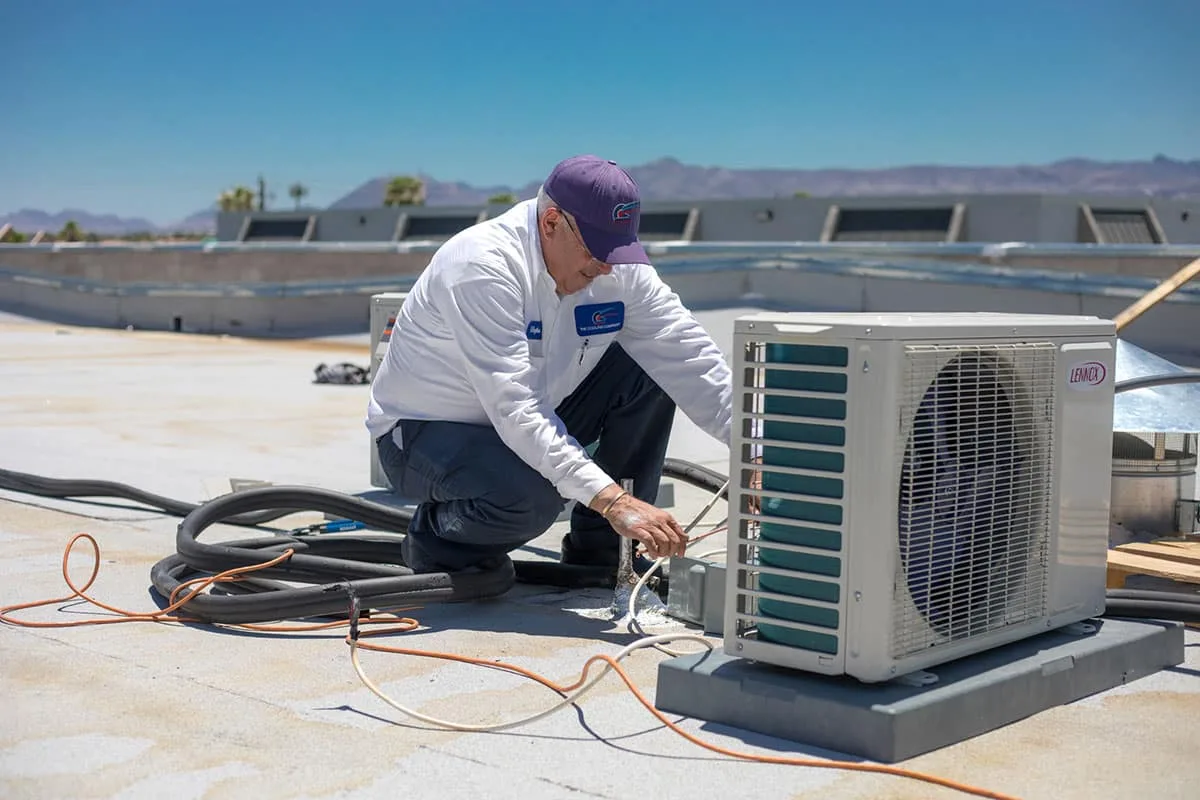
Your HVAC system circulates the entire volume of air in your home 5-7 times per day. If mold is growing anywhere in that air path — on the evaporator coil, in the drain pan, on duct insulation, or in the blower compartment — spores are being distributed to every room, every supply register, every surface in your home.The Evaporator Coil: Ground Zero
The evaporator coil is the most common site for mold growth in a Las Vegas HVAC system. It stays wet during operation as it removes moisture from the air, it sits in a dark cabinet, and it accumulates a layer of dust and organic debris that serves as a food source. During monsoon season, when the coil is working harder to dehumidify incoming air, it stays wet for longer periods and the drain pan may not empty fast enough. Mold colonizes the coil fins, the drain pan, and the surrounding insulation. Every time the blower runs, it pushes air across that contaminated coil and sends spores through the ductwork.Ductwork Contamination
Ductwork in Las Vegas attics is subject to extreme temperature differentials. Attic temperatures exceed 150 degrees F in summer, while the air inside the ducts may be 55-60 degrees F. This differential causes condensation on the exterior of duct surfaces, and any gaps in duct insulation or vapor barriers allow that moisture to reach the duct interior. Flex duct, which is standard in most Las Vegas residential construction, has a fiberglass insulation layer that absorbs moisture and provides an ideal growth medium for mold. Once mold establishes in ductwork, it is extremely difficult to eliminate without professional duct cleaning or replacement. The fiberglass interior of flex duct cannot be effectively cleaned — heavily contaminated sections must be replaced.Return Air Pathway
Mold growing in wall cavities, crawl spaces, or garage-adjacent areas can enter the HVAC system through the return air pathway. If your return air duct has gaps, disconnected joints, or runs through a contaminated space, it pulls mold spores directly into the air handler and distributes them throughout the home. This is one reason a musty smell that appears only when the AC runs is such a strong indicator of mold contamination.Prevention Through Proper HVAC Maintenance
The most effective mold prevention strategy in a Las Vegas home is keeping your HVAC system clean, dry, and properly maintained. The system that can spread mold is the same system that prevents it when functioning correctly.Condensate Drain Maintenance
The single highest-impact maintenance task for mold prevention is keeping the condensate drain clear. During your twice-annual AC maintenance visit, a technician should flush the drain line, inspect the drain pan for cracks or biofilm, and verify that the safety float switch (which shuts off the system if the pan overflows) is operational. Between professional visits, pouring a cup of distilled white vinegar down the drain line monthly during cooling season helps prevent algae buildup.Coil Cleaning
Professional coil cleaning removes the dust-and-moisture layer that feeds mold. In Las Vegas, where dust accumulation on evaporator coils is accelerated by the desert environment, annual coil cleaning should be considered mandatory rather than optional. A clean coil drains faster, dehumidifies more effectively, and denies mold the organic food source it needs.Filter Discipline
A MERV 11-13 filter changed every 30-45 days captures mold spores before they reach the evaporator coil and ductwork. This is particularly important during monsoon season when outdoor mold counts spike along with humidity. A clogged filter does not just reduce airflow — it allows spores to bypass the filter media entirely through gaps created by the pressure differential.Humidity Monitoring
Install a hygrometer (available for $10-30 at any hardware store) in your main living area and check it during monsoon season. If indoor humidity consistently exceeds 55%, your AC system may be undersized for dehumidification, your home may have air leaks allowing humid outdoor air to infiltrate, or your evaporator coil may need cleaning to restore dehumidification capacity. A properly functioning AC system in Las Vegas should maintain indoor humidity between 40-55% even during monsoon events.UV Germicidal Lights
UV-C lights installed near the evaporator coil kill mold spores before they colonize the coil surface. This is one of the most effective and lowest-maintenance solutions for mold prevention in HVAC systems. Cost runs $400-900 installed, with annual bulb replacement at $80-150. For homes that have had previous mold issues or households with allergy or asthma sufferers, UV lights provide continuous protection. See our indoor air quality page for the full range of options.When Professional Remediation Is Necessary
Not every mold situation requires professional remediation. Small surface mold on bathroom tile or around a window frame can be cleaned with a detergent solution. But several conditions demand professional intervention:- Mold covering more than 10 square feet — the EPA threshold for recommending professional remediation
- Mold inside HVAC ductwork or the air handler — requires specialized cleaning equipment and containment procedures to prevent spore dispersal during removal
- Mold resulting from contaminated water (sewage backup, flood water) — Category 3 water damage requires professional handling due to bacterial contamination
- Mold behind walls or above ceilings — removal requires demolition and containment that prevents cross-contamination to clean areas
- Occupants with health symptoms — if anyone in the household is experiencing respiratory symptoms, allergic reactions, or other health effects consistent with mold exposure, professional assessment and remediation should not be delayed
- Visible mold after a previous cleanup attempt — recurrence means the moisture source was not eliminated, and a professional needs to identify and resolve the root cause
The Connection Between HVAC Maintenance and Mold Prevention
Every mold problem in a Las Vegas home traces back to a moisture source. In most cases, that source is directly connected to the HVAC system — a clogged condensate drain, a dirty evaporator coil that is not dehumidifying properly, leaking ductwork in the attic, or an oversized system that short-cycles and never runs long enough to remove moisture from the air. Twice-annual professional AC maintenance addresses every one of these failure points before they become mold problems. The cost of a maintenance visit — typically $80-150 — is negligible compared to the cost of mold remediation, medical treatment for mold-related illness, or the disruption of having sections of your home torn apart to remove contaminated materials. If you smell something musty when your AC runs, if you see water stains near supply registers or on ceilings below the air handler, if your allergies have worsened since monsoon season started, or if you have not had your system professionally maintained in more than a year, the time to act is now — not after the mold has spread.Frequently Asked Questions
Can mold really grow in Las Vegas when it is so dry?
Yes. Mold does not need a humid climate — it needs localized moisture. In Las Vegas, AC condensate leaks, monsoon humidity spikes, poor drainage against foundations, and evaporative cooler moisture all create conditions where mold thrives inside wall cavities, HVAC systems, and attic spaces. The desert dryness actually makes the problem harder to detect because mold grows in hidden, moisture-concentrated areas rather than on visible surfaces.
How do I know if mold in my HVAC system is making me sick?
The most telling pattern is symptoms that worsen when you are home and your HVAC system is running, then improve when you leave. Persistent cough, sinus congestion, wheezing, headaches, and eye irritation that follow this pattern strongly suggest mold in the air distribution system. A musty or earthy smell when the AC cycles on is another strong indicator. If multiple household members develop similar symptoms during monsoon season, have your system inspected promptly.
How often should I have my AC maintained to prevent mold in Las Vegas?
Twice per year — once before cooling season (April-May) and once before heating season (October-November). The pre-summer visit is critical for mold prevention because it includes condensate drain flushing, coil cleaning, and drain pan inspection. During monsoon season (July-September), check your condensate drain monthly and pour a cup of white vinegar through it to prevent algae buildup that causes clogs.
What does professional mold remediation in Las Vegas cost?
General mold remediation ranges from $1,500 to $6,000 depending on the area affected and materials involved. HVAC-specific remediation — evaporator coil treatment, drain pan replacement, and duct cleaning or replacement — typically runs $500-$3,000. A professional mold inspection and air quality test costs $300-$600 and is recommended before committing to remediation so you know exactly what you are dealing with.
Should I test for mold or just remediate?
If you can see mold or smell it, testing is not required to begin remediation — you already know the problem exists. Testing is valuable when you suspect hidden mold (symptoms but no visible growth), when you need documentation for insurance claims or real estate transactions, or when you want to verify that remediation was successful. Air quality testing after remediation should show spore counts at or below outdoor baseline levels.
Protect Your Home and Health from Mold
The Cooling Company provides comprehensive indoor air quality services for Las Vegas homes, including condensate drain maintenance, evaporator coil cleaning, UV germicidal light installation, professional duct cleaning, and air purification systems that stop mold before it starts. Our NATE-certified technicians know exactly where mold hides in desert HVAC systems and how to eliminate the moisture conditions that feed it.
As a Lennox Premier Dealer and BBB A+ rated company serving the Las Vegas valley since 2011 with 55+ years of combined technician experience, we provide honest assessments, upfront pricing, and a 100% satisfaction guarantee on all work.
We serve Summerlin, Henderson, North Las Vegas, Green Valley, Centennial Hills, Mountains Edge, Aliante, Anthem, Southern Highlands, Skye Canyon, Cadence, and all Las Vegas valley communities.
Call (702) 567-0707 to schedule an HVAC inspection and indoor air quality assessment, or visit our AC maintenance page to keep your system clean, dry, and mold-free year-round.