


Short answer: For Las Vegas homeowners looking to understand how winter energy use affects their bills and discover practical ways to save, check out our Guide: Heating Costs in Las Vegas: What Affects Your Bill and How to Lower It.
Understanding heater energy use
Heating is not just another appliance load. The IEA notes that space and water heating together use almost half of global building energy, which means small choices in heater sizing and operation have outsized impact compared with lighting or electronics (IEA building heating data). For homeowners, the practical question is how to translate technical labels-wattage, BTUs, AFUE, SEER2, HSPF2-into real-world comfort and cost. This section breaks those terms into plain language and shows how they interact with climate and home characteristics.How heaters convert energy into heat
Most heaters fall into a few conversion patterns. Electric resistance heaters push current through metal elements that glow hot; every unit of electrical energy becomes heat in the room. Gas furnaces and boilers burn fuel, then transfer heat from hot combustion gases to air or water. Heat pumps work differently: they move existing heat from outdoors to indoors, acting like an air conditioner in reverse. A practical example helps: a basic plug-in space heater turns electrical energy directly into heat in the bedroom, while a gas furnace in the garage burns fuel, then uses a blower to deliver warm air to every room. Understanding which conversion pathway the home relies on is the first step in comparing energy use across systems.What watts mean for heater output
Wattage is the rate at which a heater uses power. A higher-wattage space heater draws more electricity each hour than a lower-wattage model, regardless of brand or marketing. Many homeowners assume “bigger wattage is better,” yet a 1,500-watt portable heater running in a small, leaky room can burn through energy while still leaving occupants cold. A more efficient setup might be a lower-wattage heater in a well-sealed room that holds the heat. A useful mental model is to treat watts like the width of a faucet: the wider it is, the faster energy flows, and the faster the bill rises if left fully open for long periods.Why BTUs matter for heating capacity
BTU (British Thermal Unit) measures heat output rather than power input. Capacity ratings in BTU per hour indicate how much warming a system can deliver. For example, a heater with twice the BTU capacity of another should, in principle, warm a similar space in roughly half the time, assuming similar efficiency and insulation. BTU ratings are crucial when sizing a furnace or hydronic boiler so that it can keep up with the coldest nights without constantly cycling on and off. In practical terms, a homeowner upgrading from an undersized heater to a properly sized one will often notice fewer cold spots and a system that runs more steadily instead of short bursts, which is typically more efficient and gentler on equipment.How efficiency ratings affect energy use
Efficiency ratings describe how much of the input energy becomes usable heat. For fuel-burning systems, AFUE (Annual Fuel Utilization Efficiency) expresses this as a percentage over a season. Electric resistance heaters effectively have near-100% point-of-use efficiency, but their electricity source may be less efficient at the power plant. Heat pumps use ratings like HSPF2 for heating and SEER2 for cooling, reflecting how much heating or cooling they deliver per unit of electricity. A mini case: two homes with identical heat demand can have very different bills if one uses a high-AFUE furnace and the other uses an older, lower-efficiency unit. The higher-rated furnace turns more of every energy dollar into comfort instead of waste.What causes high heater power draw
High energy use rarely comes from one factor alone. Oversized units short-cycle and never reach steady efficient operation. Poor duct design leaks warm air into attics or crawlspaces. Thermostats set too high or programmed with wide temperature swings force systems to run harder than necessary. In public buildings, cooling loads show a similar pattern: research published in MDPI reports that air conditioning systems can consume between 35% and 50% of total building energy use, highlighting how thermal comfort equipment dominates consumption patterns (MDPI air conditioning study). For homeowners, paying attention to how long the heater runs, how often it cycles, and where warm air is lost gives better clues than nameplate wattage alone.Do space heaters use more energy than furnaces
Space heaters are often marketed as “energy savers,” yet their impact depends entirely on how they are used. A single electric space heater can be an efficient choice for “spot heating” one occupied room while the central system is turned down. The same heater used in every room as a replacement for a well-maintained central system can drive bills much higher. A useful rule of thumb: space heaters make sense for small areas and short durations, while central systems are usually more efficient for whole-home, all-evening heating. The common objection-“a small plug-in heater must be cheaper to run”-only holds if it replaces, not adds to, central heating load.How Las Vegas climate impacts heater demand
Las Vegas has a desert climate with relatively mild but occasionally sharp winter cold snaps and large temperature swings between day and night. That profile changes heater demand in several ways. The heating season is shorter than in colder regions, so annual hours of operation are lower, and high-efficiency upgrades may take longer to pay back. At the same time, houses in Las Vegas often prioritize cooling performance, which can leave heating distribution (especially in older homes) uneven. A typical example is a home designed around strong air conditioning that ends up with a furnace or heat pump sized more for peak cooling than for modest winter heating needs, leading to short run-times and inefficient cycling in winter.Common myths about heater energy consumption
Several myths keep homeowners from cutting heating costs. A frequent one is that closing vents in unused rooms always saves energy. In many ducted systems, this actually increases static pressure, forcing the blower to work harder and risking duct leaks. Another myth is that keeping the thermostat at a fixed high temperature around the clock is more efficient than set-backs; for most systems, allowing a few degrees of setback during sleep or away hours reduces total energy use without sacrificing comfort. A third misconception is that new equipment automatically equals efficiency; in reality, poor installation can erase much of the theoretical advantage of a new, high-rated heater.Key metrics homeowners should track
Instead of chasing every technical detail, homeowners can focus on a few practical metrics: runtime hours, thermostat setpoints, filter cleanliness, and monthly energy use trends. Tracking how often the heater runs at night versus daytime can reveal infiltration problems or poor insulation in certain rooms. Watching energy bills over the season helps confirm whether a new control strategy or maintenance step is actually working. In many cases, simply logging thermostat changes and corresponding comfort levels for a week exposes patterns of overheating or unnecessary operation that software or smart thermostats can later automate.Quick answers to frequent questions
Several quick clarifications help cut through confusion. Leaving a heater on low all day is usually less efficient than turning it down when away and reheating later, as long as the home is reasonably insulated. Electric baseboard or resistance heaters convert all their electricity into heat but often cost more per unit of heat than efficient heat pumps, depending on local rates. Lowering the thermostat even a small amount can reduce runtime without noticeable comfort loss, especially when combined with localized measures such as warm bedding or area rugs. The common objection-“constant temperature is always cheaper”-rarely holds once real-world building losses are considered. Maintenance takeaway for this section: schedule a simple seasonal check-change filters, verify all supply vents are open and unobstructed, and confirm thermostat programming-to reduce unnecessary runtime before investing in major upgrades.
Types of heaters and energy impact
Different heater types interact with energy use in very different ways, even when they deliver similar comfort. The IEA notes that sales of heat pumps, considered a central technology for decarbonising heat, are growing at record levels in North America and Europe (IEA heat pump market insight). That trend reflects a shift away from simple resistance heating and low-efficiency combustion toward systems that move heat instead of creating it. Homeowners often object that new technologies sound complex or fragile; understanding the core behavior of each system type makes it easier to match technology to budget, climate, and risk tolerance.Electric resistance heater consumption
Electric resistance heaters are the simplest: baseboards, wall heaters, and plug-in units all convert electrical input directly into heat. Their simplicity means low upfront cost and minimal maintenance, but operating costs can be high where electricity is expensive. A typical use case is a small Las Vegas apartment where a resident heats only a bedroom or home office during limited hours. In that situation, resistance heaters can remain a rational choice despite their energy intensity, because total hours and area are limited. The danger arises when the same approach is scaled to whole-home, all-day heating, at which point consumption can become disproportionate to comfort.Gas furnace energy behavior
Gas furnaces burn fuel to heat air, then use a blower to push that air through ducts. Their energy profile depends heavily on AFUE rating, duct design, and maintenance. Older units with lower AFUE ratings lose more heat up the flue and to the furnace cabinet. Poorly sealed ducts leak warm air into unconditioned spaces, effectively heating attics instead of living rooms. A homeowner who replaces an aging furnace but leaves leaky ducts untouched may see only modest bill reductions. In Las Vegas, where winter loads are moderate, a mid- to high-efficiency gas furnace can still be a strong “better” option for those with existing gas lines and ductwork in acceptable condition.Heat pump energy efficiency
Heat pumps move heat rather than create it, using a refrigeration cycle similar to an air conditioner. This allows them to deliver multiple units of heat for each unit of electricity consumed, especially in mild climates. The IEA’s observation that heat pump sales are increasing rapidly underscores their growing role in lowering heating energy demand (IEA on heat pump growth). For Las Vegas, where winter temperatures are often above freezing, heat pumps can perform very efficiently. Homeowners sometimes worry about cold-weather performance, but in this climate the main concern is proper sizing and duct design for both heating and cooling seasons, not extreme-cold capacity.Hydronic and boiler energy profiles
Hydronic systems use boilers to heat water and circulate it through radiators or in-floor tubing. Their energy consumption depends on boiler efficiency, water temperature settings, and circulation pump effectiveness. These systems offer excellent comfort and even heat distribution, but retrofitting them into existing Las Vegas housing stock is relatively rare. Where hydronic systems already exist, upgrading to a higher-efficiency boiler and optimizing water temperatures can significantly reduce fuel use while keeping the familiar feel of radiant heat. Maintenance, particularly flushing older systems and checking for air in the lines, plays a large role in how much energy the circulation system consumes.Space heater wattage comparison
Comparing space heater wattage can be misleading without context. Many portable units cluster around similar high-wattage ratings, making brand comparisons less useful than usage pattern comparisons. A homeowner running two high-wattage heaters for several hours in different rooms may be unknowingly using more power than a moderately sized central system would require to heat the entire home. A practical approach is to treat space heaters as “surgical tools” for short-term, localized comfort-such as warming a bathroom before a shower-rather than as permanent substitutes for an optimized central system.Choosing the right heater for your home
Matching heater type to home and lifestyle can be framed as Good/Better/Best. Good: electric resistance or basic gas furnaces that are simple and affordable, fitting small spaces, tight budgets, or very low heating hours. Better: high-efficiency gas furnaces or ductless mini-split heat pumps for homeowners who prioritize lower operating costs and improved comfort. Best: well-designed whole-home heat pump systems paired with strong insulation and air sealing, ideal for those planning to stay in the home long-term. One common objection is payback time; a 2023 study summarized by the U.S. Department of Energy found that 68% of industrial operators see payback periods beyond five years as financially prohibitive, despite long-term energy savings (DOE payback perception study). Homeowners often think similarly, so it helps to choose upgrades that balance shorter payback windows with meaningful comfort improvements. Maintenance takeaway for this section: whatever heater type is installed, create an annual routine-professional inspection for combustion or heat pump systems, and at least visual checks, cleaning, and safe operation testing for resistance units-to keep real-world performance closer to the ratings advertised on the nameplate.How to choose an energy efficient heater
Choosing an energy-efficient heater involves more than picking the model with the highest advertised rating. Efficiency ratings reflect lab conditions; installation quality, duct layout, insulation, and climate all determine how those numbers translate into utility bills. The International Energy Agency notes that industrial firms increasingly see efficiency as a source of competitiveness, not just compliance, based on a survey of 1,000 companies across 14 countries (IEA efficiency competitiveness survey). Homeowners can apply the same logic: the “most competitive” home system often combines solid equipment with a well-sealed building shell and thoughtful controls, not just the most advanced unit on the showroom floor.Important specs to compare
For furnaces, AFUE is the key seasonal efficiency metric. For heat pumps and air conditioners, SEER2 and HSPF2 indicate cooling and heating performance, respectively. Beyond those, homeowners should compare noise levels, turndown or modulation capability, and compatibility with existing ductwork or electrical service. A practical example: a slightly lower-efficiency furnace that fits current ducts and venting safely may cost less to run overall than a very high-efficiency model that requires expensive duct modifications, forces short-cycling, or complicates vent routing. Objections that “only the top rating is worth it” often ignore these system-level realities.Understanding AFUE for furnaces
AFUE expresses how much of the fuel energy entering the furnace becomes useful heat over an entire heating season. Higher AFUE means less is lost up the chimney or through the cabinet. In practice, the difference shows up as shorter runtime for the same comfort level, or lower fuel use at similar runtime. For Las Vegas homes with moderate heating demand, moving from a very low AFUE to a mid- or high-AFUE model can provide a reasonable efficiency gain without over-investing in capabilities that may not be fully used over the mild winter season.SEER2 and HSPF2 for heat pumps
SEER2 (Seasonal Energy Efficiency Ratio 2) and HSPF2 (Heating Seasonal Performance Factor 2) describe how much cooling or heating a heat pump delivers per unit of electricity, under updated test procedures that better reflect real-world operation. Higher numbers mean the system moves more heat for the same electrical input. For a Las Vegas homeowner who uses a heat pump year-round, higher SEER2 reduces summer cooling costs while higher HSPF2 cuts winter heating costs. Integrating this with the earlier competitiveness insight from the IEA, treating efficiency ratings as indicators of “performance per unit of energy” helps frame equipment choices as strategic, not just technical.Sizing heaters correctly for Las Vegas
Correct sizing is especially important in a climate like Las Vegas, where the heating season is short but cooling demand is high. Oversizing for cooling can leave heating operation in a suboptimal range, with brief, frequent cycles that waste energy and wear components. A better approach is a careful load calculation that accounts for insulation levels, window area, orientation, and air leakage. Homeowners sometimes insist that “bigger is safer,” yet oversizing tends to reduce comfort through drafts, noise, and temperature swings. For ducted systems, a licensed HVAC technician should perform or verify sizing calculations; DIY estimates based only on square footage can easily misjudge real heat loss and gain.Avoiding high wattage mistakes
High wattage is not automatically a problem; it becomes one when used without control. Common mistakes include running multiple portable heaters on the same circuit, setting them to maximum output while leaving windows cracked, or using them to compensate for unresolved insulation or duct problems. These practices raise energy use and can create safety risks. Safer, more efficient use involves addressing the root cause of cold rooms-leaks, poor airflow, or mis-sized ducts-then using lower settings or shorter runtimes on supplemental heaters. Electrical work such as adding circuits or upgrading wiring for large heaters should be left to licensed professionals, while homeowners can safely manage placement, cleaning, and thermostat use.How insulation affects heater energy use
Insulation and air sealing act as the “container” for any heating system. A well-insulated home loses heat slowly, allowing heaters to run at lower power for shorter periods, regardless of AFUE or HSPF2 ratings. In contrast, even the most advanced system will struggle in a leaky building. The IEA’s emphasis on space heating as a major share of global building energy highlights why reducing losses is as important as increasing equipment efficiency (IEA on space heating share). A simple case: adding insulation to an attic and sealing obvious gaps around doors and windows often leads to more stable indoor temperatures and quieter, shorter heater cycles, even without equipment changes. Maintenance takeaway for this section: pair any heater upgrade with a basic building tune-up-attic insulation check, weatherstripping inspection, and duct leakage assessment-so that efficiency ratings on the box have a fair chance of showing up as lower monthly bills and improved comfort inside the home.Local essentials and Las Vegas challenges
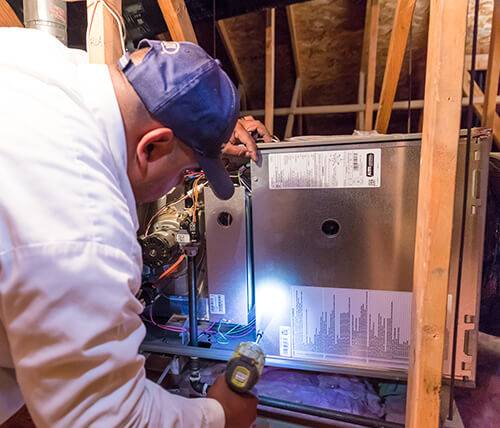
Las Vegas homes often experience big day-night temperature swings, so heating demand can spike after sunset even when afternoons are mild. Many neighborhoods feature attic ductwork and older insulation profiles that were optimized for cooling, which can make heating runtimes longer than expected. In areas like Desert Shores or older parts of Paradise, air sealing and duct leakage are common hidden drivers of winter energy use.
Cost drivers that raise heating energy use
- Leaky ducts in hot attics that lose warm air before it reaches rooms.
- Oversized equipment short-cycling and wasting energy.
- High thermostat setpoints and wide daily temperature swings.
- Poor insulation at ceilings, garages, or bonus rooms.
- Older furnaces or heat pumps with low seasonal efficiency ratings.
Decision guidance: tune-up, upgrade, or replace
Start with the lowest-cost steps: sealing obvious air leaks, replacing filters, and getting a professional tune-up. If your system is 12–15 years old, runs in short cycles, or shows rising bills despite maintenance, request a load calculation and efficiency comparison. Upgrades usually make the most sense when comfort problems and high bills appear together.
Prevention for lower winter bills
- Use modest setbacks at night and when away, then recover gradually.
- Close fireplace dampers and seal door thresholds on cold nights.
- Keep supply vents open and return grilles clear for balanced airflow.
- Schedule fall maintenance to clean burners, coils, and verify airflow.
Las Vegas neighborhoods we serve
We serve Summerlin, Spring Valley, Desert Shores, Downtown Las Vegas, Paradise, Whitney Ranch, and North Las Vegas.
Trust and guarantees
- Serving Las Vegas since 2011
- 55+ years combined experience
- Licensed, EPA-certified technicians
- 100% satisfaction guarantee
- BBB A+ rated
- Lennox Premier Dealer
Service area map
Ready for Efficient Heating? The Cooling Company Can Help
Learn about available rebates and promotions for energy-efficient HVAC equipment.
Try our energy efficiency guide to see how much you could save.
Share This Page
Related service: Need heating help in Las Vegas? Explore our heating services and heating repair services for Las Vegas homeowners.
Need HVAC Service in Las Vegas?
The Cooling Company provides expert HVAC service throughout Las Vegas, Henderson, and North Las Vegas. Our licensed technicians deliver honest assessments, upfront pricing, and reliable results.
Call (702) 567-0707 or visit heating, heating repair, furnace repair, or installation for details.