

Short answer: A puddle under a furnace or closet air handler in the Las Vegas Valley often appears without warning. One day the floor is dry; the next, there is a damp carpet, a musty odor, and the uneasy feeling that something important is failing. Recent events have shown how even a single break in a system can have outsized consequences: a municipal water leak in Las Vegas caused low water pressure and triggered a boil water advisory for residents, as reported by KOAT Action 7 News. A residential heating system leak is smaller in scale but similar in principle-uncontrolled water in the wrong place always demands respect.
Understanding The Leak
Heating systems in Las Vegas homes are often paired with central air conditioning and sometimes whole-home humidifiers. That means more than one component around the furnace can legitimately create water. High-efficiency furnaces deliberately produce condensate, and air conditioners wring moisture from indoor air. Distinguishing normal drainage from an actual leak prevents both unnecessary panic and dangerous complacency. Water itself is not the enemy; uncontained water is. The U.S. Environmental Protection Agency’s guidance on leak prevention, written primarily for commercial buildings, emphasizes that even small, chronic leaks can cause structural damage and mold growth when ignored for long periods in its leak prevention guidelines. The same logic applies in a hallway closet or attic: understanding what you are seeing is the first step toward a safe response.What Counts As A “Leak”
A true leak is more than a slight damp spot that dries quickly. Repeated puddles, surfaces that stay wet, or a steady drip from piping or the furnace cabinet indicate that water is leaving a system where it should be contained. If towels or a mop are needed more than once, the situation has moved beyond a harmless splash and should be treated as a leak.Common Visual Clues
Homeowners often first notice subtle signs. Darkened drywall, swollen baseboards, rust streaks on the furnace jacket, or mineral deposits around plastic drain tubing can all point to slow, ongoing moisture. On finished floors, the top layer may feel slightly spongy near the unit. Any recurring musty smell around the heater, even when no standing water is visible, deserves attention.Why Water Around A Furnace Matters
Water and sheet metal do not coexist peacefully for long. Persistent moisture encourages rust, weakens the furnace casing, and can compromise burner compartments or heat exchangers over time. In Las Vegas, where slab foundations are common, water that seeps down around a furnace or air handler can also mimic or worsen slab leak symptoms. Early action limits both equipment damage and potential structural repairs later. For a deeper look at why heaters start and stop in short bursts, our heating system short cycling guide explains common causes, red flags, and how technicians get to the bottom of the problem in Las Vegas homes.
Quick DIY Triage (Safe Only)
Once a leak is noticed, the goal is to stabilize the situation without taking risks. The priority is always safety: electricity, gas, and water create a hazardous combination if handled casually. Simple, surface-level checks are often enough to learn whether the problem might be a blocked drain or something more serious that demands professional help. If you are debating how far to go on your own before calling a technician, our DIY heating repair vs professional guide breaks down which tasks are safe for homeowners and which should always be handled by a licensed HVAC technician. Basic triage mirrors the first steps the EPA recommends for commercial facilities: stop active flow where possible, clean up standing water, and perform visual checks on accessible components before attempting any repair work as outlined in its leak prevention checklist. Homeowners can safely follow that same philosophy on a smaller scale.Turn Off Power If Actively Dripping
If water is dripping onto electrical wiring, control boards, or the furnace’s service switch, power to the unit should be shut off at once. Use the dedicated switch near the furnace or the labeled breaker in the main panel, not random breakers by trial and error. Shutting down power protects both the equipment and anyone working nearby from shock or short circuits.Mop Standing Water
Standing water spreads into walls, under flooring, and toward nearby rooms. Carefully mopping or using towels to remove what is visible helps limit damage and gives a clearer view of where the water originates. Avoid pushing water into floor registers, wall openings, or under the furnace itself; the aim is to remove, not redistribute, the moisture.Check Filter Condition
A severely clogged furnace filter can restrict airflow enough to cause the system to run abnormally cold or create excess condensation around the indoor coil. If the filter is obviously dirty, replacing it is safe for most homeowners. Any filter that is wet, sagging, or moldy should be discarded immediately, and the source of that moisture investigated by a professional.Verify Visible Drain Tubing Is Not Kinked
Most modern systems rely on plastic tubing to move condensate from the furnace or coil to a floor drain or condensate pump. Without removing panels, follow any exposed tubing with your eyes and hands, feeling for kinks, sharp bends, or obvious disconnections. Straightening a crushed section or reseating a loose push-on fitting is typically safe, provided no tools or panel removals are required.Confirm Condensate Pump Is Plugged In
Where a gravity drain is not available, a small condensate pump collects and pushes water to a remote drain line. If the unit is full of water but silent, ensure its power cord has not been unplugged or knocked loose. Reconnecting a plug to a dry outlet is usually safe, but if the receptacle or surrounding area is wet, leave it alone and contact a technician.Stop And Call A Pro (Red Flags)
Some symptoms move the situation beyond DIY territory immediately. Water in the wrong location can signal hidden corrosion, compromised burners, or even issues with venting exhaust gases. In those cases, the safest choice is to shut the system down and schedule a qualified heating professional rather than experiment. Industry experts consistently emphasize that regular, professional attention to hot water and heating systems helps prevent emergencies and prolongs equipment life. A recent industry feature described how ongoing monitoring by a knowledgeable technician can avert costly breakdowns and protect building infrastructure in a profile on proactive hot water maintenance. The same principle applies when red flags appear around a leaking furnace.Water Returns After Basic Checks
If puddles reappear after drying the area, verifying the drain path, and confirming the condensate pump has power, the leak is likely rooted in internal components or blocked sections not visible from the outside. Repeated leakage after simple triage indicates that further operation risks additional damage and calls for diagnostic work by a licensed HVAC technician.Rust Or Corrosion On Cabinet
Brown streaks, bubbling paint, or flaking metal on the furnace cabinet, burner access door, or nearby vent piping often mean the leak has been present for longer than it seemed. Corrosion can weaken lock tabs, fasteners, and even sections of the heat exchanger. Since combustion safety is at stake, any visible rust connected with a leak should be evaluated professionally.Chemical Or Exhaust Smells
Water leaks that coincide with strange odors-sharp chemical smells, burning plastic, or exhaust-like fumes-raise the risk of both electrical damage and combustion issues. In a gas furnace, unusual smells alongside a leak are a strong reason to shut off gas at the appliance valve if accessible and wait for an expert to inspect for flue gas problems, cracked heat exchangers, or overheated components. If you want a simple breakdown of the warning signs every homeowner should know, our carbon monoxide safety guide explains when furnace leaks and venting problems can lead to unsafe CO conditions and what steps to take next.Leaks Near Electrical Parts
When water tracks across control boards, blower motors, wiring harnesses, or junction boxes, the hazard level increases quickly. Even if the system continues to run, hidden moisture can corrode terminals and cause intermittent failures later. Under these conditions, the best course is to leave the unit off, avoid touching wet components, and schedule prompt service.Unit Lockouts Or Short Cycling
A furnace or air handler that shuts itself off repeatedly, flashes error codes, or will not restart at all after a leak is signaling that built-in safeties have been triggered. Those controls exist to prevent unsafe operation in abnormal conditions. Bypassing them, repeatedly resetting the system, or cycling the breaker in hopes of temporary relief is risky and can turn a manageable repair into a major failure. Common Questions or Objections. Homeowners sometimes ask whether a small leak is worth a service call or if they should “wait and see.” If water has returned after basic cleanup, or if any corrosion or electrical involvement is visible, waiting usually allows silent damage to accumulate. The safest rule is simple: if you are unsure whether the system is safe to run, do not run it until a professional has looked at it.Most Common Sources
Although each home is unique, a relatively small set of failure points causes most water around heating systems in Las Vegas. Many are related to drainage and condensate management rather than a ruptured water pipe. Understanding these typical causes helps homeowners describe symptoms accurately on the phone and allows technicians to arrive better prepared.If you're not fully sure whether your home uses a furnace, air handler, or heat pump, our what type of heating system you have guide walks through simple visual clues so you can identify your equipment before troubleshooting leaks.
The EPA’s leak prevention materials stress starting with the most likely and accessible causes before opening up more complex systems in its supermarket leak walkthrough. The same methodical approach works just as well for a residential furnace closet.Clogged Condensate Drain Line Or Trap
Condensate drains carry slightly acidic water, dust, and sometimes growth from algae or mold. Over time, slime and debris can clog the trap or horizontal runs of tubing. When that happens, water backs up into the furnace or coil pan and spills over. Technicians often clear these lines with specialized equipment and then treat them to slow future biological growth.Disconnected Or Cracked Tubing
Plastic drain tubing can loosen at fittings, become brittle with age, or be damaged when other work is done in the mechanical closet. Even a partial crack can leak enough water to wet surrounding insulation and flooring. Because some of the tubing may be inside the furnace cabinet, a visible drip at the bottom does not always reveal the full path of the failure.Failed Or Undersized Condensate Pump
When a condensate pump stops operating, its reservoir fills until water overflows onto the floor or back into the furnace. In some homes, a pump designed for light duty is asked to move water from both the furnace and an adjacent air conditioning coil, pushing it beyond its intended capacity. Replacement or reconfiguration by a professional can restore reliable drainage.Full Or Cracked Drain Pan
A secondary drain pan is often installed under attic or closet units to catch water when the primary drain fails. If this pan fills because the main line is clogged, it can eventually overflow, giving the impression that the leak is under the entire unit. Metal pans can corrode, and plastic ones can crack, which then allows captured water to escape where it cannot be seen easily.Humidifier Leaks
Whole-house humidifiers, sometimes attached to the furnace plenum, connect directly to the home’s water supply. Scale buildup, common in hard-water regions, can block internal orifices, cause valves to stick, or crack plastic housings. A humidifier leak may appear as water under the furnace even though the furnace itself is intact, so technicians will often inspect these add-on devices as part of a leak call.AC Evaporator Coil Condensate Carryover
On systems where the air conditioning coil sits above the furnace, improper airflow or damaged baffles can allow condensate droplets to blow off the coil instead of draining into the pan. This carryover can mimic a furnace leak, especially during peak cooling season. Addressing it usually involves airflow adjustments, coil cleaning, or pan repairs rather than work on the furnace burners. The key takeaway for homeowners is that most water around a furnace traces back to drainage or accessory components, but only a trained technician can confirm the exact source confidently. If your technician finds damage that goes beyond a simple drain or pan issue, our heating repair vs replacement guide walks through how to decide whether investing in major repairs or planning a full system replacement makes more long-term sense for your Las Vegas home.Condensing Furnace Specifics
High-efficiency, or “condensing,” furnaces are common in newer Las Vegas homes and renovations. They extract more heat from combustion gases by cooling those gases until water vapor condenses inside a secondary heat exchanger. That design choice boosts efficiency but also guarantees that the furnace will produce liquid water during normal operation. Because that condensate is slightly acidic, manufacturers specify particular drain materials, routing, and traps to carry it safely away. Commercial leak-prevention guidance from agencies such as the EPA highlights the need for compatible materials and regular inspection where corrosive or chemically active liquids are present in its leak repair recommendations. Residential condensing furnaces benefit from the same disciplined attention.How High-Efficiency Furnaces Make Condensate
In a condensing furnace, combustion gases first pass through a primary heat exchanger, then through a second exchanger where additional heat is removed. As those gases cool, the water vapor they carry turns into liquid, much like steam fogging and dripping from a cold window. That condensate collects in an internal drain assembly and flows out through dedicated tubing. When all components are correctly installed and maintained, this process is orderly and invisible to the homeowner. Leaks arise when internal drain passages clog, tubing sags or disconnects, or venting issues cause condensate to form where it should not. Regular inspections during heating tune-ups-checking traps, flushing lines, and confirming slope-help ensure the furnace’s high efficiency does not come at the cost of water on the floor. For homeowners, the bottom line is simple: a small amount of water production is normal for high-efficiency equipment, but any water outside its intended drain path deserves prompt attention and, when in doubt, a call to a qualified professional.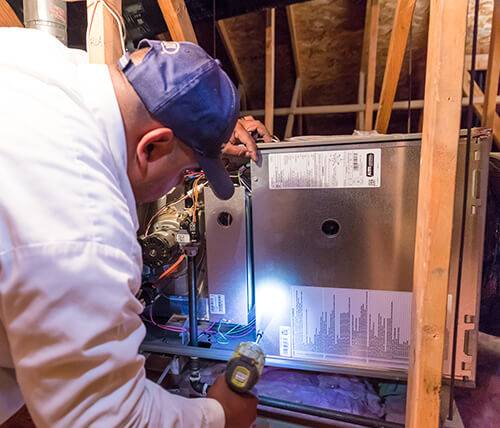
Local essentials and challenges in Las Vegas
- Hard water scale: Mineral buildup can clog humidifiers and drain traps.
- Attic installs: Insulation and tight access hide slow leaks.
- Monsoon humidity: Sudden moisture spikes increase condensate load.
- Slab foundations: Water around closets can mimic slab leaks.
Cost drivers for leak repairs
- Leak source location (drain line, coil pan, or internal cabinet).
- Access difficulty and whether attic platforms are required.
- Associated damage to wiring, drywall, or flooring.
- After-hours dispatch for active leaks.
Decision guidance: repair vs. replace
- Repair now: Drain or pump failure with otherwise healthy equipment.
- Plan replacement: Corrosion on heat exchanger or repeated leaks.
- Safety first: Water near electrical parts means shut down and call.
Prevention checklist for water leaks
- Flush condensate lines and check traps each fall.
- Replace filters to keep coils from icing or sweating.
- Confirm pump operation and test the float switch.
- Inspect drain pans for rust or cracking.
Neighborhoods we serve across Las Vegas
- Summerlin, The Lakes, and Spring Valley
- Enterprise, Silverado Ranch, and Mountain's Edge
- Henderson, Green Valley, and Anthem
- North Las Vegas, Aliante, and Centennial Hills
Why homeowners trust The Cooling Company
- Serving Las Vegas since 2011 with 55+ years combined experience
- Licensed, EPA-certified technicians and safety-first inspections
- BBB A+ rated with a 100% satisfaction guarantee
- Lennox Premier Dealer with local parts support
Service area map
Ready for Leak-Free Comfort? Schedule with The Cooling Company
You may qualify for current promotions and rebates that reduce your upfront cost.
Need HVAC Service in Las Vegas?
The Cooling Company provides expert HVAC service throughout Las Vegas, Henderson, and North Las Vegas. Our licensed technicians deliver honest assessments, upfront pricing, and reliable results.
Call (702) 567-0707 or visit heating services, furnace repair, heating maintenance, or heat pump installation for details.