
Short answer: Before troubleshooting a heating system that won't start, check for safety hazards first. If you smell rotten eggs (natural gas), hear your CO detector, or see soot around the furnace, evacuate immediately and call 911. Once safe, call (702) 567-0707 for licensed heating repair.
Understand the Symptom
The way your system fails is often as important as the fact that it fails. Heating equipment follows a fairly strict sequence: the thermostat calls for heat, safety checks run, combustion begins, then the blower moves warm air through the home. A disruption at any point in that chain can leave the system quiet, short cycling, or stuck partway through startup. If your system does turn on but only blows room-temperature air, our heating system blowing cold air guide walks through the most likely causes and safe first checks. Research on thousands of commercial rooftop units shows that even a small number of recurring faults can drive up energy use and reduce reliability when left uncorrected, based on an analysis of 6,000 service records in retail buildings from a large field study. The same principle applies at home: understanding the pattern of failure makes troubleshooting faster and prevents repeated stress on components. Before touching anything, pay attention to what you hear and see. Does the thermostat show a call for heat? Do you hear a click, a fan, or a “whoosh” of ignition? Does the blower ever start? The sections below match common “symptoms” to their likely categories of causes. If you are also hearing bangs, rattles, or squeals when the system tries to start, our heating system noises guide breaks down what each sound can mean and when to shut the system off.Thermostat Calls For Heat But Nothing Starts
This scenario looks deceptively simple: the thermostat display is on, set to “Heat,” and above room temperature, but the furnace or air handler never responds. You may hear a quiet click at the thermostat, or you may hear nothing at all. Often this points to a control or power problem rather than a mechanical failure. The thermostat might not actually be sending a signal, low-voltage wiring may be loose, the furnace’s safety circuit may be “locked out,” or the unit may not have power at all. Replacing major parts without addressing the control signal wastes time and money; start by confirming that the thermostat, breakers, and furnace switch are all logically aligned.System Tries To Start Then Shuts Down
In this pattern, the system seems to wake up. You might hear a small fan (the inducer) start, followed by the faint click of a gas valve or the glow of an igniter. Maybe you even get a brief burst of warm air. Then everything stops, sometimes repeating the cycle several times. This behavior typically indicates an internal safety or ignition problem. The furnace electronics monitor temperature, pressure, and flame; if something does not look safe, the board will shut the system down. Repeated rapid cycling can damage components and is a signal to stop manually resetting and start diagnosing the underlying fault. If your system keeps starting and stopping in short bursts, our heating system keeps shutting off guide explains why that short cycling pattern is hard on the equipment and how professionals track down the root cause.Blower Never Comes On
Another pattern: the burner seems to light correctly, but the main blower that pushes air through the ducts never starts. You may smell heat near the furnace yet feel nothing at the registers. Modern furnaces usually protect themselves by opening a high-limit safety switch if the blower fails, but that still stresses the heat exchanger. Causes here can range from a failed blower motor to a bad control board or even a misconfigured thermostat fan setting. Because a non-operating blower can quickly lead to overheating inside the cabinet, this symptom deserves prompt attention from a professional if basic checks do not resolve it. Homeowner takeaway: Note exactly what your system does-or does not do-when you call for heat; that pattern is a valuable diagnostic clue.
Quick 5-Step Check (Safe)
A few simple checks can prevent unnecessary service calls and help technicians focus on the real problem when they arrive. These steps stay on the “safe side” of DIY: no removing burner covers, no probing live wiring, no opening gas valves. Many documented heating failures stem from basic installation or maintenance issues rather than exotic defects, as highlighted in a U.S. Department of Energy review of residential HVAC performance studies that examined common field faults. Work methodically. Change only one thing at a time and recheck operation. If anything smells like gas or looks charred or melted, stop and call a professional immediately rather than continuing.Set To Heat Above Room Temp
Begin with the basics. Verify that the thermostat is in “Heat” mode, not “Cool,” “Off,” or “Auto-changeover” stuck in a neutral state. Confirm the setpoint is comfortably above the displayed room temperature-several degrees higher is ideal for testing. For programmable or smart thermostats, check that no setback schedule is preventing a call for heat. A weekday work schedule, vacation mode, or eco program can hold the temperature lower than expected, especially after a power glitch or software update.Replace Thermostat Batteries
Many wall thermostats rely on small batteries to power the display and internal electronics. As batteries weaken, the screen may still light while the control relay fails to close reliably, leaving the furnace idle even though the interface appears normal. If your thermostat has batteries, replace them with fresh, high-quality ones and then restart the heating call. This low-cost step resolves more “mystery no-heat” situations than homeowners expect, particularly after a long cooling season when battery drain goes unnoticed.Flip Furnace Switch On
Every furnace or air handler should have a nearby disconnect switch, often resembling a regular light switch mounted on or near the unit. It may have been turned off by a technician, house cleaner, or during storage or renovation work. Locate this switch, confirm it is in the “On” position, and listen for any response from the equipment. Do not tape it on or bypass it; this switch is both a code-required service disconnect and an important safety feature.Reset Tripped Breaker Once
Next, visit the electrical panel. Look for breakers labeled “Furnace,” “Air Handler,” or similar. A tripped breaker lever usually sits between “On” and “Off” or shows a colored indicator. To reset, firmly switch it fully off, then back on. Only reset a breaker once. If it immediately trips again, there is likely a short circuit or failing motor, and further attempts risk damage. At that point, stop and arrange for professional diagnosis rather than repeatedly forcing power back onto a faulted circuit.Latch Furnace Door Panel
Most modern furnaces include a door switch that cuts power when the blower compartment panel is removed. If the panel is not seated correctly after filter changes or inspection, the switch stays open and the system appears completely dead. Check that the door panel is aligned with its tracks and fully latched. A slight misalignment-just a few millimeters-can be enough to interrupt power to the control board and prevent any response to the thermostat. Homeowner takeaway: A structured five-minute check of settings, batteries, switches, breakers, and access panels can resolve many no-heat calls before deeper troubleshooting is needed.Thermostat & Control Issues
The thermostat serves as the “brain” of the heating system, coordinating on/off decisions, staging, and sometimes remote communication. When that brain is confused, misconfigured, or incompatible, the furnace may be perfectly healthy yet never receive a clear call for heat. Technicians frequently trace no-heat problems back to miscalibration, faulty sensors, or connectivity glitches in smart models, an observation echoed by industry experts who emphasize that many thermostat issues are not obvious at the wall display. Control complexity is increasing, especially in larger or more efficient systems. Advanced research on building HVAC controls now explores stochastic model predictive control, where software anticipates load and uncertainty to optimize operation; one study reported potential cost savings of up to 7.5% using such techniques in central plants compared with conventional control. While residential thermostats are simpler, they share the same vulnerability: when controls misbehave, the hardware cannot compensate.Wrong Mode Or Schedule
A surprisingly common cause of “dead heat” is simply being in the wrong mode or time period. Smart thermostats often juggle multiple schedules (workdays, weekends, vacation), occupancy detection, and weather-based adjustments. A mis-tapped option can leave the system stubbornly holding a low setpoint. Review the current mode, day, and schedule blocks. Temporarily override the schedule and use a manual setpoint to test whether the furnace responds. If manual control works but scheduled control does not, the problem lies in programming rather than in the furnace itself.Miswired Or Incompatible Thermostat
Upgrading to a new thermostat-especially a Wi‑Fi or learning model-can introduce wiring mismatches. Some controls require a common (“C”) wire for power; others expect specific terminal assignments that differ from older units. A miswired thermostat may power up and connect to an app while never sending a valid call for heat. Signs of incompatibility include intermittent operation, strange error messages, or systems that will cool but not heat. When in doubt, consult the thermostat’s compatibility chart and wiring diagrams, and consider having a licensed technician verify connections at both the thermostat and furnace control board.Locked Or Child-Safe Settings
Many thermostats include lockout features to prevent accidental or unauthorized changes. A small lock icon, PIN prompt, or unresponsive buttons can indicate that safety or tamper protection is active. In these cases, the thermostat may ignore new setpoints entirely. Check the manual or manufacturer website for instructions on disabling lockout. Restoring normal control can immediately restore heating if the previous locked setting was inappropriate for current conditions. Common questions or objections. Homeowners often insist, “It can’t be the thermostat; the screen looks fine.” Yet a functioning display does not guarantee a good temperature sensor, relay, or Wi‑Fi-connected control logic. When all mechanical checks look normal and no fault codes are present at the furnace, the thermostat remains a prime suspect. Homeowner takeaway: Treat the thermostat as a critical system component; verify its mode, schedule, wiring, and lock settings before assuming a major furnace failure.Power Path Failures
Even the best thermostat and furnace cannot operate without a clear electrical path from the service panel to the control board and back through the low-voltage circuit. Breaks along this path often present as a completely unresponsive system-no sound, no lights, and no error codes. Thinking of power as a loop can help: high-voltage power feeds the furnace transformer, which provides low-voltage power to the thermostat, which in turn sends a signal back to the furnace. Any loose wire, blown fuse, or disabled switch along that loop stops the system from ever attempting to start.Blown Fuse Or Tripped Breaker
Furnaces often include a small automotive-style fuse on the control board to protect the low-voltage circuit. A short in thermostat wiring-caused by a staple, pet, or rubbing against sheet metal-can blow this fuse. At the same time, the main breaker may remain on, misleading troubleshooting efforts. Visually inspect the furnace control board fuse if accessible without removing burner covers. A blown fuse usually looks darkened or broken internally. Replacing it with the correct type and rating may restore operation once the underlying short is corrected, but repeated fuse failures call for professional diagnostics.Disabled Service Switch
The furnace service switch discussed earlier is part of the power path logic. If it is off, the transformer and control board receive no power, and thermostats that depend on the furnace for low-voltage supply may also go dark. Because this switch is often mistaken for a light switch, clearly labeling it and educating household members can prevent accidental shutoffs that mimic serious system failures.Loose Low-Voltage Connections
Low-voltage thermostat wires terminate at small screw or spring connections on the control board and thermostat base. Over time, vibration or poor installation can loosen these connections enough to interrupt the heat call. If comfortable and with power off, a homeowner may gently tug on each thermostat wire at the furnace and thermostat to ensure it is secure. Any sign of fraying, corrosion, or movement under the terminal screw is a cue for professional repair rather than makeshift fixes. Homeowner takeaway: When a system appears completely lifeless, suspect an interruption in the electrical path before assuming catastrophic mechanical failure.Safety Switch Lockouts
Modern furnaces are designed to fail safely. Multiple sensors and switches continuously monitor temperature, pressure, and flame behavior. When any reading falls outside allowable limits, the control board shuts the system down and may enter a lockout that requires a power cycle or professional reset. Something as simple as a clogged air filter can set off these protections. Industry guidance notes that dirty filters are among the most common causes of heating system problems and that regular cleaning or replacement is essential to avoid restrictions and overheating, according to experienced service providers. Those same restrictions make safety switches trip more often and with less warning.High Limit Switch Open
The high-limit switch is a temperature-sensitive safety device that opens (turns off) the burners if the furnace cabinet becomes too hot. Causes include clogged filters, blocked supply or return vents, closed registers, or a failed blower that cannot move enough air. Repeated limit trips indicate that hot air has nowhere to go or that airflow is severely compromised. While a homeowner can safely replace filters and open vents, diagnosing persistent limit issues-especially those with visible scorching or a hot smell-belongs to a licensed technician.Pressure Switch Not Proving
In gas furnaces with induced draft, a pressure switch confirms that the venting fan is moving combustion gases correctly. If the switch never “proves” airflow, the board will not allow ignition. Blocked flue pipes, frozen vent terminations, and failed inducer motors can all cause this condition. Because venting involves combustion byproducts and potential carbon monoxide risks, any suspected vent or pressure switch problem should be handled by professionals. A homeowner’s role can safely include checking for obvious exterior blockages like snow, leaves, or nests, without disassembling venting components.Rollout Or Flame Safeties Tripped
Flame rollout switches protect against flames leaving the burner area, while other flame safety devices monitor whether the flame stays where it belongs. If rollout occurs or the flame becomes unstable, the controls shut off gas quickly and may lock the furnace out. Tripped rollout safeties are red-flag events. They can indicate blocked heat exchangers, cracked components, or dangerous combustion patterns. Resetting them without finding and correcting the cause can create serious fire and carbon monoxide hazards, so this is firmly in the territory of professional service. Homeowner takeaway: When safety switches repeatedly shut the system down, treat that behavior as a warning, not a nuisance-address the cause, not just the symptom.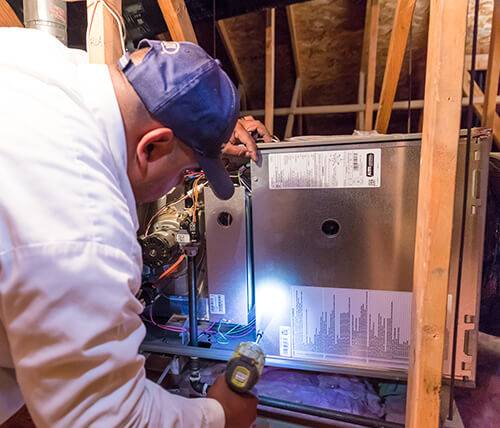
Ignition And Gas Problems
When the call for heat reaches the furnace and safety checks pass, ignition and gas delivery become the final hurdles. Faults here often show up as a furnace that starts its sequence-inducer on, igniter glowing or sparking-before shutting down with no sustained flame. Detailed failure analysis of gas boilers has led engineers to redesign components and improve reliability, underscoring how many interdependent parts must work correctly for safe ignition according to published reliability studies. Gas and combustion work introduce unique risks. DIY efforts should stop at observation: noting whether the igniter glows, whether there is a clicking sound from the gas valve, and whether any error codes flash on the control board. Any suspected gas leak, strong fuel odor, or visible flame irregularity warrants immediate shutdown and professional intervention.Failed Hot Surface Igniter
Most modern furnaces use a hot surface igniter-a small, fragile, electrically heated element that glows orange to light the gas. Over time, these igniters can crack or burn out, leaving the furnace unable to light even though the rest of the startup sequence appears normal. Symptoms often include the inducer fan starting and the igniter never glowing, or glowing weakly and then the system shutting down. Replacement requires correct part matching and careful handling, as igniters are brittle and easily damaged by oils from fingers. This task is generally best left to technicians who can also confirm that voltage and timing to the igniter are within specifications.Dirty Or Faulty Flame Sensor
The flame sensor is a small metal rod positioned in the burner flame. It detects flame presence via a tiny electrical current. If the sensor is coated with oxides or soot, or if its wiring is compromised, the control board may not see the flame even when combustion is occurring, and will shut off gas as a safety measure. Homeowners sometimes clean accessible flame sensors with fine abrasive pads, but improper cleaning, bending, or reinstallation can create more serious problems. Given the combustion safety role of this component, many prefer to have a professional assess flame shape, sensor condition, and grounding together, rather than treating the sensor as an isolated part. Homeowner takeaway: Ignition and gas issues should be treated as safety-critical; limit DIY to observation and basic filter and vent checks, and rely on qualified technicians for any work involving burners, gas valves, or combustion sensors.Local essentials and challenges for Las Vegas no-heat calls
Desert dust and long off-seasons can mask ignition and sensor issues until the first cold night. Many homes have attic ducts that lose heat quickly, making a small airflow problem feel like total system failure. If your system stops after a dusty windstorm, check filters and outdoor vents before the call.Cost drivers for no-start diagnosis
Simple fixes like a tripped breaker, door switch, or thermostat batteries are low-cost. Costs rise when the issue involves control boards, blower motors, gas valves, or combustion testing. After-hours calls and tight attic access can also increase labor time.Decision guidance: quick checks vs. immediate service
Do the five safe checks in this guide once. If the system still will not start, or if you smell gas, see soot, or hear loud ignition bangs, shut it down and call a licensed technician immediately.Prevention steps that reduce no-heat emergencies
Replace filters regularly, keep intake and exhaust vents clear, and schedule a pre-winter tune-up. For smart thermostats, confirm firmware updates and battery status before the heating season.Neighborhoods we serve in the Las Vegas Valley
- Henderson
- Green Valley
- Anthem
- Seven Hills
- Summerlin
- Spring Valley
- North Las Vegas
- Paradise
Trust and guarantees from The Cooling Company
- Serving Las Vegas since 2011 with 55+ years of combined experience
- Licensed, EPA-certified technicians and code-compliant service
- BBB A+ rated and Lennox Premier Dealer
- 100% satisfaction guarantee with clear service documentation
Service area map
Ready for Reliable Heating? Schedule Your Service Today
Learn about available current promotions and rebates for energy-efficient HVAC equipment.
Related service: Need heating help in Las Vegas? Explore our heating services and heating repair services for Las Vegas homeowners.
Need HVAC Service in Las Vegas?
The Cooling Company provides expert HVAC service throughout Las Vegas, Henderson, and North Las Vegas. Our licensed technicians deliver honest assessments, upfront pricing, and reliable results.
Call (702) 567-0707 or visit heating services, furnace repair, heating maintenance, or heat pump installation for details.