


Short answer: The cost of financing an HVAC system can sometimes be as critical as the installation itself. With approximately 80% of HVAC projects being financed, consumers face many questions about the terms they are offered. Understanding these details is key to obtaining favorable rates and managing long-term costs. For the full breakdown of every financing option we offer in Las Vegas, start with our HVAC financing guide for Las Vegas homeowners.
For a detailed cost breakdown, see our HVAC pricing guide.
What HVAC Financing Rates Mean And Why They Vary
HVAC financing rates are expressed as an Annual Percentage Rate (APR), which reflects the cost of borrowing money over one year. These rates change based on multiple factors, including credit scores, payment history, and the specific terms outlined in your loan agreement. For instance, the added pressure on HVAC budgets has risen partly because parts manufacturers recently increased prices between 2-13% (parts manufacturers’ updates). The reason HVAC financing rates vary widely is that rates aren’t set by one single standard across the industry. Rather, lenders adjust rates based on individual risk profiles and market conditions.Why There Is No Single “Standard Rate” For Everyone
Rates vary because each homeowner’s credit history, payment record, and the overall economic environment influence what interest rate will be offered. Homeowners with stronger credit may receive lower rates compared to those with a spotty or incomplete financial history. If your credit isn’t perfect, our guide to HVAC financing for bad credit explains what lenders look for and how to improve your approval odds. Local market conditions, such as those found in competitive urban areas like Las Vegas, can also lead to variations in rate offers. This diversity makes a one-size-fits-all “standard rate” impossible. Instead, rates are personal and reflect the complex interplay of market risk and individual circumstances.APR Vs Interest Rate: What You Are Really Paying For
The Annual Percentage Rate (APR) includes not only the interest charged but also additional fees and costs associated with the loan. It paints a full picture of what a homeowner will pay annually over the duration of the loan, beyond just the nominal interest rate. This distinction becomes especially important when comparing financing offers from multiple sources. While the interest rate may seem lower, hidden fees can inflate your actual cost. This deeper understanding is critical as it avoids potential surprises on the billing statement later.Promo Plans Vs Installment Plans: Rate Expectations
Promotional financing plans may offer enticing introductory rates. These offers often appear as 0% financing for a limited time, but careful examination of the fine print is essential. Installment plans, although they might start with a slightly higher rate, typically have more predictable costs over time. For homeowners looking for clarity and consistency, understanding the trade-offs between these plans is vital. Each type of plan affects overall costs differently, and it is important to ask the right questions to ensure the plan fits your long-term financial expectations.How Term Length Changes Your Payment And Total Cost
The length of your financing term directly affects determining both the monthly payment amount and the total interest paid over the life of the loan. Shorter terms often result in higher monthly payments but reduce total interest costs, while longer terms might ease monthly burdens at the expense of higher overall interest expense. Homeowners should carefully assess their monthly budget and long-term savings goals when selecting a term length. In settings like Las Vegas, where seasonal spikes in HVAC usage are common, shorter terms might be more manageable in balancing operational costs.How Loan Amount Impacts Rate And Approval
The total amount financed for an HVAC system influences both the interest rate offered and the likelihood of approval. Higher loan amounts may be scrutinized more heavily due to potential financial exposure for the lender, possibly prompting a higher interest rate. Conversely, financing a smaller amount might yield a lower APR reflecting reduced risk. Lenders evaluate the overall loan amount in relation to a borrower’s credit profile, ensuring that the specific project-whether it's a repair or complete system replacement-is matched with a corresponding risk level.How Fees Can Affect The True Cost Of Financing
Beyond the quoted interest rates, fees such as application fees, processing fees, and any other hidden costs can significantly increase the true cost of financing an HVAC system. These fees often require careful attention, as they can sometimes be masked by seemingly attractive introductory rates. When comparing financing offers, homeowners should factor in these additional charges and request a full breakdown of all fees to get a clear idea of the total cost.Why Two Offers With Similar Payments Can Cost Different Amounts
Two loans might appear comparable based solely on monthly payments, but differences in compounding methods, additional fees, and the included APR can lead to substantial variations in total amounts paid over time. An extra fee or a minor difference in compounding frequency might result in a higher aggregate cost, even if the short-term payments look almost identical. This means that a holistic review of all terms and conditions is recommended before committing to a particular financing option. Homeowners should diligently request detailed terms from each lender for a true cost comparison.What “On Approved Credit” Means In Plain English
The term “on approved credit” is a verbal shorthand indicating that financing is contingent upon the lender’s review of a borrower's credit history. It means that the advertised financing terms, often including lower interest rates or promotional plans, are accessible only if the applicant meets certain credit criteria. This language protects lenders by managing risk. For homeowners, it translates into a conditional offer where the final terms could change if the credit evaluation does not meet expectations.When To Stop Researching And Call For Real Options
Extensive research is necessary when evaluating HVAC financing options, but there comes a point when gathering more data delays a needed decision. Once you've assessed your credit profile, gathered your financial details, and compared terms from multiple sources, it becomes practical to consult with financing advisors or your local HVAC supplier for real-world options. A clear signal that it's time to move forward is when you have three or more competitive offers. If you want to compare a real in-house option, review our Service Finance financing options to see what terms may be available through The Cooling Company. At that point, the benefits of mincing words are outweighed by the need to secure timely service and lock in current rates.
What Impacts Your HVAC Financing Rate The Most
Your credit profile is undoubtedly one of the most significant factors affecting the APR offered on your HVAC financing. Lenders scrutinize credit histories, debt levels, and other personal financial markers. With HVAC projects being major investments and the financing market highly competitive, ensuring that your credit and financial details are in order can lead to more favorable terms. This section delves into the common qualifications and factors that lenders use to evaluate personal financial health and assign risks appropriately. For instance, data from various industry studies and reports emphasize the importance of debt-to-income ratios in determining potential APR adjustments (HVAC financing statistics).Credit Profile And Payment History Basics
Lenders rely heavily on an applicant’s credit profile. This record details how well an individual manages existing debts and if previous bills were paid on time. A stronger credit score generally translates into lower financing rates, as it signals lower risk. In some cases, where homeowners face otherwise unexpected expenses, maintaining a consistent payment history can mitigate concerns from lenders. The quality of the credit report is pivotal. For homeowners, a good credit report often corresponds to more options with lower APRs and better terms.Debt To Income And Why It Matters
The debt-to-income (DTI) ratio compares your monthly debt payments to your gross monthly income. A lower DTI ratio is one of the reasons lenders might offer more competitive rates, reflecting a healthier financial balance. If too much of your income is already allocated toward debt, financing new projects like HVAC replacements might be viewed as high risk. DTI ratios are a straightforward measure of financial pressure and help lenders ascertain how additional debt would fit into an individual’s budget. Homeowners should aim to minimize existing debt before applying for a new loan, thereby enhancing the prospects of lower APRs.Income, Employment, And Application Details
Your income and employment details provide proof that you have a stable financial foundation to support new financing requirements. Lenders typically verify your income through documentation such as tax returns and pay stubs. Stable employment implies reliability, making you a less risky borrower. This transparency in application details assures lenders that the homeowner can manage a new payment plan alongside current financial responsibilities. Reviewing these details before application helps avoid any surprises during the approval process.Co Applicant, Down Payment, And Other Approval Factors
Having a co-applicant with a solid credit history can significantly improve your chances of securing better financing terms. Similarly, a sizable down payment reduces the lender’s risk and can result in lower interest rates. Not all financing packages evaluate these factors equally, but many do adjust rates based on reduced risks. Collectively, these elements-from a strong co-applicant to a meaningful down payment-demonstrate financial commitment. For homeowners, this often means more than just approving the loan; it might translate into lower overall financing costs.Project Type: Repair Vs Replacement Vs Upgrade
The nature of your project also matters. A repair project typically requires less financing compared to a full HVAC system replacement. If you’re trying to restore comfort fast without replacing the whole system, our guide to HVAC repair financing walks through the quickest paths to approval and scheduling. However, replacement projects might demand larger sums, thus posing a higher risk for lenders. Upgrades that add energy efficiency features might sometimes be eligible for government incentives or rebates, affecting the net cost and financing arrangements. Lenders assess each project type separately, understanding that each has different financial implications. For example, HVAC projects in regions with extreme temperatures, such as Las Vegas, might be scrutinized more closely, given the increased operational pressures. Ultimately, project specifics influence the final financing rate offered. Homeowners should be clear on their project type before discussing terms with lenders.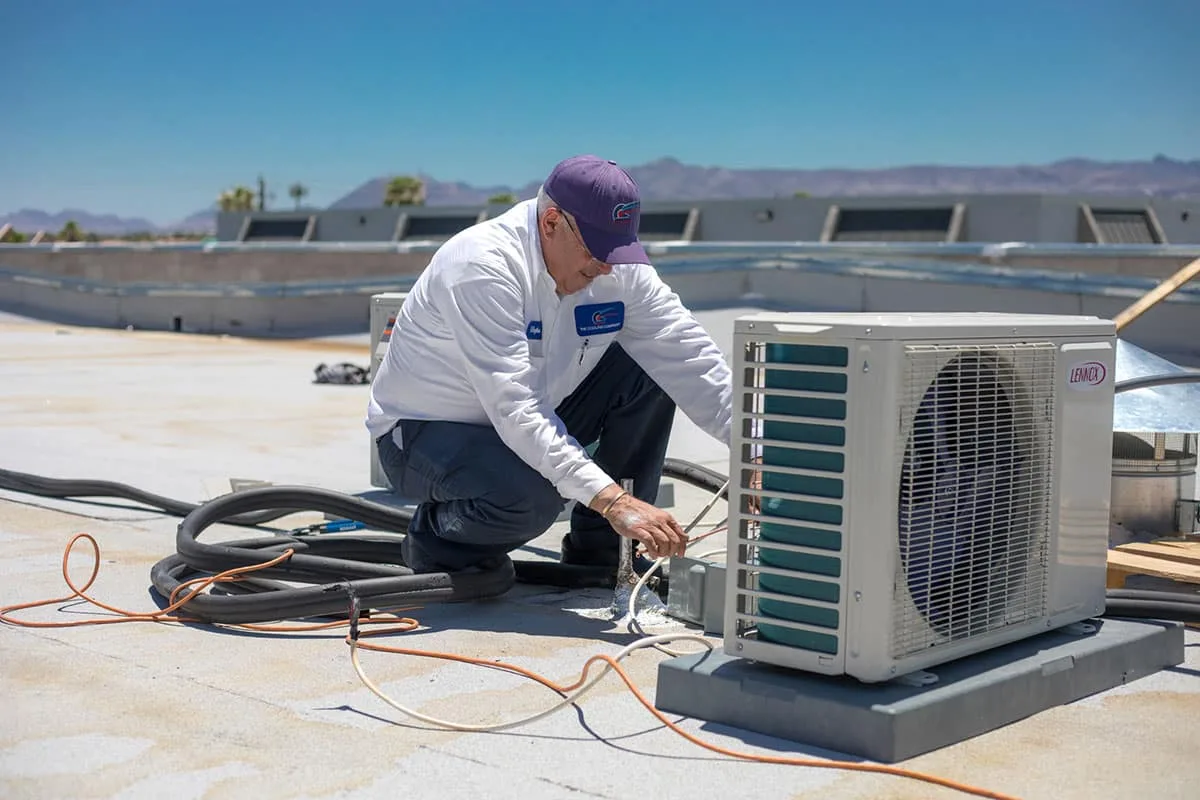
Promotional Offers, Deferred Interest, And The Fine Print
Promotional offers in HVAC financing often come packaged with elements like deferred or 0% interest rates for an introductory period. While these offers provide a temporary reprieve from high interest, understanding the associated fine print is paramount. Not all home financing products are created equal, and what appears as an attractive offer may conceal unexpected costs. An example of this is seen when manufacturers or parts suppliers adjust prices due to market pressures (recent HVAC market trends). Such changes can influence promotional financing terms and overall system cost.What “0% Promotional Financing” Usually Requires
Offers branded as “0% promotional financing” typically require strict adherence to payment deadlines and often represent introductory periods. These plans assume that homeowners will pay off the balance before the promotion expires. Missing deadlines can revert the financing to a high interest rate, making subsequent payments substantially more expensive. Terms for such promotions are explicitly spelled out in the contract. Understanding these conditions is essential before committing to such offers.No Interest Vs Deferred Interest: The Key Difference
No interest financing means that, provided all terms are met, no interest is charged over the specified period. In contrast, deferred interest means that interest accrues from the purchase date, but it is not charged if the balance is paid off within the promotional period. However, if the balance remains after expiry, the homeowner might be liable for all the accumulated interest. This subtle difference is crucial. A deferred interest plan can lead to a substantially higher liability if the terms are not met exactly, underscoring the importance of understanding the contract details.What Happens If A Promo Balance Is Not Paid By The Deadline
If the promotional period expires without full repayment, the previously deferred interest is typically applied retroactively. This means that the effective APR jumps dramatically, leading to a higher overall cost. Such retroactive charging can be unexpectedly burdensome for borrowers who assumed that the promotional financing would ease their monthly pressure. Homeowners must plan repayment carefully when opting for such financing to avoid incurring a bulk payment at the end of the period.Minimum Payments, Late Fees, And Other Common Rules
Promotional financing plans are often accompanied by strict rules about minimum payments and deadlines. Missing a minimum payment can result in late fees that add to the total cost. It is important to review every detail in the promotional agreement, as rules can significantly impact the overall financing calculations. Understanding these rules not only prevents unexpected charges but also helps plan a more effective repayment strategy.Prepayment Questions To Ask Before You Sign
Homeowners should ask if there are any penalties for early repayment. Prepayment can sometimes trigger fees that offset the potential benefits of paying off the loan ahead of schedule. The fine print will clarify if early settlement leads to additional charges or impacts the interest rate applied. Such questions ensure that any plan you commit to is flexible enough to accommodate changes in your financial situation.How To Compare A Promo Plan To A Standard Installment Plan
Comparing financing options requires looking beyond the face value of monthly payments. Evaluate the total cost, including fees, accrued interest under deferred plans, and any potential penalties. A promo plan might seem advantageous, but when compared over the life of the loan, a standard installment plan might prove more cost-effective due to fewer hidden charges. Homeowners should perform a side-by-side comparison, considering their expected repayment timeline and long-term financial goals.When A Promo Plan Is A Great Fit
A promo plan works best when a homeowner is confident in repaying the balance within the promotional period. This scenario is common for projects with predictable cost-benefit trajectories. For those who strictly manage their repayments, these offers can provide a strategic financial advantage without the burden of extra interest. Such plans may offer short-term relief and lower monthly payments if conditions are met exactly as outlined by the lender.When An Installment Plan Is The Safer Choice
An installment plan is often recommended for homeowners who prefer stability and predictability in their monthly budgeting. With fixed payments and a known schedule of fees and interest, these plans reduce the risks associated with uncertain promotional terms. The structured nature of installment plans can be especially attractive during periods of economic uncertainty, as noted by industry experts (industry insights). This approach offers consistency and is generally better suited for long-term projects that require reliable budgeting. It is a prudent choice for many homeowners.Common Questions or Objections
One common concern is whether a better rate is accessible if a homeowner's current financing plan suddenly seems onerous. It is important to know that re-financing or consolidating multiple debts is an option if your credit score improves over time. Another frequent question revolves around the hidden fees that might inflate the overall cost. Homeowners are advised to request complete terms and clarification on all fees before finalizing any agreement. Understanding these dynamics can help address many uncertainties and clarify options, setting a foundation for confident financing decisions.Ready for Optimal Comfort and Savings?
You may qualify for federal tax credits that reduce your upfront cost.
Related service: Need AC service in Las Vegas? Explore our AC repair and AC maintenance services for Las Vegas homeowners.
Need HVAC Service in Las Vegas?
The Cooling Company provides expert HVAC service throughout Las Vegas, Henderson, and North Las Vegas. Our licensed technicians deliver honest assessments, upfront pricing, and reliable results.
Call (702) 567-0707 or visit AC repair, maintenance, heating, or installation for details.