


Short answer: A cold snap hits Las Vegas, the thermostat clicks on, and instead of a smooth start-up you hear a grinding whine from the furnace, followed by a shutdown and a fault code. That exact pattern points many homeowners to one small but critical part: the furnace inducer motor. Understanding what it does, what replacement really costs, and when repair makes sense can prevent both safety risks and unnecessary spending.
Overview and Key value points
For Las Vegas homeowners, the cost to replace a furnace inducer motor typically falls between $400 and $1,100 including parts and labor, according to national and local data compiled by HomeGuide and industry repair pricing reports. That spread frustrates many people: the part looks small, but the bill can rival major car work. The key value decision is whether that cost buys you restored safety and reliability, or whether it is a signal that a larger furnace upgrade should be on the table. A common objection in this first stage is, “The furnace still runs most of the time-can’t I just wait?” In reality, the inducer is part of the system that moves combustion gases out of your home, so running on a marginal or failing motor is less about comfort and more about risk management. The following sections walk through what the inducer motor does, what failure looks and sounds like, and how to decide what to approve when your HVAC technician presents options.What an inducer motor does in your furnace
The inducer motor is a small fan assembly that starts before your main burners ignite. Its job is to pull air and combustion gases through the heat exchanger and send them safely up the flue. In plain language, it is the “exhaust fan” for your gas furnace. When it runs properly, it creates the right airflow so pressure switches close, the control board is satisfied, and ignition is allowed. When it fails to start, spins too slowly, or cannot move enough air, the furnace either locks out or runs in an unsafe way the controls are designed to prevent.Why inducer motor cost varies so widely
Homeowners are often surprised when two quotes for “inducer motor replacement” are hundreds of dollars apart. Part of that variation comes from the motor design itself: higher-efficiency furnaces use more complex assemblies, and certain brands use proprietary housings and controls. Labor time can also change if the inducer is cramped behind sheet metal or if the flue needs modification to fit an updated part. Finally, the same job can legitimately cost more when performed as an emergency after-hours call rather than a scheduled weekday repair. The good news is that your technician can usually break out the estimate into parts and labor so you can see exactly where the money is going.Common symptoms of inducer motor failure
Most failing inducer motors do not just stop one day without warning. They often announce trouble with sound and error codes. Technicians consistently report that rattling, vibrating, grinding, or high-pitched squeals from the upper section of the furnace cabinet are early warning signs, a pattern echoed in expert guides such as InducerFan’s overview of failure symptoms. On modern furnaces, the control board may flash codes indicating pressure switch problems or “insufficient draft.” Homeowners sometimes mistake these symptoms for a bad thermostat or a dirty filter, losing valuable time while a failing motor gets worse.How inducer motor issues affect heating safety
Because the inducer moves combustion gases, including carbon monoxide, a compromised motor carries more safety weight than many other furnace parts. If it cannot establish the right pressure in the flue, the furnace may fail to light or short-cycle. That self-protection is intentional. In some edge cases-especially on older or modified systems-poor venting can let exhaust linger where it should not. Even if a CO detector never alarms, repeated failed starts and burner rollouts can stress the heat exchanger and other safety devices. The safety takeaway: treat inducer problems as “fix soon” issues, not something to ignore until a convenient time.Typical lifespan of an inducer motor
An inducer motor usually lasts through many Las Vegas heating seasons, often matching a substantial portion of the furnace’s life. Its lifespan is influenced less by raw run hours and more by starts and stops, heat, and moisture inside the venting system. Short cycling, oversized equipment, and corrosive flue conditions all shorten life. By contrast, a correctly sized furnace that runs steady cycles, with a vent kept free of debris and corrosion, lets the inducer operate in a relatively gentle environment. Homeowners sometimes misinterpret a single inducer failure as proof the whole furnace is “worn out,” when it may simply be the first major component to reach the end of its normal service life.Quick cost snapshot for Las Vegas homes
Based on aggregated repair data, the total bill to replace a furnace inducer motor in Las Vegas typically ranges from $400 at the low end to $1,100 at the high end, including both parts and labor as reported by sources such as HomeGuide’s cost guide. Lower numbers are more common with standard-efficiency furnaces using widely available motors; higher numbers show up with high-efficiency units or proprietary assemblies. A practical way to view this: the inducer is in the same cost class as other major gas furnace components, such as gas valves, which industry reports place in a similar several-hundred-dollar range for full replacement. If you want to see how an inducer repair fits into your overall winter spending, our heating costs in Las Vegas guide explains the main factors that raise or lower your monthly bill.Most common reasons this repair is needed
Inducer motors usually fail for mechanic or electrical reasons: bearings seize, shafts lose lubrication and lock up, windings open, or an associated capacitor stops doing its job. Service providers frequently see units where the motor shaft is hard to turn by hand or where an internal winding has opened, both of which are commonly identified in HVAC technical literature. Environmental factors matter too: desert dust, roof leaks allowing moisture into vent piping, and birds’ nests in exterior terminations all put extra load on the motor. A typical case in Las Vegas might involve a furnace located in a hot garage, with years of dust and fluctuating temperatures slowly degrading the motor bearings until noise and lock-ups appear. For a fuller look at typical pricing for other heating issues, our heater repair service cost breakdown covers common repairs in Las Vegas and what usually pushes a quote higher.Myths about furnace inducer motor repairs
Several myths cause homeowners to hesitate at inducer quotes. One common belief is that “it’s just a small fan,” so the part should be cheap. In reality, it is a purpose-built assembly rated for high temperatures and specific pressure conditions, often integrated with housings and sensors. Another myth is that a loud inducer is merely an annoyance. In practice, unusual sounds often indicate mechanical wear that will soon stop the furnace on a cold night. Finally, some assume any inducer problem means the entire furnace is at the end of its life, when many systems see a single inducer replacement and then provide reliable service for years afterward. Debunking these myths helps frame the decision as a targeted safety and reliability repair rather than a mysterious expense.When to call a technician for inspection
There are a few clear triggers to call a licensed HVAC technician. Repeated lockouts with draft or pressure-related error codes, grinding or rattling sounds at start-up, or an inducer that hums without spinning all warrant professional evaluation. It is reasonable for a homeowner to check the thermostat settings, replace the air filter, and confirm that no obvious debris blocks the exterior vent termination. Beyond those basics, accessing the inducer usually requires removing panels protected by safety switches, and testing it safely requires electrical tools and combustion knowledge. If the furnace is under warranty or was recently installed, an inspection is also a chance to document the issue in case manufacturer coverage applies.Key KPIs homeowners should track
Although “key performance indicators” sound like business jargon, a few simple observations tell you a lot about inducer health. First, start-up sound: track whether the initial spin-up noise changes season to season. Second, cycle behavior: note if the furnace starts, runs briefly, then shuts down and retries, which can reflect draft issues. Third, error codes: take a photo of any flashing lights or display codes before resetting power. Technicians increasingly combine these observational “KPIs” with advanced diagnostic methods that analyze motor electrical signatures, echoing the trend in recent research on induction motor diagnostics such as machine-learning-based techniques explored in studies like the 2025 work on Signature-Guided Data Augmentation. Keeping a small log of what the furnace does before failure helps the technician move faster and may reduce diagnostic labor charges.
Types of inducer motors and variations
Not all inducer motors are created equal, which is part of why cost ranges so widely. Differences in furnace efficiency level, motor technology, number of stages, and whether the replacement part is original (OEM) or aftermarket all influence pricing. Industry repair analyses show that, just as a gas valve can range significantly in price depending on its design and brand in industry repair reports, inducer assemblies follow a similar pattern. A common objection here is, “Why not always choose the cheapest generic motor?” The answer often comes down to compatibility, safety listings, and warranty rules.Standard vs high efficiency furnace inducer motors
Standard-efficiency furnaces typically vent into metal flues and use simpler inducer designs. These motors are often more affordable and easier to source. High-efficiency (condensing) furnaces, by contrast, vent through plastic piping and must handle cooler, moisture-laden exhaust that can condense inside the housing. Their inducers are designed to resist corrosion and manage different pressure profiles. In practice, this means a homeowner with a basic attic furnace might see a modest inducer bill, while a high-efficiency unit in a closet with PVC venting may require a more specialized and expensive assembly. Good/Better/Best guidance: standard-efficiency inducers (Good) fit tight budgets and simpler systems; robust, brand-specific high-efficiency inducers (Better) suit homeowners focused on reliability; and premium, factory-upgraded assemblies with improved materials (Best) are ideal when paired with a long-term home ownership plan.ECM vs PSC inducer motor differences
Two main motor technologies appear in inducer assemblies. PSC (permanent split capacitor) motors use a capacitor to help them start and are relatively simple and proven. ECM (electronically commutated) motors integrate electronic controls and can vary speed more precisely. While ECMs often offer smoother operation and can integrate with sophisticated furnaces, they usually cost more to replace and may require manufacturer-specific programming or controls. A practical example: a homeowner with a mid-range furnace might pay more up front when their ECM inducer fails, but benefit from lower electrical usage and quieter operation over time. From a Good/Better/Best standpoint, PSC inducers are the budget-friendly “Good,” ECM inducers with basic variable speeds are “Better,” and fully integrated ECM systems tuned to multi-stage or modulating furnaces are the “Best” but most costly.Two stage vs single stage compatibility
Single-stage furnaces have one heat output; two-stage models can run at a lower or higher fire level depending on demand. The inducer must match this behavior. On a two-stage furnace, the inducer may run at a lower speed to support low fire and ramp up for high fire, or it may be paired with separate pressure controls. Installing a single-speed inducer where a two-stage-capable assembly is required can create noise, draft errors, or even unsafe combustion. Homeowners sometimes question why the replacement quote explicitly specifies a “two-stage compatible inducer” and costs more; the answer is that the motor must match how the furnace was engineered to breathe at different firing rates.OEM vs aftermarket replacement options
Technicians often present a choice between an original equipment manufacturer (OEM) inducer and an aftermarket unit. OEM parts match the furnace brand and model exactly and are usually required to keep certain warranties intact. Aftermarket options may cost less and can work reliably when properly matched, but not every furnace has a safe aftermarket equivalent. One reasonable homeowner objection is, “If the aftermarket part is cheaper and available now, why should I wait for an OEM?” The right answer depends on warranty status, how long you plan to own the home, and your risk tolerance. When in doubt, asking your contractor to explain why a specific OEM or aftermarket part was chosen-and whether any manufacturer bulletins apply-helps you make an informed decision.How furnace brand impacts inducer motor cost
Furnace brand affects both part availability and pricing. Some brands use shared components that multiple manufacturers adopt, making replacements more widely available and often more affordable. Others rely heavily on brand-specific assemblies and proprietary control boards. In those cases, an inducer might only be sourced through authorized distributors, which can drive both parts cost and lead time. For a Las Vegas homeowner, this means two houses on the same street can receive very different inducer quotes simply because one furnace uses a widely shared design while the other uses a proprietary one. When evaluating quotes, it can help to ask whether your brand’s inducer is considered “common” or “special order,” not as a negotiation tactic, but to set realistic expectations about future repairs.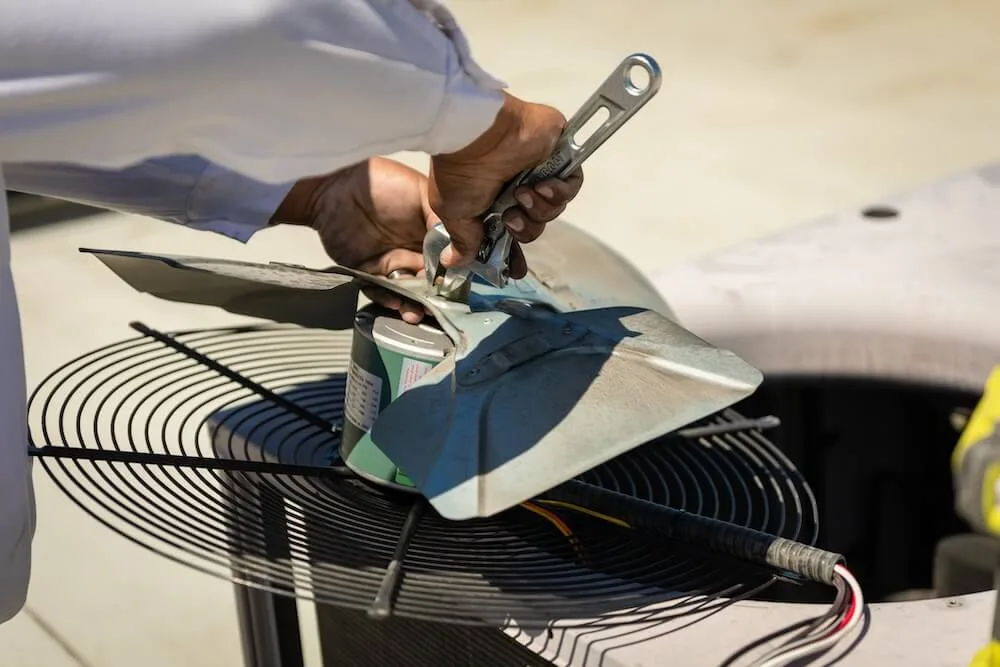
How to choose repair vs replacement
Deciding whether to approve an inducer motor replacement, attempt a repair, or explore a full furnace upgrade is where cost, safety, and long-term strategy intersect. Las Vegas homeowners must weigh a repair that can run from $400 to $1,100, as documented by sources like HomeGuide, against the reality that many other major parts-igniters, control boards, gas valves-carry similar price tags per industry reports. Add in newer diagnostic techniques, such as advanced motor-current analysis and machine-learning approaches explored in research like the 2025 study on Signature-Guided Data Augmentation for induction motors hosted on arXiv, and the decision becomes less about guessing and more about assembling a clear picture of system health. A frequent objection is, “If I’m already spending this much, shouldn’t I just get a new furnace?” The answer depends on age, efficiency goals, and what the rest of the system looks like under the hood. When you reach that point, our furnace replacement cost in Las Vegas guide outlines typical equipment and installation price ranges so you can compare a major repair with the true cost of a new system. Another dimension is risk: gambling on a marginal inducer before a cold front might seem attractive if the furnace still runs occasionally, but the cost of an untimely failure includes emergency rates and potential safety worries. A structured approach-confirming specs, checking warranty, comparing repair totals to the price of a properly sized replacement-helps keep emotions out of the decision. The sections below break that down into practical steps, with examples and maintenance takeaways.Important specs to confirm before replacement
Before committing to a replacement, a few basic specifications should be verified: voltage, rotation direction, mounting style, vent size compatibility, and whether the furnace is single or two-stage. This is also a good time to look at broader system efficiency metrics your contractor may mention, such as SEER2 for cooling systems, BTU output for heating capacity, and HSPF2 for heat pumps, even if you are only replacing the inducer. Think of these like fuel-economy ratings on a car: higher efficiency ratings usually mean lower operating costs, but only if the equipment is correctly sized and installed. As a homeowner, you do not need to memorize these numbers; it is enough to ask your technician to translate what they mean in terms of comfort and monthly bills. The maintenance takeaway is simple: keep a photo of the furnace nameplate and control board label so future techs can confirm specs quickly and avoid compatibility errors.Warranty factors that affect your cost
Warranty status can dramatically change the inducer bill. Many furnaces carry longer coverage on major components than on labor. If the inducer is still under manufacturer warranty, you may only pay labor, which can make replacement an easy decision. If both part and labor are out of warranty, the full $400 to $1,100 range is back on the table, and comparing that cost to the furnace’s age and condition becomes more important. One practical example: a homeowner with a mid-life furnace under active parts warranty might reasonably replace the inducer and continue operating the furnace for years. Another homeowner with an older furnace, long out of warranty and needing multiple major parts, could see the inducer failure as the tipping point to plan a carefully timed system replacement instead of stacking repair bills.When fixing the inducer is cost effective
Repairing or replacing just the inducer typically makes sense when the furnace is otherwise in solid condition, has no known heat exchanger issues, and has not required frequent major repairs. If your technician finds only a seized inducer shaft or a failed capacitor while the rest of the components test well, tackling that repair can be seen as replacing one wear item in an otherwise serviceable machine. Here, Good/Better/Best guidance might look like this: Good-approve a straightforward inducer replacement using a reliable part on a relatively young furnace; Better-replace the inducer and address any contributing issues (such as vent obstructions or drainage problems); Best-pair the inducer replacement with a whole-system check and service agreement that keeps the furnace tuned, especially if your long-term plan is to keep the system until a future home sale.Signs a full furnace replacement makes more sense
Sometimes the inducer failure is not the main story but a symptom of broader aging. Warning signs include repeated major repairs in recent seasons, visible corrosion, obsolete controls, and comfort issues like uneven heating that suggest sizing or duct problems. If the total of recent and anticipated repairs starts nudging into a significant fraction of what a modern, efficient system would cost, it is worth at least pricing a replacement. Another subtle signal is when the inducer assembly itself is hard to source or only available at high cost due to the furnace brand’s age. In that situation, channeling funds into a current-generation system with better efficiency ratings and readily available parts can be the more rational long-term move.Las Vegas climate considerations for inducer failures
The Las Vegas climate shapes how inducer motors age. Furnaces often sit in superheated garages or attics in summer, then see intense but relatively short heating seasons in winter. That thermal cycling stresses plastics, gaskets, and lubricants. Desert dust can infiltrate cabinets, and rooftop package units face direct sun and wind exposure. A typical local example is a rooftop gas pack where years of dust and high temperatures accelerate inducer bearing wear long before the rest of the furnace feels old. For homeowners, this means two things: first, do not assume low heating hours automatically equal low wear on the inducer; second, seasonal inspections before the first real cold snap are especially valuable in this climate.Common mistakes homeowners make with inducer issues
Several well-intentioned actions can backfire. Spraying lubricant indiscriminately into a noisy inducer without disassembly can contaminate windings and seals. Bypassing a pressure switch to “get heat tonight” defeats a critical safety layer. Ignoring error codes and repeatedly power-cycling the furnace can mask intermittent problems that would have been easier to diagnose. DIY is generally limited to listening carefully, checking filters, making sure exterior vents are unobstructed, and recording error codes. Anything that involves removing covers, disconnecting wiring, or disassembling the inducer should be left to a licensed HVAC technician. The maintenance takeaway: treat the furnace cabinet as a sealed, safety-critical space-observe and report, but do not experiment inside it.Safety and compliance factors to check
Beyond the immediate repair, inducer issues are a chance to make sure the furnace still complies with current safety and installation standards. Technicians may check vent pitch and support, confirm that condensate drains correctly on high-efficiency systems, and verify that clearances to combustibles remain adequate. Research on induction motor faults, such as recent work using advanced signal-processing methods to detect broken rotor bars in related motor types on arXiv, underscores a broader industry trend: using better diagnostics to catch problems before they become safety incidents. For homeowners, one simple step is to ensure that gas shutoff valves are accessible, CO detectors are installed outside sleeping areas, and service documentation stays with the furnace. As a final practical example, many Las Vegas families discover during an inducer call that their CO detector is expired or missing-a small, low-cost fix that significantly improves safety when combined with a properly vented furnace.Ready for Reliable Heating? Schedule Your Inducer Motor Service with The Cooling Company
Related reading: Compare costs with our furnace replacement cost guide and general inducer motor replacement guide.
Need Furnace or Heating Service in Las Vegas?
The Cooling Company provides expert furnace repair and heating service throughout Las Vegas, Henderson, and North Las Vegas. Our licensed technicians deliver honest assessments, upfront pricing, and reliable results.
Call (702) 567-0707 or visit furnace repair, heating, heating replacement, or maintenance for details.