


Short answer: Prepare your AC for Las Vegas summer by completing three pre-season checks: clean your ductwork, inspect the outdoor condenser unit and fan belts, and schedule a professional tune-up. In the Las Vegas Valley, dust storms, extreme heat, and constant runtime put extra strain on HVAC systems. Getting ahead of these issues in spring can cut energy bills by up to 25% and prevent breakdowns when temperatures climb above 115 degrees.
Top 3 Steps to Getting Your AC Ready for Summer
1. Clean Your Ductwork
Your ductwork is hidden inside walls, ceilings, and attic spaces, so it is easy to forget about. Over time, dust, pet dander, construction debris, and even desert sand accumulate inside your ducts. In the Las Vegas Valley, fine particulate from nearby desert terrain enters homes faster than in most climates. When your AC pushes air through dirty ducts, it distributes those contaminants throughout your living space and forces the blower motor to work harder. Hire a professional to clean and inspect your duct system before summer. A thorough duct cleaning involves:- Removing duct registers and cleaning them individually
- Using professional-grade brushes and vacuum equipment to clear interior surfaces
- Inspecting for moisture damage, mold growth, or signs of condensation
- Checking duct seals and connections for air leaks
2. Inspect the Outdoor Unit and Fan Belts
Your outdoor condenser unit does the heavy lifting of heat exchange. It pulls hot air from inside your home, transfers that heat to the refrigerant, and expels it outdoors. When the condenser coils, fins, or fan components are compromised, the entire system loses efficiency. Start with a visual inspection. Clear any debris, landscaping, or storage items within two feet of the unit on all sides. Check the condenser coils for visible dirt buildup, and gently rinse them with a garden hose (never a pressure washer). Bent fins can be straightened with a fin comb, available at most hardware stores. Next, inspect the fan belts in both the outdoor unit and the indoor air handler. Look for signs of cracking, fraying, or glazing. A worn belt can slip or break during peak operation, leaving you without cooling on the hottest day of the year. Replacement belts are inexpensive, but the cost of an emergency service call in July is not. Schedule these inspections every two to three months during the cooling season. Regular AC maintenance catches small problems before they become expensive failures.3. Schedule a Professional Pre-Season Tune-Up
A professional tune-up goes beyond what most homeowners can do themselves. A licensed HVAC technician will:- Test refrigerant levels and check for leaks
- Clean evaporator and condenser coils thoroughly
- Inspect and clear the condensate drain line
- Test electrical connections, capacitors, and contactors
- Measure airflow and static pressure across the system
- Calibrate the thermostat for accurate temperature readings
- Lubricate moving parts and check motor amperage

How Las Vegas Dust Storms Affect Your Condenser
Las Vegas experiences haboobs and dust storms throughout monsoon season, typically July through September. These storms carry massive amounts of fine sand and particulate that coat your outdoor condenser unit in minutes. A single dust storm can reduce condenser efficiency by clogging the fins and coils, restricting the airflow your system needs to release heat. After any significant dust event, rinse the condenser unit with a garden hose from the top down. Allow the unit to dry completely before restarting. If dust storms are frequent in your area, consider installing a condenser guard or screen, but make sure it does not restrict airflow. Check your condenser at least weekly during monsoon season and after any visible dust event. Ignoring dust buildup on your condenser forces the compressor to work harder and run longer, which increases energy costs and accelerates wear on internal components. Over time, this can shorten the lifespan of your entire system by several years. If your condenser coils are heavily caked after a storm and a hose rinse does not fully clear them, call a technician for a professional coil cleaning.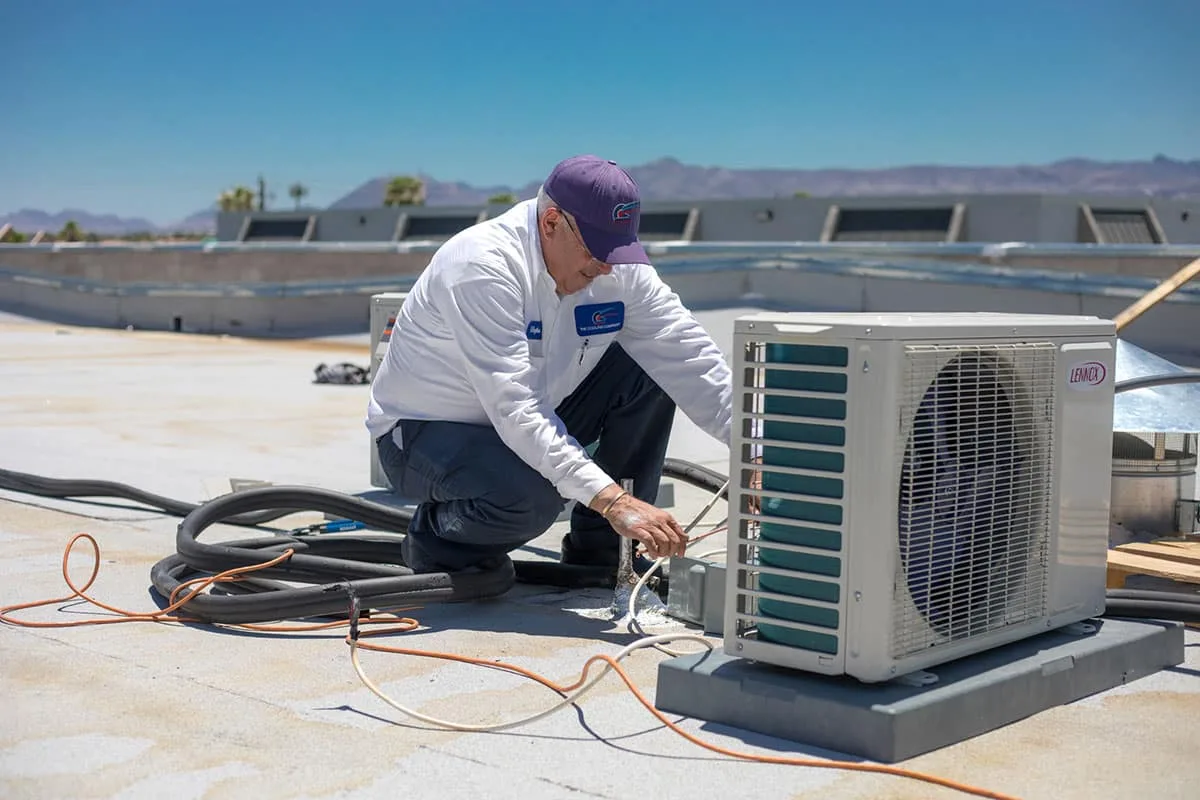
How Often to Change Your Air Filter in Las Vegas
Standard advice says to change your air filter every 90 days. In Las Vegas, that is not enough. Desert dust, construction activity, and homes with pets or multiple occupants create higher particulate loads. During the cooling season, check your filter every 30 days and replace it when it looks visibly dirty. A clogged filter restricts airflow, forces the blower to work harder, raises energy consumption, and can cause the evaporator coil to freeze. Use a filter with a MERV rating between 8 and 13 for the best balance of filtration and airflow. Higher MERV ratings may restrict airflow in older systems, so check your system specifications or ask your technician.Thermostat Settings for Las Vegas Summers
The Department of Energy recommends setting your thermostat to 78 degrees when you are home and higher when you are away. In Las Vegas, many homeowners set their thermostats lower, but every degree below 78 increases energy usage by roughly 3 to 5 percent. If 78 feels too warm, use ceiling fans to create a wind-chill effect that makes a room feel 4 to 6 degrees cooler without lowering the thermostat. A programmable or smart thermostat can automatically raise the temperature when you leave for work and cool the house before you return, saving energy without sacrificing comfort. Avoid setting the thermostat to the lowest temperature when you get home. Your AC cools at the same rate regardless of the set temperature. Setting it to 65 degrees will not cool your home faster; it will just run longer and waste energy.Bonus Tips for Staying Cool and Saving Money
Use Ceiling Fans Strategically
Ceiling fans cost roughly one cent per hour to operate, compared to 30 to 50 cents per hour for a central AC system. Set fans to spin counterclockwise in summer to push air downward. Turn them off when you leave the room. Fans cool people through evaporation, not rooms.Close Blinds and Curtains During Peak Sun
South- and west-facing windows absorb significant solar heat during afternoon hours. Closing blinds, curtains, or installing reflective window film can reduce indoor heat gain by 30 to 45 percent. In Las Vegas, where afternoon sun is relentless, this is one of the simplest ways to reduce AC load.Invest in a Programmable or Smart Thermostat
A programmable thermostat pays for itself within one cooling season in most Las Vegas homes. Smart thermostats learn your schedule, adjust automatically, and provide energy usage reports. They also allow remote control, so you can adjust the temperature from your phone if plans change.Seal Air Leaks Around Doors and Windows
Gaps around doors, windows, and electrical outlets let hot air infiltrate your home and force your AC to compensate. Weatherstripping and caulking are inexpensive fixes that can noticeably reduce cooling costs. Pay special attention to sliding glass doors and older single-pane windows, which are common in Las Vegas homes built before 2000.Why Spring Is the Best Time for a Tune-Up
Spring is the optimal window for HVAC maintenance in Las Vegas for three reasons:- Scheduling availability. HVAC companies are less busy in March and April than during peak summer. You will get faster service and more flexible appointment times.
- Time to address problems. If your technician finds a failing compressor, a refrigerant leak, or aging ductwork, you have weeks to order parts and complete repairs before temperatures spike.
- Lower emergency risk. Systems that break down in July create urgent, expensive situations. A spring tune-up identifies and resolves issues when the stakes are lower.
Related reading: AC maintenance guide, when to change your AC filter, and keeping your home cool in summer.
Need HVAC Service in Las Vegas?
The Cooling Company provides expert HVAC service throughout Las Vegas, Henderson, and North Las Vegas. Our licensed technicians deliver honest assessments, upfront pricing, and reliable results.
Call (702) 567-0707 or visit AC repair, maintenance, heating, or installation for details.