

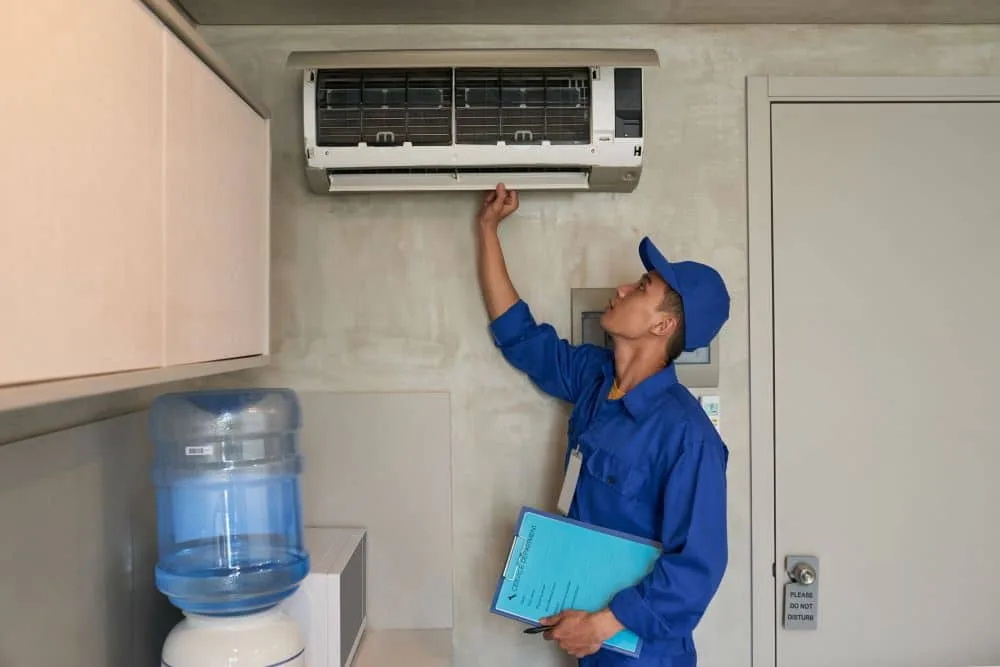
Short answer: Sticker shock is common when a homeowner sees a quote for a full HVAC replacement. Yet that number is tied to some of the biggest drivers of comfort, safety, and monthly energy bills in the home. Heating and cooling equipment is not a simple retail product; it is a custom-engineered system that has to match the house, the climate, and local code.
Use our SEER rating guide to estimate your potential savings.
Overview and homeowner value
What is included in a new HVAC system cost
When contractors talk about “system cost,” they typically mean far more than just the outdoor condenser or indoor furnace. A full quote usually covers the main equipment, the indoor evaporator coil, the thermostat, refrigerant line set, drain lines, and essential safety components like shutoff switches. For many homes, the price also reflects ductwork repair or modification so that airflow is balanced throughout the house. Labor is another major part of the total. That includes design work, removal and disposal of old equipment, crane or lift fees if needed, connection of electrical and gas lines, and commissioning tests that verify the system performs as designed. Understanding each of these elements makes the final number feel less mysterious and more like a bundle of defined services.Why understanding system pricing matters
An HVAC system affects comfort, indoor air quality, and ongoing utility bills for a decade or longer. Modern heating and cooling technology is capable of delivering substantial energy and cost savings of between 10 and 40 percent compared with older models as outlined in an industry analysis of new HVAC technology. Knowing how pricing connects to efficiency, controls, and installation quality helps a homeowner judge whether a higher quote actually offers better long‑term value. Clear understanding also prevents under‑sizing or over‑sizing the system just to “save money” in the short term. Both mistakes can shorten equipment life, increase repair frequency, and reduce comfort. Viewing the quote as an investment decision rather than a simple purchase leads to fewer regrets later.Average cost ranges for new HVAC systems
Homeowners often expect a simple price table, yet real‑world bids fall across a spectrum. Entry‑level systems focus on basic comfort with modest efficiency, familiar single‑stage compressors, and standard thermostats. Mid‑range options usually include higher efficiency ratings and quieter operation. Premium offerings layer on variable‑speed technology, zoning, and advanced controls that fine‑tune temperature and humidity. Actual quotes vary with equipment type, home size, ductwork condition, local labor rates, and building code requirements. For meaningful comparison, it is more useful to compare “good, better, best” tiers from the same contractor than to chase the single lowest number across very different system designs.What affects installation pricing most
Several factors tend to move HVAC quotes up or down more than others. The first is system capacity: larger homes and higher heat loads demand larger equipment and sometimes multiple systems. The second is the complexity of the installation. Attic or rooftop units, difficult access, or tight mechanical closets often add labor time and sometimes special equipment. Condition of existing infrastructure matters as well. Old, leaky ductwork, undersized returns, marginal electrical panels, and outdated refrigerant lines can all require upgrades to support a new system. Local permitting rules, inspection requirements, and code updates can add costs but also protect safety and resale value.Common myths about HVAC replacement costs
One frequent misconception is that all 3‑ton or 4‑ton systems should cost roughly the same, regardless of brand or efficiency. In reality, two systems with the same tonnage can differ significantly in compressor technology, noise levels, dehumidification performance, and warranty coverage. Those hidden differences affect both comfort and total cost of ownership. Another myth is that “the ducts are already there, so they’re fine.” Aging, poorly sealed, or badly designed ductwork can waste a substantial share of conditioned air and force the new system to work harder, indirectly raising lifetime costs. Assuming that ductwork is always a non‑issue leads to under‑budgeting and sometimes disappointing performance after installation.Risks of choosing the lowest bid
The lowest quote often trims something that is not obvious at first glance: time for load calculations, duct redesign, commissioning, or quality materials. Shortcuts can show up later as hot and cold spots, noisy airflow, refrigerant leaks, or premature compressor failures. Those issues are frustrating and expensive to correct once walls and ceilings are closed. If you are already facing aging equipment and trying to decide when to stop repairing and move to a planned upgrade, our replace heating in Las Vegas guide walks through options, cost ranges, and how to time a full system changeout. There is also a risk that a very low bid ignores required permits or skips inspections to save time. That can become a serious problem during home resale or insurance claims. A slightly higher, well‑documented quote from a reputable installer frequently costs less over the system’s lifespan than the rock‑bottom option.Key benefits of professional installation
HVAC equipment is only as good as its installation. A professional team performs Manual J load calculations, checks duct static pressure, sizes refrigerant lines properly, and verifies safe venting and combustion for gas appliances. This technical groundwork ensures the system operates within manufacturer specifications and code requirements. DIY is appropriate for filter changes, some thermostat swaps, and basic maintenance tasks. Full system replacements, refrigerant handling, and electrical modifications, however, require licensed professionals. Correct installation protects equipment warranties, improves safety, and optimizes energy efficiency, which all influence the true cost of ownership.Quick answers to popular cost questions
This section doubles as a concise “common questions or objections” guide:- “Can I just replace the outdoor unit?” Mismatched indoor and outdoor components often reduce efficiency and may void warranties. Full system replacement is usually recommended when equipment ages out.
- “Is a high‑efficiency system always worth it?” In hot climates with long cooling seasons, higher efficiency typically pays back faster. In milder climates, the payback period can be longer.
- “Why does one quote include ductwork and another doesn’t?” Some contractors fold duct repairs into the main price; others itemize them. Reading the scope line by line is critical for fair comparison.
How cost transparency builds trust
Clear proposals list equipment model numbers, efficiency ratings, included accessories, and specific labor tasks. When a contractor explains why a certain size or configuration is recommended, it becomes easier to see the link between upfront cost and long‑term performance. Questions about line items-such as duct sealing, surge protection, or condensate pumps-should receive straightforward explanations. Transparent pricing also simplifies future service. When documentation shows exactly what was installed and why, another professional can maintain or upgrade the system years later without guesswork. That clarity adds value beyond the initial installation.Summary of what you’ll learn on this page
This guide breaks down how system type, home characteristics, efficiency choices, and market conditions shape HVAC replacement costs. It compares common configurations, explains key technical terms, and highlights where higher upfront investment makes financial sense. It also flags areas where cutting corners typically backfires. Homeowner takeaway: understanding the components of cost gives you leverage to ask better questions and choose a system that fits both budget and comfort goals.
Types and configuration options
Split system vs packaged unit pricing
Most homes use a split system, with the condenser outside and the air handler or furnace indoors. Packaged units combine these into a single cabinet, often installed on a rooftop or slab. Split systems generally offer more flexibility in component choice and efficiency range, while packaged units can reduce installation complexity in certain layouts. Pricing differences reflect that flexibility. Split systems may cost more when long refrigerant line runs or indoor build‑outs are required, but they also allow targeted upgrades, such as replacing an aging furnace while keeping a newer air conditioner. Packaged units can be attractive for tight indoor spaces yet sometimes have fewer ultra‑high‑efficiency options.Heat pump vs furnace + AC combo costs
Heat pumps move heat rather than generating it, offering both heating and cooling from one piece of equipment. In many climates they compete directly with a traditional furnace plus air conditioner pair. A furnace/AC combo may have a lower upfront price when a gas line and venting are already in place, while a heat pump can save on fuel costs and simplify maintenance over time. For milder winters, heat pumps often provide more hours of efficient operation, which can offset a higher initial quote. In colder climates, dual‑fuel systems that pair a heat pump with a gas furnace may balance comfort, redundancy, and cost. Evaluating quotes for both configurations helps clarify which option fits a specific home and energy rate structure. For a deeper look at how fuel choice affects operating costs and comfort in our market, our electric vs gas heating guide compares both options specifically for Las Vegas homes.Ducted vs ductless system comparisons
Ducted systems distribute conditioned air through a network of supply and return ducts. When ducts are well designed and sealed, this approach delivers even temperatures room to room. However, repairing deteriorated or undersized ductwork can add meaningful cost to a replacement project. Ductless mini‑split systems place small air handlers directly in the rooms they serve, connected to an outdoor unit by small refrigerant lines. They often cost more per ton of capacity than basic ducted equipment but can avoid the expense of new ducts, especially in additions, garages, or older homes where running ducts is difficult. Ductless systems also make zoning easier, since each indoor unit is independently controlled.Zoned systems and smart thermostat integration
Zoning divides a home into multiple temperature “zones” controlled by separate dampers, thermostats, or ductless heads. This approach raises installation cost compared with a single‑zone system but can significantly cut wasted conditioning in unoccupied rooms. Zoning pairs naturally with smart thermostats, which learn occupancy patterns and adjust setpoints automatically. The smart thermostat market is projected to reach USD 8.3 billion by 2029 with a compound annual growth rate of 10.02% from 2025 to 2029 according to a recent HVAC trends report. That rapid growth reflects wide adoption of connected controls that help fine‑tune comfort and energy use. Advanced control strategies can go even further: one study of deep reinforcement learning for HVAC control in open offices reported 37% savings in energy consumption with minimal temperature violations in comparison with standard control methods. While residential systems are simpler, the same principle applies-better control can justify modest added upfront cost.Which type fits Las Vegas homes best
Las Vegas homes face long, intense cooling seasons and relatively mild winters. That climate makes air conditioning performance and efficiency more critical than ultra‑high heating output. Heat pumps with high efficiency cooling ratings or paired systems with robust condensers and variable‑speed indoor blowers often provide strong value. Many Las Vegas houses were built with ductwork set in attics exposed to extreme heat. In such cases, attention to duct insulation, sealing, and static pressure can be just as important as equipment selection. Homeowner takeaway: in desert climates, prioritize configurations that manage high cooling loads efficiently and protect ducts from harsh attic conditions.How to choose and what drives price
Home size and Manual J load calculation
“Tonnage” in HVAC describes cooling capacity, but square footage alone is a poor guide to proper size. Professional contractors use Manual J load calculations, which account for insulation levels, window area and orientation, air leakage, occupant count, and internal heat gains. A correctly run load calculation avoids the common mistake of oversizing equipment to “play it safe.” Oversized systems cycle on and off frequently, leading to uneven temperatures, poor humidity control, and unnecessary wear. Undersized systems, on the other hand, may run continuously on very hot days without fully cooling the home. Building the right capacity into the quote is a fundamental cost driver and a key predictor of long‑term comfort.Efficiency ratings (SEER2, HSPF2, AFUE)
Efficiency ratings translate equipment performance into standardized metrics. SEER2 measures seasonal cooling efficiency, HSPF2 does the same for heat pumps in heating mode, and AFUE reflects how efficiently a furnace converts fuel into usable heat. Higher ratings typically raise upfront price but lower monthly utility costs. The U.S. Department of Energy recently implemented new efficiency standards and introduced SEER2 to more accurately reflect real‑world performance under modern testing conditions as outlined in a summary of top HVAC trends. For homeowners, this means today’s minimum‑standard units are already more efficient than many older systems they replace. Choosing above‑minimum ratings adds cost but can pay back through energy savings over the life of the equipment.Ductwork condition and static pressure
Static pressure describes how hard the blower has to work to push air through the duct system. High static pressure often signals undersized ducts, too many restrictions, or closed dampers. When a contractor measures static pressure during a replacement estimate, they are checking whether the existing ducts can support new high‑efficiency equipment. If the ducts are leaking, constricted, or poorly laid out, a portion of the project budget may need to go toward duct sealing, resizing, or adding returns. While this adds to initial cost, it typically improves comfort and allows the new system to meet its rated efficiency. Skipping necessary duct upgrades can leave an expensive new unit struggling under the same old airflow problems.Electrical, line set, and refrigerant needs
New HVAC equipment can require dedicated electrical circuits, updated disconnects, or even panel upgrades when older homes lack sufficient capacity. These electrical changes are essential for safety and are usually handled by the HVAC contractor or a partnering electrician. They appear as line items in detailed quotes and can explain differences between bids. Refrigerant line sets-the copper tubing that carries refrigerant between indoor and outdoor units-also matter. Older lines may be the wrong size or contaminated with oil from previous refrigerants. With the U.S. phasing down certain high‑global‑warming‑potential refrigerants like R‑410A, and targeting large reductions in HFC production by 2036 as described in an industry outlook on refrigerant trends, many replacements will involve updated refrigerants and compatible line sets. That transition can slightly increase upfront costs while supporting long‑term regulatory compliance.Brand tiers and warranty differences
Most major HVAC brands offer product lines that can be grouped informally as good, better, and best. “Good” tiers prioritize affordability with basic controls; “better” tiers add features such as multi‑stage operation and quieter components; “best” tiers focus on maximum efficiency and connectivity. Quotes for the same capacity system can span these tiers, creating a wide cost spread. Warranty terms often track with those tiers. Longer parts warranties or optional labor warranties may add modest upfront cost but reduce future repair risk. Reading the fine print-what is covered, for how long, and under what conditions-helps explain price differences between brands and models.Permit, inspection, and compliance costs
Reputable contractors include permit and inspection fees in their proposals. These costs support local code enforcement, which in turn helps ensure venting, electrical work, and refrigerant handling meet safety standards. Some jurisdictions require mechanical drawings or special inspections for rooftop or multi‑unit installations, all of which add administrative time. Skipping permits to save money can create liability if equipment fails or contributes to property damage. It may also complicate resale, as home inspectors and appraisers increasingly look for documented, permitted mechanical work. Paying for proper permitting is effectively paying for another layer of safety and verification.Seasonal demand and timing factors
HVAC pricing is influenced by both local weather and broader economic conditions. During peak summer heat or winter cold snaps, demand for installations and emergency replacements surges, tightening schedules and limiting promotional flexibility. Planning a proactive replacement during shoulder seasons often allows for more competitive pricing and better appointment options. On the supply side, HVAC equipment prices have increased significantly in recent years due to rising raw material costs, supply chain disruptions, strong consumer demand, and labor shortages as reported in an industry pricing analysis. These external pressures mean that quotes from several years ago are not reliable benchmarks for current projects. Homeowner takeaway: timing a replacement before an emergency, and before additional market‑driven price increases, is one of the simplest ways to protect your budget.Ready for Comfort and Savings? Let The Cooling Company Help!
See why homeowners trust us — view our industry awards and certifications.
You may qualify for rebates and tax credits that reduce your upfront cost.
Need HVAC Service in Las Vegas?
The Cooling Company provides expert HVAC service throughout Las Vegas, Henderson, and North Las Vegas. Our licensed technicians deliver honest assessments, upfront pricing, and reliable results.
Call (702) 567-0707 or visit AC repair, maintenance, heating, or installation for details.