

Piezo Ignition: The Unsung Hero of Gas Appliances
Short answer: Piezo ignition uses a spring-loaded hammer striking a piezoelectric crystal to generate a high-voltage spark that lights gas appliances — no batteries, no electrical connection, no pilot light controller required. You will find piezo igniters in pool heaters, patio heaters, gas log sets, outdoor fire pits, gas grills, and some older furnaces built before electronic ignition became standard. In Las Vegas, where pool heaters run 8-10 months a year and patio heaters see heavy use from October through March, piezo igniters accumulate far more strike cycles than they would in milder climates. When the igniter fails — and it eventually will — the symptom is always the same: you press the button, hear the click, but nothing lights. Replacement igniters cost $15-50 for the part, but incorrect installation or misdiagnosis can leave you with a gas appliance that leaks fuel without igniting it.
Need a gas appliance that will not light? Call (702) 567-0707 or Schedule Now.

How Piezoelectric Ignition Actually Works
The word "piezoelectric" comes from the Greek "piezein," meaning to press or squeeze. Certain crystalline materials — most commonly lead zirconate titanate (PZT) in modern igniters, or quartz in older designs — generate an electrical charge when subjected to mechanical stress. This is not a battery reaction or a chemical process. It is a physical property of the crystal's molecular structure: deform the lattice, and electrons move. In a piezo igniter, here is what happens in the fraction of a second between pressing the button and hearing the click:- Spring compression — Pressing the igniter button compresses a spring-loaded hammer mechanism. The spring stores mechanical energy as you push.
- Hammer release — At full compression, a catch releases the hammer, which strikes the piezoelectric crystal with substantial force. This is the "click" you hear.
- Voltage generation — The impact deforms the crystal, generating a voltage spike between 15,000 and 20,000 volts. The current is extremely low (microamps), so it is not dangerous to touch, but the voltage is high enough to ionize air across a small gap.
- Spark discharge — A wire carries that voltage to a spark electrode positioned near the gas burner. The high voltage jumps across a 3-5mm air gap at the electrode tip, creating a visible spark.
- Gas ignition — If gas is present in the correct air-fuel ratio at the electrode, the spark ignites it. The flame establishes, and the appliance operates normally.
Where You Will Find Piezo Ignition in Las Vegas Homes
Piezo igniters are everywhere in residential gas appliances, particularly in equipment that operates outdoors or independently of the home's electrical system.Pool and Spa Heaters
This is where Las Vegas homeowners encounter piezo ignition most frequently — and where it fails most often. Pool heaters in the valley are not seasonal luxuries. With pool season stretching from March through November for most families, and year-round for heated spa use, a typical Las Vegas pool heater fires 200-300+ times per season. Many pool heaters manufactured before 2015 use piezo ignition as the primary lighting method, including popular models from Hayward, Pentair, and Raypak. The combination of high cycle counts, outdoor installation in direct desert sun, and exposure to pool chemical vapors (chlorine and bromine off-gassing) creates an environment that degrades piezo components faster than the manufacturer's bench testing would predict. Chlorine vapor is particularly corrosive to the spark electrode and the wire connections between the crystal and the electrode tip.Patio Heaters
Las Vegas patio heater season runs from roughly October through March, with peak use during December and January when nighttime temperatures drop into the 30s and 40s. Freestanding propane patio heaters — the mushroom-shaped radiant units you see on every restaurant patio on the Strip and in thousands of residential backyards — almost universally use piezo ignition. These units get stored during the brutal summer months, often in sheds or garage corners where temperatures exceed 130 degrees F. That thermal cycling — extreme heat in storage, then rapid cooling when brought out for fall use — stresses the piezoelectric crystal and can cause hairline fractures that reduce spark output. If your patio heater worked fine last March but will not light this October, the crystal likely cracked during summer storage.Gas Log Sets and Fire Pits
Decorative gas logs in indoor fireplaces and outdoor fire pits are staples of Las Vegas homes, particularly in master-planned communities like Summerlin, Southern Highlands, and Anthem where outdoor living spaces are standard. Most gas log sets use a piezo igniter to light the pilot, which then stays lit (standing pilot) or relights the main burner on demand. Indoor gas log sets are relatively protected from the elements. Outdoor fire pits, however, get the full desert treatment: 115-degree summer heat radiating off surrounding hardscape, monsoon rain and dust, and UV exposure that degrades the igniter button housing and wiring insulation. Fire pit piezo igniters in Las Vegas rarely last more than 3-4 seasons before requiring replacement.Older Furnaces and Wall Heaters
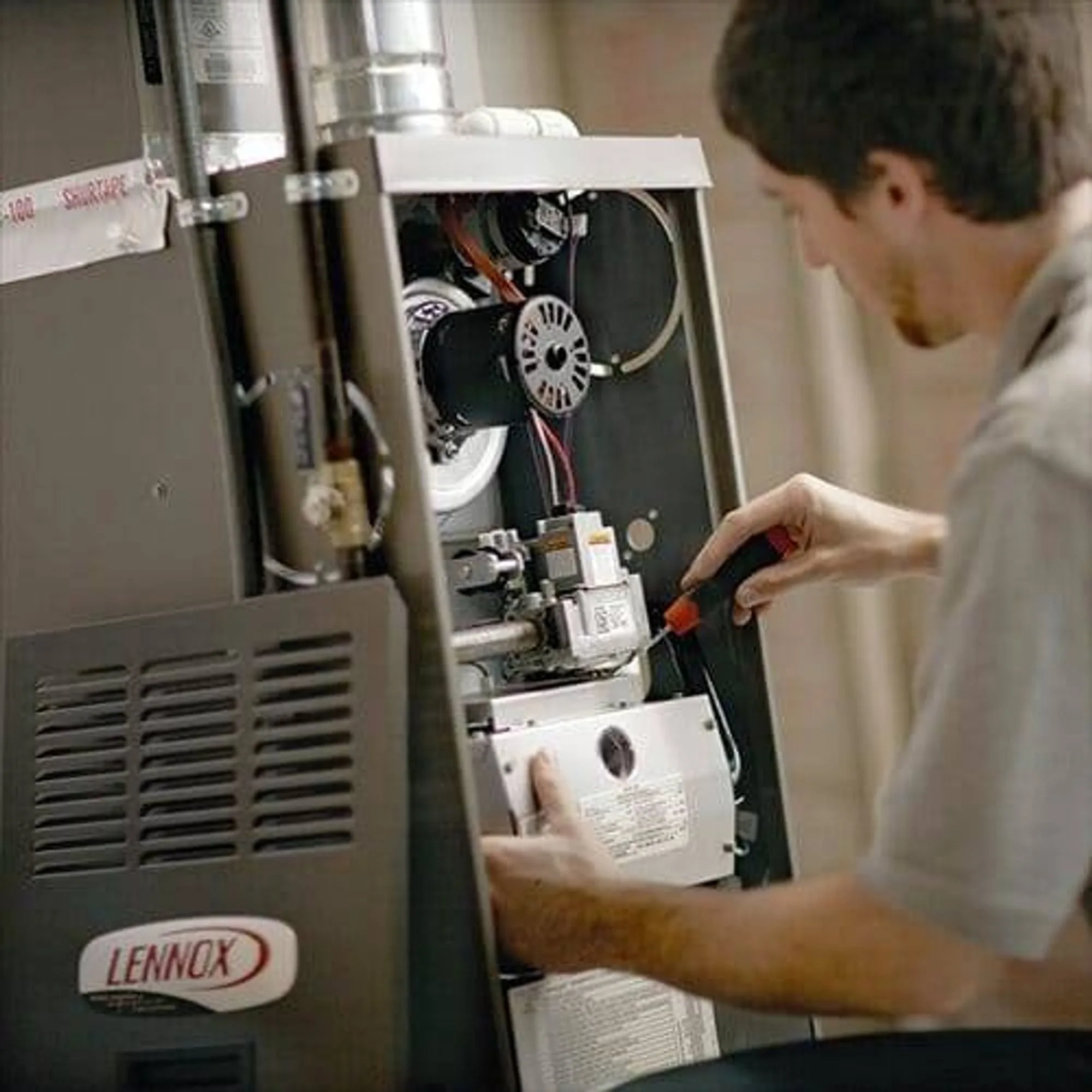
Gas furnaces manufactured before the mid-1990s commonly used piezo ignition to light the standing pilot. When the pilot was lit, a thermocouple kept the gas valve open. Modern furnaces have moved to hot surface igniters (silicon carbide or silicon nitride elements that glow red-hot) or intermittent pilot systems with electronic spark modules. But Las Vegas still has a significant inventory of older homes — particularly in neighborhoods like Paradise, Winchester, Spring Valley, and older sections of Henderson built in the 1970s and 1980s — where original or early-replacement furnaces with piezo ignition remain in service. If you have a furnace with a red or black push-button igniter near the gas valve, that is piezo ignition. These systems work fine when maintained, but a furnace that old has other concerns beyond the igniter — heat exchanger integrity, gas valve reliability, and efficiency losses that make replacement worth serious consideration. Visit our heating services page for an honest evaluation of repair versus replacement.
Why Piezo Igniters Fail
Piezo ignition has no moving electrical parts, no batteries to die, and no circuit boards to short out. So why does it fail? Several reasons, and Las Vegas conditions accelerate all of them.Crystal Fatigue and Fracture
Piezoelectric crystals are not indestructible. Each strike creates microscopic stress fractures in the crystal lattice. After 10,000-20,000 strikes — a number that sounds high but accumulates over 5-8 years of regular use on a pool heater — the crystal's ability to generate sufficient voltage degrades measurably. The spark gets weaker, then inconsistent, then absent. Extreme temperature cycling accelerates this degradation, which is why Las Vegas piezo igniters tend to fail sooner than identical units in moderate climates like San Diego or Atlanta.Electrode Fouling and Corrosion
The spark electrode — the pointed metal tip where the spark actually jumps — must maintain a clean, sharp edge to ionize air effectively. Carbon buildup from incomplete combustion, corrosion from pool chemical vapors, rust from monsoon moisture exposure, and mineral deposits from hard Las Vegas water (our municipal supply runs 16-22 grains per gallon hardness) all degrade the electrode surface. A fouled electrode can receive full voltage from a healthy crystal and still fail to produce a visible spark.Wire Damage and Connection Failure
The high-voltage wire connecting the crystal to the spark electrode is typically a thin, insulated conductor. UV exposure in outdoor installations breaks down the insulation, allowing voltage to arc to the appliance chassis (ground) before reaching the electrode. Rodent damage is another common culprit in Las Vegas — roof rats and field mice chew through igniter wiring inside pool heater cabinets and furnace compartments with depressing regularity.Moisture Intrusion
Monsoon season brings sudden, heavy rain to the Las Vegas valley from July through September. Pool heater cabinets, patio heater bases, and outdoor fire pit control compartments are not watertight. Water intrusion shorts the igniter circuit, corrodes connections, and can permanently damage the crystal if moisture penetrates the housing. A piezo igniter that fails immediately after a monsoon storm is almost certainly a moisture issue.Troubleshooting a Piezo Igniter That Will Not Spark
Before calling for service, there are a few things you can safely check yourself.- Listen for the click — Press the igniter button firmly and listen. A solid, sharp click means the hammer is striking the crystal. No click means the mechanical linkage is broken (spring detached, hammer stuck). A soft or muffled click suggests crystal fracture.
- Check for spark visually — In dim lighting, press the igniter and look at the spark electrode. If you see a bright blue-white spark but the gas does not light, the igniter is working and the problem is gas supply, electrode positioning, or air-fuel mixture. If you see a weak orange spark or no spark at all, the igniter or electrode is the problem.
- Inspect the electrode gap — The gap between the spark electrode and the grounding bracket should be 3-5mm (roughly 1/8 to 3/16 inch). Too wide and the spark cannot jump. Too narrow and it may arc without producing enough heat to ignite gas. Adjust with needle-nose pliers if accessible.
- Clean the electrode — Light sanding with 400-grit sandpaper removes carbon and corrosion from the electrode tip. Do not use water or solvents on the electrode while it is installed in the appliance.
- Check the wire — Look for cracked insulation, rodent chew marks, loose connections at either end, or signs of arcing (black marks on insulation or nearby metal surfaces).
When to Replace vs. When to Call a Pro
Replacing a piezo igniter on a gas grill or a freestanding patio heater is a reasonable DIY project. The igniter is typically held by one or two screws, the wire has a push-on connector, and universal replacement igniters cost $15-30 at any hardware store. Pool heaters, furnaces, and built-in gas appliances are a different situation. These involve natural gas or propane connections, gas valve interaction, and in the case of pool heaters, integration with water flow switches and high-limit safety circuits. A misinstalled igniter on a pool heater can allow gas to accumulate in the combustion chamber before igniting, causing a small explosion that damages the heat exchanger — a $1,200-2,500 repair. On a furnace, improper igniter work near the gas valve puts your household at risk. The smarter move for any gas appliance connected to your home's gas line is to have a licensed technician handle the replacement. A maintenance plan with The Cooling Company covers annual inspection of all gas appliance ignition systems, catching degraded piezo igniters before they fail completely.Frequently Asked Questions
How long does a piezo igniter last?
Typically 5-10 years under normal use conditions. In Las Vegas, expect the lower end of that range for outdoor appliances like pool heaters, patio heaters, and fire pits due to extreme heat cycling, UV degradation, and exposure to monsoon moisture. Indoor gas log igniters tend to last longer because they are protected from weather and temperature extremes. Crystal fatigue is cumulative and not reversible — once spark output declines, replacement is the only fix.
Is it dangerous if my piezo igniter is not working?
The igniter itself is not dangerous when it fails — it simply stops producing a spark. The danger comes from pressing the gas valve button repeatedly while the igniter is not sparking, which floods the combustion chamber with unburned gas. If you press the igniter 3-4 times without ignition, stop and wait at least 5 minutes for gas to dissipate before trying again. Never use a match or lighter to manually ignite a gas appliance that has been flooded with fuel. If you smell gas strongly, shut off the gas supply and call for service.
Can I replace a piezo igniter with an electronic ignition system?
In some cases, yes. Pool heater manufacturers offer electronic ignition retrofit kits for older piezo-equipped models, typically costing $150-400 installed. Electronic ignition is more reliable long-term because it generates sparks from a circuit board powered by a transformer rather than a degrading crystal. For furnaces, upgrading from piezo to electronic ignition usually means upgrading the entire furnace, since the gas valve and control board are integrated in modern systems. Ask your technician whether a retrofit makes sense for your specific appliance.
Why does my pool heater piezo igniter fail every couple of years?
Las Vegas pool heaters endure conditions that drastically shorten piezo igniter life: direct sun exposure heating the cabinet to 150+ degrees F in summer, chlorine and bromine off-gassing that corrodes the spark electrode, hard water mineral deposits on components, and high cycle counts from near-year-round use. If you are replacing the igniter every 2-3 years, consider upgrading to an electronic ignition model or installing a shade structure over the heater equipment pad to reduce thermal stress.
My patio heater clicks but will not light — is it the piezo igniter?
Not necessarily. A clicking sound means the piezo crystal is generating voltage and the hammer mechanism is intact. The problem is more likely a fouled or misaligned spark electrode, a damaged high-voltage wire, a clogged gas orifice, an empty or low propane tank, or a thermocouple that is shutting down the gas valve. Check the propane level first (a common oversight), then inspect the electrode gap and clean the tip with fine sandpaper. If the spark is visibly weak or orange instead of blue-white, the crystal is degrading and the igniter assembly needs replacement.
Keep Every Gas Appliance in Your Home Lighting Reliably
Piezo ignition is one of those rare technologies that works so well for so long that it becomes invisible — until it does not. In Las Vegas, where pool heaters fire up 10 months of the year, patio heaters run all winter, and gas logs set the mood on every cool desert evening, these simple crystal-and-hammer assemblies earn their keep thousands of times over before they finally give out.
The Cooling Company services and repairs gas appliances across the Las Vegas valley, from pool heater ignition systems to furnace pilot assemblies to complete heating system replacements. Our technicians carry the most common piezo igniter replacements on their trucks and can diagnose whether your no-light condition is an igniter problem, a gas supply issue, or something more serious — usually in a single visit.
We serve Summerlin, Henderson, North Las Vegas, Green Valley, Centennial Hills, Mountains Edge, Aliante, Anthem, Southern Highlands, Skye Canyon, Cadence, and all Las Vegas valley communities.
Call (702) 567-0707 to schedule a gas appliance inspection, or visit our maintenance plans page to protect every gas appliance in your home with a single annual service agreement.