

Short answer: At The Cooling Company the service track runs technician, senior technician, lead technician, then field supervisor or operations leadership. Senior means advanced diagnostics and complex commercial work plus mentoring helpers. Lead means you are the technical escalation point for the whole field. Service technicians earn $24 to $44 per hour, and senior and lead technicians sit at the top of that range. Advancement is tied to demonstrated skill and certifications, not seniority.
Every shop has a "senior technician." At a lot of them it means the person who has been there longest. That is a waste of a title, because it tells a customer nothing and it tells the other technicians that time served is the promotion criteria.
Here is what the steps actually mean here, and what you would need to demonstrate to reach each one.
Key Takeaways
- Technician: independent service and install capability, EPA 608 Universal certified.
- Senior technician: advanced diagnostics, complex commercial work, and mentoring helpers.
- Lead technician: crew leadership on large jobs and the technical escalation point for the field.
- Field supervisor and operations: for those who want to move into management.
- Pay: service technicians earn $24 to $44 per hour; senior and lead sit at the upper end.
- Criteria are capability, certification, and results. Not years.
The Step That Actually Separates People
It is not knowledge. Plenty of technicians know more than they can apply.
It is the ability to work a problem you have never seen before, on equipment you did not install, when the obvious answer has already been tried and was wrong. That is the whole job at the senior level, and it is composed of a few specific habits.
Reasoning from the system, not from the symptom
A competent technician sees "not cooling" and works a checklist. A senior technician sees "not cooling" and starts asking what the system is actually doing: where is the heat going, what would have to be true for these pressures at this ambient, what changed recently, and what does the failure pattern suggest about root cause rather than the immediate broken part.
The difference shows up on the calls that matter. If a capacitor failed, replacing it is the fix. If a capacitor failed because the condenser fan motor is drawing high amps because the coil is packed with Las Vegas dust and the head pressure is through the roof, then replacing the capacitor is a return visit waiting to happen.
Knowing when you are wrong
The most expensive habit in this trade is committing to an early theory and then interpreting every subsequent reading as confirmation. Senior technicians notice when the data stopped fitting and start over. That is a discipline, not a talent.
Handling the customer situation, not just the equipment
By the time a call escalates, the homeowner has often already had two technicians out and paid for parts that did not fix it. Managing that conversation, explaining without blaming anyone, and rebuilding confidence is part of the senior role. It is also why documentation matters: photos and written findings turn an argument into a review of facts.
Complex Commercial Work
Senior technicians handle the light commercial calls that require more than residential experience: rooftop packaged units, larger split systems, businesses that cannot shut down while you diagnose, and equipment that has been maintained by whoever was cheapest for the last decade.
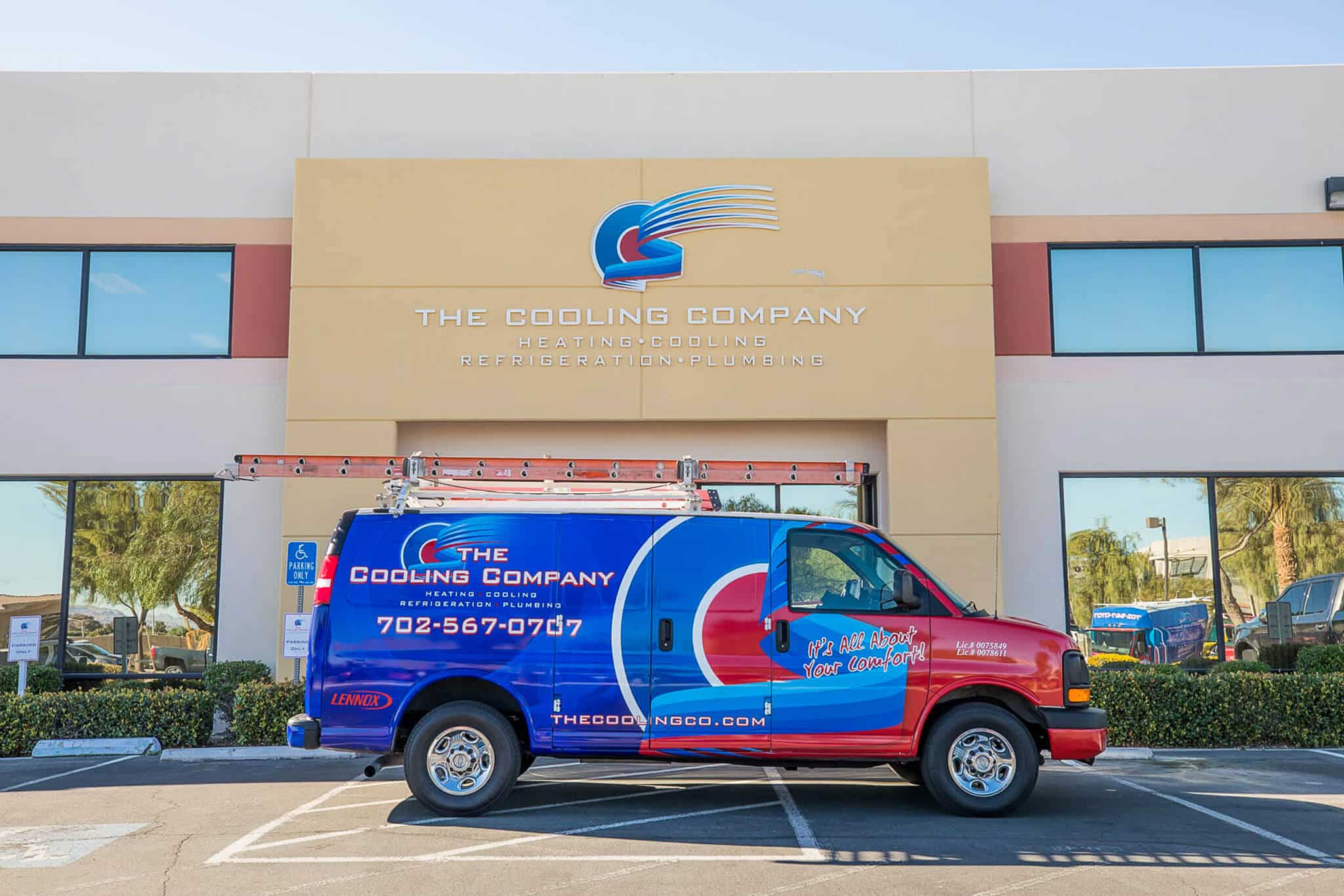
We hold Nevada licenses #0075849 (C-21) and #0078611 (C-1D) with a $700,000 bid limit, so this work is a genuine part of the schedule. A technician who can be dispatched to a rooftop unit at a restaurant on a Friday afternoon is worth a great deal to an operation.
Mentoring Is Part of the Job, Not a Favor
This is where a lot of technically strong people stall out, and it is worth being direct about it.
Helpers and apprentices ride with technicians and install crews. A senior technician is expected to develop the person next to them: explaining the reasoning rather than just the action, letting them attempt things under supervision, and being patient with questions that seem obvious.
Some excellent diagnosticians dislike this and would rather work alone. That is a legitimate preference, and it does place a ceiling on advancement here, because a lead technician's job is substantially about raising the capability of the field. If you know that about yourself, say so in your interview, and we will be equally direct about what it means for the path.
Lead Technician
The lead technician is the technical escalation point. When a technician in the field cannot resolve a call, the lead is who they talk to. When an install crew hits a condition that changes the job, the lead is often who makes the call.
Practically, this involves:
- Being reachable and useful on the phone. Diagnosing through someone else's description is a skill of its own.
- Crew leadership on large install jobs.
- Setting the technical standard. What "commissioned correctly" means here is defined by the people who do it best.
- Training. Formal and informal.
Field Supervisor and Operations Leadership
For people who want management. Scheduling, quality oversight across the field, training programs, and the operational decisions that determine whether technicians succeed or struggle.
We have promoted from within into field supervisor and operations roles. It is the only sensible way to fill them: someone who has never diagnosed a system on a rooftop in August cannot credibly direct people who do.
How Long Does It Take
There is no fixed timeline, which is either encouraging or frustrating depending on your temperament.
Advancement is tied to demonstrated skill, certifications, and the results you produce for customers, not seniority. If you develop faster than average, you advance faster than average. A technician who arrives with eight years of strong commercial diagnostic experience may be operating at a senior level within months. A technician who has been comfortable running the same calls for six years may not advance at all, and we will say so directly rather than letting them assume the promotion is coming eventually.
Questions About Advancement
What does a senior HVAC technician make in Las Vegas?
At The Cooling Company, service technicians earn $24 to $44 per hour, and senior and lead technicians sit at the upper end of that range based on capability and certifications. Peak-season overtime from June through September is available on top of the hourly rate.
How do I get promoted to senior technician?
Demonstrate advanced diagnostic capability on hard calls, take on light commercial work, earn certifications beyond EPA 608, and develop the helpers who ride with you. Then say out loud that this is what you want, because unstated ambitions are the most common reason good technicians feel overlooked.
Does The Cooling Company promote from within?
Yes, including into field supervisor and operations roles. We are fewer than 50 people and family owned, so leadership observes your work directly rather than reading about it in a report.
Can I advance without going into management?
Yes. Senior and lead technician are senior technical roles, and they are a legitimate destination for a full career. Not everyone wants to supervise, and we do not treat that as a lack of ambition.
What if I want to move from service into install?
That works in both directions. Install technicians earn $28 to $38 per hour and the work rewards production quality and crew leadership. Tell us which suits you and we will build toward it.
Do I need a contractor license to advance?
No. Technicians work under the company's Nevada contractor license. A personal C-21 license is what you would pursue if you eventually intend to run your own operation, and the documented experience you build here counts toward that.
Start the Conversation
If you are already operating at a senior level, say so in your application and be ready to describe the hardest call you ever solved. That conversation is worth real money.
Submit your application, see roles on our careers page.
Share This Page