

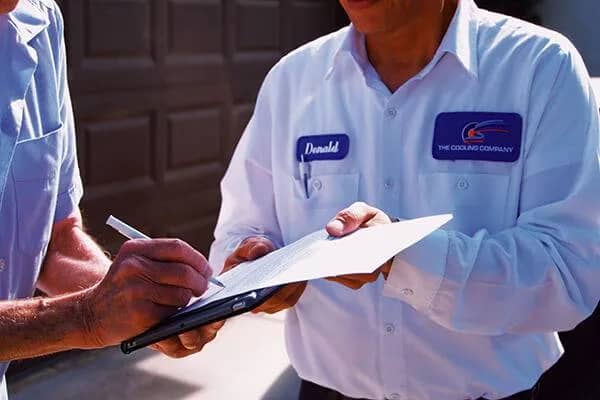
Short answer: Under Nevada law (NRS 118A.290 and NRS 118A.380), your landlord is required to maintain essential services — including air conditioning in a rental property that has AC as part of the lease. If your AC fails, you must provide written notice to your landlord, and they have 48 hours to begin repairs for conditions affecting health and safety. If they do not act, Nevada law gives tenants the right to repair and deduct the cost from rent (up to one month's rent per occurrence) or to pursue other legal remedies. In a Las Vegas summer where temperatures reach 115 degrees or higher, a broken AC is not just uncomfortable — it is a legitimate health emergency. If you need emergency AC repair right now, call (702) 567-0707 — The Cooling Company works with both tenants and landlords, and we provide documentation you can use for landlord reimbursement.
Key Takeaways
- Nevada landlords must maintain habitability (NRS 118A.290). This includes keeping supplied systems — including air conditioning — in reasonable working condition. A rental property advertised or leased with AC that stops functioning is a habitability issue.
- Written notice is required. Always notify your landlord in writing (email, text, or certified letter) documenting the AC failure and requesting repair. Verbal requests are difficult to prove later. Include the date, temperature inside, and a clear statement that the AC is not functioning.
- The 48-hour timeline applies to essential services affecting health and safety. Under NRS 118A.380, if a condition materially affects health and safety (as a broken AC in 115-degree heat can), the landlord has 48 hours from receipt of written notice to begin remediation. This does not mean 48 hours to complete the repair — it means 48 hours to take action.
- Repair-and-deduct is a legal option under NRS 118A.360. If the landlord fails to act within the required time, tenants may arrange for the repair themselves and deduct the cost from rent — up to one month's rent. You must follow the proper notice requirements and keep all receipts and documentation.
- Document everything. Photograph thermometer readings, save all communications with your landlord, keep copies of repair invoices, and note dates and times. Documentation protects you if the situation becomes a dispute.
- TCC provides repair documentation for landlord reimbursement. We work with tenants and landlords regularly. Our invoices include detailed descriptions of the problem, the repair performed, and the condition of the system — the documentation you need for deduction or reimbursement claims.
What Nevada Law Actually Says About Landlord AC Responsibilities
Nevada's landlord-tenant laws are codified in NRS Chapter 118A. The relevant sections for AC issues are:NRS 118A.290 — Landlord's Obligation to Maintain Habitability
This statute requires landlords to maintain rental units in a habitable condition throughout the tenancy. Specifically, the landlord must:- Maintain the property in a condition fit for human habitation
- Keep all supplied systems, including heating, cooling, ventilation, and plumbing, in reasonable working condition
- Make repairs reasonably necessary to keep the premises in a habitable condition
NRS 118A.380 — Essential Services and Emergencies
This section addresses what happens when an essential service fails and the failure materially affects the health and safety of the tenant. In Las Vegas, where summer temperatures routinely exceed 110 degrees, a non-functioning AC system in a residential property can meet this threshold. When an essential service failure affects health and safety, the timeline accelerates. The landlord has 48 hours from written notice to begin taking action. This is not 48 business hours — it is 48 consecutive hours including weekends.NRS 118A.360 — Tenant Remedies (Repair and Deduct)
If the landlord fails to act within the required time period, the tenant has several legal options:- Repair and deduct: Arrange for the repair and deduct the cost from rent, up to one month's rent per occurrence
- Rent withholding: In some circumstances, tenants may be able to withhold rent until the issue is resolved (consult an attorney before taking this step)
- Lease termination: If the condition renders the property uninhabitable and the landlord refuses to repair, the tenant may have grounds to terminate the lease without penalty
Step-by-Step: What to Do When Your Rental AC Breaks
Here is the practical playbook. Follow these steps in order to protect your rights and get your AC fixed as quickly as possible.Step 1: Document the Problem Immediately
Before you contact anyone, document the failure:- Take a photo of a thermometer showing the indoor temperature
- Note the date and time the AC stopped working (or when you first noticed)
- Check your thermostat settings — make sure it is set to cool, the fan is set to auto, and the temperature is set below the current room temperature
- Check your air filter — a severely clogged filter can shut down a system, and a landlord may argue this was tenant neglect
- Check the circuit breaker — if the AC breaker has tripped, reset it once. If it trips again, stop and leave it off (repeated tripping indicates an electrical problem that needs professional repair)
Step 2: Notify Your Landlord in Writing
This step is critical. Send a written notice to your landlord or property management company via:- Email (creates a timestamp and permanent record)
- Text message (screenshot and save)
- Certified mail (for formal situations or unresponsive landlords)
- The date and time you discovered the AC failure
- The current indoor temperature
- The current outdoor temperature
- A clear statement that the air conditioning is not functioning
- A request for immediate repair
- If applicable, a note about health concerns (elderly residents, infants, medical conditions)
Step 3: Give the Landlord Time to Respond — But Not Unlimited Time
Once you have delivered written notice, the clock starts. For conditions affecting health and safety in extreme heat, the landlord has 48 hours to begin taking action. "Taking action" means contacting an HVAC company, scheduling a repair, or communicating a concrete repair plan to you. It does not mean "we will get to it next week." During the waiting period:- Keep your home as cool as possible — close blinds, avoid using the oven, use fans to circulate air
- If indoor temperatures exceed 90 degrees, consider temporary relocation to a cooler space, especially for young children, elderly residents, or anyone with heart or respiratory conditions
- Continue documenting indoor temperatures at regular intervals
Step 4: If the Landlord Does Not Act Within 48 Hours
If 48 hours pass with no repair initiated and no concrete plan communicated, you have several options under Nevada law:Option A: Repair and deduct. Contact a licensed HVAC company (like The Cooling Company), have the repair performed, pay for it, keep all documentation, and deduct the cost from your next rent payment. Under NRS 118A.360, you may deduct up to one month's rent. If the repair costs more than one month's rent, you may need to pursue the excess through small claims court or negotiate with the landlord.
Option B: Contact code enforcement. The City of Las Vegas, Clark County, Henderson, and North Las Vegas all have building and housing code enforcement divisions. A complaint to code enforcement creates an official record and may result in an inspection that compels the landlord to act.
Option C: Seek legal assistance. Nevada Legal Services (702-386-0404) provides free legal help to qualifying residents. The Clark County Self-Help Center can also help tenants understand their rights and file appropriate paperwork.
Step 5: Keep Records of Everything
Whether the situation resolves quickly or becomes a dispute, your documentation is your protection:- All written communications with the landlord (emails, texts, letters)
- Photos of thermometer readings with dates and times
- HVAC repair invoices and receipts
- Any hotel or temporary cooling costs incurred (portable AC units, hotel stays)
- Medical records if the heat caused health issues
When No AC Becomes a Health Emergency
Las Vegas is not a city where "no AC" is merely uncomfortable. The National Weather Service issues excessive heat warnings when temperatures exceed 110 degrees, and Las Vegas regularly exceeds that threshold from June through September. Indoor temperatures in an uncooled Las Vegas home can reach 100-115 degrees within hours of an AC failure during peak summer.Who Is Most at Risk
| Population | Risk Level | Recommended Action |
|---|---|---|
| Infants and children under 4 | High | Relocate to air-conditioned space if indoor temp exceeds 85 degrees |
| Adults over 65 | High | Relocate to air-conditioned space if indoor temp exceeds 85 degrees |
| People with heart or lung conditions | High | Seek cooled shelter immediately; heat worsens cardiac and respiratory conditions |
| People taking certain medications | Moderate to High | Diuretics, beta-blockers, and some psychiatric medications impair heat regulation |
| Pregnant women | Moderate | Excessive heat increases risk of dehydration and heat-related complications |
| Pets | High | Dogs and cats can develop heat stroke at indoor temperatures above 90 degrees |
How The Cooling Company Works With Tenants
We serve both tenants and landlords throughout the Las Vegas valley. Here is how the process works when a tenant contacts us.Tenant-Initiated Repairs
When a tenant calls us directly for an AC repair:- We perform the same thorough diagnostic we would for any homeowner
- We explain the problem and all repair options clearly
- We provide a detailed invoice that includes the system condition, the specific failure, the repair performed, and the cost — this is the documentation you need for landlord reimbursement or rent deduction
- We accept standard payment methods — you do not need the landlord's approval for us to perform the repair if you are exercising your repair-and-deduct rights
Landlord-Initiated Repairs
When a landlord or property management company contacts us on behalf of a tenant:- We coordinate directly with both parties for scheduling
- We provide the diagnosis and quote to the landlord for approval
- We prioritize tenant-occupied properties, especially during extreme heat
- We provide detailed documentation to the property manager for their records
Common Landlord Objections — And How to Respond
"It's the tenant's responsibility to maintain the AC"
Tenants are generally responsible for routine maintenance like changing air filters. They are not responsible for mechanical failures, refrigerant leaks, compressor breakdowns, electrical component failures, or any repair that requires a licensed HVAC technician. The landlord's obligation under NRS 118A.290 covers these repairs."The lease says the tenant is responsible for AC repairs"
A lease clause that shifts habitability maintenance to the tenant may be unenforceable under Nevada law. NRS 118A.200 prohibits lease provisions that waive the landlord's obligation to maintain habitability. If your lease contains such a clause, it does not necessarily override your statutory rights. Consult Nevada Legal Services for guidance on your specific lease language."I called my HVAC company and they cannot come for two weeks"
A two-week wait during a Las Vegas summer heat wave is not a reasonable timeline when indoor temperatures exceed safe levels. Document the landlord's response, note the expected wait time, and exercise your repair-and-deduct rights to get the system fixed sooner through a different licensed HVAC company. The Cooling Company offers same-day emergency AC repair throughout the Las Vegas valley."I want to replace the whole system, not just repair it"
That is the landlord's prerogative — but they cannot leave you without AC while they plan and schedule a full replacement. If the system can be temporarily repaired to provide cooling while a replacement is coordinated, the landlord should authorize that interim repair. Your right to habitable conditions does not pause while the landlord shops for a new system.Property Managers and Landlords: Working With TCC
If you are a landlord or property manager reading this because a tenant sent you the link — that is a good sign. It means your tenant is informed and wants to work within the system. Here is what we offer property professionals:- Priority scheduling for occupied rental properties during extreme heat
- Direct communication with property managers on diagnosis and pricing before any work is performed
- Detailed documentation for your records, insurance claims, and warranty tracking
- Honest assessment of whether a repair or replacement makes more financial sense for the property
- Maintenance plans designed for rental properties — learn about our plans
Frequently Asked Questions
How long does a landlord have to fix a broken AC in Las Vegas?
Under NRS 118A.380, when a condition materially affects the health and safety of the tenant — which a broken AC in extreme Las Vegas heat can — the landlord has 48 hours from receipt of written notice to begin taking action. For non-emergency habitability issues, the standard is 14 days. However, given that Las Vegas summer temperatures regularly exceed 110 degrees, most broken AC situations during summer months meet the health-and-safety threshold for the 48-hour timeline.
Can I withhold rent if my landlord will not fix the AC?
Nevada law provides for rent withholding in certain circumstances, but this is a step that carries legal risk if not done correctly. The safer and more commonly used remedy is repair-and-deduct under NRS 118A.360 — you pay for the repair and deduct the cost from your next rent payment. Before withholding rent entirely, consult with Nevada Legal Services (702-386-0404) or an attorney to understand the requirements and risks specific to your situation.
What if the AC repair costs more than one month's rent?
Under Nevada's repair-and-deduct provision, you may deduct up to one month's rent from a single rental payment. If the repair exceeds that amount, you may need to pay the excess and pursue reimbursement from the landlord through small claims court (for amounts up to $10,000 in Clark County Justice Court) or through negotiation. In many cases, showing the landlord the invoice and documentation is enough to reach a reimbursement agreement without court involvement.
Can my landlord evict me for requesting AC repair?
No. NRS 118A.510 prohibits retaliatory eviction — a landlord cannot evict, raise rent, or decrease services in retaliation for a tenant exercising their legal rights, including requesting repairs, contacting code enforcement, or exercising repair-and-deduct rights. If you believe your landlord is retaliating, document the timeline (your repair request followed by the adverse action) and contact Nevada Legal Services.
Does the landlord have to provide AC if the unit never had it?
If the rental unit was not equipped with air conditioning when you moved in and AC is not specified in the lease as an included amenity, the landlord is generally not required to install one. However, if AC was present and functioning when you took possession — even if it was not specifically mentioned in the lease — the landlord is typically obligated to maintain it. The practical question for Las Vegas tenants is: was AC part of what you rented? If yes, it must be maintained.
Should I call an HVAC company before or after notifying my landlord?
Notify your landlord first — in writing — and give them the opportunity to arrange the repair within the legally required timeframe. However, if you are in a genuine health emergency (indoor temperature above 90 degrees with vulnerable household members), you should take immediate steps to protect your safety, which may include calling an HVAC company for emergency assessment. Document everything, including your attempts to reach the landlord, and keep all receipts for potential reimbursement.
Need Emergency AC Repair Right Now?
If your rental AC has failed and you need help now — whether your landlord has authorized the repair or you are exercising your repair-and-deduct rights — call The Cooling Company at (702) 567-0707. We provide same-day service throughout the Las Vegas valley, and our invoices include the detailed documentation you need for landlord reimbursement.
The Cooling Company is licensed (#0075849, C-21 | #0078611, C-1D), rated 4.8 stars across 536 Google reviews, and has been serving both tenants and landlords across Southern Nevada for years. We treat every home — rented or owned — like our own.