

Understanding your heating and cooling system helps you maintain it better and recognize problems early. Click on any component below to learn more.
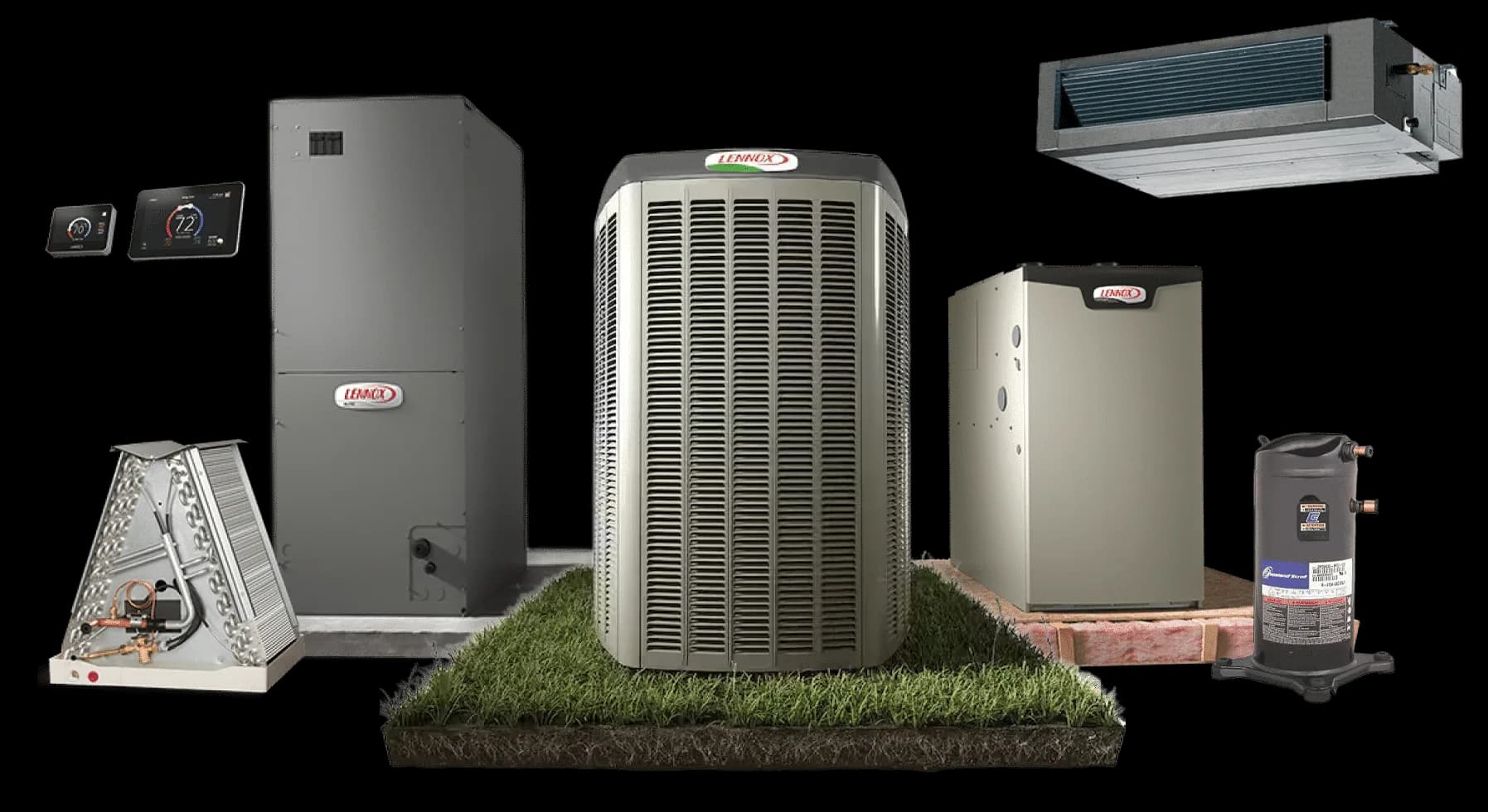
Tap a number to learn more:
Click a numbered hotspot to learn about that component
Your AC doesn't create cold air—it removes heat from indoor air. Here's how:
Warm indoor air passes over the cold evaporator coil, which absorbs heat from the air.
The now-warm refrigerant travels through copper lines to the outdoor unit.
The compressor pressurizes the refrigerant, significantly increasing its temperature.
Hot refrigerant passes through the condenser coil, releasing heat to the outdoor air.
The refrigerant cools, depressurizes, and returns to the evaporator coil to repeat the cycle.
The blower motor pushes the cooled air through your ductwork to every room.
Las Vegas puts unique stress on HVAC systems. With summer temperatures regularly exceeding 110°F and sometimes reaching 120°F, your AC works harder here than almost anywhere else in the country.
During summer, Las Vegas dust clogs filters fast
2 feet of clearance around condenser
Professional maintenance twice yearly
An AC works by absorbing heat from indoor air (evaporator coil), transporting that heat via refrigerant to the outdoor unit (compressor/condenser), and releasing it outside. The cooled air is then distributed through your ductwork by the air handler's blower motor.
A heat pump and AC work identically in cooling mode. The difference is that a heat pump has a reversing valve that allows it to reverse the refrigerant flow, absorbing heat from outdoor air to warm your home in winter. This makes heat pumps ideal for Las Vegas's mild winters.
In Las Vegas's demanding climate, we recommend professional maintenance twice yearly: once before summer (AC tune-up) and once before winter (heating check). Between services, change your air filter monthly during peak usage seasons.