

2 Ton Heat Pump Price in Las Vegas (2025)
Short answer: In Las Vegas, a 2 ton heat pump typically costs about $5,000 to $10,500 installed, depending on efficiency, brand, ductwork condition, and electrical needs. Equipment-only pricing often ranges from $3,000 to $6,000 before installation.
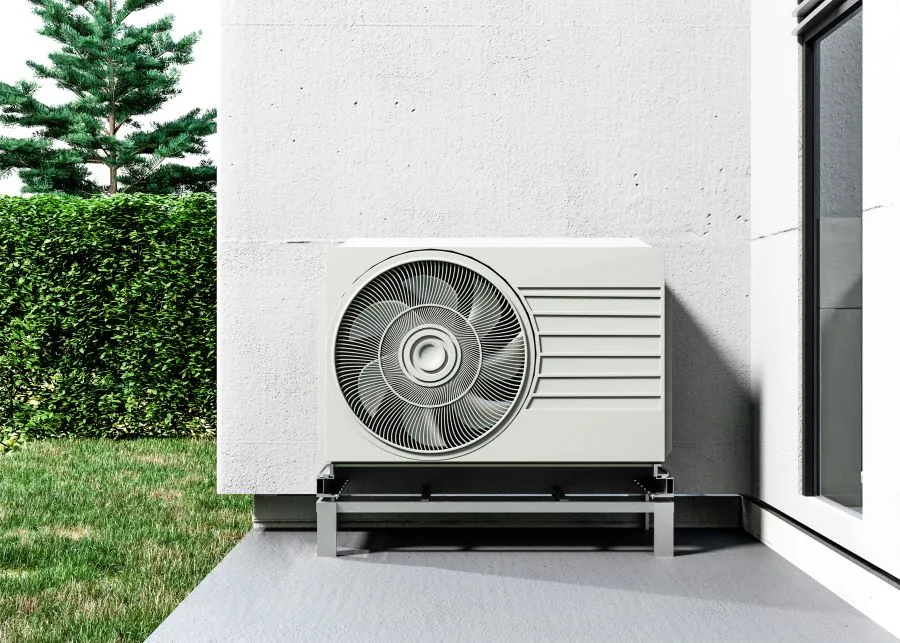
What can change the total price
- SEER2/HSPF2 efficiency level and single‑stage vs inverter
- Ductwork sealing, resizing, or replacement needs
- Electrical panel, breaker, or disconnect upgrades
- Line set replacement and refrigerant handling
- Permits, code requirements, and access constraints
Why 2 Ton Heat Pumps Are Common in Las Vegas
A 2 ton heat pump delivers about 24,000 BTUs of heating and cooling. It often fits smaller homes or well-insulated spaces around 900 to 1,400 square feet. Because desert heat adds load in summer, accurate sizing matters more than rule-of-thumb estimates.
Local sizing considerations in Las Vegas
- West-facing glass and dark roofs add afternoon heat load
- Two-story layouts often need balancing to avoid hot upstairs rooms
- Older ductwork can reduce delivered cooling by 20%+
- Ceiling height and attic insulation shift the load
Is a 2 Ton Heat Pump the Right Size?
Square footage is only a starting point. Ceiling height, insulation quality, window exposure, and duct leakage can change the load dramatically. The best way to confirm sizing is a Manual J load calculation that measures your actual heating and cooling needs.
Sizing guidance for Las Vegas homes
- 900-1,200 sq ft: Usually a good fit for 2 ton if insulation is adequate and windows are energy-efficient
- 1,200-1,400 sq ft: May work if home is well-insulated, single-story, and has minimal west-facing glass
- 1,400+ sq ft: Often needs 2.5-3 ton, especially with two stories, high ceilings, or large windows
- Older homes (pre-1990): Often need larger capacity due to less efficient windows and insulation
- New construction (2010+): May fit 2 ton due to better building envelope and tighter construction
- Good fit: Tight, well-insulated homes with modest sun exposure.
- Often too small: Older homes, large glass areas, or poor ductwork.
- Often too large: Small condos with efficient windows and shading.
2 Ton Heat Pump Cost Breakdown
Equipment-only price
Most 2 ton heat pumps range from $3,000 to $6,000 based on SEER2/HSPF2 ratings and features. In Las Vegas, higher-efficiency models (18+ SEER2) typically cost $4,500 to $6,000, while standard efficiency units (14-16 SEER2) range from $3,000 to $4,500.
Installation labor
Labor typically adds $1,500 to $3,500 depending on access, line set condition, and system complexity. Las Vegas installations often require additional work for attic ductwork, electrical upgrades, or rooftop access, which can push labor costs toward the higher end.
Typical installed range
Most Las Vegas homeowners land between $5,000 and $10,500 for a full 2 ton heat pump install. The desert climate's extreme summer heat means many homeowners choose higher-efficiency models (16-18 SEER2) to reduce cooling costs, which typically fall in the $7,000 to $10,500 range.
Las Vegas efficiency context
In Las Vegas, where cooling runs 8-9 months per year, higher SEER2 ratings deliver significant energy savings. A 16 SEER2 heat pump can save $200-$400 annually compared to a 14 SEER2 model, making the efficiency upgrade pay for itself within 3-5 years. HSPF2 ratings matter less here since winters are mild, but look for units rated 8.5+ HSPF2 for optimal year-round performance.
What a quality install should include
- Manual J load calculation and airflow targets
- Refrigerant charge verification and temperature split testing
- Line set evaluation and replacement if needed
- Drain line inspection and safety switch check
- Startup documentation and thermostat setup
What we measure during a quote
- Airflow and static pressure to confirm duct performance.
- Refrigerant line set condition and routing.
- Electrical capacity and disconnect location.
- Thermostat placement and control compatibility.
What Affects 2 Ton Heat Pump Cost
- Efficiency rating: Higher SEER2 and HSPF2 units cost more upfront but reduce energy use. In Las Vegas, 16-18 SEER2 models add $1,000-$2,500 to equipment cost but save $200-$400 annually on cooling bills.
- Ductwork condition: Leaks or undersized ducts add labor and materials. Duct sealing adds $500-$1,500, while full replacement can add $2,000-$6,000 depending on home size.
- Electrical upgrades: Panels or breakers may need updates for safe operation. Panel upgrades cost $1,500-$3,500, while adding a dedicated circuit typically runs $300-$800.
- Line set replacement: Old or incompatible lines can increase total cost. Replacing refrigerant lines adds $500-$1,200 depending on length and routing complexity.
- Permits and code: Local requirements can add modest fees. Las Vegas permits typically cost $150-$400, and code compliance may require additional safety switches or disconnects.
- Brand and features: Premium brands (Lennox, Carrier, Trane) cost 15-25% more than value brands, while inverter/variable-speed models add $800-$2,000 over single-stage units.
- Installation complexity: Attic installations, rooftop access, or tight spaces can increase labor by $500-$2,000 compared to standard ground-level installs.
- Thermostat and controls: Smart thermostats and zoning systems add $200-$800, while basic programmable thermostats are often included.
Signs a 2 Ton Heat Pump Is Undersized
- System runs nonstop during afternoon heat
- Rooms never reach the thermostat setpoint
- High humidity or stale air despite long runtimes
- Large west-facing glass without shading
Questions to Ask Before You Buy
- Will you run a Manual J load calculation?
- Is my ductwork sized for 2 ton airflow?
- What SEER2/HSPF2 options fit my budget?
- What warranty and labor coverage is included?
Las Vegas Heat Pump Pricing Pitfalls
- Skipping load calculations and oversizing the system.
- Reusing old line sets that do not match refrigerant specs.
- Ignoring electrical capacity limits for inverter equipment.
After-install performance report
- Temperature split and airflow readings
- Refrigerant charge confirmation to specs
- Notes on any remaining wear items
- Recommendations to prevent repeat failures
Choosing the Right Efficiency Level
Entry-level (14 to 15 SEER2)
Lower upfront cost with higher monthly energy use. Works for budget installs or short-term ownership.
Mid-range (16 to 18 SEER2)
Balanced price and comfort. Often the best long-term value for Las Vegas homes.
High-efficiency (19+ SEER2)
Lower operating costs and quieter performance. Best for long-term ownership and heavy summer usage.
Understanding SEER ratings can help you estimate your potential savings.
Install timeline expectations
- Most replacements take 1 day if ductwork is in good shape.
- Plan for 1–2 days if duct sealing or electrical upgrades are required.
- We confirm start-to-finish timing after the on‑site evaluation.
When to Upgrade to a Heat Pump
- Your current system is 12 to 15 years old and repairs are adding up.
- Summer bills are high and comfort is uneven.
- Your existing unit short cycles or struggles in peak heat.
- You want a single system for both heating and cooling.
2 Ton Heat Pump Pros and Cons
Pros
- Year-round comfort: Single system handles both heating and cooling, eliminating the need for separate furnace and AC units
- Energy efficiency: Heat pumps move heat rather than create it, using 30-50% less energy than electric resistance heating
- Lower operating costs: In Las Vegas's mild winters, heat pumps are more efficient than gas furnaces, reducing monthly utility bills
- Environmentally friendly: No combustion means no carbon monoxide risk and lower carbon emissions
- Consistent temperature: Variable-speed models provide steady, even heating and cooling without temperature swings
- Rebates available: Federal tax credits and NV Energy rebates can reduce upfront cost by $500-$2,000
- Long lifespan: With proper maintenance, heat pumps typically last 12-15 years in Las Vegas
Cons
- Higher upfront cost: Heat pumps cost $1,500-$3,000 more than comparable AC-only systems
- Reduced heating capacity in extreme cold: While rare in Las Vegas, heat pumps may need backup heat during extended cold snaps below 30°F
- Electrical requirements: Requires adequate electrical capacity, which may need panel upgrades in older homes
- Installation complexity: Proper sizing and installation are critical; poor installation reduces efficiency and lifespan
- Refrigerant dependency: System performance depends on proper refrigerant charge, which requires professional maintenance
- Outdoor unit noise: Some models can be louder than traditional AC units, though modern inverter models are quieter
Heat Pump vs AC and Furnace
Heat pumps provide both heating and cooling in one system and are highly efficient in Las Vegas’s mild winters. For homes with aging furnaces or rising gas bills, a heat pump can reduce energy use while keeping comfort consistent year-round.
Rebates and Financing in Las Vegas
Rebates and tax credits can lower upfront costs when you choose higher-efficiency equipment. Ask about current incentives and financing options for qualified customers.
You may qualify for rebates and tax credits that reduce your upfront cost.
Helpful resources for Las Vegas homeowners
- Heat pump cost in Las Vegas
- Energy-efficient heating and cooling
- HVAC sizing and load calculations
- Heat pump problems and fixes
- Energy-efficient heating systems
FAQs About 2 Ton Heat Pumps
How many square feet can a 2 ton heat pump handle?
Often around 900 to 1,400 square feet in Las Vegas, but insulation, windows, and duct losses can shift that range.
Is a 2 ton heat pump enough for Las Vegas summers?
It can be for smaller, well-insulated homes. A Manual J calculation confirms whether the load matches a 2 ton system.
Do heat pumps work well in winter here?
Yes. Las Vegas winters are mild, and heat pumps perform efficiently without frequent backup heat.
What is the most common hidden cost?
Duct repairs and electrical upgrades are the most common add-ons once installation begins.
How long does a heat pump last?
Most systems last 12 to 15 years with proper maintenance, especially if filters and coils are kept clean.
Do I need to replace my air handler too?
Not always. We check compatibility and airflow first. If the indoor equipment is undersized or inefficient, replacement can improve performance.
Will a 2 ton heat pump control humidity?
Yes when properly sized and installed. Oversized systems short‑cycle and remove less humidity.
Related Las Vegas Heat Pump Services
- Heat pump installation in Las Vegas
- Heat pump repair
- Heat pump installation
- AC installation
- HVAC financing in Las Vegas
Need HVAC Service in Las Vegas?
The Cooling Company provides expert HVAC service throughout Las Vegas, Henderson, and North Las Vegas. Our licensed technicians deliver honest assessments, upfront pricing, and reliable results.
Call (702) 567-0707 or visit heat pump installation, heating, AC installation, or maintenance for details.
Share This Page
Ready for 2 Ton Heat Pump Installation or Replacement?
For accurate pricing based on your home, schedule an in-home evaluation. We will confirm sizing, inspect ductwork, and provide clear options for heat pump installation or replacement.
Our heat pump installation service includes Manual J load calculations, proper sizing, ductwork evaluation, and professional installation with full commissioning. We handle permits, electrical upgrades, and system setup so your new heat pump performs efficiently from day one.
Call (702) 567-0707 or visit heat pump installation in Las Vegas to get started with your 2 ton heat pump installation or replacement project.
Browse our repair vs. replace guide to see if upgrading makes sense for your home.