
Why Does My AC Keep Freezing Up in Las Vegas?
Short answer: Repeated AC freezing in Las Vegas is usually caused by restricted airflow from dusty filters, low refrigerant from leaks, or blower motor problems. The desert heat and frequent dust storms make filter maintenance especially critical here—filters can clog in days rather than weeks. Turn the system off immediately to thaw, replace the filter, check all vents are open, and schedule professional service if ice returns. Running a frozen system can damage the compressor, which is especially costly during peak summer when you need cooling most.
Common Causes of Repeat AC Freezing
Understanding why your AC keeps freezing helps prevent future problems. In Las Vegas, the combination of extreme heat, dust storms, and extended cooling seasons creates unique conditions that make freezing more common than in milder climates.
- Dirty filters: Restricted airflow reduces the amount of warm air passing over the evaporator coil, causing the coil temperature to drop below freezing. In Las Vegas, dust and debris accumulate faster due to desert conditions—filters can load in just days after wind storms, making monthly filter changes essential during peak summer months (May-September).
- Low refrigerant: Refrigerant leaks reduce system pressure, which lowers the coil temperature and causes ice formation. Low refrigerant levels also reduce cooling capacity, forcing the system to run longer and increasing freeze risk. Refrigerant doesn't get used up—low levels always indicate a leak that must be repaired.
- Blocked or closed vents: Closed or obstructed supply vents reduce airflow across the coil, while blocked return air grilles starve the system of air, both leading to freezing conditions. Many Las Vegas homes have undersized return systems that become easily blocked by furniture, rugs, or closed doors.
- Dirty evaporator coils: Dust, dirt, and debris buildup on coils insulates them and restricts heat transfer, causing the coil to run colder and freeze. Las Vegas dust storms and rooftop installations make coil cleaning especially important—rooftop units are exposed to more dust and extreme temperatures.
- Blower motor or capacitor issues: Weak or failing blower motors, bad capacitors, or loose electrical connections reduce airflow velocity, allowing coils to drop below freezing temperature even with clean filters. During peak summer when systems run almost continuously, blower components face more stress.
- Thermostat set too low: Setting the thermostat below 70°F for extended periods, especially during hot afternoons when outdoor temps exceed 110°F, forces the system to run continuously and can cause freezing if airflow is already compromised.
- Duct leaks or undersized returns: Leaky supply ducts reduce delivered airflow, while undersized or blocked return air ducts starve the system, both creating conditions that lead to freezing. Older Las Vegas homes often have undersized return systems.
- Refrigerant line restrictions: Kinked or restricted refrigerant lines, clogged filter dryers, or expansion valve problems can cause pressure drops that lead to freezing.
AC Freezing Troubleshooting Checklist
Use this step-by-step checklist to safely address a frozen AC system and prevent further damage. Follow these steps in order and call a professional if ice returns after thawing.
- Immediate safety steps: Turn off the AC at the thermostat immediately, switch to fan-only mode to help circulate air and speed thawing, and turn off the breaker if you see water leaking or hear unusual sounds.
- Allow complete thawing: Let the system sit with cooling off for at least 2-4 hours (heavier ice may take 24 hours), check that all visible ice has melted before restarting, and look for water around the air handler that needs cleanup.
- Filter inspection and replacement: Remove and inspect the current filter—if it's dirty, gray, or clogged, replace it immediately. Check the filter size and install the correct replacement, and note the filter condition to share with your technician. In Las Vegas, filters can become heavily loaded after dust storms or windy periods.
- Vent and register check: Walk through your home and verify all supply vents are open and unobstructed, check return air grilles for blockages from furniture, rugs, or debris, and ensure no vents are completely closed in unused rooms.
- Visual inspection: Look for visible ice on refrigerant lines or the outdoor unit, check for water damage or leaks around the indoor air handler, and inspect the outdoor unit for debris buildup or blocked airflow.
- Restart procedure: Once fully thawed, turn the thermostat back to cooling mode, set temperature to 75-78°F (not too low), monitor the system for the first 30 minutes to ensure it's cooling properly, and watch for any signs of ice returning.
- Document symptoms: Note what time of day the freezing occurred, record outdoor temperature when it happened, document how long the system had been running, and note any recent filter changes or maintenance.
- When to call a professional: If ice returns within 24 hours after thawing, if the system won't cool properly after restart, if you notice refrigerant leaks or hear hissing sounds, or if the compressor makes unusual noises or won't start.
If freezing recurs after following this checklist, shut the system off and call a licensed HVAC technician immediately. Repeated freezing can damage the compressor and lead to expensive repairs.
What Not to Do
- Do not chip ice off the coil
- Do not run the system while frozen
- Do not ignore repeated freezing cycles
When to Call a Technician
If the system freezes again after basic steps, you likely have a refrigerant or airflow issue that needs professional diagnosis.
What a quality diagnostic should include
- Airflow measurement and temperature split testing
- Refrigerant pressure check and leak indicators
- Blower motor and capacitor testing
- Coil inspection and cleaning recommendations
Why AC Freezing Happens More in Las Vegas
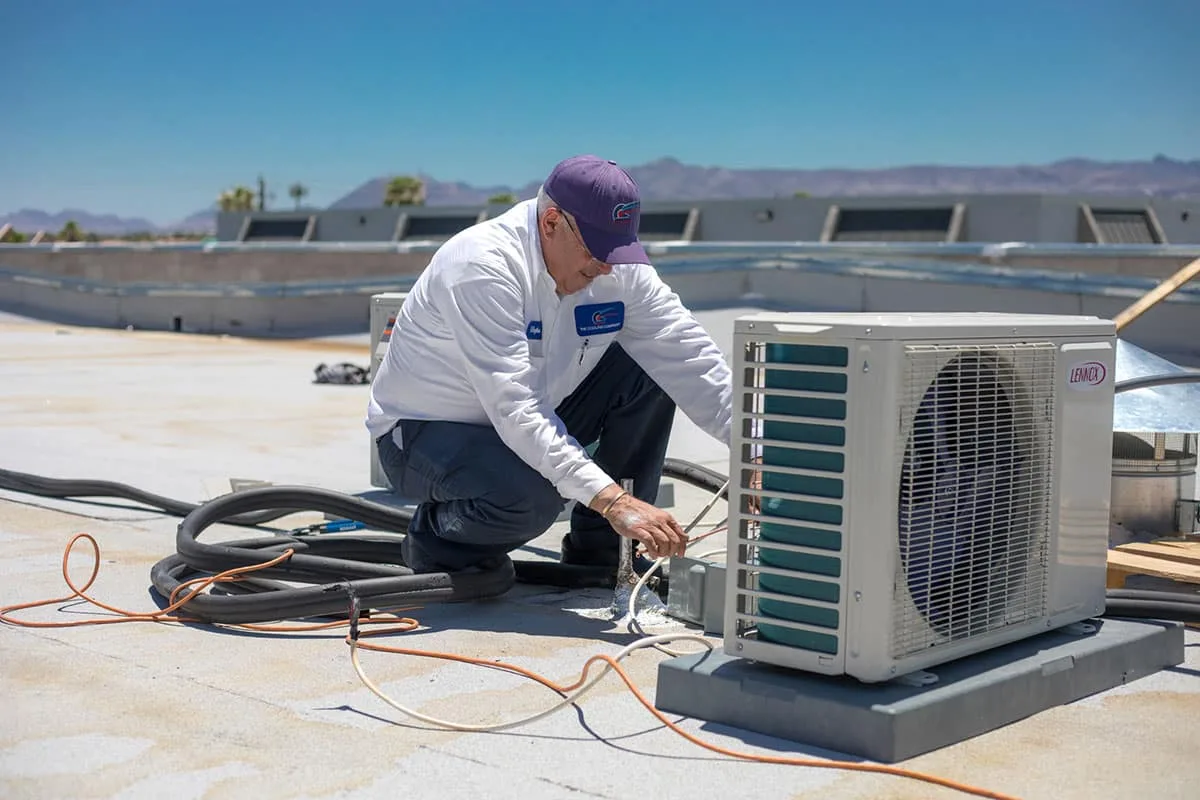
Las Vegas's extreme desert climate creates unique conditions that make AC freezing more common here than in milder climates. The combination of intense heat, frequent dust storms, and extended cooling seasons means systems run longer and harder, accumulating dust and debris faster. During peak summer, when temperatures regularly exceed 110°F, air conditioners run almost continuously, which accelerates filter clogging and coil contamination. Desert dust storms can load filters in days rather than weeks, quickly restricting airflow. Additionally, many Las Vegas homes have rooftop AC units exposed to dust, debris, and extreme temperatures, making coil cleaning and filter maintenance even more critical. The high demand for cooling also means systems are more likely to be pushed beyond their optimal operating conditions, especially if maintenance is delayed.
Las Vegas-Specific Freeze-Up Triggers
Our technicians track these common causes of AC freezing specific to Las Vegas homes and climate conditions.
- Dust-loaded filters after wind events: Desert wind storms can load filters in just days, quickly restricting airflow. Check filters after any visible dust storms or windy periods.
- Long overnight runtimes: When thermostats are set too low (below 70°F) during hot nights, systems run continuously and can freeze if airflow is already compromised.
- Coil contamination from rooftop exposure: Rooftop units are exposed to more dust, debris, and extreme temperatures, requiring more frequent cleaning than ground-level installations.
- Return grille blockage in older homes: Many older Las Vegas homes have undersized return air systems that become easily blocked by furniture, rugs, or closed doors.
- Extended cooling season stress: Systems running from April through October accumulate more wear and require more frequent maintenance than systems in seasonal climates.
- High outdoor temperatures: When outdoor temps exceed 110°F, systems work harder and are more susceptible to freezing if any airflow restriction exists.
- Attic air handler exposure: Units in hot attics face extreme temperatures that can affect refrigerant pressures and increase freeze risk during peak heat.
Prevention Tips to Avoid AC Freezing
Follow these proactive steps to prevent AC freezing and keep your system operating efficiently through Las Vegas summers.
- Regular filter maintenance: Change filters every 1-2 months during peak summer (May-September), or monthly if you have pets, high dust, or run the AC frequently. Check filters more often after dust storms or windy conditions. Use high-quality filters rated MERV 8-11 for better dust capture without restricting airflow.
- Keep vents open and unobstructed: Ensure all supply vents are open and clear of furniture, rugs, or curtains. Never close more than 20% of vents in your home. Keep return air grilles clean and unobstructed to maintain proper airflow.
- Schedule annual AC maintenance: Professional maintenance includes coil cleaning, refrigerant charge verification, blower motor inspection, capacitor testing, and airflow measurement. Maintenance catches problems before they cause freezing.
- Fix duct leaks and airflow issues: Have ductwork inspected and sealed if leaks are found. Ensure return air ducts are properly sized. Address any airflow restrictions or imbalances that reduce system performance.
- Monitor thermostat settings: Avoid setting the thermostat below 72°F during hot weather. Use programmable thermostats to gradually cool the home rather than forcing rapid temperature drops. Consider raising the setpoint by 2-3°F to reduce runtime.
- Clean evaporator coils regularly: Schedule professional coil cleaning every 1-2 years, or more often if your unit is exposed to dust storms or rooftop conditions. Dirty coils reduce efficiency and increase freeze risk.
- Inspect and maintain blower components: Have technicians check blower motor amperage, capacitor condition, and belt tension (if applicable) during maintenance. Weak blowers are a common cause of freezing.
- Address refrigerant leaks promptly: If you notice reduced cooling or hear hissing sounds, have the system checked for leaks immediately. Low refrigerant always indicates a leak that needs repair.
- Protect outdoor units: Keep the area around your outdoor condenser clear of debris, vegetation, and stored items. Ensure at least 2-3 feet of clearance on all sides for proper airflow.
- Watch for warning signs: Reduced airflow from vents, higher energy bills, longer cooling cycles, or ice forming on refrigerant lines are early warnings that need attention before freezing occurs.
- Consider system upgrades: If freezing is a recurring problem, consider upgrading to a variable-speed blower motor, installing a larger return air system, or upgrading to a more efficient system with better airflow management.
Helpful resources for Las Vegas homeowners
- Air conditioner not cooling
- AC not blowing hard
- What’s included in an AC diagnostic
- Air conditioning maintenance
- AC repair
Repeat Freeze Prevention Plan
- Swap filters every 30 to 45 days in peak summer.
- Keep return grilles clear to avoid airflow collapse.
- Schedule a coil cleaning before monsoon humidity spikes.
- Track if freezing happens at night or late afternoon.
What to Ask After the Repair
- Airflow and temperature split readings after thawing.
- Evidence of leaks or pressure issues found.
- Filter size and replacement schedule confirmation.
- Any duct restrictions that need follow-up.
FAQs About AC Freezing
Is it safe to run the AC while it is frozen?
No. Running the system can damage the compressor.
Why does freezing happen more in Las Vegas?
Heavy runtime and dust restrictions are common in the desert climate.
Can low refrigerant be fixed by a recharge?
Refrigerant does not get used up. Low levels mean a leak that must be repaired.
How long should I wait before turning the system back on?
Wait until all ice is melted and airflow is restored.
Do you offer emergency AC repair?
Yes. We provide emergency service across the Las Vegas Valley.
Should I run the fan to thaw the coil faster?
Yes, set the thermostat to fan-only to speed thawing, but keep cooling off.
Will freezing damage the compressor?
Yes. Running a frozen system can damage the compressor and lead to costly repairs.
Need HVAC Service in Las Vegas?
The Cooling Company provides expert HVAC service throughout Las Vegas, Henderson, and North Las Vegas. Our licensed technicians deliver honest assessments, upfront pricing, and reliable results.
Call (702) 567-0707 or visit AC repair, maintenance, heating, or installation for details.
Share This Page
Need AC Repair or Maintenance in Las Vegas?
If your AC keeps freezing or you want to prevent future problems, our licensed technicians can diagnose airflow and refrigerant issues, clean coils, verify system performance, and make necessary repairs to restore reliable cooling. We also offer annual maintenance plans that include filter changes, coil cleaning, and system inspections to prevent freezing before it happens.
Call (702) 567-0707 or visit AC repair to schedule service. For preventive maintenance, visit AC maintenance to learn about our maintenance plans.