


AC Repair in Las Vegas: Signs, Costs, and Next Steps
Short answer: If your AC is blowing warm air, short cycling, or freezing up, it likely needs professional repair. Early fixes prevent larger, more expensive failures during peak Las Vegas heat.

What can change repair cost and urgency
- After-hours or emergency service during heat waves
- Parts availability and system age
- Refrigerant leaks vs. electrical failures
- Access to attic or rooftop components
- System still cooling vs. completely down
Top Signs You Need AC Repair
- Warm air or weak airflow
- Ice on coils or lines
- Short cycling or nonstop runtime
- Strange noises or burning smells
- Rising energy bills without higher use
Symptom to Cause Quick Guide
- Warm air: Dirty filters, low refrigerant, or compressor issues
- Weak airflow: Clogged filters, dirty coils, or blower problems
- Ice on coils: Low airflow or refrigerant leaks
- Short cycling: Oversizing, thermostat issues, or sensor faults
- Burning smell: Electrical issues that need immediate service
Common AC Repair Issues in Las Vegas
Las Vegas AC systems face unique challenges from extreme heat, dust, and extended runtime. Understanding these common issues helps you recognize problems early and communicate effectively with technicians.
Refrigerant Problems
- Low refrigerant: Usually indicates a leak that must be located and repaired. Simply adding refrigerant without fixing the leak wastes money and damages the environment.
- Refrigerant leaks: Common in older systems or after component replacements. Leaks in Las Vegas can worsen during heat waves when systems run continuously.
- Incorrect refrigerant charge: Overcharging or undercharging reduces efficiency and can damage the compressor.
Electrical Component Failures
- Capacitor failure: Weak capacitors cause hard starts, humming, and short cycling. Extreme Las Vegas heat accelerates capacitor wear.
- Contactor problems: Worn or burned contactors prevent the compressor from starting or cause intermittent operation.
- Wiring issues: Loose connections, corrosion, or damaged wires can cause system failures or safety hazards.
- Control board failures: Modern systems rely on circuit boards that can fail due to power surges or age.
Airflow Restrictions
- Dirty filters: Las Vegas dust storms clog filters faster than in other climates. Restricted airflow causes ice formation and compressor strain.
- Dirty coils: Dust and debris on evaporator or condenser coils reduce efficiency and can cause freezing.
- Ductwork leaks: Leaky ducts waste cooled air, especially problematic in attics where Las Vegas temperatures can exceed 150°F.
- Blocked vents: Furniture or closed vents create pressure imbalances and reduce system effectiveness.
Thermostat and Control Issues
- Dead batteries: Simple but common cause of no-response situations.
- Sensor drift: Old thermostats lose accuracy, causing temperature swings and excessive runtime.
- Wiring problems: Loose or damaged thermostat wires prevent proper communication with the system.
- Programming errors: Incorrect schedules or mode settings can make it seem like the system isn't working.
If you own a Lennox system, our dedicated Lennox AC repair guide covers brand-specific problems, error codes, and Las Vegas repair costs in detail.
Mechanical Failures
- Blower motor problems: Bearings wear out, motors burn out, or belts break, reducing airflow.
- Compressor issues: The most expensive repair. Compressors can fail due to electrical problems, refrigerant issues, or age.
- Fan motor failures: Outdoor fan motors fail due to heat exposure and continuous operation in Las Vegas summers.
What Drives AC Repair Costs in Las Vegas
Understanding cost factors helps you budget for repairs and recognize when pricing is reasonable. Las Vegas repairs often cost more due to extreme conditions and high demand during peak season.
Service Timing and Urgency
- Emergency or after-hours service: Typically adds $100-$300 to the base repair cost. Heat waves create high demand, making same-day service more expensive.
- Peak season pricing: June through September sees highest demand. Scheduling repairs in spring or fall can reduce costs.
- Weekend service: Often carries premium pricing, especially during heat emergencies.
Parts and Labor Complexity
- System age: Older systems (12+ years) may require discontinued parts or custom fabrication, increasing costs.
- Part availability: Common parts like capacitors are inexpensive ($50-$200), while compressors or control boards can cost $800-$2,500.
- Labor intensity: Attic or rooftop access, tight spaces, or complex diagnostics add labor hours.
- Refrigerant type: Older R-22 refrigerant costs significantly more than R-410A due to phase-out regulations.
Las Vegas-Specific Factors
- Heat-related stress: Systems running 18+ hours daily during heat waves experience accelerated wear, leading to more frequent failures.
- Dust and debris: Desert conditions require more frequent coil cleaning and filter changes, adding to maintenance costs.
- Attic installations: Many Las Vegas homes have AC units in attics where temperatures exceed 150°F, making repairs more difficult and time-consuming.
- Rooftop units: Commercial or some residential rooftop installations require specialized equipment and safety measures.
Typical Repair Cost Ranges
- Simple fixes: $150-$400 (capacitor, contactor, filter replacement, thermostat battery)
- Moderate repairs: $400-$800 (blower motor, refrigerant leak repair, coil cleaning, sensor replacement)
- Major repairs: $800-$2,500 (compressor, control board, major refrigerant leak, ductwork repair)
- Emergency premiums: Add $100-$300 for after-hours or same-day emergency service
Note: Always get a written estimate before work begins. Reputable Las Vegas contractors provide clear pricing and explain what's included in the repair cost.
Check our AC repair cost guide for current cost estimates.
What to Expect During a Repair Visit
- Full diagnostic testing and clear explanations
- Written estimate before work starts
- System test after repair is completed
What a quality diagnostic should include
- Airflow measurement and temperature split testing
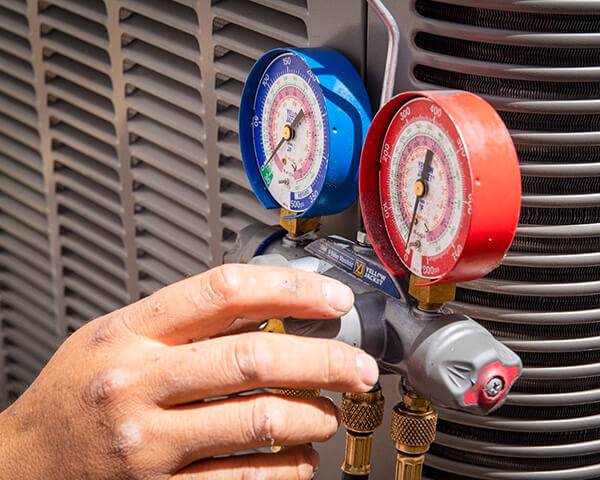
- Refrigerant pressure check and leak indicators
- Electrical testing for capacitors and contactors
- Thermostat and control verification
Repair vs Replace: Making the Right Decision
Deciding between repair and replacement isn't always straightforward. In Las Vegas, where AC systems face extreme conditions, this decision requires careful consideration of multiple factors.
When Repair Makes Sense
- System under 10 years old: Most repairs are cost-effective for newer systems with good maintenance history.
- Simple, inexpensive fixes: Capacitor, contactor, or filter issues are typically worth repairing regardless of age.
- First major repair: If this is the first significant repair and the system has been reliable, repair is usually the right choice.
- Repair cost under $500: For systems under 12 years old, repairs under $500 are generally worthwhile.
- You plan to move soon: If selling within 2-3 years, repair may be more practical than replacement.
When Replacement May Be Better
- System over 12-15 years old: Las Vegas systems often need replacement after 10-12 years due to extreme conditions. Older systems become less reliable and more expensive to maintain.
- Repeated major repairs: If you've spent $1,500+ on repairs in the past 2 years, replacement often makes more financial sense.
- Repair cost exceeds 50% of replacement: When a single repair approaches half the cost of a new system, replacement provides better long-term value.
- Compressor failure on old system: Compressor replacement on systems over 10 years old often costs $2,000-$3,500, making new system installation more attractive.
- R-22 refrigerant leaks: Older systems using phased-out R-22 refrigerant face rising costs. Replacement eliminates this ongoing expense.
- High energy bills: If your system is inefficient (low SEER rating) and energy costs are rising, a new high-efficiency system can pay for itself over time.
- Comfort issues: If repairs can't fix uneven cooling, excessive noise, or humidity problems, replacement may be necessary.
The 50% Rule
A common guideline: if the repair cost exceeds 50% of the cost to replace the system, replacement is usually the better investment. However, this rule should be combined with consideration of system age, repair history, and your long-term plans.
Las Vegas-Specific Considerations
- Heat wave timing: If your system fails during peak summer heat and replacement can be scheduled quickly, it may prevent multiple emergency repair calls.
- Energy efficiency: New systems with SEER ratings of 16+ can reduce cooling costs by 20-30% compared to older units, significant savings in Las Vegas where AC runs 6+ months annually.
- Warranty protection: New systems come with 5-10 year warranties, providing peace of mind during Las Vegas summers.
- Reliability: Older systems become less reliable in extreme heat. Replacement eliminates the risk of breakdowns during dangerous heat waves.
Getting Professional Guidance
A qualified Las Vegas technician can help you make this decision by:
- Providing a detailed diagnostic report showing all system issues
- Comparing repair costs to replacement costs with energy savings projections
- Assessing remaining system lifespan based on age, condition, and maintenance history
- Explaining how Las Vegas conditions affect your specific system
- Offering financing options if replacement is the better choice
Remember: There's no universal answer. A 15-year-old system with one failed capacitor should be repaired. A 12-year-old system needing its third major repair in two years may be better replaced. Trust a reputable contractor to help you weigh all factors.
How to Prepare for Faster Service
- Replace the air filter if it is dirty
- Clear space around the indoor unit
- Write down symptoms and when they occur
Las Vegas AC Repair Context: Why It's Different Here
Las Vegas presents unique challenges for AC systems that affect both failure rates and repair approaches. Understanding these local factors helps you make better decisions about maintenance and repairs.
Extreme Heat Conditions
Las Vegas summers regularly exceed 110°F, with heat indices that can make indoor temperatures dangerous without working AC. During peak heat months (June through September), AC systems run nearly continuously—often 18+ hours per day. This extreme workload means:
- Minor issues escalate quickly into major failures
- Components wear out faster than in milder climates
- Systems that might last 15 years elsewhere often need replacement after 10-12 years in Las Vegas
- Heat waves create high demand, making emergency service more expensive and harder to schedule
Desert Environment Challenges
- Dust and debris: Desert winds carry fine dust that clogs filters and coats coils faster than in other regions. Filters may need replacement monthly during peak season.
- Low humidity: While low humidity reduces some issues, it also means systems work harder to cool dry air, increasing electrical load.
- Monsoon season: July and August bring humidity spikes that add cooling load, pushing already-stressed systems to their limits.
- UV exposure: Intense sunlight degrades outdoor unit components, wiring insulation, and refrigerant lines faster than in shaded or cooler climates.
Common Las Vegas Installation Challenges
- Attic installations: Many Las Vegas homes place AC units in attics where temperatures can exceed 150°F. This extreme heat accelerates component failure and makes repairs more difficult.
- Rooftop units: Some commercial and residential buildings use rooftop installations that require specialized access and equipment for repairs.
- Oversized systems: Some older Las Vegas homes have oversized AC units installed to handle extreme heat, leading to short cycling and reduced efficiency.
Why Early Action Matters
In Las Vegas, waiting to address AC problems can be dangerous and expensive:
- Heat-related health risks: Vulnerable populations (elderly, young children, those with health conditions) face serious risks during heat waves without working AC.
- Rapid failure escalation: A system showing warning signs in May can fail completely by July if not addressed.
- Emergency premium costs: Same-day emergency service during heat waves costs significantly more than scheduled repairs.
- Limited availability: During peak heat, reputable contractors book quickly, potentially leaving you with limited options.
Las Vegas Repair Best Practices
- Schedule spring maintenance: Have your system serviced in April or May before peak season to catch issues early.
- Replace filters monthly: During peak season (June-September), check and replace filters every 30-45 days due to dust.
- Keep coils clean: Desert dust requires more frequent coil cleaning than in other climates.
- Plan for replacement: If your system is 10+ years old, start planning for replacement before it fails during a heat wave.
- Know your system location: Understand where your indoor and outdoor units are located to help technicians prepare for access challenges.
Helpful resources for Las Vegas homeowners
- AC breakdown warning signs
- Air conditioner not cooling
- AC not blowing hard
- What’s included in an AC diagnostic
- Repair or replace decision guide
Las Vegas Same-Day Dispatch Notes
- Share gate codes and HOA access rules up front.
- Tell us if anyone in the home is heat-sensitive.
- Note which rooms are hottest and when it started.
- Provide thermostat model info to speed checks.
No-Cool Emergency Checklist
- Set thermostat to cooling and note current indoor temp.
- Replace the filter if it is dirty.
- Check the breaker once and do not keep resetting.
- Document ice, water leaks, or error codes.
After-Repair Performance Report
- Airflow and temperature split readings after the fix.
- Root cause summary and parts replaced.
- Preventive steps to avoid repeat failures.
- Recommended timing for the next maintenance visit.
FAQs About AC Repair
Do you offer same-day repair?
Yes. Same-day service is available in most areas.
Can I keep running the system if it is freezing?
No. Turn it off to avoid compressor damage.
Is low refrigerant just a recharge?
No. Low refrigerant means a leak that must be repaired.
How long does a repair take?
Most repairs take one to two hours after diagnosis.
Do you service Henderson and North Las Vegas?
Yes. We serve the entire Las Vegas Valley.
Should I reset the breaker if it trips?
Reset it once. If it trips again, leave it off and call for service.
Can low airflow cause warm air?
Yes. Restricted airflow can make the system run longer without cooling well.
Need HVAC Service in Las Vegas?
The Cooling Company provides expert HVAC service throughout Las Vegas, Henderson, and North Las Vegas. Our licensed technicians deliver honest assessments, upfront pricing, and reliable results.
Call (702) 567-0707 or visit AC repair, maintenance, heating, or installation for details.
Share This Page
Related service: Experiencing AC problems in Las Vegas? Explore our AC repair and AC maintenance services for Las Vegas homeowners.
Need AC Repair in Las Vegas?
Don't let AC problems leave you in the heat. The Cooling Company provides fast, reliable AC repair across the Las Vegas Valley. Our licensed technicians are experienced with the unique challenges Las Vegas systems face, from extreme heat to desert dust conditions.
Why choose The Cooling Company for AC repair:
- Same-day service available in most areas
- Licensed, EPA-certified technicians
- Transparent pricing with written estimates before work begins
- Experience with all major AC brands and models
- Comprehensive diagnostics to identify root causes, not just symptoms
- Serving Las Vegas, Henderson, North Las Vegas, Summerlin, and surrounding areas
For same-day AC repair service, call (702) 567-0707 or Schedule Now. Our dispatchers will prioritize heat-sensitive households and provide an estimated arrival window.