

Affordable AC in Las Vegas: How to Save
Short answer: The most affordable AC in Las Vegas is the one sized correctly and installed properly. Low upfront prices without good installs often lead to higher energy bills and repeat repairs. In Las Vegas, where summer temperatures regularly exceed 110°F and AC systems run 10-11 months per year, proper sizing and installation are critical for long-term affordability. Desert heat, dust storms, and high energy costs make efficiency and reliability essential.
Las Vegas AC Context
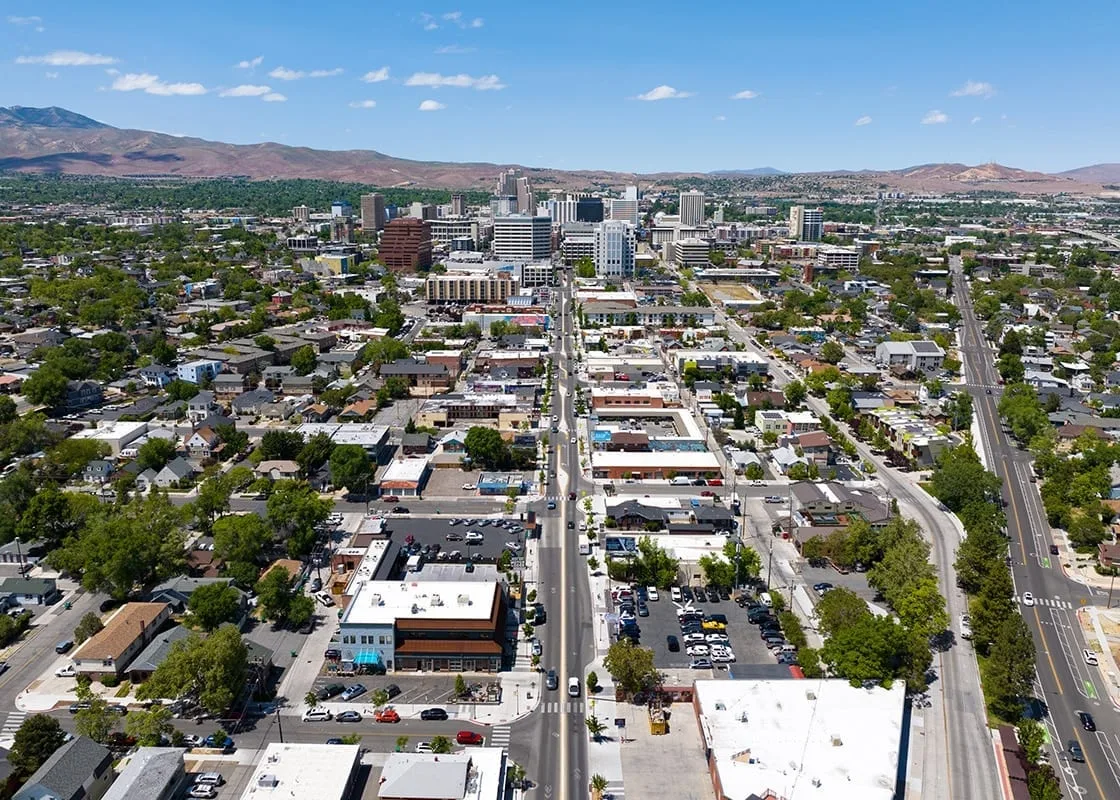
Las Vegas homeowners face unique AC challenges due to extreme desert heat. The Las Vegas Valley experiences 310+ days of direct sunlight annually, with summer highs regularly reaching 110-115°F. Unlike moderate climates, AC systems here operate nearly year-round, which increases wear and energy consumption. Desert dust storms can clog filters and coils faster, requiring more frequent maintenance. High summer energy bills make efficiency upgrades especially valuable, with many homeowners seeing $100-300+ monthly savings from properly sized, efficient systems.
Use our SEER ratings guide to estimate your potential savings.
Neighborhoods across the valley—from Summerlin and Henderson to North Las Vegas, Paradise, and Enterprise—all face similar heat challenges, but home age, insulation quality, and ductwork condition vary significantly. Older homes built before modern energy codes often need duct sealing and insulation upgrades alongside new equipment. Newer homes may only need properly sized equipment, but still benefit from quality installation and commissioning.
What can change total cost
- System size and efficiency level
- Ductwork repairs, sealing, or resizing
- Electrical panel, breaker, or disconnect upgrades
- Access challenges in attic or roof installs
- Permits, code requirements, and inspections
Best Value AC Options
- Central split systems: Best for homes with good ducts
- Ductless mini-splits: Efficient for single zones
- Window units: Lowest upfront cost for one room
Affordable Efficiency Targets
- Mid-range SEER2 for the best ROI
- Proper airflow and duct sealing for low bills
- Smart thermostat scheduling to cut runtime
How to Keep Costs Low
- Require a Manual J load calculation
- Fix duct leaks before replacing equipment
- Use rebates and financing to reduce out-of-pocket cost
- Compare itemized bids, not just price
Las Vegas Cost-Saving Moves
- Plan installs in spring (March-April) or fall (October-November) for better availability and pricing
- Prioritize airflow testing and commissioning to avoid oversizing
- Ask about NV Energy rebates and manufacturer seasonal promotions
- Schedule maintenance before peak summer to catch issues early
- Consider duct sealing before replacement to reduce system size needs
Affordable Doesn’t Mean Lowest Bid
The lowest price often skips commissioning, duct repairs, or proper sizing. Those shortcuts lead to higher bills and repeat repairs in Las Vegas heat.
What a quality install should include
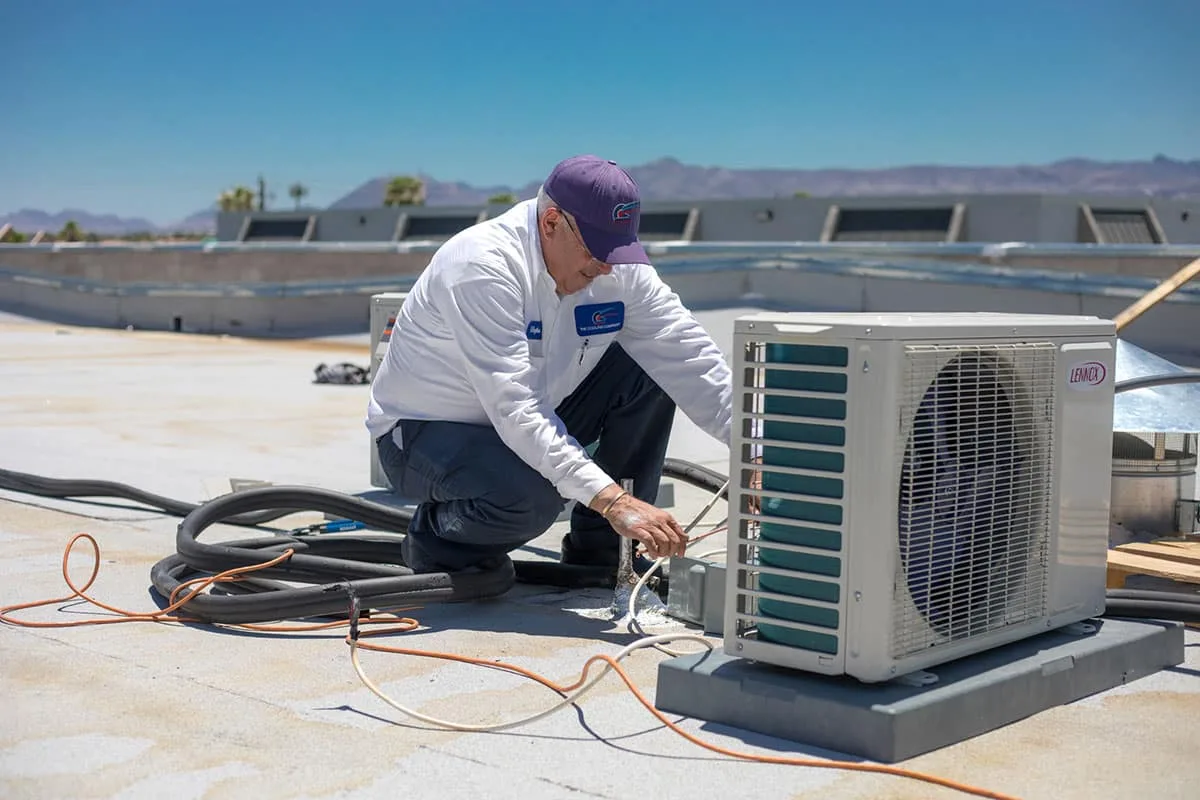
- Manual J load calculation and airflow targets
- Refrigerant charge verification and temperature split testing
- Line set evaluation and replacement if needed
- Drain line inspection and safety switch check
- Startup documentation and thermostat setup
Prevention Tips for Las Vegas Homes
Preventive maintenance and smart choices reduce long-term costs:
- Regular filter changes: Replace filters every 1-3 months, especially during dust storm season (spring and summer)
- Annual tune-ups: Schedule spring maintenance before temperatures exceed 90°F to catch issues early
- Duct sealing: Fix leaks before replacement to avoid oversizing and reduce energy waste
- Thermostat programming: Use smart thermostats to reduce runtime during peak hours and save on energy bills
- Shade and insulation: Improve home efficiency with window treatments, attic insulation, and shade for outdoor units
- Monitor energy bills: Track monthly costs to spot efficiency declines before major failures
Common Cost Mistakes
- Oversizing the system (common in Las Vegas due to heat concerns, but causes short cycling and higher bills)
- Skipping duct repairs before replacement
- Choosing the cheapest install without commissioning
- Ignoring filter maintenance, leading to coil damage and reduced efficiency
- Waiting until summer peak demand when prices and wait times increase
Where to Spend for Long-Term Value
- Proper sizing and airflow testing
- Mid-range SEER2 for best ROI
- Labor warranty coverage and service support
Helpful resources for Las Vegas homeowners
- AC installation cost
- SEER ratings explained
- HVAC sizing and load calculations
- Repair or replace decision guide
- AC installation
Las Vegas Budget-Smart Upgrade Path
- Start with duct sealing to avoid oversizing.
- Choose mid-tier SEER2 for best payback.
- Bundle thermostat upgrades during install.
- Schedule in spring for better pricing windows.
Affordable Quote Checklist
- Manual J sizing included in the estimate.
- AHRI match numbers listed for equipment.
- Line set, drain, and electrical scope itemized.
- Commissioning steps listed in writing.
After-Install Performance Report
- Temperature split and airflow readings after startup.
- Refrigerant charge verification to manufacturer specs.
- Thermostat setup and staging confirmation.
- Warranty registration and maintenance schedule documented.
FAQs About Affordable AC
Is a higher SEER2 always worth it?
Not always. Mid-range SEER2 often gives the best value.
Do rebates lower total cost?
Yes. NV Energy rebates can reduce upfront cost.
You may qualify for federal tax credits and rebates that reduce your upfront cost.
Is financing available?
Yes. Financing options can make better systems affordable.
For a detailed cost breakdown, see our AC installation cost guide.
Do you provide itemized estimates?
Yes. We provide clear line-item quotes.
Do you serve Henderson and North Las Vegas?
Yes. We serve the entire Las Vegas Valley.
Should permits be included in the quote?
Yes. A licensed contractor should include permits and inspections when required.
Is the cheapest bid risky?
Often. Low bids may skip commissioning, duct repairs, or proper sizing.
Need HVAC Service in Las Vegas?
The Cooling Company provides expert HVAC service throughout Las Vegas, Henderson, and North Las Vegas. Our licensed technicians deliver honest assessments, upfront pricing, and reliable results.
Call (702) 567-0707 or visit AC repair, maintenance, heating, or installation for details.
Share This Page
Financing and Rebate Strategies for Affordable AC Upgrades
Smart financing and rebate utilization can make high-quality AC systems affordable even on tight budgets. Understanding your options helps you make better financial decisions.
NV Energy Rebates (Save $300-$1,500+): NV Energy offers rebates for high-efficiency AC systems (16+ SEER2), smart thermostats, and duct sealing. Standard AC rebates run $300-600, while heat pump rebates reach $1,000-1,500. Combine multiple rebates for maximum savings—for example, new high-efficiency heat pump ($1,200 rebate) plus smart thermostat ($100 rebate) plus duct sealing ($500 rebate) totals $1,800 in utility rebates. Check NV Energy's rebate page for current offers and eligibility requirements.
Manufacturer Promotions (Seasonal Savings): HVAC manufacturers offer promotional rebates during shoulder seasons (March-April and October-November) when demand is lower. These promotions can add $200-800 to utility rebates, further reducing upfront costs. Timing your installation for these promotional periods maximizes savings—ask contractors about upcoming manufacturer incentives when planning installations.
0% Financing Options: Many HVAC contractors partner with financing companies offering 0% APR for 12-60 months on approved credit. This lets you spread costs without interest, making $6,000-10,000 installations affordable at $100-250 monthly. Compare financing terms carefully—some 0% offers require large down payments or revert to high interest if not paid in full by the term end.
Home Equity Financing: For homeowners with equity, home equity lines of credit (HELOCs) or cash-out refinancing may offer lower rates (currently 6-9% APR) than HVAC-specific financing (often 9-18% APR after promotional periods end). HELOC interest is sometimes tax-deductible as mortgage interest, further reducing effective cost. This strategy works best for major upgrades ($10,000+) combining AC replacement with duct work or insulation improvements.
Tax Credits and Deductions: Federal energy tax credits (currently 30% of cost up to $1,200 annually for qualifying heat pumps and improvements) reduce tax liability for qualifying HVAC upgrades. Check IRS Form 5695 for current eligible equipment and maximum credits. State and local programs occasionally offer additional incentives—consult tax professionals for guidance on maximizing benefits.
Long-Term Cost of Ownership: True Affordability
The most affordable AC is the one with the lowest total cost of ownership over its 12-15 year lifespan, not the lowest upfront price. Understanding total costs helps you make smarter decisions.
Budget System Example (14 SEER2, $5,000 installed):
- Upfront cost: $5,000
- Annual energy cost (3-ton system, Las Vegas climate): $1,800-2,200
- Likely repair costs over 12 years: $2,500-4,000 (budget systems need more repairs)
- Total 12-year cost: $5,000 + ($2,000 x 12) + $3,000 repairs = $32,000
Mid-Efficiency System Example (16 SEER2, $7,000 installed):
- Upfront cost: $7,000 (minus $500 rebate = $6,500)
- Annual energy cost: $1,350-1,650 (25% more efficient than 14 SEER2)
- Likely repair costs over 12 years: $1,500-2,500 (better quality, fewer repairs)
- Total 12-year cost: $6,500 + ($1,500 x 12) + $2,000 repairs = $26,500
- Savings vs. budget system: $5,500 over 12 years
High-Efficiency System Example (18+ SEER2, $9,500 installed):
- Upfront cost: $9,500 (minus $800 rebate = $8,700)
- Annual energy cost: $1,150-1,400 (35% more efficient than 14 SEER2)
- Likely repair costs over 12 years: $1,000-2,000 (premium quality, extended warranties)
- Total 12-year cost: $8,700 + ($1,275 x 12) + $1,500 repairs = $25,500
- Savings vs. budget system: $6,500 over 12 years
- Savings vs. mid-tier: $1,000 over 12 years
Key Insight: The $4,500 upfront difference between budget and premium systems is recovered through energy savings in 5-6 years, with another 6-7 years of continued savings. In Las Vegas's climate where ACs run 2,500+ hours annually, efficiency upgrades pay for themselves faster than in moderate climates.
Avoiding False Economy: What Not to Skimp On
Some cost-cutting measures create bigger expenses later. Avoid these common money-saving mistakes:
Skipping the Manual J Load Calculation ($150-300): Some contractors skip proper load calculations and guess at sizing based on square footage. This leads to oversized systems that short-cycle (reducing lifespan and comfort) or undersized systems that struggle in extreme heat. The $150-300 for proper Manual J calculations prevents $1,000-3,000 in wasted equipment costs and ensures optimal performance.
Choosing the Cheapest Installation Bid: The lowest bid often skips critical steps like airflow verification, refrigerant charge testing, duct sealing, or proper commissioning. These shortcuts cause efficiency losses of 20-40%, costing $300-800 annually in wasted energy—more than the $500-1,000 saved by choosing the cheap bid. Always compare detailed scopes, not just bottom-line prices.
Reusing Old Line Sets and Components: Some installers reuse existing refrigerant lines, pads, or electrical disconnects to reduce costs. Old line sets often have internal contamination or corrosion that reduces efficiency and causes premature failures. The $200-400 saved by reusing old components leads to $800-2,000 in repairs within 2-3 years. Always insist on new line sets with refrigerant-specific treatments for new systems.
Ignoring Duct Work Issues: Installing a new high-efficiency AC without sealing leaky ducts is like putting a high-performance engine in a car with flat tires—you won't see the promised benefits. Duct leakage wastes 20-40% of cooling capacity, negating efficiency improvements from new equipment. Allocate $1,000-2,500 for duct sealing before replacement—the combination of sealed ducts plus right-sized equipment often allows downsizing to a smaller, more affordable system.
Skipping Maintenance Plans: $150-300 annual maintenance plans seem expensive until you face a $600 capacitor replacement that could have been caught during a tune-up. Maintenance plans include priority scheduling, discounted repairs, and annual inspections that catch small issues before they become expensive failures. Over a system's 12-15 year life, maintenance plans save $2,000-4,000 in avoided emergency repairs.
Need an Affordable AC Quote?
We provide honest pricing, right-sized systems, and quality installation across Las Vegas. Our team serves Summerlin, Henderson, North Las Vegas, Paradise, Enterprise, and the entire Las Vegas Valley.
Call (702) 567-0707 or visit AC installation to schedule a free estimate. We also offer AC repair and AC maintenance services to keep your system running efficiently.