

Short answer: Before calling for repair, check 12 things in order: thermostat settings, batteries, breaker, disconnect switch, air filter, supply and return vents, condensate drain, outdoor unit clearance, ice on coils, refrigerant line insulation, drain pan, and unusual sounds. Most AC failures trace back to one of these.
If your air conditioner stops cooling, start with a few safe, quick checks you can do yourself: thermostat settings and batteries, circuit breakers and outdoor disconnect, the air filter, condensate drain, and outdoor unit clearance. If the unit runs but won’t cool, or you see ice, burning smells, or repeated breaker trips, call a licensed HVAC technician. (Source: [Energy.
Key Takeaways
- Begin with low‑risk DIY checks: thermostat mode and batteries, circuit breakers/outdoor disconnect, air filter, condensate drain, and outdoor condenser clearance; these often fix problems in 10–30 minutes.
- Never attempt refrigerant work or major electrical repairs; EPA Section 608 and state licensing are required for refrigerant, and capacitors/store voltage are dangerous.
- Small homeowner fixes typically cost $5–$250; sealed‑system or compressor repairs can run $800–$4,000+. Take photos of error codes and the outdoor unit data plate before calling a tech.

Why is my AC not working?
"Not working" can mean many things: no power, air is warm, short cycling, strange noises, leaks, or poor airflow. Most issues fall into three groups:
- Power and controls: thermostat settings, batteries, breakers, fuses, or outdoor disconnect.
- Airflow and restrictions: clogged filter, closed/blocked vents, dirty coils, or leaky ducts.
- Mechanical and sealed‑system: bad capacitor, failed compressor, refrigerant leak, or failed fan motor.
Start with safe, low‑risk checks. Stop and call a pro for electrical faults, refrigerant problems, or anything that involves opening sealed components.
Typical homeowner symptoms to note?
System won’t turn on at all: likely power/control issue (thermostat, breaker, disconnect). Unit runs but air is warm: suspect refrigerant issues, frozen evaporator, compressor problems, dirty coils, or poor airflow. Unit cycles on/off rapidly: thermostat placement, short cycling from an oversized unit, or electrical problems. Strange noises or burning smells: cut power and call a technician.
Quick, safe checks to try first?
Have a flashlight, smartphone camera, screwdriver, and replacement batteries or filters handy. These low‑risk checks often solve the problem.
Is the thermostat set correctly?
Common user errors cause many service calls. Check all of the following:
Mode: set to COOL, not HEAT or FAN. Setpoint: set the temperature at least 5°F (2–3°C) below the current room temperature to trigger the compressor. Fan: usually set to AUTO so the blower only runs during cooling cycles. Schedule/hold: programmable and smart thermostats may be on a schedule or in a hold; verify it isn’t locked to a higher temperature. Batteries: replace coin cells or AA/AAA if the display is dim or blank.
If the thermostat shows an error code, photograph the display and note the model number on the device and thermostat base. Many codes correspond to simple fixes (sensor open, low line voltage, or communication error).
Have you checked circuit breakers and the outdoor disconnect?
A tripped breaker or blown fuse is a common reason the system won't run.
- Inspect your main panel for breakers that are between ON and OFF; reset by moving fully OFF and then ON.
- If the breaker trips again immediately when the AC starts, stop — that indicates an electrical fault.
- Locate the outdoor disconnect (a covered switch or fused pull‑out near the condenser) and ensure it’s on. If it uses fuses, visually inspect fuses for burn marks.
If you’re unsure which breaker controls the unit, unplug the thermostat or set it to OFF and then flip breakers until the outdoor unit stops; label that breaker afterward.
Could a tripped GFCI or outlet be blocking power?
Some furnaces, condensate pumps, or packaged units use a GFCI outlet for safety. Check nearby GFCIs and reset them once. If a GFCI trips repeatedly, stop and call an electrician or HVAC tech.
Is the outdoor unit free of debris and able to breathe?
The condenser needs clear airflow to reject heat. Check that there is about 2–3 feet (0.6–0.9 m) of clearance on all sides and 4–6 feet above the unit when possible. Remove leaves, grass clippings, toys, and storage. With power off at the disconnect, check that the fan spins freely by hand — no binding or loose blades.
Do not spray electrical components. Clean the coils gently with a garden hose using a low‑pressure spray directed from the inside out. Avoid high‑pressure washers that can damage fins.
Is the air filter dirty or clogged?
A clogged filter reduces airflow, increases run time, and can cause the evaporator coil to freeze.
- Disposable filters: replace every 1–3 months; busy households and pets warrant monthly checks.
- Reusable filters: clean per manufacturer instructions and allow to dry before reinstalling.
- Quick check: hold the filter up to a light — if very little light passes, replace it.
When the system runs but won’t cool
If fans and blower run but air stays warm, the problem is more serious. Typical causes include low refrigerant, frozen evaporator, failing compressor, or poor airflow.
How to tell if refrigerant is low
Signs of low refrigerant (often due to a leak):
- Long run times with little temperature drop — if the supply vs. return air temperature difference (delta‑T) is less than 10–12°F (6–7°C) that’s concerning; a healthy system typically produces 15–20°F (8–11°C).
- Ice on the evaporator coil, refrigerant lines, or visible frost on indoor copper lines.
- Hissing noise or oily residue near line fittings.
Technicians use gauges, leak detectors, and dye tests to locate leaks. Never add refrigerant yourself — doing so can hide leaks and damage the system. Refrigerant work must be done by an EPA Section 608 certified technician. (Source: Energy gov HVAC Efficiency Basics)
Could the evaporator or condenser coils be dirty?
Dirty coils reduce heat transfer and make the system less effective:
- Evaporator coil dirty: indoor air won’t cool well and the coil may freeze if airflow is restricted.
- Condenser coil dirty: outdoor heat rejection reduces; the system runs longer and head pressures rise, stressing the compressor.
Light outdoor coil cleaning by homeowners is fine: power off, brush loose debris, then rinse gently from the inside out. Significant coil cleaning or opening the indoor unit is best left to a technician.
Why the evaporator might freeze and what to do
Common causes of freezing:
- Restricted airflow (dirty filter, closed vents, blocked return).
- Low refrigerant charge.
- Blower motor issues or a failed metering device.
If you see ice, turn the system off, set the fan to ON to help thaw, and open registers. Allow 4–24 hours to fully thaw. After thawing, run the system and watch for re‑freeze - if it returns, call a pro.
Is the compressor or fan motor failing?
Signs of trouble:
- Compressor hums but won’t start while the fan won’t run - suspect a start capacitor or contactor.
- Fan motor noisy, wobbly, or not spinning.
- Loud mechanical noises from the compressor (grinding/knocking) - cut power and call a technician.
If the outdoor fan isn’t running while the compressor is, stop operation; running the compressor without fan airflow will overheat it and cause major damage.
Are ducts contributing to poor cooling?
Blocked, leaky, or undersized ducts reduce delivered cooling. Look for:
- Rooms far from the air handler staying warm.
- Strong temperature swings and high humidity.
Homeowner checks: ensure supply and return registers are open and unobstructed, confirm attic or crawlspace ducts are insulated and not crushed, and check for large visible holes or disconnected joints. For air leakage greater than about 20–30% of system flow or extensive duct runs, call a contractor for pressure testing and sealing.
Safety: when to cut power and call a professional?
Shut off power and call a technician immediately if you see or smell any of the following:
Smoke, burning smells, or visible electrical arcing. Pooling water near electrical components or the breaker panel. Repeated immediate breaker trips when trying to start the AC. Loud metallic banging or detached components.
When in doubt, cut power and schedule service. Electrical faults and sealed‑system issues can escalate quickly.
Practical DIY fixes and how to do them?
These low‑risk tasks can be done by most homeowners. Wear gloves and safety glasses and follow manufacturer instructions.
How to change a dirty filter (step‑by‑step)
- Turn thermostat fan to OFF or the system to OFF.
- Locate the return grille or air handler filter door.
- Note the airflow arrow on the filter and pull out the old one.
- Slide in the new filter with the arrow pointing toward the air handler/blower.
- Reset the date on the filter frame or set a phone reminder for 1 month (or 3 months for low dust situations).
Cost: $5–$30 for typical residential filters. Time: 5–10 minutes.
How to safely reset a circuit breaker
- Turn the thermostat to OFF to stop calls for cooling.
- Open the electrical panel and locate the AC breaker (often labeled).
- Move the breaker fully to OFF, then to ON.
- Verify the outdoor disconnect is ON.
- Return the thermostat to COOL and test.
If the breaker trips immediately when turning on, flip the breaker OFF and call an HVAC electrician.
How to clear debris around the condenser
- Turn off power at the outdoor disconnect (or breaker if unsure). (Source: Energy gov HVAC Efficiency Basics)
- Remove large debris by hand and sweep leaves away.
- Trim vegetation to restore 2–3 feet clearance on sides and 4–6 feet above if possible.
- Use a garden hose to gently flush dust from the coil from inside out; let dry before restoring power.
Time: 10–30 minutes. Don’t operate the unit if the fan is obstructed.
Visual check for a bad start capacitor (homeowner level)?
A capacitor can look swollen or may leak oily fluid. If the capacitor shows these signs, call a technician. Testing and replacing capacitors involve high voltage and stored charge - dangerous for untrained people.
How to clear a clogged condensate drain
Clogs in the condensate drain cause water leaks and can trigger float switches.
- Locate the drain line near the indoor air handler; typically a white PVC pipe with an access port.
- Use a wet/dry vacuum on the outside condensate line to suck out clog material (30–60 seconds).
- Pour 1 cup of household white vinegar or a 50/50 vinegar/water solution into the drain pan through the access port every few months to inhibit algae growth.
If you see frequent backups or mold, call a technician to replace or reroute the drain with a trap or pump.
When to call a technician right away
Call a pro for these situations:
Refrigerant leaks or recharge needed. Compressor, sealed‑system, or major electrical failures. Repeated breaker trips or visible arcing. Strange mechanical noises (metallic knocks, grinding) or burning smells.
Ask the technician to bring proof of state license, EPA Section 608 certification, insurance, and an itemized written estimate.
Diagnosing common AC problems: symptoms, likely causes, and actions?
This quick reference pairs common observations with likely causes and suggested homeowner actions.
Symptom: No power to system?
Likely causes: tripped breaker, blown fuse, outdoor disconnect off, dead thermostat batteries. Action: reset breaker, check disconnect, replace batteries; call electrician if breaker trips again.
Symptom: Unit runs but no cold air?
Likely causes: low refrigerant, frozen evaporator, dirty coils, failing compressor, poor airflow. Action: check filter and vents, thaw frozen coil, call HVAC tech for gauges and sealed‑system diagnosis.
Symptom: Short cycling (on/off rapidly)
Likely causes: oversized system, thermostat location, low refrigerant, electrical faults. Action: check thermostat placement (avoid next to heat sources), check filter, call tech if persists.
Symptom: Water leaking indoors
Likely causes: clogged condensate drain, overflow pan rusted, frozen evaporator thawing. Action: clear drain, inspect pan; if recurrent, call tech.
Symptom: Loud or unusual noises
Likely causes: fan blade hitting debris, loose panels, motor or compressor failure, refrigerant leak. Action: cut power if metallic or burning sounds; remove debris if safe; call tech for motors or compressor.
Costs, timelines, and when replacement makes sense
Repair costs vary with region, system age, refrigerant type, and part availability. These are ballpark ranges for typical split residential systems.
Typical minor repair costs
Filter replacement: $5–$30 (DIY) or $20–$50 if contractor changes. Thermostat batteries or simple thermostat reset: $10–$200 (smart thermostat higher). Condensate drain cleaning: $100–$250. Contactor or relay replacement: $150–$350.
Diagnostic fee: expect $75–$150 in many areas; some companies waive it if you authorize repair.
Medium repairs
- Capacitor replacement: $150–$400 (parts + labor).
- Fan motor replacement: $300–$900 depending on motor type and labor.
Major repairs or replacements
- Compressor or sealed‑system repair: $800–$4,000+ depending on diagnosis and refrigerant type.
- Full system replacement: $3,500–$10,000+ depending on tonnage (1.5–5 tons), efficiency rating (SEER), ductwork condition, and installation complexity.
Consider replacement when multiple major components fail, the unit is older than 12–15 years, or when repair costs approach 50% of replacement cost. (Source: Energy gov HVAC Efficiency Basics)
How long repairs take
Minor fixes: 30 minutes–2 hours. Component replacements (capacitor, contactor, fan motor): 1–4 hours. Sealed‑system work or compressor replacement: diagnosis same day, repair 1–3 days depending on parts. Full system replacement: typically 1–2 days on site.
Choosing and working with an HVAC technician
Hiring the right technician saves money and prevents repeat failures.
Credentials and questions to ask
Ask for state license and EPA Section 608 certification (required for refrigerant). Ask about NATE certification, liability insurance, and whether the tech is bonded. Request written, itemized estimates and part/labor warranties. Ask upfront about diagnostic fees, emergency or after‑hours rates, and whether they use flat rates or hourly labor.
Helpful questions:
What is your diagnostic fee and is it waived with repair? Do you warranty parts and labor? For how long? Can you show a copy of your license and insurance? Do you perform a load calculation before recommending a replacement system?
What to expect during a service visit
Technicians typically:
Ask about recent symptoms and thermostat settings. Inspect the thermostat, filters, outdoor unit clearance, and condensate drain. Test electrical components, capacitors, and contactors. Check refrigerant pressures and look for leaks. Provide diagnostic notes and a written estimate with repair options and timelines.
Bring photos of the thermostat display, the outdoor unit data plate (model and serial number), and the air handler location to speed the visit.
Warranties and documentation
- Get the estimate and final invoice in writing.
- Ask about parts and labor warranty length and whether the tech provides a service report.
- Keep maintenance records; many manufacturer warranties require regular documented service.
Preventive maintenance to reduce breakdowns
Regular maintenance reduces failures and supports efficiency. Poor maintenance shortens equipment life and increases energy bills.
Annual tasks (hire a pro)
- Spring tune‑up: clean coils, check refrigerant, inspect electrical, lubricate motors where required, check safety controls, and test capacity.
- Verify thermostat calibration and airflow balance.
- Inspect ductwork for leaks, insulation gaps, and obvious damage.
Monthly or seasonal homeowner tasks
- Check and change filters every 1–3 months.
- Keep outdoor unit clear of plants and debris.
- Monitor thermostat behavior and signs of performance decline (longer run times, more noise, higher bills).
Seasonal prep
- Before peak summer, run the system for 15–20 minutes to confirm it starts and cools.
- In late fall, clear leaves and debris and cover or remove any soft covers that could trap moisture.

Tools and diagnostics homeowners can safely use
Smartphone camera to document error codes and unit labels. Flashlight for visual inspections. Infrared thermometer or contact thermometers to measure supply/return temperature. Non‑contact voltage tester for simple outlet checks (requires basic electrical competency).
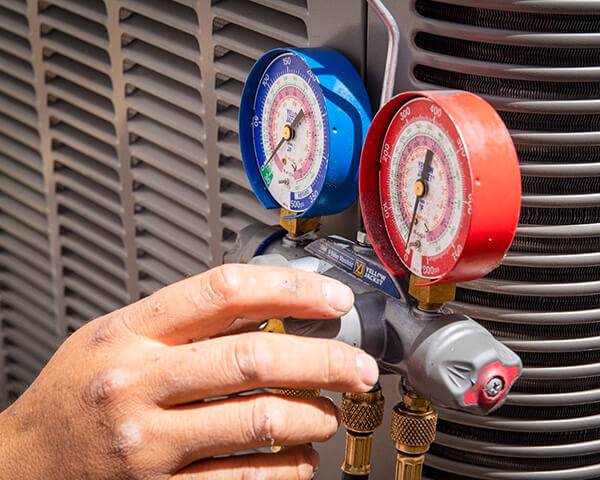
Avoid using refrigerant gauges or attempting capacitor discharge without training and insulated tools.
Extra tips and practical checks before calling a pro
Note the temperature difference: measure return air at the return grille and supply at a register. A healthy system typically delivers a 15–20°F (8–11°C) drop under normal conditions. If the drop is below 10–12°F, suspect an issue.
Record run times: if the system runs continuously and doesn’t reach setpoint, that’s important information. Check all registers: make sure they’re open and not blocked by furniture. Photograph the outdoor unit data plate (model, serial, refrigerant type) - techs use that to know refrigerant type and capacities.
Before you call: information to gather
Gather these items to speed diagnosis and reduce time on site: (Source: Energy gov HVAC Efficiency Basics)
Photos: outdoor unit data plate, thermostat display showing any error codes, and the air handler location. Symptom notes: when it started, whether the unit runs, any recent changes (new windows, insulation, TV placed near thermostat), and whether the circuit breaker tripped. Temperatures: measured return and supply temps and the delta‑T. Maintenance history: date of last service, last filter change, and any recent repairs.
Having this information ready helps the technician arrive prepared and can reduce diagnostic fees.
How to measure temperature split correctly
- Turn the system on and let it run for at least 15 minutes.
- Measure return air at the grille closest to the air handler (or the largest central return).
- Measure supply air at a supply register near the air handler for best accuracy.
- Subtract supply temperature from return temperature; a healthy split is typically 15–20°F (8–11°C) on a properly charged system.
If you don’t have a thermometer, an infrared thermometer works well - aim at the center of the register airflow and hold steady for an accurate reading.
10‑minute troubleshooting checklist (do this first)
- Confirm thermostat is set to COOL and setpoint is 5°F below room temp.
- Replace thermostat batteries if display is dim.
- Check the indoor filter and replace if dirty.
- Inspect breaker panel and reset the AC breaker if tripped.
- Verify outdoor disconnect is ON.
- Scan outdoor unit for debris and clear 2–3 feet around it.
- Check registers are open and unobstructed.
- Look for ice on indoor coils or refrigerant lines.
- Smell near equipment for burning or chemical odors; if present, cut power and call.
- Photograph any error codes, the outdoor data plate, and unusual conditions.
If these steps don’t restore cooling, it’s time to call a technician.
Seasonal maintenance schedule
A simple schedule keeps the system healthy and efficient:
Monthly: check and change the filter, inspect registers. Spring (professional): full tune‑up, coil cleaning, refrigerant check, electrical inspection. Summer (midseason): quick visual check of condenser and filter, note performance. Fall (professional): check airflow, inspect ducts, service heater components if part of the same system.
Document each inspection and keep receipts for warranty and resale value.
Summary and next steps
Start with low‑risk checks: thermostat mode and batteries, breakers and outdoor disconnect, replace the filter, clear debris from the outdoor unit, and inspect the condensate drain. If the unit runs but doesn’t cool, or if you see ice, hear strange noises, or experience repeated breaker trips, call an EPA‑certified HVAC technician for diagnosis and repair.
Prepare for the technician visit by gathering thermostat model and error codes, photos of the outdoor unit data plate, notes on symptoms and timing, and recent maintenance history. Ask for an itemized written estimate and inquire about parts and labor warranties.
Need professional help?
To get the fastest diagnostic visit, contact local HVAC companies with strong reviews, ask about NATE certification and EPA Section 608 credentials, and provide photos and symptom notes when requesting service. Expect a diagnostic visit of 30–90 minutes and immediate small repairs when possible.
Related reading: what to explore next?
- Cost to Replace AC: What to Budget for Your New System
- Air Handler Installation Cost: What to Budget Before Buying
- Furnace Types: Fuel, Technology, Efficiency
References
U.S. Department of Energy (Energy.gov) (accessed 2025-12-18). U.S. Environmental Protection Agency (EPA) (accessed 2025-12-18). ASHRAE (Standards and guidance) (accessed 2025-12-18). ENERGY STAR (Heating & cooling) (accessed 2025-12-18).
Related reading: what to explore next?
- Cost to Replace AC: What to Budget for Your New System
- Air Handler Installation Cost: What to Budget Before Buying
- Furnace Types: Fuel, Technology, Efficiency
- Cost to Add HVAC to: An Old House: Typical
- Furnace Prices: Total Cost to Buy, Install,
- Furnace: How It Works, Common Problems, Costs
- Furnace Size: Furnace Size: Why Sizing
- HVAC Financing Near Me: Fast Approval In Las Vegas
- Service Finance: HVAC Financing In Las Vegas
- Hot Water Heater Financing Near Me: Fast Approval, Same-Week Service
Related service: Experiencing AC problems in Las Vegas? Explore our AC repair and AC maintenance services for Las Vegas homeowners.
Need HVAC Service in Las Vegas?
The Cooling Company provides expert HVAC service throughout Las Vegas, Henderson, and North Las Vegas. Our licensed technicians deliver honest assessments, upfront pricing, and reliable results.
Call (702) 567-0707 or visit AC repair, maintenance, heating, or installation for details.