


Short answer: Start with the thermostat, filter, breakers, and outdoor unit clearance. If you see ice, burning smells, or repeated short cycling, call a licensed technician.
What can raise urgency
- Ice on coils or refrigerant lines
- Burning smells or electrical popping
- Repeated breaker trips
- No-cool during extreme heat
- Water around the air handler
central air conditioning troubleshooting: quick chart & fixes (Source: Energy gov HVAC Efficiency Basics)
Key Takeaways
- Start with simple checks: thermostat mode, fresh filter, breaker and outdoor unit clearance.
- Ice on coils, burning smells, and repeated short cycling are urgent. Call a licensed tech.
- Do not handle refrigerant or live electrical work yourself. Use photos and notes for the tech.
This guide helps you find common central AC problems fast. It lists safe homeowner checks and clear urgency levels. Start with the thermostat, filter, breakers, and outdoor unit clearance before calling for service. Note what you tried and take phone photos for the technician.
Local essentials and challenges for Las Vegas troubleshooting
- Heat waves: No-cool calls are urgent when temps top 110°F.
- Dust storms: Filters clog quickly and reduce airflow.
- Rooftop units: Common in older Las Vegas neighborhoods and harder to access.
- Peak rates: 1–7 PM pricing makes efficiency losses more costly.
- Monsoon humidity: Adds load and can cause drain issues.
A short monthly check in cooling season avoids many emergency calls. Keep two spare filters and a small notebook with dates. Clearing shrubs and leaves from the condenser prevents airflow problems and reduces repair needs. These small steps often save time and money.
Why AC Troubleshooting Matters in Las Vegas
Las Vegas's extreme desert climate creates unique challenges for air conditioning systems. Summer temperatures regularly exceed 110°F, forcing AC units to run 18+ hours daily for months at a time. This extended runtime, combined with frequent dust storms and high winds, accelerates wear on filters, coils, and components. Many Las Vegas homes also have rooftop AC units exposed to intense sun and dust, making maintenance even more critical.
Las Vegas experiences dramatic temperature swings—70°F mornings can reach 110°F+ by afternoon, testing system responsiveness. During monsoon season (July-September), humidity spikes add cooling load, pushing already-stressed systems to their limits. Desert dust storms can clog filters in days rather than weeks, and NV Energy's peak demand rates (1-7 PM) make efficient operation critical for managing energy bills that can exceed $300/month during summer.
The combination of extreme heat, dust, and long cooling seasons means small issues can quickly become major problems if not addressed promptly. During heat waves, no-cool calls require immediate response—delays can be dangerous in Las Vegas homes where indoor temperatures can exceed 100°F within hours.
AC Troubleshooting Checklist for Las Vegas Homes
Follow this systematic checklist before calling for service. Most AC problems in Las Vegas can be resolved with these simple checks, saving time and money.
Step 1: Thermostat Check (30 seconds)
- Confirm thermostat is set to COOL mode (not HEAT or FAN only)
- Verify setpoint is at least 5°F below current room temperature
- Check if display is blank or dim—replace batteries (AA, AAA, or coin cell depending on model)
- Look for schedule locks or holds on programmable/smart thermostats
- Note any error codes displayed on the thermostat screen
Step 2: Air Filter Inspection (1 minute)
- Locate and remove the air filter (usually in return grille or air handler)
- Hold filter up to light—if you can't see light through it, replace immediately
- In Las Vegas, check filters every 2-3 weeks during summer (May-September)
- After dust storms, inspect filters immediately
- Use correct filter size—check existing filter for dimensions (e.g., 16x25x1)
- Install with airflow arrow pointing into the system
Step 3: Power Supply Check (1 minute)
- Check main breaker panel for tripped breakers (look for breakers between ON and OFF)
- Reset tripped breaker once by moving fully OFF, then ON
- If breaker trips again immediately, STOP—do not reset again (indicates electrical fault)
- Locate outdoor disconnect switch near condenser unit and verify it's ON
- Check for tripped GFCI outlets near the unit (some systems use GFCI protection)
Step 4: Outdoor Unit Inspection (2 minutes)
- Clear at least 2-3 feet of debris, vegetation, and obstructions around the unit
- Check for visible damage to fins or coils
- Verify outdoor fan is spinning when AC is running
- Listen for unusual noises (grinding, buzzing, rattling)
- After dust storms, gently rinse coils with garden hose (power off first)
- For rooftop units, check for debris buildup and ensure proper clearance
Step 5: Indoor Airflow Check (1 minute)
- Ensure all supply vents are open and unobstructed
- Check return air vents for blockages (furniture, rugs, etc.)
- Feel air coming from vents—should feel cool, not room temperature or warm
- Listen for blower motor noise—should be steady, not grinding or squealing
- Check for ice on refrigerant lines or indoor coil (if visible)
Step 6: System Behavior Observation (ongoing)
- Note if system runs continuously without cooling
- Watch for short cycling (turns on/off every few minutes)
- Check if certain rooms stay hot while others cool
- Monitor energy bills for sudden increases (common sign of efficiency loss)
- Record any unusual smells (burning, musty, chemical)
What does this troubleshooting chart cover?
This troubleshooting chart covers split systems and packaged units found in most homes. It lists common symptoms, likely causes, safe homeowner checks, urgency, and rough cost ranges. The goal is to help you triage problems and choose the right next step.
The chart also explains simple performance checks like delta-T (supply minus return). It shows how to spot signs of refrigerant or electrical trouble. It flags tasks that are safe for homeowners and those that need EPA-certified or licensed technicians. Keep notes and photos for any service call.
Which common AC symptoms should I watch for?
Watch for no cooling, weak airflow, strange noises, water leaks, ice on lines, and odd smells. Track run times and room-to-room comfort differences. Short cycles under ten minutes are a common sign of trouble and should be logged with times.
Also watch your electric bill for unexplained rises. Higher bills with the same use often mean lower system efficiency. Uneven cooling usually points to airflow or duct issues, so check vents and returns. These simple checks give the technician useful context and speed diagnosis.
Try our energy savings calculator to see how much you could save.
No cooling: what quick checks help?
Start with simple thermostat checks. Confirm the mode is set to COOL and the fan is on AUTO. Set the temperature at least four degrees below current room temperature. Replace thermostat batteries if the display is dim or flickers.
Next inspect the indoor filter and the outdoor condenser. A dirty filter reduces airflow and can stop cooling quickly. Clear two feet of plants and debris around the condenser. If the outdoor fan runs and you still have no cool air, the issue may be refrigerant loss or a compressor problem.
Why is my AC short cycling?
Short cycling is when the unit turns off and on too often. It can come from low refrigerant, a failing compressor, oversized equipment, or thermostat placement problems. Short cycles raise wear and energy use and can cause compressor failure if ignored.
Check for blocked airflow from dirty filters or closed vents. Make sure the thermostat is not near a heat source like a stove, lamp, or sunny window. If basic fixes do not stop short cycles, call a technician to check pressures and electrical starting components.
What causes odd noises from the unit?
Rattles often mean loose panels, a bent fan blade, or loose ductwork. Hissing near refrigerant lines can signal a refrigerant leak. Grinding usually points to failing motor bearings. Buzzing may indicate electrical issues. Each sound helps narrow the cause—our guide to noisy air conditioner fixes covers each in detail.
If you hear electrical popping or burning smells, shut the system off at the disconnect and call a professional. Do not touch capacitors or electrical parts. For small rattles, you can inspect panels with power off and tighten screws if safe to do so.
Why is there ice on the evaporator coil?
Ice on the coil usually means low airflow or low refrigerant. A clogged filter, blocked return vents, or a failing blower can reduce airflow so much the coil freezes. Low refrigerant from a leak can also lower suction temperature and cause ice build-up.
If you see ice, stop the compressor and set the indoor fan to ON to thaw the coil. Do not run the system with a frozen coil for long. If ice returns after thawing, schedule a service call to find the root cause and prevent compressor damage.
Why are my electric bills higher?
Higher bills with the same use often mean the system runs longer to reach setpoint. Dirty coils, clogged filters, failing motors, or low refrigerant all lower efficiency. Older systems also use more energy compared to new high-SEER units.
A quick homeowner check is to measure delta-T between supply and return. A much lower than normal delta-T suggests an efficiency problem. If a simple filter change does not help, have a technician perform a full performance check and provide an estimate.
Las Vegas energy bill context: NV Energy's peak demand rates (1-7 PM) make efficient operation critical. During summer, Las Vegas cooling bills average $250-400/month. A 10% efficiency loss from dirty coils or low refrigerant can add $25-40/month. Programmable thermostats that avoid peak hours can save $15-45/month. If bills spike suddenly during heat waves, check filters and coils first—dirty systems work harder and cost more during peak rate periods.
What quick homeowner checks can I do?
Many useful checks need no special tools. Start with the thermostat, then the filter, breakers, and a visual check of the outdoor unit. These steps often solve common problems or give clear information for a technician.
Keep a flashlight and phone for photos. Do not open electrical panels beyond the outdoor disconnect. Avoid touching capacitors or wiring. If a check requires removing covers with wiring inside, stop and call a licensed contractor to avoid danger.
How do I check the air filter?
Turn the system off and remove the filter from the return grill or indoor unit. Hold it up to a light. If the filter is gray or clogged, replace it. A clogged filter cuts airflow and can cause the coil to ice and the system to short cycle.
Use the correct filter size and type for your system. Replace cheap fiberglass filters monthly in heavy use. Pleated filters last up to three months in cleaner homes. Note the filter age and condition for the technician.
Las Vegas-specific tip: Desert dust storms can clog filters in days, not weeks. During summer (May-September), check filters every 2-3 weeks in areas like Summerlin, Henderson, and the Strip corridor where dust accumulation is heaviest. After dust storms, inspect filters immediately—restricted airflow during extreme heat can cause compressor damage.
Can I test the thermostat myself?
Set the thermostat to COOL and lower the setpoint five degrees below room temperature. Set the fan to AUTO and listen for the system to start. If nothing happens, swap batteries and try again. A bad display or odd behavior often points to the thermostat.
If the thermostat shows correct settings but the system does not respond, check the breaker and the outdoor disconnect. Avoid opening the thermostat if you are unsure of wiring. For smart thermostats, a technician can confirm wiring and configuration.
How do I inspect the outdoor unit safely?
Turn the thermostat off and use the outdoor disconnect if you need to remove the fan grille. Remove leaves, grass, and large debris from around the unit. Leave at least two feet of clearance so airflow is not restricted. Bent fins reduce efficiency and can be gently straightened.
Do not spray water into electrical compartments or touch capacitor terminals. If you see oil, rust, or animal chew marks, photograph the damage and leave the disconnect off. Those clues help technicians find leaks or wiring issues faster.
Las Vegas-specific tip: Rooftop units are common in Las Vegas and exposed to intense sun and dust. After dust storms, gently rinse coils with a garden hose (power off first) to remove fine dust that reduces efficiency. Check for debris buildup monthly during summer—desert winds carry fine particles that coat coils faster than in other climates. UV exposure degrades outdoor unit components faster here, so inspect wiring and refrigerant lines for cracking or brittleness.
How to check breakers and disconnects?
Find the breaker labeled AC or condenser and check if it tripped. Reset it once by switching it fully off and then on. If it trips again immediately, do not keep resetting the breaker. Repeated trips point to an electrical fault that needs a pro.
Check the outdoor disconnect box. If a fuse is blown or wiring shows burning, leave the system off and call a technician. Do not replace fuses or keep resetting breakers without a trained electrician. Electrical faults can cause fire or compressor damage.
Which issues require a pro?
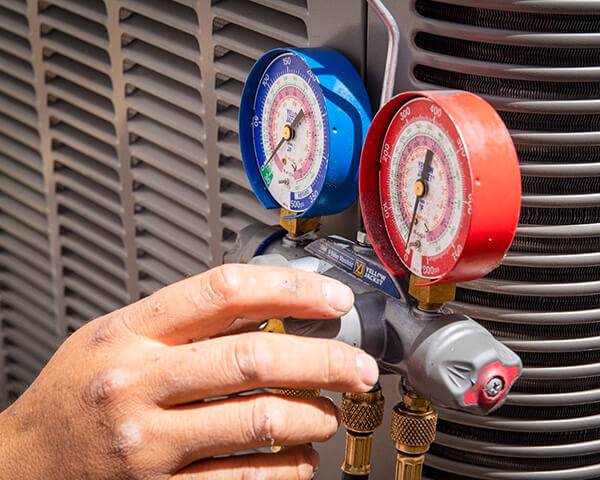
Tasks that need gauges, amperage meters, or refrigerant handling require licensed technicians. Suspected refrigerant leaks, compressor failures, hard-starting compressors, and major electrical faults are not DIY jobs. They need tools and safety gear.
Some work needs EPA certification for refrigerant handling or live electrical testing. If repair requires opening sealed components, changing refrigerant, or testing live wiring, stop and call a pro. Trying these jobs can cause injury or void warranties.
How to tell if refrigerant is low?
Common signs of low refrigerant are weak cooling, long run times, ice on the suction line, and hissing near fittings. Low refrigerant often shifts suction and head pressures. Only a technician with gauges can confirm a low charge and find the leak source.
Do not add refrigerant yourself. Handling refrigerants requires certification and special tools. If you suspect a leak, document symptoms and call a licensed technician for leak detection, repair, and proper recharge.
When is compressor failure likely?
A compressor may fail if the unit hums but will not start, or if it repeatedly overheats. Running with low refrigerant or a frozen coil puts heavy stress on the compressor. Short cycling also shortens compressor life and increases failure risk.
Technicians diagnose compressor health with amp readings and pressure checks. Compressor replacement is often one of the costlier repairs. If the unit is older, compare replacement options rather than repair alone to choose the best long-term value.
What fixes can homeowners do safely?
Homeowners can replace filters, clear debris around the outdoor unit, check thermostat settings and batteries, and reset a tripped breaker once. You can also clear a condensate drain with a wet/dry vacuum at the drain line if you are comfortable doing so.
Avoid replacing capacitors, charging refrigerant, or working inside the electrical compartment unless you are trained. If a repair goes into the sealed refrigerant system or wiring inside the unit, schedule a licensed technician to keep you safe.
How should I prioritize AC problems?
Prioritize safety risks first. Burning smells, smoke, or melted wiring mean stop using the system and call a professional right away. These symptoms can indicate fire risk or failing electrical parts and need immediate attention.
Next, address problems that harm the compressor, such as low refrigerant and repeated short cycling. Fixing these early prevents costly failures. Keep a dated list of symptoms and checks to hand to the technician for faster diagnosis.
Which problems are high-risk?
High-risk problems include burning smells, repeated breaker trips, heavy smoke, and visible melted wiring. Refrigerant leaks that cause coil icing and compressor overheating are also high-risk. These issues can cause fire or total system loss.
If you see a high-risk sign, shut off the system at the disconnect and call a licensed technician. Do not try to run the unit while these conditions exist. A quick shutdown can save the compressor and prevent fire.
How to estimate cost vs risk?
Compare repair cost to system age and expected future failures. A $1,200 compressor fix on a 12-year-old unit may not be wise if more failures are likely soon. Consider replacement when repair costs are a large share of new system cost.
Ask for itemized estimates and expected life after the repair. Factor in energy savings from a new, higher-SEER unit. This comparison helps avoid repeated repair bills and downtime during the next heat wave.
Las Vegas cost drivers: Typical repair costs in Las Vegas range from $150-500 for minor fixes (capacitors, contactors, thermostats) to $800-3,500 for major repairs (compressor, refrigerant leaks, heat exchangers). Systems in Las Vegas often need replacement after 10-12 years due to extended runtime—units that might last 15 years elsewhere wear faster here. Energy savings from a new high-SEER system (16-20 SEER) can save $30-80/month during summer, making replacement more cost-effective when repair costs exceed $2,000-3,000 on older units.

Las Vegas repair cost drivers
- Access: Rooftop or tight side-yard condenser access adds labor.
- After-hours calls: Heat-wave demand can add priority fees.
- Parts availability: Older or discontinued models take longer to source.
- Electrical upgrades: Panel or disconnect issues increase costs.
- Duct problems: Leaks or restrictions add repair scope.
Decision guidance for next steps
- Repair now: Newer system, small part, and stable performance.
- Plan replacement: Repeated failures, high bills, or 10+ year unit.
- Schedule maintenance: Minor issues and no safety concerns.
- Call urgently: Burning smell, breaker trips, or ice + no cooling.
When to choose repair vs replacement?
Repair smaller components on newer systems. Fix capacitors, contactors, and thermostats when the system is under 10 years old and the price is reasonable. These repairs often restore reliable operation without large cost.
Replace the system when repairs exceed about 50% of replacement cost and the unit is older than 10 to 15 years. Also choose replacement if efficiency is poor and bills remain high after repairs. Get a replacement quote to compare.
How can maintenance prevent problems?
Regular tune-ups catch small problems before they become big. Seasonal checks include filter changes, coil cleaning, testing capacitors, and inspecting electrical connections. A yearly spring tune-up avoids many summer breakdowns and peak service delays.
A maintenance plan saves energy and extends equipment life. It should include cleaning coils, checking refrigerant, testing motors, and clearing drains. Ask for a written checklist and keep service records to track recurring issues and warranty needs.
What regular filter schedule is best?
Check filters monthly in heavy-use months. Replace pleated filters every one to three months depending on dust and pets. Washable filters need monthly cleaning. Using a higher MERV rating improves air but may need more frequent checks to avoid airflow restriction.
A clean filter improves airflow and prevents coil icing. Keep a spare filter on hand and set calendar reminders. Regular filter changes are the lowest-cost way to reduce failures and energy use. For a complete schedule, see our HVAC maintenance checklist.
Las Vegas filter schedule: During summer (May-September), check filters every 2-3 weeks—desert dust storms can clog filters in days. After dust storms, inspect immediately. In areas with heavy dust (near construction, open desert), monthly replacement is often necessary. Keep 2-3 spare filters on hand during peak season to avoid emergency filter runs during heat waves when stores may be out of stock.
How often should coils be cleaned?
Clean the outdoor condenser coil annually and more often in dusty or high-pollen areas. Inspect the indoor evaporator coil yearly and clean if dirty. Dirty coils reduce heat transfer and cause longer run times and higher bills.
For deep cleaning or hard-to-reach coils, call a technician. They have tools to clean safely without damaging fins or electrical parts. Professional cleaning helps keep the system near rated efficiency.
Las Vegas coil cleaning schedule: Desert dust coats coils faster than in other climates. Schedule professional coil cleaning every 6-12 months, or more often if you're near construction or open desert. After dust storms, gently rinse outdoor coils with a garden hose (power off first) to remove surface dust. Rooftop units exposed to intense sun and dust may need cleaning every 4-6 months. Dirty coils can reduce efficiency by 10-20%, adding $25-80/month to summer energy bills.
Ready to book service?
If you are in Las Vegas, Henderson, or North Las Vegas, call The Cooling Company at (702) 567-0707 for fast, licensed HVAC service. Mention symptoms, recent checks you ran, and any photos you took. That helps technicians bring the right parts and get you cooling sooner.
The Cooling Company offers AC repair, heating repair, AC installation, and maintenance services throughout Las Vegas. Our licensed technicians can test refrigerant, check electrical parts, and replace components safely. For urgent issues like burning smells or repeated breaker trips during heat waves, request priority emergency service to avoid further damage and dangerous indoor temperatures.
Las Vegas emergency response: During heat waves (110°F+), no-cool calls are prioritized as life-safety emergencies. We understand that Las Vegas homes can reach dangerous temperatures within hours without AC. Our team serves Summerlin, Henderson, Green Valley, North Las Vegas, and the Strip corridor with fast response times. For non-emergency issues, schedule maintenance during spring (March-April) to avoid peak season delays and ensure your system is ready for summer.
Conclusion
A few safe homeowner checks often fix common AC problems. Replace filters, confirm thermostat settings, and clear the outdoor unit first. For electrical smells, refrigerant concerns, or repeated short cycling, call a licensed technician quickly to avoid higher costs.
Keep a maintenance plan and service records to avoid surprises. In Las Vegas, where extreme heat and dust accelerate wear, annual spring tune-ups prevent summer breakdowns. Schedule maintenance before peak season (March-April) to ensure your system is ready for the long cooling season ahead.
If you are in Las Vegas, Henderson, or North Las Vegas, call The Cooling Company at (702) 567-0707 for licensed techs and fast service. We offer AC repair, AC installation, heating services, and maintenance plans tailored to Las Vegas's unique climate challenges. Outside the area, search for NATE-certified pros using the link above.
Sources
- Energy gov HVAC Efficiency Basics: https://www.energy.gov/energysaver/air-conditioning
Related reading: what to explore next?
- Electric Heating and Cooling: Save Money with Heat Pumps Today
- Air Conditioner Not Cooling: Quick Fixes and Pro Triggers
- AC Blowing Hot Air: Causes, Fixes & Prevention
Share This Page
Neighborhoods we serve for AC troubleshooting
We help homeowners across the Las Vegas Valley, including Summerlin, Centennial Hills, Aliante, Green Valley, Silverado Ranch, and Henderson. If you are unsure about access to a rooftop unit, tell us your neighborhood and we will plan the right crew and equipment.
Trust and guarantees
- Serving Las Vegas since 2011
- Licensed, insured, and EPA-certified technicians
- Upfront diagnostics and clear pricing
- Workmanship-backed repairs
- 100% satisfaction guarantee
Service area map
Need HVAC service help in Las Vegas?
If you're facing an HVAC emergency in Las Vegas, Henderson, or North Las Vegas, The Cooling Company offers fast, reliable service from licensed technicians. We understand that heating and cooling emergencies don't wait for business hours.
Call us now at (702) 567-0707 for emergency service. Our team is ready to help restore your comfort quickly and safely.
About The Cooling Company
- Phone: (702) 567-0707
References
- U.S. Department of Energy (Energy.gov) (accessed 2025-12-22)
- U.S. Environmental Protection Agency (EPA) (accessed 2025-12-22)
- ASHRAE (Standards and guidance) (accessed 2025-12-22)
- ENERGY STAR (Heating & cooling) (accessed 2025-12-22)
Need HVAC Service in Las Vegas?
The Cooling Company provides expert HVAC service throughout Las Vegas, Henderson, and North Las Vegas. Our licensed technicians deliver honest assessments, upfront pricing, and reliable results.
Call (702) 567-0707 or visit AC repair, maintenance, heating, or installation for details.