
Short answer: Commercial AC repair is urgent when cooling drops, energy bills spike, or unusual noises appear. Early diagnostics prevent downtime and tenant complaints.
What can change repair urgency
- No-cool during peak heat or business hours
- Rooftop unit access and safety constraints
- Refrigerant leaks vs. airflow-only issues
- Equipment age and parts availability
- After-hours response needs

Las Vegas Essentials & Challenges
Las Vegas commercial sites see high rooftop temperatures, dust-heavy coils, and long runtime windows that turn small issues into urgent repairs. Tenant comfort expectations and peak demand charges make fast diagnosis critical, especially for retail and office spaces during 100°F+ days. Access restrictions and safety protocols can also add time to repairs, so clear reporting and pre-approval thresholds help avoid delays.
When temperatures fluctuate significantly or soar to unbearable levels in the summer, businesses in Las Vegas may not be able to run with efficiency without a properly functioning commercial HVAC system. If your air-conditioner is struggling to maintain a comfortable temperature for your employees and customers, you may notice a poor quality of indoor comfort, frequent strange noises from the system, and even some odors. You’ll likely see a decline in productivity and profitability, which can have short-term and long-term effects on your business. A wide range of factors can cause your commercial HVAC unit to become less effective, behave strangely, or break down. For example, it could be a sudden increase in temperature or fluctuations in your system's performance. An untrained person may not be able to tell if the issue is easy to fix or requires a professional inspection. Follow this guide to learn about the common signs indicating your commercial HVAC system needs to be repaired.3 Signs Your Commercial HVAC System Needs to Be Repaired
Regardless of the age or model, every commercial HVAC system sustains wear and tear over time, which causes it to become more vulnerable to mechanical failures and strange noises. Some problems like poor quality of cooling may seem negligible, but they can be an indication of larger underlying problems. As such, it’s essential to know how to identify both existing and potential issues and fix them as soon as possible. Here are three signs you need to look out for:1. Your Utility Bills Have Increased Sharply
Generally, your business’ electricity bills should remain about the same on a year-to-year basis. If you notice a sharp increase in your energy bills, it usually has something to do with your commercial air-conditioner. In fact, this could be due to a decline in its efficiency, caused by frequent usage, poor maintenance, or a system issue. This is because HVAC systems account for roughly 40% of energy consumption in commercial buildings, according to the Small Business Administration. A significant spike in energy costs may be a result of a variety of HVAC problems, from dirty filters with strange odors to a bad installation. Issues such as clogged filters or ducts and dirty coils can be fixed by performing some simple maintenance tasks or hiring a professional to service your air-conditioner. Nonetheless, there are more complex problems that require you to schedule HVAC repair, such as:Leaky Ducts
Air ducts serve the important function of transporting cooled air from your commercial HVAC unit to your indoor space. If there are leaks or loose joints along the ducts, some of the conditioned air will escape into other parts of the building or the outdoors. Besides causing energy waste, this problem also can cause temperature fluctuations and strange noises as your system struggles to cool your office or store, resulting in higher energy bills and increased wear and tear. Repairing leaky air ducts is a job that’s best left to an HVAC technician. Regular inspection by professionals can help detect problems early and ensure a high level of operational efficiency. Ducts are mostly located in hard-to-reach places such as crawl-spaces or behind walls. A trained technician knows how to gain access to these places and locate leaks and loose joints along the ducts. In addition, they will use the right materials and techniques to seal the leaks or secure the loose joints to prevent any cool air from escaping.Refrigerant Leaks
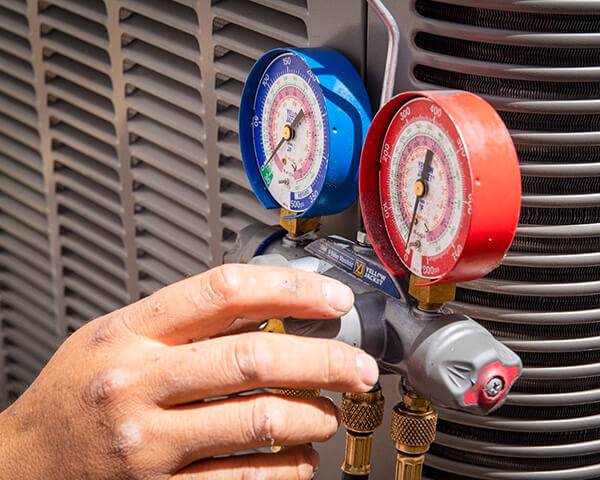
Your commercial HVAC system won’t be able to produce cool air without refrigerant. The refrigerant absorbs heat from your indoor air and transfers it to the outdoors. Under normal circumstances, it won’t run out because it flows in a closed circuit. If your air conditioner is low on refrigerant, it means that there's a leak somewhere in the system. This would usually be detected during an inspection, and its repair is crucial for the system's efficiency and your indoor air quality. Learn more about the cost of refrigerant and how it affects your repair budget.For most people, refrigerant leaks can result in less effective cooling, thus causing the heating and air conditioning system to work harder. This increased strain on your system, which occurs especially during peak times of usage, consequently escalates your energy bill. In the event that your commercial air-conditioner is leaking refrigerant, you should promptly call an HVAC company. Refrigerant is a hazardous substance that, upon inhalation or skin contact, can trigger an array of health problems ranging from mere skin rashes and eye irritation, to breathing difficulties, headaches, nausea, and even organ damage. It has to be properly handled and disposed of in a secure, eco-friendly way to prevent causing harm to anyone or the surrounding environment. Identifying a refrigerant leak is a complex task due to the multitude of areas where it might occur, such as the furnace, air filters or anywhere else in the system. An EPA-certified professional can efficiently pinpoint the leak, undertake a safe repair, and appropriately dispose of the leaked refrigerant.2. Your HVAC System Isn’t Cooling
The primary role of your commercial HVAC system is to ensure the cooling of your business area, and if this is not being effectuated, it certainly should not be ignored. There are various reasons contributing to your air conditioner not providing optimal cooling, with several issues that can be rectified independently, such as a mismanaged thermostat, dirty air filter, and a grimy outdoor condenser. In more serious instances that involve harsh smells or inefficient cooling, it's highly recommended to reach out to an HVAC technician immediately.Faulty Fan
In an ideal functioning HVAC unit, the fan extracts air from the vicinity of the evaporator coils, circulating it within your indoor space. If the fan's operation is interrupted, there will be a significant reduction in airflow over the coils. Consequently, the coils may become cold to the extent that they are enveloped in frost and ice, further prohibiting the airflow. By approaching the unit and listening for a distinctive buzzing sound, you can determine if the fan on your air-conditioner is defective. In case you notice that the motor is jammed, immediate contact should be made with an HVAC company. A malfunctioning fan isn't an easy issue to solve, given that it can be provoked by numerous underlying complications. Interestingly, even if the motor appears untroubled and running smoothly, the fan can be flawed or suffering from a lack of sufficient power. Detecting these concerns is a complex task that may necessitate the use of advanced diagnostic tools like a multimeter. An HVAC professional can provide valuable assistance in determining the cause and strategize the necessary repairs or replacements, thereby enabling your air-conditioner to resume its cooling function.Bad Compressor
Playing an indispensable role in your HVAC system, the compressor compresses the refrigerant gas from a lower to a higher pressure, subsequently transmitting it to the condenser. In case of a malfunction, the compressor cannot effectively circulate the refrigerant throughout the system, resulting in diminished cooling power. The compressor's condition can be assessed by examining the air expelled from the compressor fan. If the air is lukewarm or cool rather than hot, suspicions can be raised about the compressor either being worn or defective. A well-functioning compressor will dispel heat into the external air to circumvent any possible overheating risks. The failure of a compressor can occur for many reasons such as the unit grounding out, inferior bearings, flawed motor among others. Only those who possess comprehensive knowledge of its intricate mechanics can accurately identify the issues. Therefore, seeking the help of an HVAC technician becomes an imperative step when dealing with a malfunctioning compressor thwarting the cooling operations of your air-conditioner. It's essential to emphasize the importance of not attempting any DIY repairs on faulty components by oneself. If you aren't certain about the procedure, there's a high probability of committing errors, which could exacerbate the problem or even damage other integral parts of the system. Consequently, the keen intervention of a professional becomes unavoidable for maintaining the long-term efficiency of the equipment.Besides more expensive repairs, neglecting the health of your commercial HVAC system can also void your manufacturer’s warranty. Much like tenants in a building, even the weather elements such as humidity and cycling temperature changes can impact the unit and create discomfort if not controlled.3. Your HVAC System is Making Unusual Sounds
Much like cycling in the city or the constant flow of plumbing in a large building, even the newest and quietest HVAC systems don’t operate in absolute silence. If you notice that your commercial air conditioner is making certain sounds beyond its comfort zone, sounds that are distinctly different from its normal operational sounds, it may be an indication that it’s in need of repair. It might affect air quality or cause discomfort for your tenants if left unchecked. Some examples of unusual HVAC sounds that require professional attention include:Screeching or Squealing
Much like the discomfort you'd feel if your bike chain were failing while cycling, if your commercial HVAC system is producing a screeching or squealing sound, it may be because its blower motor has a damaged belt or bearing problems. A damaged belt, akin to faulty plumbing piping, is usually not expensive to fix. It should be replaced before it breaks because a broken belt can cause the blower to stop turning, and much like a plumbing issue, it can cause discomfort and major inconvenience.Hissing
A hissing sound usually means that air, similar to steam escaping from plumbing vents, is escaping from a certain component in your commercial HVAC system. The important thing is to locate the source of the sound, much like you would trace a leak to its original source in plumbing systems.Banging or Clanking
A banging or clanking sound, uncomfortable like cycling on a rough terrain, usually suggests that a component in your HVAC system is loose or broken.Rattling or Chattering
If you hear a rattling sound coming from your HVAC unit, it can mean that your equipment is beginning to show signs of wear and tear and some of its components are loosening, much like a loose plumbing fixture that needs tightening.Prevention and Maintenance Tips for Las Vegas Commercial Buildings
Preventive maintenance is critical in Las Vegas' harsh climate. Follow these tips to reduce repair frequency and energy costs:
Use our energy savings calculator to estimate your potential savings.
- Monthly filter changes: Desert dust loads filters faster than in other climates. Check filters monthly during peak season (May-September) and replace when dirty.
- Quarterly coil cleaning: Rooftop units accumulate dust and debris. Schedule professional coil cleaning every 3-4 months to maintain efficiency.
- Pre-monsoon inspection: Before monsoon season (typically July), have a technician check refrigerant levels, electrical connections, and drainage systems.
- Peak demand management: Use programmable thermostats or BAS to reduce cooling during peak demand hours (2-6 PM) when possible, without sacrificing comfort.
- Monitor energy usage: Track monthly kWh and demand charges. Sudden spikes often indicate HVAC problems before visible symptoms appear.
- Rooftop unit protection: Ensure proper shading or reflective coatings on rooftop units to reduce ambient heat exposure.
Cost Drivers: What Affects Commercial AC Repair Pricing
Understanding cost drivers helps you budget and compare quotes fairly:
For a detailed cost breakdown, see our HVAC pricing guide.
- System type and size: Rooftop units (RTUs) vs. central systems, tonnage, and complexity
- Parts availability: Older systems may need custom parts or longer lead times
- Access complexity: Rooftop crane work, after-hours service, or confined spaces add costs
- Refrigerant type: R-410A repairs are standard; older R-22 systems cost more due to phased-out refrigerant
- Labor rates: Peak season (May-September) may have premium rates; emergency after-hours service costs more
- Diagnostic scope: Simple filter/coil issues vs. compressor or control board failures
Decision Checklist: When to Repair vs. Replace
Use this checklist to guide repair vs. replacement decisions:
- ✓ System age: Under 12 years = usually repair; 12-18 years = evaluate; over 18 years = consider replacement
- ✓ Repair frequency: More than 2-3 major repairs per year suggests replacement may be more cost-effective
- ✓ Repair cost: If repair exceeds 50% of replacement cost, replacement often makes more sense
- ✓ Energy efficiency: Older systems (SEER below 13) waste money monthly; newer systems (SEER 16+) save significantly — see our commercial AC unit cost guide for pricing details
- ✓ Refrigerant availability: R-22 systems are expensive to maintain; R-410A systems are standard
- ✓ Comfort complaints: If tenants consistently complain despite repairs, replacement may solve root causes
- ✓ Peak demand impact: Newer systems reduce peak demand charges, improving ROI
If you find that your commercial HVAC system is showing any of these signs, you should schedule a repair visit with a reputable HVAC contractor. For an overview of what to budget, see our guide on commercial HVAC maintenance costs. Remember, like the comfort provided by smooth cycling tracks and the convenience of high-quality plumbing, high-quality air conditioning maintenance can ensure that your business premises remain comfortable for your tenants.
See why homeowners trust us — view our industry awards and certifications.
Related service: Experiencing AC problems in Las Vegas? Explore our AC repair and AC maintenance services for Las Vegas homeowners.
Ready for Professional Commercial AC Repair in Las Vegas?
The Cooling Company specializes in commercial HVAC repair and maintenance across Las Vegas, Henderson, and North Las Vegas. Our NATE-certified technicians understand the unique demands of desert climate operation—from rooftop heat stress to dust loading and peak demand management. We offer:
- 24/7 emergency service for no-cool situations during heat waves
- Preventive maintenance programs tailored to Las Vegas conditions
- Fast response times with fully stocked service vehicles
- Transparent pricing with upfront estimates before work begins
- Experience with all major commercial brands and system types
Don't let HVAC problems disrupt your business or spike your energy bills. Contact us today at (702) 567-0707 or Schedule Now to get your commercial HVAC system running efficiently again.
Las Vegas Rapid Response Tip
During heat waves, early diagnostics prevent tenant complaints and costly downtime.
FAQs About Commercial AC Repair
How quickly can you respond during peak heat?
Response times vary, but no-cool calls are prioritized during heat waves.
Do you service rooftop units?
Yes. We service and repair rooftop units across Las Vegas.
Can maintenance reduce emergency repairs?
Yes. Regular filter, coil, and control checks prevent many breakdowns.
Should I repair or replace an older unit?
If repairs are frequent on 12–18 year units, replacement often makes more sense.
What should I document for the technician?
Note noises, runtimes, and affected zones to speed diagnosis.
Neighborhoods We Commonly Serve
- Downtown Las Vegas
- Summerlin
- Spring Valley
- Henderson
- North Las Vegas
- Airport Corridor
Trust & Guarantees
- Serving Las Vegas since 2011
- 55+ years combined experience
- Licensed, EPA-certified technicians
- 100% satisfaction guarantee
- BBB A+ rated
- Lennox Premier Dealer
Find Us on the Map
Need HVAC Service in Las Vegas?
The Cooling Company provides expert HVAC service throughout Las Vegas, Henderson, and North Las Vegas. Our licensed technicians deliver honest assessments, upfront pricing, and reliable results.
Call (702) 567-0707 or visit commercial HVAC, AC repair, maintenance, or installation for details.