

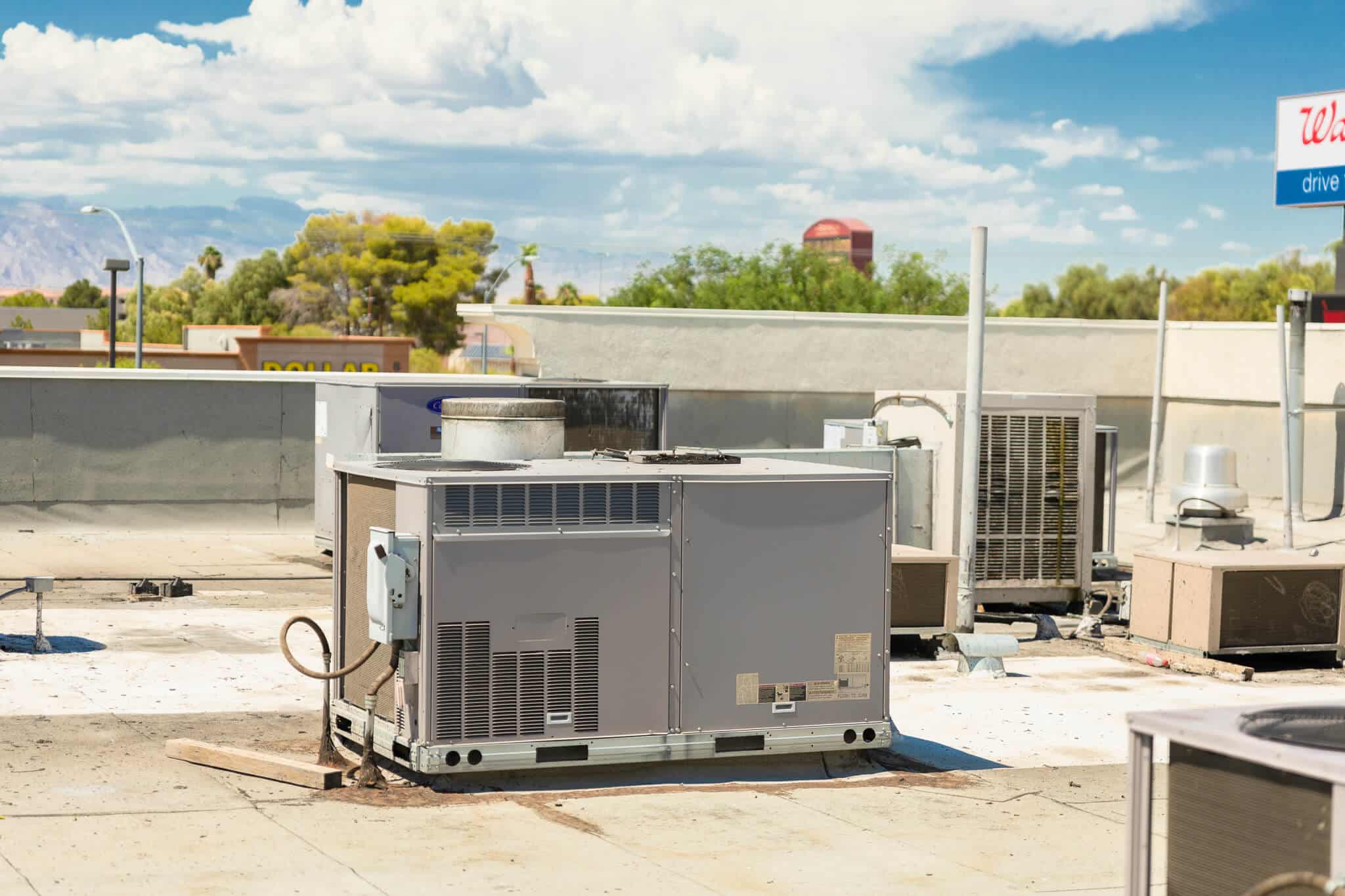
Short answer: Commercial HVAC filter change costs vary by filter type, MERV rating, and replacement frequency, typically ranging from $15–$75 per filter plus $75–$150/hour labor. In Las Vegas, commercial systems face extreme heat loads (110°F+ summer days requiring 8–12 hours daily runtime), frequent dust storms that foul filters faster, monsoon season impacts on condensate systems, and peak demand charges that make preventive filter maintenance essential for controlling energy bills. Cut costs through bulk purchasing, condition-based replacement using delta-P sensors, standardized filter sizes, and service bundling to reduce labor travel fees.
Las Vegas essentials and commercial filtration challenges
Rooftop units across Las Vegas run longer and load filters faster because of desert dust, construction activity, and heavy summer runtimes. Hospitality kitchens, medical offices, and warehouse dock doors also increase particulate loads, so “quarterly” filter swaps often turn into monthly checks. Add NV Energy demand charges and after-hours labor, and the cost of a late filter change can be higher than the filter itself.
Key Takeaways
- Use a room-by-room Manual J load calculation (not a square-foot rule).
- Select equipment with Manual S and verify ducts with Manual D for comfort and efficiency.
- Avoid oversizing: short-cycling wastes fuel and can create uneven temperatures.
Why change filter strategy before summer?
Summer stretches run hours and raises outdoor dust and pollen loads. When equipment runs longer, filters collect particulates much faster. Without change, a stable schedule in spring can become inadequate by June. Waiting until summer peaks raises the chance of lost airflow and tenant complaints. Fans operating against loaded filters draw more power and can trip on high amps. Planning now lets you balance upfront costs against energy and service risk. Evaluate current static margin and coil condition before upgrading MERV. A blanket MERV increase can raise pressure drop and reduce airflow if fans cannot provide the extra static. A short inspection will show if coils are clean and if fans have spare static to accept higher resistance.How does summer loading change filters?
Late spring and early summer bring higher pollen counts, landscape irrigation spray, and more construction activity. These raise the particulate concentration at intake points and speed filter loading. In some sites, filter life drops from quarterly to monthly during these periods. Las Vegas-specific loading factors: Desert dust storms dramatically increase filter loading, requiring monthly filter checks and quarterly coil cleaning. Summer days reach 110°F+, forcing systems to run 8–12 hours daily during peak season (June–September), which accelerates filter wear. Monsoon season (July–September) brings sudden humidity spikes that stress condensate drainage systems. Peak demand charges from NV Energy can make up a large share of monthly bills, making preventive filter maintenance critical for controlling energy costs. Track local events and plan extra inspections during known dusty periods. A proactive inspection schedule prevents sudden delta‑P spikes and avoids emergency service calls at peak cooling demand.What are tenant and energy risks?
Reduced airflow hurts comfort and raises complaints. Occupants notice slower cooling or hot zones. That often leads to service calls and tenant dissatisfaction. Higher fan energy and extra wear follow loaded filters. Fans that run harder increase electricity bills and may shorten motor life. Early action on filtration reduces these downstream costs.How to estimate annual filter spend
Start with a basic lifecycle-cost worksheet. List each filter SKU, count per unit, unit price, and the number of swaps per year. Then add realistic technician minutes per swap and an hourly labor rate to calculate labor cost. Next add disposal or recycling fees. Some media types require special handling that adds per-filter cost. Include those fees before you finalize a comparison. Finally, add fan energy and indirect costs such as coil cleaning and downtime. Estimate the additional static pressure from a higher MERV option and convert that extra pressure to annual kWh. Multiply by your electric rate to see the true annual cost.What inputs are needed for a spend model?
The model needs SKU, physical size, and unit cost for each filter. You also need the expected number of changes per year and average technician minutes per change. Add labor hourly rate and disposal fees. For energy, get supplier data on clean and loaded initial pressure drop. Use those numbers to estimate added fan power from increased static pressure. Include any special handling fees for HEPA or custom media.How to count filters across RTUs and AHUs?
Use a walk-through or your CMMS asset list to inventory filter locations. Record prefilter and final media separately and note each size and frame type. Include photos to speed quoting. For rooftop units include travel time and rooftop safety tasks. Remote or confined-space units need extra minutes for safety setup, which increases labor cost and should be counted in the model.Which replacement frequency is realistic?
Replacement frequency depends on loading and system design. Many office spaces use quarterly changes for MERV 8–11. MERV 13 often needs more frequent checks and may require monthly inspection depending on delta‑P trends. Critical or high‑exposure spaces might need monthly or weekly checks. Use measured delta‑P to refine schedules rather than fixed calendar swaps when loads vary.How to include fan energy in cost?
Estimate the added static pressure for each MERV option from supplier data. Convert that pressure change to fan kW using a fan power formula or a DOE calculator. Multiply by annual operating hours and your site electric rate. Add the resulting annual energy cost to material, labor, and disposal to compare lifecycle totals. Often fan energy outweighs small differences in filter price.Which filter specs save energy and cost?
Pick the lowest MERV that meets your IAQ goals and that your system can handle. Higher MERVs trap smaller particles but usually add pressure drop. If the fan lacks spare static, more resistance will reduce airflow and increase energy. Where possible use a low-cost prefilter upstream of a higher-MERV final media. Prefilters extend life of the final media and lower average pressure drop across the bank. Standard filter sizes cut custom-cut costs and speed supply. Test a small group of units before fleet changes. Measure clean and loaded delta‑P and confirm airflow. This reduces the risk of system-wide changes that raise bills or cause tenant issues.What MERV range suits common spaces?
Offices and retail spaces usually balance cost and capture with MERV 8–11. These provide good coarse particle removal at low pressure drop. MERV 13 is appropriate when health goals require finer capture and fans can absorb the extra resistance. Reserve MERV 14 and HEPA for critical zones such as labs or healthcare where high capture is essential and systems are designed for the added pressure.Are HEPA or high MERV needed for offices?
Most general office environments do not need HEPA. HEPA increases material cost, labor, and often requires system upgrades to maintain airflow. A staged approach - MERV 13 final with a prefilter - often meets higher IAQ goals for offices without the high energy and retrofit costs of HEPA installations.How does pressure drop impact fan power?
Any added pressure drop raises fan work. Over long summer runs the energy penalty can exceed filter cost savings. Always model added static pressure as part of lifecycle comparisons. Run on-site tests on a few representative units to confirm the theoretical energy impact. Site data prevents surprises when you apply a filter change across a portfolio.Which filter media types cost less over time?
Pleated panel filters with prefilters are often the lowest lifecycle cost for many offices. They are easy to replace and usually available in standard sizes. Bag filters or extended media hold more dust and last longer in heavy-loading situations. Match the media type to expected dust load and access constraints to reduce both material and labor costs.Can pleated filters meet IAQ goals?
Properly installed pleated filters with correct MERV and gasketing can meet most office IAQ needs. Prevent bypass by using correct frames and seals. Validate performance with spot particle counts or occupant feedback after changing strategy. That ensures you meet both comfort and health goals.When should you switch to condition-based replacement?
Switch when runtime and dust loads vary enough that calendar swaps waste money or leave you exposed to airflow loss. Condition-based replacement uses measured indicators so you change filters only when needed. Delta‑P triggers and runtime counters reduce emergency calls and keep airflow consistent during summer peaks. Start with a pilot on a few representative units to set thresholds and check results.What sensors indicate filter change?
Differential pressure gauges or transmitters across filter banks show real loading in real time. Simple magnehelic gauges give a visual readout, while wireless transmitters can log data and push CMMS work orders. Logging delta‑P removes guesswork from scheduling and prevents late-stage high-pressure drops that cause performance issues and tenant complaints.How to set pressure drop thresholds?
Record clean delta‑P values and track loading over several months. A common replacement trigger is 0.3–0.5 in. W.g. Above the clean reading, but thresholds should reflect fan static margin and coil sensitivity. Validate trigger settings with airflow and coil checks. If airflow drops significantly before the delta‑P threshold, lower the trigger or clean coils before filters reach that level.Which CMMS workflows reduce labor?
Automate work orders from delta‑P alerts and group tasks by zone or building to optimize routes. Scheduling multi-unit visits cuts travel time and reduces per-filter labor cost. Track technician minutes per task in the CMMS. Use that history to refine crew sizes, reduce overtime, and remove emergency fees during peak season.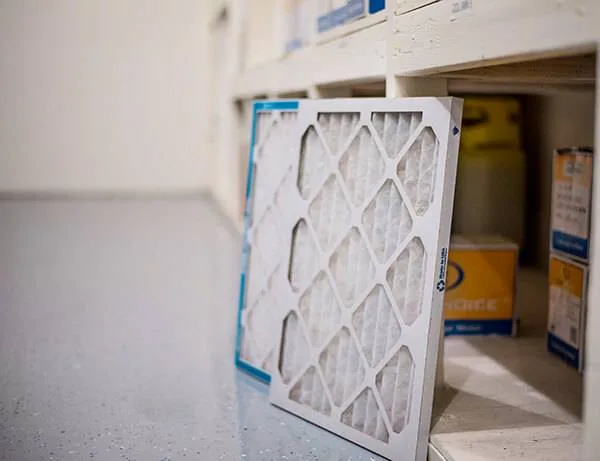
How to cut material and labor costs
Consolidate buying and standardize sizes across similar RTUs and AHUs. Bulk buying lowers per-unit price and reduces lead-time risk. Standard frames and staged filtration minimize custom work and speed swaps. Train in-house staff to stage filters and prepare safe rooftop access. Even small reductions in on-site technician time add up over many units. Tie training to safety procedures and lockout/tagout to keep liability low. Use route optimization and bundling to avoid emergency trips. Fixed service agreements or bundled schedules often include travel in the fee and prevent costly rush surcharges.Can bulk purchasing for RTUs lower unit price?
Yes. Buying common sizes in bulk reduces per-filter price and avoids seasonal lead-time problems. Negotiate fixed prices for a year and ask for volume discounts to contain costs. Ask suppliers for delivery windows and lot traceability so a bad lot does not affect many units. That protects you in large portfolios and reduces replacement surprises.How can stock rotation avoid rush fees?
Implement FIFO rotation and label lots with delivery and install dates. Keep a one-quarter buffer of the most common sizes on site to avoid emergency orders during heavy loading events. A small spare stock reduces rush shipping and downtime when a sudden loading event or a piece of equipment fails.Are onsite filter preps worth training?
Yes. Training staff to stage filters, gather tools, and clear access before a technician arrives reduces swap time. Saving even 10–15 minutes per change accumulates quickly across many units. Require written checklists and safety steps to keep quality consistent and reduce callbacks.How much time does a filter change take?
RTU swaps typically take 15–30 minutes per filter if roof access is easy. AHU element swaps may take 30–60 minutes when racks or harnesses are required. Include testing, sealing, and logging delta‑P in the task time. Complete visits prevent repeat calls and ensure the job is done correctly.What labor rates should you budget?
Budget market rates for certified technicians, typically $75–$150 per hour depending on region and skill. Add travel, rooftop safety premiums, and overtime risk during peak demand. Use these realistic rates in your lifecycle model so you compare total costs rather than just material prices.Can service bundling cut travel fees?
Yes. Bundle visits to multiple units or buildings and use route optimization built into your CMMS. Monthly or quarterly service agreements often absorb travel in the fee and reduce emergency surcharges. Document routes and expected visit times so vendors can plan efficient days and lower per-filter labor minutes.Which filter sizes reduce custom orders?
Standardize on a small set of sizes across similar RTUs and AHUs. That reduces custom cuts and lead times and simplifies spare stocking. When a custom size is needed, document it in the asset record and keep a sample photo so orders are correct the next cycle.How to use variable frequency drives to save
VFDs can recover fan energy when system curves allow speed reductions without sacrificing airflow. If a MERV upgrade adds moderate pressure, tuning a VFD may offset some added fan energy. Always verify performance with system tests before claiming fleet-wide savings. Some fans and controls respond poorly to speed changes and need professional tuning.What are warranty considerations for filters?
Check supplier warranties for defects and media performance. For high-MERV and HEPA filters, ask for shop test data and lot traceability to reduce risk on large bulk buys. Warranties can shift risk. A bad lot on a large purchase can affect many units, so require clear warranty terms in the contract.How to track replacements for budgeting?
Log filter SKU, unit, install date, delta‑P, and technician minutes in your CMMS. Export annual reports to refine budgets and reorder plans. Use replacement history to spot early wear patterns and justify prefilters, schedule changes, or additional inspections.Get a quote and plan next steps
Prepare a packet for suppliers with unit counts, filter sizes, delta‑P readings, and access constraints. Include photos of filter banks and notes about rooftop or confined-space needs. Clear information reduces surprises and rush charges. Ask suppliers for lifecycle cost quotes, not just per-filter prices. Require clean initial pressure drop and MERV data and request lead times and volume discounts so you can compare true annual costs across proposals.What site prep matters for proposals?
Provide an asset list and photos of filter banks and access routes. Note safety needs like harness points, rooftop walkways, and allowable work windows to avoid overtime. These details help vendors price the job accurately and avoid surprise premiums during pre-summer work.What info should you send suppliers?
Send filter SKUs if known, MERV targets, replacement intervals, delta‑P readings, and unit make and model. Ask for sample filters and ASHRAE 52.2 data to validate initial pressure drop and performance claims. This data allows side-by-side lifecycle comparisons and reduces the chance of receiving misleading low per-filter quotes.How The Cooling Company can help?
Las Vegas area facility managers can call The Cooling Company at (702) 567-0707 for a site review and quote. Our teams include NATE‑certified technicians who perform delta‑P checks, prefilter staging, and condition‑based plans. We understand Las Vegas-specific challenges: extreme commercial heat loads, desert dust requiring frequent filter changes and coil cleaning, monsoon season impacts on condensate systems, and peak demand charges that make preventive filter maintenance essential. Service areas include Las Vegas, Henderson, and North Las Vegas for fast summer readiness. If you are outside our service area, ask vendors for NATE certification and lifecycle cost models using the same inputs: material, labor, fan energy, and disposal.Need commercial HVAC filter change help in Las Vegas?
Las Vegas building owners trust The Cooling Company for professional commercial HVAC filter change services and cost optimization. Our licensed, NATE-certified technicians conduct comprehensive site audits, inventory all filter locations, and present defensible filter change plans with clear cost breakdowns.
Our pricing guide breaks down the costs you can expect.
Our commercial HVAC filter services include:
- Site audits and filter inventory for accurate cost estimating
- Condition-based filter replacement using delta-P sensors
- Bulk filter purchasing and standardized sizing programs
- Filter change scheduling and CMMS workflow optimization
- Energy analysis showing fan energy impact of filter choices
- Emergency commercial HVAC repair with fast response times
Call (702) 567-0707 or visit our commercial HVAC services page to schedule a site audit and receive a detailed filter change cost estimate. We serve Las Vegas, Henderson, North Las Vegas, and surrounding commercial areas.
Filter change cost reduction checklist
- Inventory all filter locations (RTUs, AHUs) with sizes, MERV ratings, and current replacement frequency
- Calculate annual filter spend including material, labor, disposal, and fan energy costs
- Evaluate condition-based replacement using delta-P sensors vs. calendar-based schedules
- Standardize filter sizes across similar units to enable bulk purchasing
- Negotiate volume discounts and fixed pricing for common filter SKUs
- Set up CMMS workflows to automate work orders and optimize technician routes
- Factor in Las Vegas-specific challenges: extended summer runtime, dust loading, monsoon season
- Test MERV upgrades on a small group before fleet-wide changes
- Track fan energy impact of filter pressure drop changes
- Plan pre-summer maintenance to avoid breakdowns during heat waves when emergency rates are highest
Las Vegas-specific filter maintenance prevention tips
Desert dust management: Desert dust requires aggressive filter management—consider upgrading to higher-MERV filters or electronic air cleaners for heavy-loading areas. After dust storms, inspect and clean coils immediately to prevent airflow restrictions. During monsoon season (July–September), ensure condensate drains are clear to prevent water damage. Schedule filter changes before peak summer (May–June) to avoid breakdowns during heat waves when emergency rates are highest. Track energy usage monthly—sudden increases may indicate clogged filters or coil fouling.
Peak demand charge reduction: Clean filters reduce fan energy consumption, which helps control peak demand charges. Schedule filter changes during off-peak hours when possible. Use condition-based replacement to avoid unnecessary changes while preventing emergency failures during peak cooling demand.
Use our energy savings calculator to estimate your potential savings.
Final checklist before summer
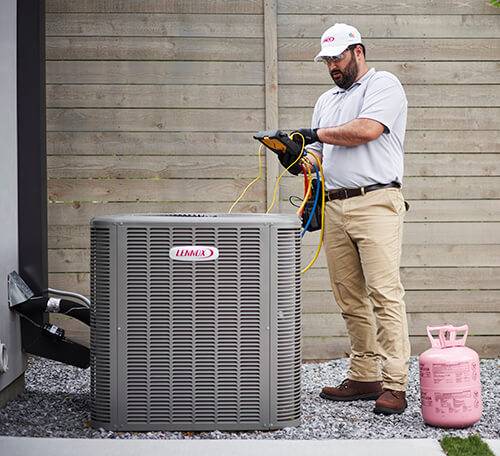
Walk key units and log clean delta‑P and runtime. Stock common sizes and a one‑quarter buffer of spare filters. Set delta‑P triggers and automate CMMS work orders. Pilot any MERV upgrade on a small group and measure airflow and energy before broad fleet changes. These steps reduce risk and cost ahead of peak cooling demand. Early planning avoids emergency repairs, prevents tenant complaints, and keeps your equipment running efficiently through the hottest months.Cost drivers that change filter-change budgets
- Filter count and access: RTU rooftop access, safety setup, and ladder time raise labor minutes per unit.
- MERV targets and media depth: Higher MERV and deeper media cost more and can increase fan energy.
- After-hours or occupied work: Night work for retail or medical sites adds premiums.
- Dust exposure and door traffic: Loading rises near loading docks, kitchens, or busy storefronts.
Decision guidance: pick the right filter strategy
- Use measured delta-P so you replace by condition, not habit.
- Standardize sizes across similar RTUs to lower unit price and avoid custom orders.
- Compare lifecycle cost with fan energy and disposal, not just filter price.
- Bundle service visits to reduce travel fees and downtime.
Prevention: keep filter costs predictable
- Check filters after dust storms and during late spring construction peaks.
- Seal filter racks and add prefilters to prevent bypass and extend life.
- Log delta-P and runtime in your CMMS to forecast monthly spending.
- Schedule changes before heat waves to avoid emergency labor premiums.
Neighborhoods we serve for commercial filter programs
We support businesses across Downtown Las Vegas, the Arts District, Summerlin, Spring Valley, Enterprise, Paradise, Henderson, Green Valley, North Las Vegas, and Silverado Ranch.
Why businesses trust The Cooling Company
- Serving Las Vegas since 2011
- 55+ years combined experience
- Licensed, EPA-certified technicians
- 100% satisfaction guarantee
- BBB A+ rated
- Lennox Premier Dealer
Service area map
Sources and notes- DOE Better Buildings HVAC: (DOE Better Buildings HVAC)
- For Las Vegas area help, call The Cooling Company at (702) 567-0707.
Related reading: what to explore next?
Expand your knowledge with these related guides from our experts. Each article provides in-depth information to help you make informed decisions about your HVAC system and home comfort needs.Need HVAC service help in Las Vegas?
If you're facing an HVAC emergency in Las Vegas, Henderson, or North Las Vegas, The Cooling Company offers fast, reliable service from licensed technicians. We understand that heating and cooling emergencies don't wait for business hours. Call us now at (702) 567-0707 for emergency service. Our team is ready to help restore your comfort quickly and safely.About The Cooling Company
The Cooling Company has been serving the Las Vegas valley with professional HVAC services for over a decade. Our team of licensed, NATE-certified technicians specializes in air conditioning repair, heating system maintenance, and complete HVAC installations. We're committed to providing honest, reliable service with upfront pricing and a 100% satisfaction guarantee on all work performed.- Phone: (702) 567-0707
- Reviews: 4.8/5 stars (780+ reviews) - See reviews
Service Areas
We proudly serve homeowners and businesses throughout the Las Vegas metropolitan area, including Las Vegas, Henderson, and North Las Vegas. Our service technicians are available for same-day appointments in most areas, with emergency service available 24/7 for urgent HVAC issues.Share This Page
Need HVAC Service in Las Vegas?
The Cooling Company provides expert HVAC service throughout Las Vegas, Henderson, and North Las Vegas. Our licensed technicians deliver honest assessments, upfront pricing, and reliable results.
Call (702) 567-0707 or visit commercial HVAC, AC repair, maintenance, or installation for details.