

When it comes to needing a new commercial HVAC system for your business, you’re undoubtedly going to have a lot of questions. A leading question among them is typically, "How much will it cost to install?" Depending on the size and area of your business location, as well as the state of the current HVAC system if one exists, an estimate provided by a professional contractor can vary significantly. If you want a dedicated service quote, visit our commercial HVAC installation services page.
The same can be observed in residential areas where the costs of installing HVAC systems in homes can greatly differ. Different brands also play a part in this cost variability because each has its own specific features and utilities. For example, a heat pump from one brand may cost more due to advanced features it may possess.
As you project the future costs and go through the process of obtaining numerous installation quotes from various contractors, it gets complex. Among other things, these quotes provide you with examples of the potential expenses, interpreting them may be as tricky as deciphering ventilation system schematics if you don't fully understand the ins and outs of HVAC replacement. Therefore, it's essential to equip yourself with the right tools and knowledge to make sure you're making an informed decision.
- What HVAC system types are available
- The factors that affect installation prices
- What a reasonable price may be
New system installation or replacement?
If your commercial building already has a central air conditioning system, replacing it with a new, more efficient unit will undoubtedly be less costly than installing a brand new HVAC system to a property that's never had central heating and cooling. New installations are more labor-intensive: your contractor will need to install ductwork, drains, decking, and wiring to support the new equipment, essentially starting from scratch, all of which invariably hike the cost.System type
Installation cost can also vary according to the type of system you’re buying, as each one has specific installation requirements. In this broad spectrum of HVAC systems, a clear understanding of the different units goes a long way in selecting an appropriate one for your commercial application. Commercial HVAC systems come in various sizes; the size of the system you choose should match the area it is supposed to serve.- Package Units: These systems are the most popular type for commercial spaces because their heating and cooling capabilities are both efficient and effective.
- Heat pumps: Seen more frequently in warmer climates, heat pumps are more expensive than central air conditioners, but in the right climate, they can save money. Heat pumps are available as split systems or packaged units.
- Ductless mini-split systems: If you only need to cool a small office or store, mini-split systems are convenient because they don’t require ducts. For larger spaces, however, they can be an expensive option because they need to work harder to provide sufficient cooling.
System size
Certainly, size has a significant impact on how much you pay for your HVAC installation. Central air conditioners are measured in tons, which refer to the system’s ability to cool your space. A system designed for certain square footage will, of course, have a proportional installation cost.Building size
The larger your office or retail premises, the bigger the system you will need to control internal temperatures, and it's an unavoidable fact that you will pay more to have it installed. Paying attention to the size of the areas that will require an HVAC system is paramount because these areas directly affect the total installation cost. As part of deciding on an appropriate HVAC system, some business owners might be tempted to cut corners to save money on the purchase price and install costs by buying a smaller unit. However, in reality, if the system is too small for the commercial space, it will be less energy-efficient, leading to higher HVAC unit costs in the long run, and can even wear out sooner. This article will discuss the role HVAC prices play in choosing the right unit. An HVAC unit with an output that’s too high can pose potential problems. They may cool an area too quickly and shut off before it can be properly dehumidified. Engaging a professional HVAC company to carry out a load calculation and energy analysis for your building will provide valuable insights into the right size system and its part in cost-effectiveness. It's important to understand that the value of an HVAC system is determined by its Seasonal Energy Efficiency Ratio, or SEER, which indicates how efficient the system is. It measures the unit’s cooling output against the energy consumed. The higher the SEER rating, the less expensive it is to operate. Although newer commercial HVAC systems with higher SEER ratings might demand more from the market in terms of purchase price, it is offset by the energy savings you realize over the lifespan of the unit.SEER rating
Every commercial HVAC system also comes with an EER, or Energy-Efficiency Rating, that typically ranges from 8 to 11.5. EER is calculated by comparing its BTU rating to its wattage. For example, if you have a 10,000 BTU air-conditioning unit that consumes 1,200 watts, it will have a rating of 8.3. The better the EER, the significant your energy savings and the smoother your operations.EER rating
The higher a system’s EER rating, the more efficiently it operates, and thus, the more value it provides. This efficiency translates into reduced energy costs, better air quality, and lower labor cost in installation, servicing, and furnace repair. That's why businesses typically reduce their average amount spent on servicing heating and cooling systems through strategic investments in higher EER-rated furnaces. When it comes to installation, some building structures are straightforward, while others can be more complicated. Estimates indicate that if the HVAC unit needs to be in an unusual location or one that’s difficult to reach, the installation cost will be higher because more planning, materials, and labor will be needed. Specific features, including the ductwork path and furnace location, particularly impact costs.Installation Difficulty
If you are replacing an existing system and the existing ducts and piping don’t need to be redesigned or replaced, the cost of your commercial HVAC installation will be lower. At the very least, based on research and industry standards, your ductwork should have:Ductwork
If the ductwork has not been correctly installed and maintained or the zone control systems are not working correctly, it can:- Manual dampers at each TY junction for air balance
- Proper insulation at these junctions to minimize the risk of condensation and water leaks
- Reduce system efficiency due to leaks
- Create hot or cold spots in the building
- Cause mold growth
- The HVAC technician will have to work through ceiling grids and in tight spaces
- Some installation steps may need to be done after hours, which can incur overtime costs. For example, pipes cannot be soldered during business hours in an occupied building because fire alarms might be set off.
The number of supply and return vents needed in the space
Just as system complexity dictates HVAC equipment and installation costs, the controls you select will have a similar effect. Depending on the size of your business, you may need a simple thermostat attached to a single HVAC unit or a more intricate setup consisting of multiple locations connected to a central office. Even if you only need a single thermostat, the price will be higher if you opt for our smart models featuring remote connectivity. Your HVAC contractor, armed with thorough research, a keen understanding of your needs, and knowledge about replacement cost, will recommend the best control setup for your business size.System controls
When you receive a quote for a commercial HVAC system, the price typically represents the system alone. However, if you, like many of our homeowners, decide to add comfort-enhancing components, such as the following, it will increase the overall cost of the unit.Add-ons and upgrades
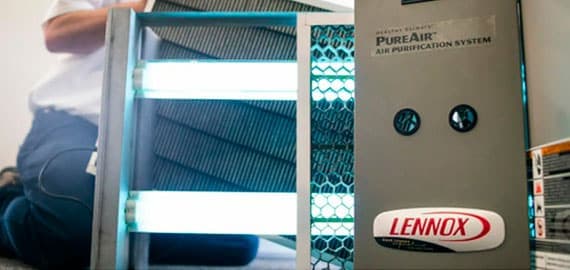
Although not always integral parts of most HVAC systems, these add-ons can present enough benefits to make them worth the investment in terms of improved air quality and reduced energy costs. Homeowners and office buildings alike have benefited from these added components.- UV air filtration systems
- Humidification equipment
- Electrostatic filters
System startup costs
For each line and unit, your HVAC technician, understanding the complex layout of your system, will have to test thermometers, gauges, wells, and thermostats before the system can be put into operation.- How many units you purchased
- The complexity of your system
Miscellaneous charges
Investing in a new commercial HVAC system is a significant step, but the cheapest option is not always the best solution for your climate control needs. A reputable HVAC contractor will provide you with a system that meets your budget and is backed by industry-leading warranties and guarantees. A company that refuses to skimp on service quality by cutting corners can become a trusted partner in the future success of your Las Vegas business.- Any necessary city inspections and permits. Some HVAC installation companies will carry out controlled inspections to confirm the accuracy of the installation and do any required filing with the building department on your behalf.
- Air balancing tests for air-cooled systems. This process verifies that the airflow outlined in the drawings or the manufacturer’s documentation matches what the system produces.
- Water balancing tests for water-cooled systems. This test confirms that the correct temperature is achieved through the pipe at the right flow rate.