

Short answer: Commercial HVAC installations in Las Vegas require ASHRAE-based load calculations, high-efficiency equipment, and proper commissioning to avoid costly downtime. Typical installed costs range from $2,500–$5,000 per ton for RTUs to $3,500–$8,000 per ton for central plant systems. In Las Vegas, factor in extreme commercial heat loads (110°F+ summer days requiring 8–12 hours daily runtime), desert dust requiring frequent coil cleaning, monsoon season impacts on condensate systems, and peak demand charges that make preventive maintenance essential for controlling energy bills. Get itemized bids showing $/ton, IEER, peak kW, and estimated annual kWh for fair comparison. Include economizers, VFDs, BAS integration, and NV Energy rebate support in scope.
Learn about available federal tax credits for energy-efficient HVAC equipment.
Las Vegas essentials and installation challenges
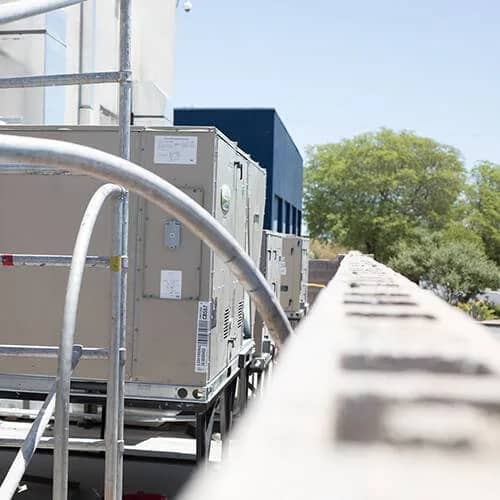
Commercial installs in Las Vegas face rooftop heat, long equipment lead times, and strict permitting requirements from Clark County and city jurisdictions. Crane access, curb sizing, and high-ambient performance ratings (125°F) all affect schedules and final cost. Planning around peak cooling months reduces tenant disruption and avoids emergency change orders.
Key Takeaways
- Require ASHRAE-based load calculations and an itemized equipment schedule before bid.
- Compare installed $/ton, IEER, peak kW and estimated annual kWh across proposals.
- Include economizers, VFDs, BAS integration and NV Energy rebate support in scope.
- Make commissioning and documented functional testing a contract deliverable.
- Las Vegas commercial heat loads, dust, monsoon season, and peak demand charges require specialized planning.
Why hire a commercial HVAC pro in Las Vegas?
Hiring a local commercial HVAC pro saves money over the life of the system. Local firms know code, permitting, and NV Energy rebate rules so they avoid common delays. They also know rooftop rigging and desert roof concerns that out-of-town crews often miss. A local contractor reduces risk during peak summer months with faster field fixes and parts. They bring crews that handle rooftop rigging, curb mods, and quick coil cleaning. Expect better shutdown sequencing and less tenant downtime when local crews manage the job.How does Las Vegas heat affect HVAC sizing?
Las Vegas causes long daily run-hours and big solar gains on west and south facades. Designers must use ASHRAE methods and local weather files to capture sensible loads. That avoids undersized systems at peak times and oversized units that short-cycle during mild days. Accurate inputs matter in load calcs. Include glass type, roof insulation, equipment loads, and occupancy schedules. A proper sensible heat ratio helps designers balance dehumidification and cooling energy for comfort and control.Las Vegas commercial heat load factors: Summer days reach 110°F+, forcing systems to run 8–12 hours daily during peak season (June–September). Desert dust storms foul coils and filters faster than in milder climates, requiring monthly filter checks and quarterly coil cleaning. Monsoon season (July–September) brings sudden humidity spikes that stress condensate drainage systems and controls. Peak demand charges from NV Energy can make up a large share of monthly bills, making preventive maintenance and efficient equipment selection critical for controlling energy costs.
Try our energy savings calculator to see how much you could save.
What are typical installed costs per ton?
Installed cost varies by system type, access, and controls. Small packaged RTU swaps often land between $2,500 and $5,000 per ton for simple installs. Add curb mods, new ducts, or structural work and costs rise substantially. Large central plant water-cooled chillers typically cost more, often $3,500 to $8,000 per ton installed for big projects. Data centers and hospitals push costs higher because they need redundancy, water treatment, and strict controls.When is central plant better than RTUs?
Central plants often win when buildings exceed about 200 to 300 tons or need shared redundancy. They provide better part-load efficiency with VFDs, staging, and thermal storage. That lowers lifecycle cost for long-run sites. Rooftop RTUs suit smaller retail and standalone offices where first cost is key. Compare central plant payback using a life-cycle model that includes NV Energy rebates, maintenance. Demand-charge savings for a full view.Which refrigerant options reduce risk?
Low-GWP refrigerants reduce exposure to future regulation and high refill costs. The AIM Act phases down some HFCs, so choosing lower-GWP options helps long-term service costs. Also consider equipment designed for easier retrofit. Verify local service support and EPA 608-certified techs for any refrigerant you pick. Ask for systems that simplify leak detection and have planned pathways for future refrigerant changes to reduce long-term risk.How do size and short cycling impact bills?
Oversized equipment short-cycles and fails to remove humidity well. Short cycles cause more compressor starts and higher wear. That raises energy and maintenance cost over time. Correct sizing leads to longer run times and better latent removal. Ask bidders for runtime and kW demand models so you can compare actual operating cost instead of only installed price.Which efficiency standards matter for Vegas?
IEER and EER measure efficiency across load ranges and matter in Las Vegas. IEER is useful because units run many hours at partial load. ASHRAE 90.1 sets baseline rules and local code can add requirements. VFDs on fans and pumps and economizers often qualify for rebates and improve part-load kW. Check DOE commercial efficiency tables and manufacturer IEER data when you compare bids.Where to find local rebates and incentives?
NV Energy offers commercial rebates for efficient RTUs, chillers, VFDs, and BAS upgrades. Rebates usually require pre-approval and specific documentation before equipment is bought. Missing pre-approval can void incentives. Contact NV Energy early and review their commercial guide. Contractors who know the local rebate steps can save days in paperwork and help you lock in incentives that change payback math.Who handles permitting and inspections?
Licensed mechanical contractors normally secure permits and schedule city or county inspections. Permits typically need mechanical plans, equipment specs, and sometimes load calculations. Plan review can add weeks to project timelines. Confirm who pays permit fees and who handles plan corrections before signing contracts. Clear responsibility for permit work avoids delays and hidden costs that show up mid-project.Which system is right for your building?
Picking the right HVAC system depends on building size, use, access, and lifecycle budget. RTUs often suit small retail and offices because they are modular and quick to swap. Large campuses, hotels, and hospitals usually favor central chilled-water plants for efficiency and control. Owners should weigh installed cost, maintenance needs, reliability, and demand charges. Model life-cycle costs with local kW demand data and NV Energy rebates. That gives a clear comparison between a higher-efficiency RTU and a central plant.What are rooftop unit (RTU) advantages?
RTUs are modular, reduce interior mechanical rooms, and typically install faster than central systems. They save early cost and keep mechanical work on the roof. This is useful for single-tenant retail and small offices. High-IEER RTUs with economizers and VFD fans can be efficient. Plan for rooftop access, curb sizes, crane needs, and frequent coil cleaning in dusty Las Vegas to protect long-term efficiency.How do chillers compare to packaged units?
Chillers usually give better efficiency at larger scales and for continuous runs. Water-cooled chillers pair well with towers and VFD pumps to cut kW at part load. That helps large buildings lower monthly energy bills. Packaged rooftop units keep mechanical systems simple and can cost less to install for small sites. For projects over a few hundred tons, chilled-water systems usually win lifecycle cost due to better part-load control.When is VRF a good option?
VRF systems fit buildings with many zones or retrofit limits. They give precise zone control and can recover heat between zones. That suits mixed-use or multi-tenant buildings where duct space is limited. Consider technician availability and refrigerant management when picking VRF. For projects under about 200 to 300 tons, VRF can be competitive if local service is strong and code allows it.What about central plant economics?
Central plants scale well and often win when run-hours are very high. They allow staged chillers, thermal storage, and shared redundancy that cut lifecycle cost over time. Campuses benefit most from central plants. Model economics with expected run-hours, part-load curves, and local demand charges. Include water treatment, tower maintenance, and controls costs to estimate true lifecycle expense.How does dehumidification affect comfort?
High sensible loads in Las Vegas can mask humidity issues in certain zones. Oversized cooling can lead to poor latent removal and sticky conditions. This matters in kitchens, labs, and medical spaces. Longer runs at lower fan speeds improve latent removal. Consider dedicated dehumidifiers, enthalpy wheels, or energy-recovery ventilators where ventilation and humidity control are critical.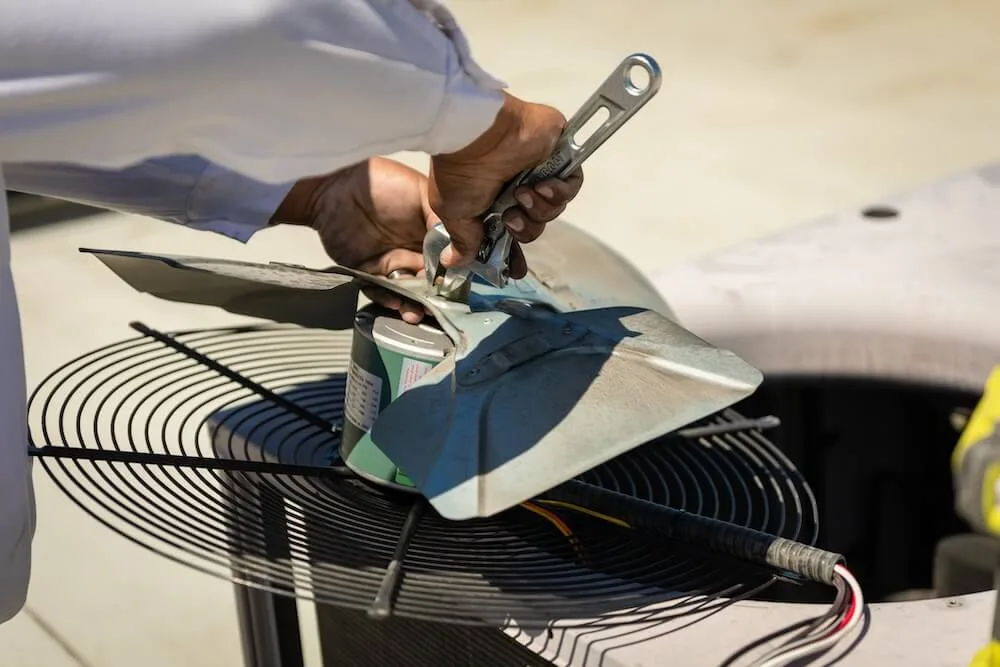
How much will installation cost and take?
Installation cost and schedule depend on system type, roof access, ductwork, structural work, and commissioning scope. Budget items include equipment, freight, roof curbs, electrical upgrades, and a commissioning allowance. Plan for a contingency for hidden conditions. Timelines vary from a few days for a simple RTU swap to many months for a new central plant. Lead times for high-efficiency or low-GWP equipment can be several weeks. Start procurement early and require a detailed contractor schedule with milestones.How to prepare a bid package for contractors?
A clear bid package includes site plans, load calculations, existing mechanical drawings, and performance specs. State required efficiencies, refrigerant choices, BAS scope, and commissioning needs to force apples-to-apples bids. Add curb sizes, crane limits, staging areas, and tenant outage windows. Clear access notes reduce change orders and help contractors give firm, comparable prices for the work you want.What information do contractors need for quotes?
Contractors need accurate load calcs, roof curb measurements, and electrical service details. Photos of existing units, access routes, and curb framing speed quote work. Also share recent utility bills so bidders can model operating cost. Give a single point of contact and a set site walk date. That keeps questions focused and shortens the bid timeline. Ask for itemized line items for equipment, controls, rigging, and commissioning.How are load calculations done for Vegas?
Load calcs use ASHRAE methods and software such as TRACE 700, eQUEST, or Carrier HAP. Inputs include local design temperatures, envelope properties, internal gains, and ventilation rates. Las Vegas design weather and long run-hours must be used. Require a certified load report that lists peak sensible and latent loads and room-by-room sizing. Review assumptions for roof solar, glazing, and equipment loads to avoid rule-of-thumb sizing.What permits does the City require?
Permit needs vary but usually include mechanical and electrical permits. Clark County and the City of Las Vegas often require plans that show equipment specs and installation details. Plan review can reveal needed fire dampers or smoke control changes. Confirm whether the contractor or owner submits the plans and pays fees. Include permit timelines in the master schedule to avoid late start dates due to plan-check delays.Which inspections happen during install?
Inspections often include rough mechanical work, duct penetrations, piping, and final mechanical sign-off. Electrical inspections are required for new service or panel work. Structural checks may be needed for heavy rooftop equipment. Coordinate inspection timing with the contractor and the city. Delays in inspection approvals can postpone commissioning and startup, so keep a tight schedule and clear lines of responsibility.How to evaluate life-cycle operating costs?
Life-cycle models combine installed cost, energy use, maintenance, and equipment life. Estimate annual kWh using IEER curves, run-hours, and local energy rates. Add expected maintenance and parts for a 10- to 20-year horizon. Include peak demand charges in the model because they can be a large share of monthly cost for commercial accounts. Use manufacturer part-load data and utility tariff information to estimate real bills.What incentives reduce upfront cost?
NV Energy rebates for efficient RTUs, chillers, VFDs, and BAS upgrades often cut first cost materially. Rebates usually need pre-approval, documentation, and sometimes M&V. Work with contractors who know the submission steps. Assume conditional rebate estimates until NV Energy signs off. Proper rebate strategy can change the preferred design by improving payback for premium measures.How to compare refrigerant and efficiency tradeoffs?
Compare refrigerant GWP, cost, and local service support. Low-GWP refrigerants lower long-term regulatory risk but can raise initial cost. Check availability and technician training before you commit to a refrigerant. Efficiency tradeoffs involve higher IEER at higher first cost or lower installed cost but higher energy bills. Use a lifecycle cost model with local demand charges to weigh options and ask bidders for estimated annual kWh.Who should commission the system?
Third-party commissioning is best when budgets allow because it gives an independent check on performance. Commissioning should test sequences, BAS points, and performance under realistic loads. Require a final report and punch-list closure. If a third-party is not in the budget, require a contractor-supplied functional performance test and a short FDD period. Document testing steps and acceptance criteria in the contract to avoid startup disputes.How do you select an HVAC contractor?
Selecting the right contractor affects cost, schedule, and long-term reliability. Look for commercial experience with similar building types, local licensing, and a record of permit work. Verify references and inspect past sites if you can. Price matters but transparency matters more. Choose firms that give itemized bids, clear schedules, and defined acceptance tests. Avoid very low bids that skip permits, commissioning, or spare parts in the scope.What certifications should contractors have?
Contractors should hold Nevada mechanical and electrical licenses required by Clark County. Technicians who handle refrigerant must have EPA Section 608 certification. Look for NATE-certified techs as a sign of competence. For BAS work, ask for BACnet or Niagara experience and factory controls training. For VRF or specific chiller brands, confirm factory-authorized installer status to reduce startup headaches.How to check references and past projects?
Ask for recent projects similar in size and scope and contact those owners about schedule and warranty work. Inspect finished rooftops or central plants when possible and ask about punch-list resolution. Also ask about emergency response times. Review online business listings and local trade groups. A contractor who shares detailed references and site visits usually stands behind their work and will be easier to manage during construction.What contract terms protect owners?
Include a clear scope of work, milestone schedule, and payment terms tied to milestones. Require itemized change-order pricing and a not-to-exceed allowance for unknown conditions. Add liquidated damages or schedule incentives where needed. Define warranty terms, spare parts, and commissioning deliverables. Require a post-install maintenance plan and operator training as part of final acceptance to protect owner interests.Get fast quotes and compare contractors?
Getting fast, fair quotes depends on the quality of the bid package and clear decision criteria from the owner. Provide curb dimensions, photos, load calcs, and a clear schedule. That saves bidding time and reduces costly clarifications. Ask bidders to return a base option and two upsell options for efficiency and controls. Set a firm submission date and require itemized pricing for equipment, controls, rigging, and commissioning to allow quick side-by-side comparison.How to request detailed proposals?
Request itemized proposals with model numbers, IEER or EER ratings, refrigerant type, installed $/ton, and an estimated annual kWh. Ask for separate lines for controls, commissioning, and permits so you can see the true cost of each scope item. Provide site photos, curb sizes, and a single contact person to speed questions. Ask for references on similar Las Vegas projects and proof of Nevada licensing and EPA 608 certification to vet bidders quickly.What to include for rapid quote turnaround?
For faster quotes, give contractors curb dimensions, electrical service details, and a clear scope. State required efficiencies and any rebate or refrigerant limits. That cuts back-and-forth and speeds firm pricing. Ask for a base option and two upgrade paths for controls and efficiency. Specify the preferred file format and a submission deadline so you can compare offers without extra work.How to evaluate bids quickly and fairly?
Compare bids on installed $/ton, estimated annual kWh, and modeled peak kW demand. Normalize performance using the same IEER and run-hour assumptions. That shows which bid really saves energy over time. Check license and certification proof, manufacturer training, and included commissioning. Score bids by lifecycle cost, not only first cost, to pick the option that best fits your building and budget.
Final call-to-action
Las Vegas area readers: ready to get fast, transparent quotes for commercial HVAC in Las Vegas, Henderson, or North Las Vegas? Call The Cooling Company at (702) 567-0707 for a free project intake. We provide ASHRAE-based load calculations, itemized bids, NV Energy rebate support, and full commissioning. We understand Las Vegas commercial heat loads, dust management, monsoon season impacts, and peak demand charge optimization.
If you are outside our service area, ask contractors for NATE-certified technicians and EPA 608 certification. For local support and a fast site visit or virtual review, contact The Cooling Company. We serve Las Vegas, Henderson, and North Las Vegas and can help you compare options and secure rebates.
Commercial HVAC installation checklist
- ✓ Require ASHRAE-based load calculations before bid
- ✓ Request itemized equipment schedule with model numbers
- ✓ Compare installed $/ton, IEER, peak kW, and estimated annual kWh
- ✓ Include economizers, VFDs, BAS integration in scope
- ✓ Verify NV Energy rebate support and pre-approval process
- ✓ Make commissioning and functional testing contract deliverables
- ✓ Check contractor credentials: Nevada licenses, EPA 608, NATE-certified
- ✓ Review references and past Las Vegas projects
- ✓ Plan for Las Vegas-specific factors: dust, monsoon season, peak demand
- ✓ Document all findings and maintain project logs
Cost drivers that change installation pricing
- Tonnage and system type: RTUs, VRF, and chilled-water plants have different installed $/ton ranges.
- Roof and structural work: Curbs, steel reinforcement, and crane lifts add cost.
- Electrical and controls: New feeders, panels, BAS integration, and VFDs raise scope.
- Permits and inspections: Plan review timelines and fees impact schedule and budget.
Decision guidance: compare bids fairly
- Require load calculations and a full equipment schedule before pricing.
- Compare IEER and kW demand using the same run-hour assumptions.
- Confirm commissioning scope and acceptance testing deliverables.
- Validate rebate eligibility with NV Energy pre-approval.
Prevention: avoid change orders and delays
- Complete site walks early and document curb sizes and access routes.
- Schedule installs before peak heat to reduce overtime and tenant disruption.
- Lock equipment lead times and refrigerant choices in the contract.
- Set inspection dates in advance to prevent commissioning delays.
Neighborhoods we serve for commercial installs
Our commercial installation teams serve Downtown Las Vegas, Summerlin, North Las Vegas, Henderson, Green Valley, Spring Valley, Enterprise, Paradise, Centennial Hills, and Silverado Ranch.
Why businesses trust The Cooling Company
- Serving Las Vegas since 2011
- 55+ years combined experience
- Licensed, EPA-certified technicians
- 100% satisfaction guarantee
- BBB A+ rated
- Lennox Premier Dealer
Service area map
Share This Page
About The Cooling Company
The Cooling Company has been serving the Las Vegas valley with professional HVAC services for over a decade. Our team of licensed, NATE-certified technicians specializes in air conditioning repair, heating system maintenance, and complete HVAC installations. We're committed to providing honest, reliable service with upfront pricing and a 100% satisfaction guarantee on all work performed.- Phone: (702) 567-0707
- Reviews: 4.8/5 stars (780+ reviews) - See reviews
Service Areas
We proudly serve homeowners and businesses throughout the Las Vegas metropolitan area, including Las Vegas, Henderson, and North Las Vegas. Our service technicians are available for same-day appointments in most areas, with emergency service available 24/7 for urgent HVAC issues.Need HVAC Service in Las Vegas?
The Cooling Company provides expert HVAC service throughout Las Vegas, Henderson, and North Las Vegas. Our licensed technicians deliver honest assessments, upfront pricing, and reliable results.
Call (702) 567-0707 or visit commercial HVAC, AC repair, maintenance, or installation for details.