

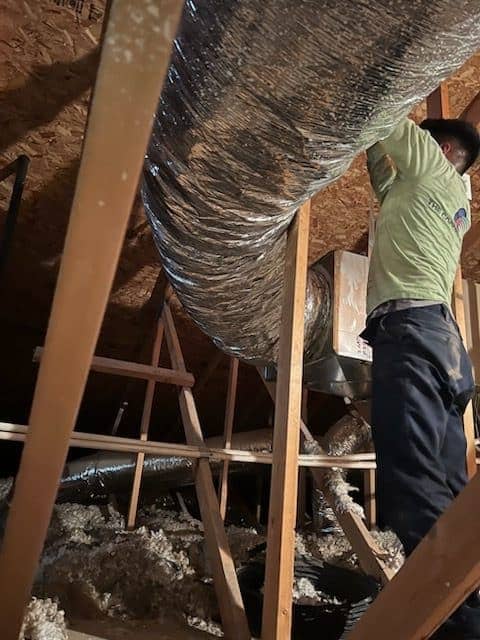
Short answer: Commercial HVAC with ductwork typically costs $8–$25 per square foot, depending on complexity. Low-complexity projects with basic rooftop units and short duct runs start around $8/ft², while high-complexity jobs with VAV systems, ERVs, and difficult rooftop rigging can exceed $20–$25/ft². In Las Vegas, extreme heat (110°F+), rooftop access challenges, and desert dust add to costs. Always require professional load calculations and compare multiple bids with clear exclusions listed.
For more information, see our guide on ductwork cost per linear foot.
For more information, see our guide on ductwork and HVAC efficiency.
Las Vegas HVAC Installation Cost Factors
Las Vegas presents unique challenges that affect HVAC installation costs:
- Extreme heat increases capacity needs: Design temperatures exceed 115°F, requiring 20-30% more cooling capacity, which increases equipment and ductwork costs
- Rooftop access challenges: Difficult rooftop access, crane scheduling, and extreme summer heat increase labor allowances and rigging costs
- Desert dust impacts: Ductwork must be properly sealed to prevent dust infiltration, adding to installation complexity
- Monsoon season considerations: July-September humidity spikes require systems sized for peak conditions, affecting both equipment and duct sizing
- High energy costs: NV Energy's commercial rates and peak demand charges (1-7 PM) make efficiency upgrades pay back faster, justifying higher upfront costs
- Extended cooling season: AC systems run 10-18 hours daily from March through October, making premium equipment and controls more cost-effective
- Attic installations: Many Las Vegas buildings place units in attics where temperatures exceed 150°F, requiring specialized equipment and installation techniques

Decision Checklist: HVAC Installation Planning
Use this checklist when planning commercial HVAC installations in Las Vegas:
- Load calculation: Has a professional calculated cooling loads using Las Vegas design temperatures (115°F+)?
- Ductwork design: Is ductwork properly sized and sealed to prevent efficiency loss from desert dust infiltration?
- Rooftop access: Have you assessed rooftop access, crane requirements, and rigging costs?
- Efficiency targets: What SEER/EER ratings are specified? (Higher efficiency costs more upfront but saves significantly in Las Vegas)
- Controls strategy: Do plans include modern controls, staging, and demand management to reduce peak charges?
- Duct material selection: Have you considered material costs, installation complexity, and long-term maintenance?
- Testing and balancing: Is TAB (Testing, Adjusting, and Balancing) included to verify performance?
- Commissioning scope: Is functional testing and commissioning included to verify performance?
- Maintenance plan: Is a preventive maintenance contract included in lifecycle cost calculations?
- Rebate eligibility: Have utility rebates been identified and pre-approved before equipment selection?
- Lifecycle analysis: Have you compared 15-year total cost of ownership, not just first cost?
Key Takeaways
- Use $8–$25 per ft2 for early budgets and refine with $/ton after loads.
- Expect big swings from rooftop rigging, duct complexity, and efficiency options.
- Require professional load calculations and compare multiple bids for projects.
- Budget 5–15% contingency and list exclusions in every bid.
This section summarizes the most important planning points for budgeting HVAC with new ductwork. Start with a $/ft2 range to align budgets early. Use $8–$25 per ft2 for many commercial projects during schematic budgeting. Then refine your estimate to $/ton once a proper load study is complete.
What does $/ft2 cover for commercial HVAC?
When you see a $/ft2 budget line for commercial HVAC, it should cover the core system items. Typical inclusions are the packaged rooftop unit or split system, the basic supply and return ductwork, diffusers and grilles, thermostats or basic controls, electrical wiring to the unit, and installation labor tied to those items. For early planning, a well-documented $/ft2 number helps owners check the HVAC budget against the total project cost.
Not everything belongs in the $/ft2 line. Common exclusions include demolition, hazardous material abatement, roof curb rebuilds, structural repairs, specialty architectural transitions, and owner-furnished equipment. Specify these exclusions in bid documents. Clear allowances and exclusions keep bids comparable and reduce the chance of late change orders that inflate cost.
How do cost bands per ft2 typically range?
Cost bands reflect project complexity and equipment choices. Low-complexity projects with basic packaged rooftop units and short duct runs can sit near $8 per ft2. Mid-range projects with multiple zones, moderate duct lengths, and basic controls often fall between $12 and $18 per ft2. High-complexity jobs with VAV systems, ERVs, long runs, and difficult rooftop rigging can exceed $20 to $25 per ft2.
Regional labor rates and market conditions also affect where a particular project falls within the bands. Use local bids to refine any national benchmark. Early site visits and clear scopes reduce variance among proposals and help you place a project more accurately within these bands.
What factors drive price per square foot?
Many elements influence the $/ft2 number. Key drivers include total tonnage, duct length, branch count, and number of diffusers or VAV boxes. Long runs increase material and labor. Many branches add fittings and sealing time. Rooftop work that needs a crane, curb rebuilds, or curb adapters adds thousands per unit. Equipment efficiency, accessories like economizers or ERVs, and control complexity further raise first cost.
Labor rates, union rules, and schedule constraints also change the installed price. Asking bidders to break out labor and material costs makes it easier to compare proposals. Ensure line-item clarity on rigging, permits, and allowances so you can see where savings exist.
How to convert $/ton to $/ft2
Converting installed $/ton to a per-square-foot figure ties equipment cost to building area. Start by estimating the tons needed using a rule of thumb or a load study. Multiply the estimated tons by the installed $/ton and divide by the total conditioned square footage to get a comparable $/ft2 number. This helps compare system types and whether packaged or split approaches fit the budget.
Check our HVAC pricing guide for current cost estimates.
Be conservative for hot climates or spaces with high internal loads. Initial $/ton estimates should include not only the unit cost but an appropriate share of ductwork, controls, rigging, and contractor markup. Update the conversion after you receive the load calculation and equipment cut sheets.
What formula links tonnage and area?
A common early-planning rule is 1 ton per 400–600 ft2 for commercial spaces. High-load areas like kitchens or gyms may need closer to 1 ton per 400 ft2. Low-load warehouses or storage spaces might work with 1 ton per 600 ft2. Use these numbers only for preliminary alignment and follow up with a professional calculation.
Apply the rule by estimating tons, multiplying by installed $/ton, and dividing by the conditioned area. After a proper load and ventilation study, refine the numbers to avoid mis-sizing and costly rework.
How to calculate installed cost per ton?
Installed $/ton equals the total installed system cost divided by system tonnage. Include equipment purchase, freight, rigging and crane costs, ductwork share, controls, electrical tie-ins, permitting, and contractor markup. Also include testing and balancing and any commissioning fees.
Example: a $100,000 installed package serving 20 tons yields $5,000 per ton. Use this approach to compare bids. Ask bidders for a per-ton breakout that lists accessories and rigging so you can spot where costs concentrate.
Which cost drivers cause the biggest swings?
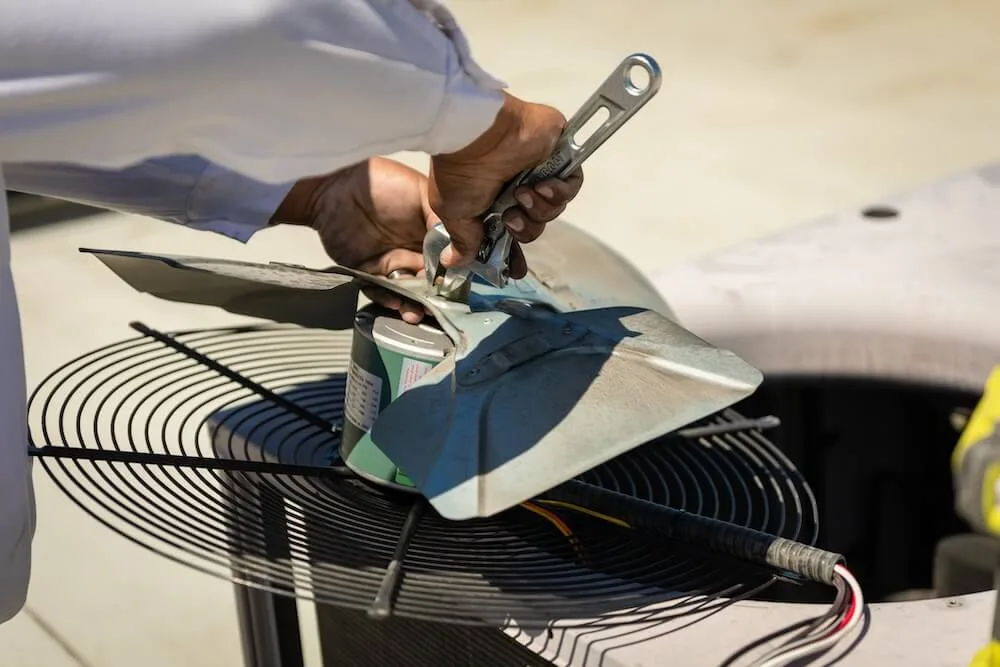
Large swings usually come from site logistics and duct access. Rooftop rigging, curb rebuilds, and crane requirements can add the largest one-time charges. Long duct runs with many branches raise both material and labor. High-efficiency equipment and advanced controls increase first cost but can lower operating cost over time.
Learn about available federal tax credits for energy-efficient HVAC equipment.
Try our energy savings calculator to see how much you could save.
Other major drivers include local labor rates, specialty sheet metal work, and permitting or testing requirements. Early site visits that document curb condition, roof access, and staging areas allow bidders to price rigging and mobilization accurately. That detail narrows variance between bids and reduces contingency needs.
How much does duct material change price?
Galvanized sheet metal is common and usually cost-effective in commercial work. Alternatives like spiral duct, insulated duct, or fabric duct affect both material and labor costs. Fabric ducts may be faster to install and cheaper in certain open-plenum applications. Heavy gauge, field-fabricated transitions require skilled labor and cost more.
Material choice also affects leakage rates and maintenance. Ask bidders to list material types and the expected impact on price and performance. Consider life-cycle costs as well as first cost when choosing materials.
What labor rates affect commercial installs?
Local wage levels, union requirements, and prevailing wage rules significantly change job cost. Skilled sheet metal workers and HVAC techs command higher rates. Overtime, night work, and condensed schedules raise labor costs quickly. Jobs with many small runs or complex field fabrication need more field hours.
Ask bidders for crew-size and hour estimates. That makes labor assumptions clear and easier to compare. Include allowances for overtime and constrained access if the site is tight or remote.
How do ceiling plenum and layout impact ducts?
Open plenum ceilings reduce the need for enclosed ducts and hangers. Exposed ductwork can cut material and installation time. Concealed ceilings require soffits, chases, and coordination with electrical and fire-protection trades. That adds cost and schedule complexity.
Floor plans with many small rooms need more terminal devices and balancing work. Wide open plans minimize branches and fittings. Share ceiling and floor layouts early with bidders so they can propose accurate duct routing and realistic costs.
How to plan bidding and procurement
A clear scope and consistent drawings produce apples-to-apples bids. Include demolition limits, roof access notes, finish repair obligations, and who supplies curbs and cranes. Pre-qualify contractors with similar commercial experience and ask for project references. Staged procurement for long-lead items like ERVs or economizers can protect the schedule.
Require bidders to list exclusions and allowances in the bid package. Use a standard line-item cost sheet to make it easier to spot large differences in approach or to find savings. Clear change-order rules in the contract reduce owner risk and streamline dispute resolution.
What scope to include in contractor bids?
List demolition limits, safety and access constraints, roof staging, and finish repair expectations. Clearly state who supplies and installs curbs, who books the crane, and who handles electrical tie-ins. Include testing, balancing, and commissioning requirements in the scope.
Require bidders to provide a full list of exclusions and allowances. Comparing these line by line prevents surprises after award and helps you choose the true low bidder, not just the lowest base price.
How to evaluate unit prices vs lump sum?
Unit prices work well when actual quantities may change. For items like linear feet of duct or additional VAV boxes, unit pricing keeps costs transparent. Lump sum is simpler and shifts more risk to the contractor. A hybrid approach often works best: lump sum for the defined base scope and unit prices for uncertain extras.
Ask bidders to provide both a lump-sum base and a set of unit prices for likely extras. That combination gives you predictability and flexibility as the project evolves.
When to require performance guarantees?
Require performance guarantees for large or critical systems. Guarantees can cover capacity, energy use, or acoustic limits and should spell out test methods and acceptable tolerances. Include remedies and retesting rules in the contract to avoid disputes.
Performance tests occur at turnover and after commissioning. Define acceptable tolerances and timelines for retesting. Clear contract language on remedies helps both parties manage risk and ensures systems meet owner needs.
Which performance upgrades justify cost?
Evaluate upgrades by looking at simple payback and life-cycle cost. Items like ERVs, variable-frequency drives (VFDs), and advanced control systems often pay back faster in buildings with long run hours and high ventilation needs. For low-use or seasonal buildings, payback can be long and may not justify the capital investment.
Model energy use with local utility rates and expected hours. Include maintenance and mid-life replacement costs in the analysis. A higher first cost may be justified by lower operating expenses over the asset life.
When do ERVs or energy recovery pay off?
ERVs can pay off in projects with high outside-air fractions or in extreme climates. They reclaim energy from exhaust air and reduce the heating and cooling load on the new air. Payback depends on ventilation rates, local energy costs, and run hours.
In many office buildings and high-occupancy spaces, ERVs show relatively fast paybacks. In milder climates or low-ventilation projects the payback can be much longer. Check incentives that may improve economics.
How much do variable frequency drives add?
VFDs typically add several hundred to a few thousand dollars per fan, based on size and control needs. They save energy by matching motor speed to demand and reduce startup current. VFDs also extend motor life and lower maintenance in many applications.
For fans with variable loads and long run hours, VFDs often return value quickly. For constant-load fans with short run times, payback is slower. Include VFD costs in motor and control lines when comparing bids.
What premium for high efficiency RTUs?
High-efficiency rooftop units often cost 5–20% more than standard models. The premium depends on rated efficiency and options such as variable compressors, heat recovery, or advanced controls. Rebates and incentives can offset part of the premium.
Balance the efficiency premium with expected annual run hours and energy prices. For buildings with heavy runtime, the premium usually pays back faster. Get vendor performance data to run accurate life-cycle models.
How to estimate life cycle operating cost?
Estimate annual energy use using local rates, expected run hours, and equipment efficiency. Add routine maintenance, filter costs, and mid-life replacements. Sum those costs over the equipment life to get total cost of ownership.
A higher initial cost that reduces annual energy and maintenance can lower total life-cycle cost. Use a simple payback and a discounted life-cycle analysis for major decisions. This gives a clearer picture than first cost alone.
What incentives lower first cost?
Local utility rebates, state programs, and federal incentives can reduce first cost for high-efficiency RTUs, ERVs, and certain controls. Some programs require pre-approval and specific testing. Incentives can change the economic decision in favor of higher-efficiency gear.
Ask bidders to list potential incentives and note any pre-approval steps. Include incentive timing in the project schedule to avoid procurement delays.
How to plan testing, commissioning, and maintenance
Testing and balancing (TAB) verifies airflow, temperature, and control sequences at turnover. Commissioning confirms sequences, interlocks, and control logic. Both services add cost but reduce callbacks and warranty claims. For critical systems, TAB and commissioning cost little compared to the value of correct performance over years of operation.
Plan for periodic maintenance in your budget. Typical annual maintenance runs about 1–3% of installed cost for many commercial systems. Higher-use facilities need larger maintenance budgets. Include mid-life replacement allowances for compressors, motors, and controls.
How does duct leakage affect performance?
Leaky ducts waste conditioned air into unconditioned spaces or plenums. That increases energy use and reduces occupant comfort. Commercial duct leakage testing quantifies leakage and shows where repairs are needed. Sealing ducts during installation and testing them before turnover prevents chronic energy loss and comfort issues.
Specify leakage class or percent leakage in the contract to give bidders a clear target. Proper sealing often pays back quickly in energy savings and reduces the need for extra capacity.
What testing and balancing costs apply?
TAB costs vary by site complexity and number of zones. Simple offices may have a scaled TAB scope, while labs, healthcare, and critical facilities require full services and retesting allowances. TAB fees are often quoted as a percentage of mechanical cost or as fixed fees per zone.
Include TAB and retest allowances in the contract. Clearly state expected deliverables such as reports and as-built airflow tables. This reduces ambiguity at turnover and helps verify guarantees.
How do warranties influence vendor choice?
Warranty length and coverage vary between vendors. Some offer long compressor warranties but limited labor coverage. Others provide full-service warranty packages with local support. A long warranty is only valuable if the vendor and contractor can respond quickly when service is needed.
Ask for warranty terms in writing and check vendor presence in your area. Balance warranty length with vendor track record and local response time when choosing equipment and contractors.
What are typical maintenance budgets?
For many commercial systems, budget 1–3% of installed cost per year for routine maintenance. High-use systems such as data centers, hospitals, or hotels need higher budgets. Maintenance includes filter changes, belts, coil cleaning, and controls checks.
Plan for mid-life component replacements and set aside funds for emergency repairs. Require bidders to provide optional maintenance contracts so you can compare costs and service levels.
Las Vegas HVAC Maintenance and Prevention Tips
Las Vegas commercial HVAC systems require specialized maintenance due to extreme conditions:
- Monthly filter changes: Desert dust clogs filters faster; change filters monthly during peak season (March-October) to maintain airflow and efficiency
- Quarterly coil cleaning: Rooftop units accumulate dust quickly; professional coil cleaning every 3 months maintains efficiency and prevents overheating
- Duct sealing verification: Have ducts tested for leakage annually; seal leaks promptly to prevent efficiency loss from desert dust infiltration
- Pre-monsoon inspections: Schedule comprehensive inspections before July to ensure systems can handle humidity spikes
- Peak season monitoring: Monitor system performance during June-September heat waves; early detection prevents costly failures
- Refrigerant level checks: High ambient temperatures stress systems; check refrigerant levels quarterly to prevent efficiency loss
- Electrical component inspection: Heat accelerates electrical wear; inspect contactors, capacitors, and wiring annually
- Drain line maintenance: Clear condensate drains monthly to prevent water damage and system shutdowns
- Controls calibration: Verify thermostat and control accuracy seasonally; incorrect readings waste energy and reduce comfort
- Demand management: Use controls to stagger system starts and reduce peak demand charges during 1-7 PM periods
- Documentation: Keep detailed maintenance logs; track energy use to identify efficiency degradation early
How to get a tailored budget estimate
A site visit and load check give the most realistic budget. On-site measurements reveal curb condition, roof access, and hidden obstructions that affect rigging and duct routing. A scoped visit produces a written estimate with installed $/ton and $/ft2, allowances, and exclusions.
Ask for load calculations, equipment cut sheets, and a timeline with milestones. These items make bids comparable. A detailed scope with line-item costs reduces owner risk and shortens negotiation time after bid opening.
How to request a proposal?
For Las Vegas area owners, call The Cooling Company at (702) 567-0707. Ask for a scoped site visit, a load check using Las Vegas design temperatures, and a detailed cost sheet that lists exclusions. Request both installed $/ton and $/ft2, plus a timeline for work. Require load calculations and equipment cut sheets with the proposal.
If you are outside the Las Vegas area, ask all bidders for NATE-certified technicians and recent references for similar commercial work. Require the same cost sheet format and unit price lines for likely extras. These requests improve quote quality and comparability.
Ready to Get Accurate HVAC Installation Cost Estimates?
FAQs
Do estimates include curbs, crane, permits, and commissioning? Always ask. Get installed $/ton and $/ft2 and compare at least three qualified bids. Verify warranty coverage and post-install service options. Check whether the quote includes TAB and commissioning or lists them as separate allowances.
How do I choose a contractor? Check local references and recent project photos. For work outside Las Vegas, look for NATE certification and commercial experience. In Las Vegas, Henderson, or North Las Vegas, call The Cooling Company at (702) 567-0707 to schedule a quote.
Las Vegas cost note
Las Vegas rooftop access, crane scheduling, and extreme summer heat often increase labor allowances. Include clear rigging and roof-protection line items to avoid surprise change orders during peak season.
Need HVAC service help in Las Vegas?
If you're facing an HVAC emergency in Las Vegas, Henderson, or North Las Vegas, The Cooling Company offers fast, reliable service from licensed technicians. We understand that heating and cooling emergencies don't wait for business hours. Call us now at (702) 567-0707 for emergency service. Our team is ready to help restore your comfort quickly and safely.
About The Cooling Company
The Cooling Company has been serving the Las Vegas valley with professional HVAC services for over a decade. Our team of licensed, NATE-certified technicians specializes in air conditioning repair, heating system maintenance, and complete HVAC installations. We're committed to providing honest, reliable service with upfront pricing and a 100% satisfaction guarantee on all work performed.
- Phone: (702) 567-0707
- Reviews: 4.8/5 stars (780+ reviews) - See reviews
Service Areas
We proudly serve homeowners and businesses throughout the Las Vegas metropolitan area, including Las Vegas, Henderson, and North Las Vegas. Our service technicians are available for same-day appointments in most areas, with emergency service available 24/7 for urgent HVAC issues.
Share This Page
Sources and compliance notes
This aspect deserves careful consideration as you evaluate your options. Understanding the details helps you make more informed decisions. Consulting with qualified professionals provides additional insights specific to your situation. Take time to consider how this information applies to your particular needs and circumstances. Making well-informed choices typically leads to better long-term outcomes and greater satisfaction.
- ASHRAE Technical Resources: ASHRAE Technical Resources
Compliance note: This document provides budgeting guidance only. Require professional load calculations and contract language for final design and procurement. Always verify local code and permit requirements with the authority having jurisdiction.
Related reading: what to explore next?
Expand your knowledge with these related guides from our experts. Each article provides in-depth information to help you make informed decisions about your HVAC system and home comfort needs.
Need HVAC Service in Las Vegas?
The Cooling Company provides expert HVAC service throughout Las Vegas, Henderson, and North Las Vegas. Our licensed technicians deliver honest assessments, upfront pricing, and reliable results.
Call (702) 567-0707 or visit ductwork, duct repair, duct cleaning, or duct inspection for details.