

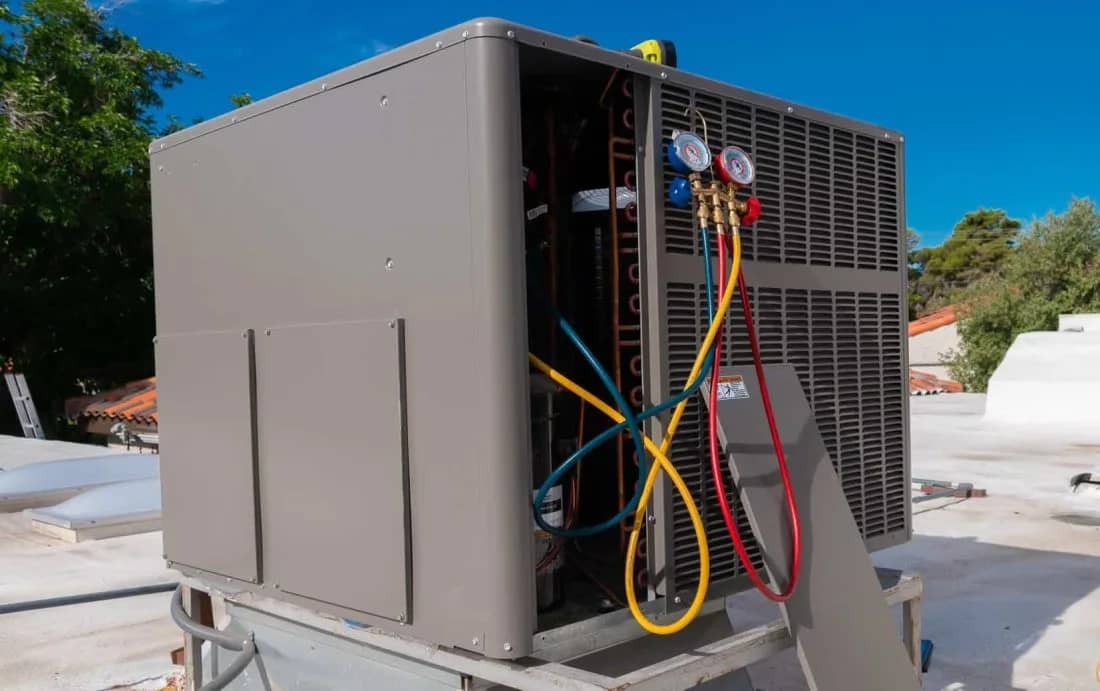
How much does ductwork installation cost?
Ductwork installation costs typically range from $12–$90 per linear foot depending on material type, access, and insulation. Spiral duct averages $12–$25 per foot, rectangular duct $20–$60 per foot, and flexible duct $5–$20 per foot. For Las Vegas homeowners, expect $1,500–$4,000 for small repairs and $2,000–$12,000 for full residential replacements. Commercial projects scale significantly higher. Always require itemized bids with separate line items for materials, labor, fittings, insulation, testing, and permits to compare quotes accurately.
Source: The Cooling Company
Key Takeaways
- Budget spiral duct at $12–$25 per linear foot; rectangular at $20–$60 per linear foot.
- Expect ductwork to be 20–35% of total HVAC installed cost and include TAB in base bids.
- Specify SMACNA leakage classes and insulation R-values to reduce change orders.
- Use prefabrication targets to lower field labor by roughly 15–30% on medium projects.
Commercial ductwork costs vary with duct type, insulation, fittings, and access. Spiral duct often costs about $12–$25 per linear foot, and rectangular runs about $20–$60 per foot. Plan for ductwork to be 20–35% of HVAC installed cost and include TAB and leakage specs in bids. (ASHRAE Technical Resources)
Las Vegas homeowners and business owners face unique challenges with ductwork installation due to extreme summer heat, rooftop exposure, and high cooling demands. Attic temperatures can exceed 150°F during peak cooling season, making proper insulation and sealing critical. Many Las Vegas homes built before 2000 have undersized or poorly sealed ducts that waste 20–30% of cooling energy. Understanding installation costs helps you budget accurately and avoid costly surprises during projects.

What are typical commercial ductwork costs?
Commercial ductwork pricing depends on material, labor, complexity, and testing. Spiral or round ducts typically run $12 to $25 per linear foot with basic fittings. Rectangular systems usually cost $20 to $60 per linear foot, depending on gauge and stiffeners.
Labor, fittings, insulation, and TAB add to material costs. Ductwork often makes up 20 to 35 percent of the total HVAC installed cost. Expect spikes when steel or insulation prices rise and when site work complicates installation.
How much per linear foot for spiral duct?
Spiral duct pricing varies by diameter, gauge, and insulation. Basic uninsulated spiral for exposed ceilings often sits at $12 to $18 per linear foot. Adding insulation, liners, or specialty fittings pushes that to $18 to $25 per foot.
Shop prefabrication can lower installed cost even if spool costs are higher. Long, straight runs with few fittings give the best per-foot value. Short, offset-heavy runs reduce that advantage and increase field labor.
What drives rectangular duct pricing?
Rectangular duct needs more fabrication and stiffening than round duct. Gauge, double-wall options, and stiffeners raise material and shop labor costs. Simple rectangular mains often start near $20 per foot and can reach $60 per foot for heavy gauge or specialty work.
Skilled sheet metal workers add time for measuring, cutting, and sealing. Complex labs or hospitals needing tight leakage classes call for more fabricator time. That extra labor shows up clearly in bids.
How do labor rates affect total cost?
Local wages, overtime, and prevailing wage rules strongly influence installed duct price. Journeyman rates and helper ratios change the labor line item. Labor often equals 25–40 percent of the duct package in many estimates.
Productivity counts as much as hourly cost. Crowded sites, rework, and poor coordination reduce output per hour. Prefab and good BIM coordination help reduce field hours and lower the labor multiplier on large jobs.
Which materials most increase price?
Thicker gauge steel, double-wall construction, and stainless increase material costs. Acoustic lining, heavy-faced insulation, and specialty coatings also raise prices. These items add both material and shop labor charges.
Fittings like curb adapters, large vanes, and welded transitions add per-foot costs when used often. Fast-track schedules cause premium shipping and shop overtime, which further raise prices.
How do building height and site access matter?
High-rise projects need rigging, lifts, and hoists that add rental and labor costs. Rooftop units with long risers may require cranes and extended hoist time. These needs increase both cost and schedule risk.
Tight corridors, finished ceilings, and occupied floors slow crews and raise labor hours. Night work or restricted access often carries a time-of-day premium. Budget for these constraints during estimating.
How to estimate costs for tenant projects?
Tenant projects vary widely due to tight spaces and fast schedules. A 5,000 square foot tenant might pay from $5,000 to $25,000 for ductwork. Price differences depend on exposed spiral versus concealed rectangular systems.
Estimators should separate materials, field labor, prefabrication, and TAB. Small jobs often have flat TAB fees of $1,500 to $5,000. Include ceiling patching and limited shutdown allowances to avoid surprise change orders.
What are per-duct element cost breakdowns?
Break down costs into materials, labor, fittings, insulation, and specialty items for clear bids. Materials commonly make up 20–35 percent of the duct package. Labor usually accounts for 25–40 percent, and specialty services take the remainder. (ASHRAE Technical Resources)
Estimators should list each duct type, length, and fittings count. Use unit rates for straight lengths, elbows, and transitions. Apply a field labor multiplier for site conditions and include a prefab allowance.
How do VAV boxes change estimates?
VAV boxes add equipment and coordination labor to the mechanical bid. Basic small VAVs cost $500 to $2,500 each plus install. Larger VAVs with sound attenuators and controls can be far more expensive.
For per-foot pricing details, see our ductwork cost per linear foot guide.
Each VAV increases TAB time and balancing complexity. Include control wiring, sensors, and integration into the electrical and controls budgets. Price VAVs as complete installed units to avoid later markup surprises.
When should you prefer spiral over rectangular?
Spiral is best for exposed ceilings and long straight runs. It often installs faster and needs fewer ceiling repairs. That makes it cost-effective for retail, restaurants, and open-plan offices.
Rectangular fits where headroom is limited or where penetrations require flat profiles. Choose rectangular when noise control, tight clearances, or slab-to-slab runs are critical. The technical needs can justify higher cost.
How to include insulation and liners?
List insulation as a separate item by location and type. Ducts in unconditioned spaces typically need R-6 to R-8 insulation. Specify vapor barriers and facing types for humid climates.
Call out whether insulation is applied in shop or field. Shop insulation lowers field hours but needs staging and transport. Include labor for sealing and mastic application when pricing insulation installs.
What contingencies should be budgeted?
Budget 10–25 percent for hidden conflicts, rework, and price swings. Small tenant jobs often use 10 percent. Larger or complex projects should plan 15–25 percent contingencies.
Also include allowances for TAB retests and remedial sealing. Add a line for expedited delivery or overtime if schedules demand fast completion. These items prevent scope creep.
Which duct types are most cost-effective?
Cost-effectiveness depends on project goals and geometry. Spiral usually costs less per foot for visible runs with few transitions. Rectangular becomes cost-effective when clearances or acoustic needs limit other options.
Consider lifecycle energy loss when choosing duct type. Poor sealing and low insulation increase energy costs. Spending more initially on sealing and insulation often pays back in reduced utility bills.
For tips on identifying leaks and improving efficiency, read our ductwork troubleshooting guide. If you need a full replacement, our ductwork replacement cost guide covers residential and commercial pricing.
How does spiral duct compare on labor?
Spiral duct reduces field labor on long straight runs. Round shapes are quicker to hang and join with quick connectors. That saves time and reduces ceiling repairs after install.
Complex offset runs reduce that benefit. Evaluate run geometry and number of transitions before choosing spiral solely for cost. Geometry often dictates the most economical type.
What are pros of rectangular ductwork?
Rectangular ducts fit tight ceiling spaces and allow lower installed height. They integrate well with slab penetrations and risers. These traits make them essential for multi-story buildings.
The tradeoff is more shop and field labor. Cutting and assembling rectangular pieces takes time. For tight tolerance projects, that cost is normally justified.
Does material gauge affect cost?
Yes. Thicker gauge increases material prices and shop time. Large ducts need heavier gauge to avoid sag and vibration. Use SMACNA tables to set minimum gauges by size.
Under-specifying gauge to save money can cause rework. Specify gauges clearly in drawings to prevent later disputes and change orders.
Where is custom fabrication needed?
Custom pieces are necessary for complex transitions and architectural penetrations. Hospitals and labs often need custom shapes for isolation rooms. Mockups reduce surprises during installation.
Plan shop drawings and allot lead time for custom work. Add fabrication and handling fees for painted or coated custom pieces, and allow space for curing and inspection.
How to evaluate sealants and joints?
Sealant and joint methods set leakage performance and long-term durability. Mastic, gaskets, and welding each have cost and performance tradeoffs. Specify acceptable methods in the contract to avoid bidder assumptions. (DOE Better Buildings HVAC)
Higher leakage classes require more mastic or welded seams and gasketed joints. Price materials and labor for sealing separately and include testing costs in estimates.
What insulation R-values matter in commercial jobs?
Most projects use R-6 to R-8 for ducts in unconditioned spaces, per common practice. Rooftop or exposed ducts may need higher R-values. Facing and vapor barriers are critical in humid climates.
List exact R-values and facing types in the specifications. Contractors should price these details to avoid substitution of inferior insulation.
How do penetrations and fire dampers add cost?
Penetrations need sleeves, fire wraps, and dampers, which add materials and labor. Each damper requires wiring and testing. Hospitals and high-rises often have many dampers that increase cost.
Coordinate fire damper work with firestop trades and inspectors. Expect inspection time, documentation, and possible rework. Price each damper with installation and acceptance testing.
When is stainless or painted duct required?
Stainless steel is used in corrosive environments and some food-service areas. Painted duct is common for exposed architectural installations. Both options add material, shop prep, and handling costs.
Price these finishes as separate line items. Include surface prep, primer, coatings, and lead time. Painted spools may need extra curing space in the shop.
What are lifecycle maintenance costs?
Lifecycle costs include resealing, insulation replacement, and access door repairs. Systems with poor initial sealing or thin materials cost more over time. Energy loss from leakage often dominates lifecycle expense.
Budget periodic TAB and commissioning checks, especially in critical facilities. Install access panels in strategic locations to cut service time and future repair costs.
How to specify performance and testing?
Performance specs make bids comparable and reduce disputes. Name SMACNA, ASHRAE, and local codes for leakage classes and insulation. That forces bidders to include required sealing and testing.
Include TAB and commissioning in the base bid and state retest triggers with clear acceptance criteria. Require NEBB or AABC credentials for TAB providers and ask for detailed reports.
Which TAB levels should contracts require?
Specify the TAB level that matches project risk and complexity. Small tenant work may need limited balancing, while hospitals need full system and zone-level TAB. List required deliverables and retest conditions.
NEBB or AABC credentials should be required for the TAB firm. Include time allowances for balancing and potential corrective work in the contract schedule.
How to write airtightness and leakage specs?
Cite SMACNA leakage classes and test procedures in the specification. For example, require Class 3 for mains and Class 4 for terminals when tight control is needed. List ASTM or SMACNA test methods.
Define who pays for remediation and retesting if tests fail. Avoid vague language that leads to disputes. Clear pass/fail criteria keep bids comparable and fair.
What QA checkpoints reduce change orders?
Set shop drawing reviews, BIM clash detection, and preinstallation meetings as contract hold points. Require hanger layout approvals and prefabrication targets early in the schedule. These steps catch conflicts early.
Require on-site mockups for complex transitions and critical penetrations. Use QA hold points for fire damper wiring and TAB readiness. These checkpoints reduce rework and unexpected costs.
Where do major cost drivers appear?
Major drivers include design choices, site access, material specs, and testing. Poor coordination early in design multiplies field hours and change orders. Schedule pressure adds premiums to labor and material deliveries.
Address these drivers in early estimates and specs. Include clear allowances for concealed conflicts and retesting. That approach makes bids more realistic and limits surprises during construction.
How does coordination with structural affect price?
Early coordination of hanger points reduces the need for structural changes. Include hanger layouts in design reviews with structural engineers. That prevents costly field attachments and welding. (DOE Better Buildings HVAC)
Late structural conflicts force field fixes and special attachments that add time and inspection costs. Add coordination tasks and mockups to the schedule to avoid those outcomes.
What scheduling impacts labor multipliers?
Tight schedules often need overtime, weekend work, or double shifts. These conditions increase effective labor rates. Also include expedited shipping fees for long-lead items when schedules are compressed.
Staged turnovers on occupied buildings slow productivity. Plan for scaffold moves, repeated testing windows, and additional mobilizations. Multiply base labor by a schedule factor when timelines are aggressive.
How are access restrictions priced?
Restricted access forces smaller crews and more handling time. Elevators and narrow corridors slow material moves and add to labor hours. Contractors typically charge a site premium to cover lost productivity.
Security escorts or after-hours work require allowances in the estimate. Include these costs as separate line items for multi-tenant or secured facilities.
What inspection standards should be cited?
Cite SMACNA, ASHRAE 90.1, IMC, and NFPA 90A for a clear baseline. For TAB, require NEBB or AABC procedures and ASTM test methods. Clear standards let bidders price to the same benchmarks.
Require calibration records and acceptable instrument lists in submittals. That reduces disputes and prevents unknowns during acceptance testing.
How to estimate for multi-level risers?
Risers need larger ducts, vertical stiffeners, and extra hanger hardware. Material and labor per linear foot rise with duct size. Include bracing and special handling in the estimate.
Coordinate shaft penetrations with firestop and smoke control testing. Allow time for hoisting long riser sections and for special inspections where required.
What is the cost impact of VAV revisions?
Late VAV changes cause rework in ducts, controls, and electrical. Costs include box swaps, new transitions, and additional balancing. Expect a chain of change orders when terminals are revised late.
Finalize terminal requirements before duct fabrication. Include a modest allowance for minor changes to reduce bigger change orders later.
How do fire and smoke requirements change scope?
Fire and smoke controls add dampers, wiring, and firestop work. They also need inspections, documentation, and sometimes retesting. High-rise and healthcare projects face stricter AHJ scrutiny.
Add time for fire marshal reviews in the schedule. Price coordination and retesting that some authorities require during inspections.
When are sound attenuators necessary?
Sound attenuators reduce noise between mechanical spaces and occupied areas. They add material cost and pressure drop, which can require larger fans. Include attenuator sizing and access in the design.
Coordinate attenuator location with controls and space needs. Ensure maintenance access and protection during construction to avoid damage and extra repair costs.
What allowances for balancing labor are typical?
Balancing labor often equals 0.5 to 2 percent of the mechanical budget depending on complexity. Small systems take a few days, while hospitals can need many weeks. Include retest allowances for failed balancing.
Price TAB as a separate line item for transparency. Add remediation time and materials if initial tests show failure to meet specified classes.
How does TAB duration affect schedules?
Long TAB windows delay HVAC startup and commissioning. TAB timing must align with electrical and controls readiness. Delays in TAB can push occupancy and raise general conditions costs.
Plan contingency for retesting and remediation. A failed test often requires sealing work that can take days to weeks depending on severity.
What subcontractor markup is customary?
Subcontractor markup varies by region and risk profile, from 10 to 25 percent. Bonding, insurance, and overhead increase the effective rate on public work and prevailing wage projects. Ask bidders to show markups clearly. (DOE Better Buildings HVAC)
Request transparent breakout of overhead and profit to compare proposals. That clarity helps owners find savings by adjusting specs or schedule rather than chasing low bids.
Ready to get an accurate commercial estimate?
If you need a site-specific ductwork estimate in the Las Vegas area, call The Cooling Company at (702) 567-0707. Our team serves Las Vegas, Henderson, and North Las Vegas and provides NATE-certified technicians for on-site measurements. We deliver detailed cost breakdowns tied to SMACNA and ASHRAE standards.
For owners outside our service area, ask bidders for NATE-certified technicians and NEBB/AABC TAB credentials. Require SMACNA leakage classes and clear insulation specs in base bids. These requirements make remote bids fair and comparable.
How to request a site-specific estimate?
Provide project drawings, mechanical plans, and desired leakage and insulation specs when you call. Include schedule constraints and any access restrictions. That helps estimators give a fast and accurate line-item quote.
Expect a detailed reply with separate pricing for shop labor, field labor, materials, and TAB. Ask for prefab targets and hanger layouts to see where savings appear.
What should Las Vegas owners do now?
Owners in Las Vegas should call The Cooling Company at (702) 567-0707 for fast plan reviews and site visits. Our estimating team prepares contract-ready bids. We include TAB, prefabrication targets, and SMACNA-based specs to limit change orders.
We serve Las Vegas, Henderson, and North Las Vegas and dispatch NATE-certified technicians for field measurements. That local experience shortens lead times and keeps pricing reliable for area projects.
What if I am outside the service area?
If you are outside our market, ask bidders for NATE-certified techs and NEBB or AABC TAB. Require clear SMACNA leakage classes and retest rules in the base bid. These items make proposal comparisons meaningful.
When you later work in Las Vegas, The Cooling Company can support plan review and prefabrication coordination. Call (702) 567-0707 to discuss local support and review options.
FAQs
Q: How much should I budget for TAB?
A: Small tenant work typically costs $1,500 to $5,000. Mid-size office TAB is often $2,500 to $12,500. Hospitals pay more due to strict documentation and retesting needs.
Q: Is prefabrication worth it?
A: For mid-size and larger projects with repetitive runs, yes. Prefab often cuts field labor by 15–30 percent and reduces change orders when geometry is coordinated early.
Q: Which leakage class should I require?
A: Use SMACNA leakage classes and list the test method. Tight projects commonly use Class 3 for mains and tighter classes at terminals when needed.
Q: What contingency is reasonable?
A: Use 10 percent for small tenant jobs and 15–25 percent for larger, complex projects. Include allowances for retesting and remedial sealing.
Final call to action
Las Vegas area owners: get a contract-ready, site-specific ductwork estimate from The Cooling Company. Call (702) 567-0707 today. Our NATE-certified technicians serve Las Vegas, Henderson, and North Las Vegas. We deliver SMACNA-based specs, TAB, and prefab coordination to lower risk and cost.
If you are not local, insist on NATE-certified techs and NEBB/AABC TAB in all bids. When your project reaches Las Vegas, contact The Cooling Company at (702) 567-0707 for plan review and local estimating support.
Las Vegas Ductwork Installation Checklist
Use this checklist when planning ductwork installation in Las Vegas:
- Pre-Installation: Get Manual J load calculation, Manual D duct design, and baseline duct blaster test
- Material Selection: Choose R-6 minimum insulation for attic ducts, R-8 for rooftop exposure; prefer sealed metal ducts
- Contractor Vetting: Verify Nevada C-21 HVAC license, request local references, require itemized bids
- Testing Requirements: Require pre/post duct blaster tests, TAB reports, and leakage class specifications
- Las Vegas-Specific: Account for rooftop crane access, extreme heat protection, and seasonal demand premiums
- Permits & Codes: Ensure contractor pulls required permits and follows local energy code requirements
Preventing Costly Ductwork Installation Problems
Las Vegas homeowners can avoid expensive installation issues with proper planning:
- Proper Sizing: Require Manual D calculations to avoid undersized ducts that restrict airflow
- Quality Sealing: Insist on mastic or UL-181-rated foil tape, not standard duct tape
- Adequate Insulation: Ensure R-6 minimum for attics, R-8 for rooftops to prevent heat gain
- Professional Installation: Hire licensed contractors with NATE certification and local references
- Post-Install Testing: Require duct blaster tests and balancing reports before final payment
- Regular Maintenance: Schedule annual inspections and seal visible leaks promptly
Many Las Vegas homes see 20–30% energy savings from proper duct installation and sealing. These improvements often pay back in 1–4 years and significantly improve comfort during extreme summer heat.
For comprehensive duct installation, sealing, replacement, and indoor air quality services, contact The Cooling Company or call (702) 567-0707. We serve Las Vegas, Henderson, and North Las Vegas with duct blaster testing, Manual D design, and written performance reports.
Share This Page
About The Cooling Company
The Cooling Company has been serving the Las Vegas valley with professional HVAC services for over a decade. Our team of licensed, NATE-certified technicians specializes in air conditioning repair, heating system maintenance, and complete HVAC installations. We're committed to providing honest, reliable service with upfront pricing and a 100% satisfaction guarantee on all work performed.
- Phone: (702) 567-0707
- Reviews: 4.8/5 stars (780+ reviews) - See reviews
Service Areas
We proudly serve homeowners and businesses throughout the Las Vegas metropolitan area, including Las Vegas, Henderson, and North Las Vegas. Our service technicians are available for same-day appointments in most areas, with emergency service available 24/7 for urgent HVAC issues.
Need HVAC Service in Las Vegas?
The Cooling Company provides expert HVAC service throughout Las Vegas, Henderson, and North Las Vegas. Our licensed technicians deliver honest assessments, upfront pricing, and reliable results.
Call (702) 567-0707 or visit ductwork, duct repair, duct cleaning, or duct inspection for details.