


Short answer: Yes, you can claim a federal tax credit of up to $2,000 for installing a qualifying heat pump water heater in your home. The credit applies to ENERGY STAR-certified models and is claimed on IRS Form 5695. To get started on a qualifying installation in Las Vegas, call The Cooling Company at (702) 567-0707 or book online.
federal tax credit water heater: save up to $2,000 this year
Key Takeaways
- Federal credits often target heat pump water heaters and other high-efficiency electric models.
- Keep invoices, model numbers, manufacturer certification, and placed-in-service dates.
- Credits and caps change by tax year; check IRS Form 5695 before claiming.
Federal tax credits often cover qualifying high-efficiency water heaters, especially heat pump models. Homeowners can claim credits based on certified equipment and placed-in-service dates. Keep invoices, model numbers, and manufacturer statements for proof. Check IRS Form 5695 and current DOE lists before buying or filing taxes this year.
What federal tax credit applies to water heaters?
Federal tax credits for water heaters come from programs that change over time. Recent programs like the Energy Efficient Home Improvement Credit and the Residential Clean Energy Credit have included some water heaters. Those credits usually focus on heat pump water heaters and other certified, high-efficiency electric units.
Eligibility depends on DOE and IRS rules that list qualifying metrics and models. The rules require a placed-in-service date and manufacturer certification in many cases. Always check current IRS guidance and ENERGY STAR lists before you buy so you confirm eligibility for your tax year.
Which water heaters qualify?
Qualifying water heaters typically include certified heat pump models and some high-efficiency electric units. Qualification often needs a manufacturer statement that the model meets DOE or ENERGY STAR metrics. The seller or maker should give a written certificate you keep with your invoice.
Some programs use metrics like Uniform Energy Factor (UEF) or Coefficient of Performance (COP). If you see those numbers on a spec sheet, match them to IRS or DOE lists. When in doubt, request a certification letter from the manufacturer before you pay.
Are heat pump water heaters eligible?
Most qualifying heat pump water heaters are eligible for current federal incentives. Heat pump models move heat from air into water and are far more efficient than standard electric resistance tanks. That efficiency often makes them the target of federal credits focused on energy reduction.
Confirm eligibility by checking the model on ENERGY STAR or the DOE qualified product lists. Keep the model number, serial number. Any maker certification with your tax paperwork in case the IRS asks for proof later.
Does ENERGY STAR certification matter?
ENERGY STAR labeling is a reliable way to find eligible water heaters. Many federal incentives list ENERGY STAR models or require equivalent DOE metrics. Using the ENERGY STAR list reduces guesswork when you shop for a qualifying unit.
A model can meet DOE standards without an ENERGY STAR label, but the label makes verification easier. Always save the ENERGY STAR listing or a manufacturer statement that shows the model meets the program rules for your tax year.
Can electric resistance models qualify?
Most plain electric resistance water heaters do not qualify for federal credits aimed at efficiency upgrades. Those units use more energy than heat pump options and rarely meet the high-efficiency thresholds set by DOE. The federal incentives seek large energy reductions.
Learn about available federal tax credits for energy-efficient HVAC equipment.
Rarely, an electric resistance model with an unusually high UEF might meet rules. If you think a resistance unit may qualify, get the manufacturer to supply a formal certification that matches current IRS definitions before you buy.
Are gas tankless models covered?
Gas tankless units sometimes qualify for state or local incentives. They often sit outside the federal credits geared to electric heat pump systems. Federal rules can exclude combustion appliances, depending on the law and the tax year. Confirm the program definition before assuming eligibility.
If a gas unit appears to qualify, check the specific federal rule or your state program language. Ask the manufacturer for a statement that lists the exact rule it meets and save that with your receipts and permit records.
How much is the credit worth?
Credit amounts change by program and tax year. Some incentives give a percentage of the equipment cost up to a cap. Others provide a fixed amount per qualifying appliance. Recent policy has offered caps like $2,000 for certain water-heating upgrades, but numbers vary.
To find the exact amount, consult the IRS guidance for the tax year you installed the unit. Use the invoice to show the qualified equipment cost and check whether installation labor counts toward the credit that year.
Is the $2,000 limit per unit or per home?
Whether a $2,000 cap applies per unit or per home depends on the specific rule in effect. Some programs cap per appliance, while others cap the total credit across all improvements in one tax year. The IRS instructions will state how the cap is applied.
If you plan multiple upgrades in one year, read Form 5695 instructions carefully. That form and its guidance tell you whether credits stack or whether a limit applies to the total filing.
Who administers the program?
The IRS handles the tax filing and the credit calculation on your return. The Department of Energy provides efficiency metrics that determine which models qualify. ENERGY STAR and EPA lists also help identify eligible units for many programs.
Local utilities and state energy offices may run separate rebate programs that work with federal credits. Keep both sets of documents because utilities sometimes require proof that the unit qualifies for federal incentives when you apply for their rebate.
How do I estimate my credit and savings?
Start by using the invoice to find the qualified equipment cost and the manufacturer certification. Some credits allow only the equipment price while others include limited installation costs. Knowing which costs count helps you estimate the credit more accurately.
Our pricing guide breaks down the costs you can expect.
Next, estimate annual energy savings using the unit's UEF or COP and your household hot water use. Multiply predicted energy savings by your electricity rate to get yearly dollars saved. Add installation and upgrade costs to estimate payback time and net savings.
Try our energy savings calculator to see how much you could save.
How do I calculate expected credit dollars?
If the credit is a percentage, multiply the qualifying equipment cost by that percentage. If a dollar cap applies, compute the percent or fixed amount then cap it at the stated limit. Keep careful notes of how you arrive at the number for tax records.
Do not include unrelated expenses in the equipment cost unless the IRS says they count. For example, check whether your tax year allows labor, electrical upgrades, or permits to be part of the qualifying cost before adding them to your calculation.
What purchase prices produce a $2,000 credit?
If a credit is 30% with a $2,000 cap, a qualifying equipment price of about $6,667 would hit the cap. If the rule instead gives a flat cap for each appliance, you may simply be eligible up to $2,000 once the equipment meets program criteria. Read the current IRS math.
Check whether installation labor is treated as qualifying cost. If labor is excluded, you need a higher equipment price to hit the cap. Ask your installer for a breakdown on your invoice so you can calculate properly.
How do installation costs affect savings?
Installation, permits, and electrical upgrades raise the total project cost and change your payback time. Even with a tax credit, these extra costs can reduce short-term savings if the credit covers only equipment. Include installation in your cash-flow model.
If upgrades are large, consider financing options or phased work. For example, a panel upgrade may cost $500 to $2,500 or more. Add that to your estimate and compare total costs with long-term energy savings.
Can electrical upgrades reduce net benefit?
Yes. A needed panel upgrade or new service can cut into the financial benefit of an HPWH. Service work may cost several hundred to a few thousand dollars. Those expenses matter when calculating payback and return on investment.
Think long-term if you plan other electric projects like EV charging. A one-time panel upgrade can enable future savings and upgrades, even if it delays payback on the water-heating switch.
Are utility rebates counted with the credit?
Utility rebates often cut your out-of-pocket cost, but they can affect the taxable amount used to compute a federal credit. Some programs require subtracting rebates from equipment cost before calculating the federal credit. Others allow stacking without reduction.
Ask the utility and read the IRS guidance for your tax year. Save all rebate paperwork and any utility communication that shows how the rebate applied to your purchase so you can show the correct basis on your tax return.
How and when must I buy and install to qualify?
Timing is central to claiming the credit. The credit applies in the year the unit is placed in service. Placed-in-service means the unit is installed and ready for normal use. A purchase alone does not trigger eligibility if installation finishes later.
Keep invoices, installer job completion dates, and permit sign-offs to show the in-service date. If you buy in one tax year and install in the next, you must claim the credit for the year the unit is actually in service.
What purchase and installation dates matter?
The key date is when the heater is ready for use, not the purchase date. The IRS looks for documentation showing installation and that the unit was operational. Installer sign-offs and permit approvals often serve as proof.
If you do the work yourself, document the completion date with photos and any permit inspection forms. Keep a file that ties the placed-in-service date to your tax-year claim.
Do used or rebuilt units qualify?
Most federal tax credits target new equipment and exclude used or rebuilt units. The incentive aims to spur purchases of new, more efficient technology. Manufacturer warranties and certifications usually apply only to new units.
If you consider a reconditioned unit, ask the seller and manufacturer for a written certification that the unit meets current program criteria. Rarely, some refurbished equipment may qualify if it meets the exact rule language.
What receipts and certifications do I need?
Save the purchase invoice, installer receipt, model and serial numbers, and a manufacturer certification. The certification must state the model meets the program's efficiency standard for your tax year. Keep permit records as well when applicable.
Organize paper and digital copies in one folder. The IRS may ask for proof during an audit. Keep records for at least three years after filing and longer if your tax advisor recommends it.
How does IRS Form 5695 work?
Form 5695 is the typical way taxpayers report residential energy credits. Enter qualifying equipment costs on the form and compute the credit. The form then transfers the credit to your main tax return to reduce tax owed. [Point 1]
Tax software often guides the entries, but keep original documentation in case the IRS asks for proof. Read the form instructions for your tax year to apply the right calculation and caps.
Can contractors claim the credit instead?
Usually the homeowner claims the residential credit because it applies to property owned by the taxpayer. Contractors that supply and install units typically do not claim the homeowner's credit. If a contractor offers to claim the credit, get the deal in writing.
Confirm the invoice shows the homeowner as purchaser if you expect to claim the credit. An unclear arrangement could lead to disputes or missed tax benefits.
What if I sell the home shortly after?
If you sell the home after installing a qualifying heater, you usually can still claim the credit for the tax year you owned the property and placed the. Unit in service. The key is whether you owned the property at the time of installation.
Keep closing statements and installation records. If you sold the home before filing, discuss the situation with a tax professional to make sure you claim the credit correctly.
Are there income or tax liability limits?
Some credits are nonrefundable, meaning they can reduce tax owed to zero but will not generate a refund beyond that. Other credits may have specific limits or phaseouts. Check Form 5695 instructions for your tax year for details.
If you have little federal tax liability, a nonrefundable credit may not yield full value. Talk with a tax advisor to understand how the credit will affect your situation.
How long does processing typically take?
Tax credits claimed on your regular return follow IRS processing timelines. E-filed returns often process faster. If the IRS requests more documentation, processing can slow, so keep paperwork handy to respond quickly.
Large credits sometimes draw extra review. Keep manufacturer certifications and installation proofs organized so you can send them if the IRS asks.
Where can I find official guidance from the DOE or IRS?
The IRS posts Form 5695 and its instructions for each tax year. The Department of Energy provides performance metrics and test methods that define qualifying models. ENERGY STAR lists many qualifying heat pump water heaters.
Start with the IRS guidance for your tax year and cross-check product lists on DOE and ENERGY STAR sites. Local utility pages also list rebates and rules that can affect your net cost.
Should I install the unit myself or hire pros?
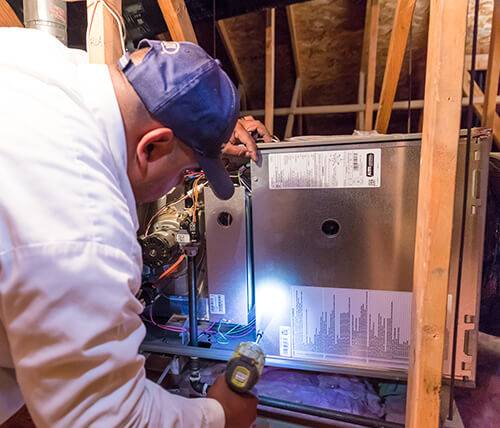
A DIY installation can work for a simple like-for-like electric tank swap if local codes permit. Many homeowners do that work safely if they have plumbing and electrical experience. Still, changing technologies often requires licensed pros for safety and code compliance.
Professional installers handle permits, inspections, and paperwork that help when claiming federal credits. For Las Vegas water heater options, visit our water heater service page. They will provide the model certification and placed-in-service documentation that support your tax filing and local rebate claims.
Can a homeowner do this as a DIY project?
Skilled homeowners can install some electric water heaters safely. If the job is a straightforward replacement and local law allows homeowner work, DIY is possible. Follow the manufacturer manual and local code rules closely.
Avoid DIY for gas lines, venting changes, or major electrical upgrades. Mistakes can cause hazards, void warranties, or fail inspections. Could put your tax credit at risk if installation does not meet code. [Point 3]
When should I hire a licensed plumber?
Hire a licensed plumber for gas connections, venting changes, or complex condensate drainage for HPWHs. Plumbers ensure safe connections and code-compliant venting. They often handle permits and inspections too, simplifying the process for homeowners.
A licensed installer also provides documentation showing the model and installed date. That paperwork makes claiming credits and utility rebates easier and more reliable.
What electrical upgrades might be needed?
Heat pump water heaters often need a dedicated 30–50 amp circuit or more depending on the model. Some homes need a panel upgrade if the service is full or the unit increases load greatly. An electrician can confirm needs with a load calculation.
Get written cost estimates for needed electrical work and add them to your payback analysis. Ask whether those costs are eligible for the credit in your tax year and save the electrician's invoice if they are.
Need help claiming credits or installing in Las Vegas area?
If you live in Las Vegas, Henderson, or North Las Vegas, the Cooling Company can help with site evaluation, model selection, and full installation. Our technicians will handle permits, provide the manufacturer certification, and document the placed-in-service date for your tax filing.
Call The Cooling Company at (702) 567-0707 to schedule a site visit. We will give a written estimate that separates equipment and labor so you can calculate the credit. We serve Las Vegas, Henderson, and North Las Vegas and provide local references.
What will The Cooling Company provide for my tax paperwork?
Our team supplies the model number, serial number, an installation date, and a signed installer statement when asked. We will give copies of permits and final inspection reports as they apply. That documentation helps you fill out Form 5695 and support an audit if needed.
We also provide a clear invoice that separates equipment cost from labor and upgrades. Keep these documents with your tax file and provide them to your tax preparer when you claim the credit.
What if I am outside the Las Vegas area?
If you are outside our service area, look for a NATE-certified technician near you. NATE stands for North American Technician Excellence, and its site helps find qualified pros. Ask any installer for the same paperwork we provide for Las Vegas clients.
Use local utility and state incentive databases like DSIRE to find rebates. Save manufacturer certifications and invoices regardless of the installer. These steps make claiming federal credits easier no matter where you live.
Final checks before you buy
Before you sign a sales order, confirm the unit's model number matches the manufacturer certification. Check placed-in-service timing with your installer and confirm permit requirements. Ask whether the utility rebate reduces the equipment cost for federal credit math.
Make a short checklist to take to the store or to your contractor. Include model number, UEF or COP value, ENERGY STAR status, warranty length, expected installation date. Whether the installer will provide the documentation you need for the tax claim.
Take action now
Document your purchase, save the manufacturer certification, and confirm the placed-in-service date. Review IRS Form 5695 for the tax year you plan to claim the credit and gather any utility rebate paperwork. Include potential electrical upgrade costs in your budget.
Las Vegas area homeowners: call The Cooling Company at (702) 567-0707 for a site visit, model recommendations, and full installation. We serve Las Vegas, Henderson, and North Las Vegas. We handle permits, provide the manufacturer certification, and leave complete paperwork for your tax filing. Outside our area? Hire a NATE-certified pro via natex. Org and use this guide to prepare paperwork and questions before hiring.
References.
IRS Form 5695 and instructions for the applicable tax year. U. S. Department of Energy - water heating guidance and test methods. ENERGY STAR - qualified heat pump water heater product lists. DSIRE - state and local incentive database. Manufacturer product literature and certification statements.
Related reading: what to explore next?
- Insulation Tax Credit: Claim Savings Before Credits Expire
- Home Improvement Tax Deduction: Save Hundreds on Renovations
- Tankless Water Heater Las Vegas: Options and Costs
About The Cooling Company
- Phone: (702) 567-0707
References
- U.S. Department of Energy (Energy.gov) (accessed 2025-12-24)
- U.S. Environmental Protection Agency (EPA) (accessed 2025-12-24)
- ASHRAE (Standards and guidance) (accessed 2025-12-24)
- ENERGY STAR (Heating & cooling) (accessed 2025-12-24)
Need HVAC Service in Las Vegas?
The Cooling Company provides expert HVAC service throughout Las Vegas, Henderson, and North Las Vegas. Our licensed technicians deliver honest assessments, upfront pricing, and reliable results.
Call (702) 567-0707 or visit water heaters, tankless water heaters, plumbing, or heat pump installation for details.