

Short answer: When a Las Vegas cold snap hits and the furnace won’t start, the most common causes are thermostat settings, power issues, clogged filters, or safety lockouts. Start with safe checks (mode, setpoint, breaker, filter) before assuming major repairs.
Local essentials and challenges for Las Vegas no-heat calls
- Long off-season: Furnaces sit idle for months, so first start-ups reveal weak igniters or sensors.
- Dust storms: Fine desert dust clogs filters and trips high-limit switches.
- Fast temperature drops: Nighttime lows can fall quickly, making no-heat feel urgent.
- Garage installations: Many Valley homes house furnaces in garages where service switches get bumped.
No-start cost drivers in Las Vegas homes
- Service call and diagnostic fee (often credited with approved repair)
- Filter replacement and airflow corrections
- Igniter or flame sensor cleaning/replacement
- Control board or low-voltage wiring repairs
- Venting or pressure switch issues in high-efficiency systems
Why Your Furnace Is Not Kicking On When Temp Drops
What Furnace Not Kicking On Usually Looks Like at Home
No-start problems usually follow a familiar pattern. The thermostat indicates that heat is needed, yet the furnace stays silent, or it wakes briefly and then shuts off before any warm air reaches the living space. Sometimes the blower runs without heat, pushing cool or room-temperature air that never becomes comfortable. Other times there is nothing at all-no fan, no burner noise, no ignition click-just a steadily dropping room temperature. If your main issue is that you hear the burner or feel warmth at the furnace but no air really moves through the vents, our furnace blower not working guide focuses on those blower and airflow problems.How This Problem Shows Up on First Cold Nights in Las Vegas
In Las Vegas, furnaces often sit idle for many months. When the first cold evenings arrive, latent issues that went unnoticed all summer tend to show themselves. Dust and debris that accumulated inside the cabinet can interfere with burners and sensors, filters may be overdue for replacement, and electronic controls may be stressed by the sudden shift from long cooling cycles to heating operation. That combination makes the first few cold nights a prime time for “won’t start” complaints.Difference Between Will Not Start and Will Not Stay On
It helps to separate “will not start” from “will not stay on.” A furnace that will not start never begins its normal sequence: no inducer fan, no ignition, no burner flame, and no main blower. A furnace that will not stay on, by contrast, may ignite, blow warm air briefly, and then shut itself down. The second pattern often points to safety controls-such as flame sensors or temperature limits-responding to a problem they detect after ignition, while the first pattern more often indicates power, control, or thermostat issues. If your furnace does start but keeps shutting down after just a few minutes, that is usually a short cycling issue, and we cover those causes in more depth in our furnace keeps turning on and off guide.Why No Start Issues Feel Urgent in Desert Winters
Desert winters are short but intense in their temperature swings. A home that feels comfortable at sunset can feel uncomfortably cold by early morning when outdoor temperatures fall sharply. Many Las Vegas homes were built with cooling in mind, not robust winter insulation, so indoor temperatures can drop faster than homeowners expect. When the furnace will not respond, that rapid change creates a sense of urgency, especially for households with children, older adults, or pets that feel the cold more quickly.Common Misunderstandings About No Heat Situations
Several beliefs commonly mislead homeowners during a no-heat event. Some assume the gas utility is at fault when, in reality, the furnace never received a proper “call for heat” from the thermostat. Others believe that turning the thermostat far above the desired temperature will force the furnace to start faster; in fact, most modern thermostats simply treat any call above the room temperature the same way. Technicians repeatedly report that basic issues such as incorrect thermostat mode, dead thermostat batteries, or badly clogged filters cause many “furnace is broken” service calls each fall when heaters are re-started for the season.How Modern Furnace Controls Decide When to Start
Modern furnaces follow a defined logic sequence controlled by an electronic board. When the thermostat demands heat, the control board first verifies that safety circuits are closed and venting pressure appears normal. Only then does it start the inducer fan to pull combustion air through the heat exchanger. After a short verification period, the ignition system activates, the gas valve opens, and the burners light. A temperature rise in the heat exchanger then signals the board to start the main blower to distribute warm air. At any point in this sequence, a failed check can stop the process and prevent the furnace from kicking on.How Long a Normal Heating Cycle Takes in Most Homes
A healthy furnace does not deliver instant warmth the moment the thermostat calls for heat. There is typically a short delay while the system completes its safety checks, lights the burners, and waits for the heat exchanger to reach a safe temperature before turning on the blower. Once the blower starts, it runs long enough to move heat into the ductwork, stabilize the room temperature, and then continues briefly after the burners shut off to use the remaining heat in the exchanger. Recognizing this normal pattern helps distinguish a true no-start from a furnace that is simply moving through its designed cycle. When the furnace does run but the home still feels lukewarm or certain rooms never warm up, our furnace not heating house guide walks through airflow, duct design, and heat-loss issues that go beyond basic starting problems.Key Safety Ideas Behind No Start and Lockout Modes
Many furnaces intentionally refuse to start when a safety condition is not satisfied. Pressure switches confirm that the vent is drafting correctly, high-limit switches monitor for overheating, and flame sensors confirm that gas is actually burning where it should. If, for example, the ignition system fails to light the gas reliably or a dirty flame sensor cannot “see” the flame, the control board may shut the system down and enter a safety lockout to prevent raw gas from accumulating or burners from operating without proper flame detection. What feels like an arbitrary refusal to start is often a deliberate protective response.How This Guide Helps You Move From Panic to Plan
A structured checklist turns a stressful no-heat moment into a manageable diagnostic process. By working from the thermostat outward-first confirming calls for heat, then verifying power and basic airflow items, and only then considering more complex ignition or control board issues-homeowners can often identify simple, safe-to-correct causes on their own while also knowing when to stop and call a licensed technician. Common questions or objections at this stage include “Is it safe to keep resetting the furnace?” or “Will I break something if I open the blower door?” Resetting repeatedly without understanding the cause can push a furnace deeper into lockout, and removing panels exposes live components, so any step that involves gas valves, burner assemblies, or internal wiring is better left to professionals. The key takeaway for homeowners is to handle obvious, low-risk checks and then seek expert help when the problem involves gas, open electrical panels, or repeated error indications.Thermostat Checks When the Furnace Will Not Kick On
Confirm Heat Mode Setpoint and Fan Settings First
The thermostat is the starting point for any no-start investigation. Confirming that the system is set to “Heat” rather than “Cool” or “Off” sounds trivial but resolves many calls. The setpoint should be higher than the current room temperature; otherwise, the furnace will never receive a request to start. The fan setting also matters. “Auto” lets the furnace control the blower, while “On” runs the fan continuously, which can confuse troubleshooting by pushing unheated air even when the burners are not firing.Check Thermostat Batteries and Display Status
Many wall thermostats depend on small batteries for power or backup memory. When these batteries weaken, the display may go blank, flicker, or lose its programmed schedule. In that state, the furnace never receives a clear heat call, even though the rest of the heating system is ready. HVAC service providers consistently list dead or weak thermostat batteries among the most common and easily preventable causes of fall furnace problems when homeowners first switch over from cooling. Replacing batteries and confirming that the display is stable and readable is a simple, safe DIY step.Look for Schedules Holds and Eco Modes That Block Heat
Programmable and smart thermostats often layer multiple settings: daily schedules, vacation holds, and energy-saving “eco” modes. Any of these can block a furnace from starting even though the basic “Heat” mode is selected. A vacation hold may keep the setpoint far below comfort level, or an eco mode may cap the maximum heat allowed unless it is manually overridden. Reviewing the thermostat’s schedule screen and clearing any unexpected holds helps ensure the furnace receives a straightforward, unambiguous command.Smart Thermostat App Settings That Can Stop a Heat Call
For households using Wi‑Fi thermostats, the companion phone app effectively becomes part of the control system. Features such as geofencing (which reduces heating when occupants are away), utility demand-response programs, or incorrectly set “away” scenes can prevent the thermostat from calling for heat even when someone is home and cold. A quick check in the app to confirm the home’s status, override any away modes, and temporarily disable advanced automation often restores normal heating calls and makes troubleshooting the furnace itself more accurate.Thermostat Location Problems in Typical Las Vegas Homes
Thermostat placement affects how often and how long the furnace runs, and in some cases can contribute to apparent no-start complaints. In many Las Vegas homes, thermostats are installed in interior hallways that may be cooler than the main living area, or on walls exposed to afternoon sun from west-facing windows. If the thermostat warms up from sunlight or nearby appliances, it may “think” the house is comfortable and never request heat. Conversely, a thermostat in a drafty hallway may constantly call for heat while occupied rooms still feel cold. When repeated thermostat checks show correct settings but persistent comfort problems, relocation by a professional may be part of the long-term solution.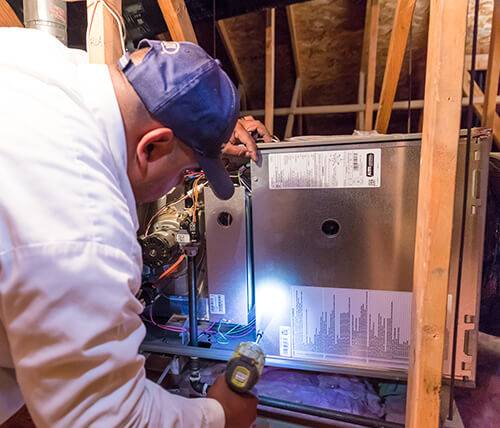
Power Safety and Control Issues That Keep Furnaces Off
Tripped Breakers and Switched Off Furnace Service Switches
If the thermostat appears normal yet the furnace remains silent, power supply becomes the next major checkpoint. A tripped circuit breaker in the main electrical panel can cut power to the furnace entirely, leaving it unresponsive to any heat call. In many homes, a wall-mounted service switch resembling a light switch is installed near the furnace; if this switch is accidentally turned off during storage or cleaning, the furnace will not start. Verifying that the breaker is on and the nearby service switch is in the “On” position restores power in many cases without further intervention.Blower Door Switches That Cut Power When Panels Are Open
Inside the furnace cabinet, a safety switch confirms that the blower compartment door is securely in place. If this “blower door switch” is not fully depressed-because the panel is misaligned, removed, or warped-the furnace loses power to key internal circuits and will not run. Homeowners sometimes remove the blower door to inspect the filter or wiring and then replace it slightly out of position, unknowingly holding the switch open. Gently removing and reinstalling the panel so it seats firmly often restores contact. Any work beyond panel removal, however, exposes live components and should be reserved for a licensed technician.Low Voltage Wiring Problems Between Thermostat and Furnace
The thermostat communicates with the furnace using low-voltage wiring, typically routed through walls and sometimes exposed near the furnace. Loose connections at the thermostat terminals, damaged insulation where thermostat wire passes through metal, or a dislodged common wire can all interrupt the heat call. Symptoms may include intermittent starting, short cycles, or complete silence from the furnace despite correct thermostat settings. Visual inspection for completely disconnected wires is generally safe with power off, but diagnosing shorts, partial breaks, or control-signal problems calls for professional tools and training.Control Board Fuses and Indicators Homeowners May Notice
Most modern furnaces include a small automotive-style fuse on the control board that protects low-voltage components from shorts or wiring errors. If that fuse blows, the furnace will not respond even though main power is present and the breaker is on. Some boards also display diagnostic lights-steady, flashing, or patterned-that store fault codes. Homeowners can sometimes observe whether any lights are on at all, which helps distinguish between a total power loss and a control error. Replacing fuses or interpreting fault codes is best left to professionals, because an underlying short or miswire can cause replacement fuses to fail immediately.Safety Lockout After Repeated Failed Ignition Attempts
When a furnace tries and fails to light its burners multiple times in a row, the control board often enters a timed “lockout” state. During lockout, the burner will not attempt to ignite even if the thermostat continues to call for heat. This behavior is intentional: it protects the system from repeatedly releasing gas that fails to burn and from stressing ignition components. Underlying causes can include a weak hot surface igniter, dirty burner assemblies, or obstructed flame paths, all of which require skilled service. Homeowners may notice the inducer fan running briefly followed by repeated quiet time without heat as the system cycles through failed attempts and lockout.High Limit Switch Trips From Overheating or Airflow Issues
The high limit switch is a temperature-sensitive safety device that shuts the burners off if the furnace’s internal temperature climbs too high. One of the most frequent reasons for these high-temperature trips is poor airflow, often caused by a dirty or clogged air filter that restricts movement of air through the heat exchanger. When airflow is blocked, the furnace can overheat and shut itself down or short-cycle, sometimes refusing to restart until it cools to protect the equipment from damage. Industry guidance consistently warns that neglected filters can cause furnaces to overheat, short-circuit, or shut down entirely by starving the system of needed airflow. Checking and replacing filters on a regular schedule remains one of the simplest homeowner maintenance tasks.Pressure Switch and Venting Problems That Block Operation
Furnaces with power venting use a pressure switch to confirm that combustion gases are being safely pulled through the vent system. If the vent is partially obstructed by debris, bird nests, or accumulated condensate, the pressure measured by this switch may never reach the threshold needed to allow ignition. As a result, the furnace will refuse to start even though electrical power and gas supply are present. Because venting components deal with exhaust gases and building codes, any diagnosis or repair involving pressure switches or flue piping should be handled by qualified HVAC professionals.Signs the Furnace Is Getting Power but Ignition Is Failing
Sometimes the furnace clearly has power-the inducer fan starts, relays click, and a faint gas smell may even be present near the unit-yet no sustained flame develops. A hot surface igniter may glow weakly or not at all, the gas valve may fail to open, or the flame may flash briefly and then disappear. A dirty or faulty flame sensor can also cause a flame to light and then shut down quickly as the control board fails to “see” stable combustion, leading to short bursts of warm air followed by cooling and eventual lockout for safety. Once a problem has been narrowed to ignition or flame sensing, it is time to pause DIY efforts and schedule professional service, because these components directly control gas burning inside the home. For homeowners, the essential takeaway is that a furnace not kicking on is rarely a random failure; it usually reflects either a simple external issue such as power, thermostat, or filter problems, or an intentional safety response to a detected fault. Working through the basic checklist in this guide can resolve many no-heat events safely and, just as importantly, alert you quickly when the situation calls for a licensed HVAC technician rather than further trial-and-error. If you want to see how tune ups, repairs, and system replacement fit together over the life of your equipment, start with our local furnace services in Las Vegas homeowner guide.Decision guide: when to call a professional
Call immediately if:
- You smell gas, see soot, or hear loud bang-and-shutoff cycles
- CO alarms sound or anyone feels dizzy or nauseated
- The furnace locks out repeatedly after ignition attempts
Schedule service soon if:
- Thermostat is correct but there is no response from the furnace
- It starts briefly and shuts down before warm air reaches vents
- Filters and breakers are fine yet no heat returns
Prevention checklist for first cold nights
- Replace filters at the start of fall and after major dust storms
- Test thermostat batteries and confirm heat mode in September
- Keep the furnace service switch on and the cabinet door secured
- Schedule a pre-season tune-up to clean burners and sensors
- Test carbon monoxide detectors monthly
Neighborhoods we serve for no-heat diagnostics
- Henderson, Green Valley, and Whitney Ranch
- Seven Hills, Anthem, and Inspirada
- North Las Vegas, Aliante, and Centennial Hills
- Spring Valley, Paradise, and Chinatown
- Summerlin, Sun City Summerlin, and The Lakes
Why homeowners trust The Cooling Company
- Serving Las Vegas since 2011 with 55+ years combined experience
- Licensed, EPA-certified technicians and safety-first procedures
- BBB A+ rated with a 100% satisfaction guarantee
- Lennox Premier Dealer with local parts support
Service area map
Ready for Warmth? Schedule Your Service with The Cooling Company
You may qualify for federal tax credits that reduce your upfront cost.
Related service: Is your furnace giving you trouble? Explore our furnace repair and heating repair services for Las Vegas homeowners.
Need Heating Service in Las Vegas?
The Cooling Company provides expert heating service throughout Las Vegas, Henderson, and North Las Vegas. Our licensed technicians deliver honest assessments, upfront pricing, and reliable results.
Call (702) 567-0707 or visit heating, furnace repair, heat pump installation, or heating maintenance for details.