

Short answer: Learn HVAC maintenance tips to replace a Goodman furnace filter with 5 fast, safe fixes that restore airflow, and get step-by-step guidance now.
Replace a Goodman furnace filter every 1 to 3 months for 1‑inch filters and less often for thicker media. Turn power off before opening the access panel. Install the filter so the airflow arrow points toward the blower, seat it flush, then check airflow and date the filter. (ASHRAE Technical Resources)
Key Takeaways
- Use a room-by-room Manual J load calculation (not a square-foot rule).
- Select equipment with Manual S and verify ducts with Manual D for comfort and efficiency.
- Avoid oversizing: short-cycling wastes fuel and can create uneven temperatures.

How often should you check or replace the filter?
Check standard 1" pleated filters visually at least once a month in heavy heating or cooling seasons. If you have pets, smokers, or recent remodeling dust, check more often. Mark the date on the filter frame so you track changes and avoid long gaps between swaps. Track how long each filter lasts in your house and adjust your schedule.
Thicker filters and high‑efficiency media last longer. A 2" or 4" media filter will often run from three to twelve months depending on dust load and runtime. But only use thicker filters if the cabinet has space or you add an approved adapter. For any change that increases resistance, consider a pro static pressure test to confirm blower performance.
Where is the filter on a Goodman furnace?
Most Goodman furnaces place the filter at the return‑air plenum or inside the blower access door. Look for a thin slot or removable panel near the cold‑air return. Some systems use a filter at the wall or ceiling return grille rather than in the cabinet. If you cannot find the slot, read the cabinet label and turn off power before opening panels.
How do I read filter size markings?
Filter frames usually show a nominal size like 16x20x1 on the edge. If the printed label has worn off, measure length, width, and depth with a tape measure. Use whole inches and round up if you land between sizes to avoid a tight fit. Record nominal size and slot width to buy the right replacement and avoid gaps that permit bypass.
Which replacement filters fit Goodman units?
Goodman units normally accept common nominal filter sizes printed on the filter frame. Most stock cabinets are built for 1" filters. Some models include racks for 2" or 4" media. Aftermarket adapters can add clearance for thicker filters, but you must verify the cabinet is compatible before forcing a thicker media filter into place.
If you plan to switch to thicker media, measure the slot and check the owner manual. Installing a thicker filter without a rack can bend panels or prevent the access door from closing properly. Bending panels and gaps can cause bypass, reduce protection of the blower and coil, and may affect warranty terms. Confirm clearance before buying.
How to measure your old filter size?
Pull the old filter out and read the printed nominal size on the frame if it is visible. If the print is gone, measure length, width, and depth with a tape measure. Record both nominal size and the actual slot width in inches. If no old filter exists, measure the slot from edge to edge and include any space needed for a frame.
Are 1 inch filters okay for Goodman?
Yes. One‑inch pleated filters are standard on many Goodman models and work well for basic dust and particle control. Expect to change them every 1–3 months based on runtime and household dirt load. Higher quality 1" pleated filters capture more dust without a large pressure rise compared with cheap flat fiberglass filters.
When to choose 2 inch or media filters?
Choose 2" or 4" media filters when you want longer life and more dust holding capacity. These filters last longer and reduce the frequency of changes. They also capture more particles for the same surface area. Only install them if the cabinet has a built‑in rack or you add an approved adapter. A clearance check avoids forced fits that can damage the cabinet.
How do I safely replace a Goodman filter?
Safety starts with turning the system off. Switch the furnace off at the thermostat or the service switch. This keeps the blower from starting while the cabinet is open and lowers the risk of injury when you reach inside. After turning power off, wait a minute and confirm the blower has stopped before you touch internal parts.
Next, open the access panel, slide the old filter straight out, and inspect the slot for dust, torn seals, or loose fasteners. Clean loose dust with a dry cloth. Slide the new filter in with the arrow pointing to the blower and seat it flush. Close the panel and restore power. Run the fan to check airflow and listen for normal sounds.
Should you switch power off before replacing?
Yes. Turn the furnace off at the service switch or thermostat before opening the cabinet. This prevents the fan from starting while you work and reduces the hazard from moving parts when your hand reaches inside. If the blower continues to run, shut off the circuit breaker and call a qualified technician to avoid injury.
Which direction should the new filter face?
Follow the arrow printed on the filter frame so it points toward the blower. The arrow shows airflow direction. Installing the filter backward reduces efficiency and can allow dirt to pass into the unit. If the arrow is missing, trace the airflow path from the return grille toward the furnace to determine the correct orientation.
How to remove a stuck filter safely?
If a filter is stuck, do not pry with sharp tools that might bend the cabinet or cut the filter. Gently wiggle and pull straight out to avoid tearing the frame. Try loosening any nearby screws that hold a retainer. If it still resists, stop and call a technician. A pro can remove it cleanly and inspect the slot for hidden fasteners or damage.
Seating, marking, and PPE
Wear simple protective gear when handling dirty filters. Gloves reduce skin contact with dust and allergen particles. A basic dust mask helps if you are sensitive. Eye protection matters if you will brush out loose dust near the blower or return. Have a plastic bag nearby to seal the used filter and avoid scattering dust back into the house.
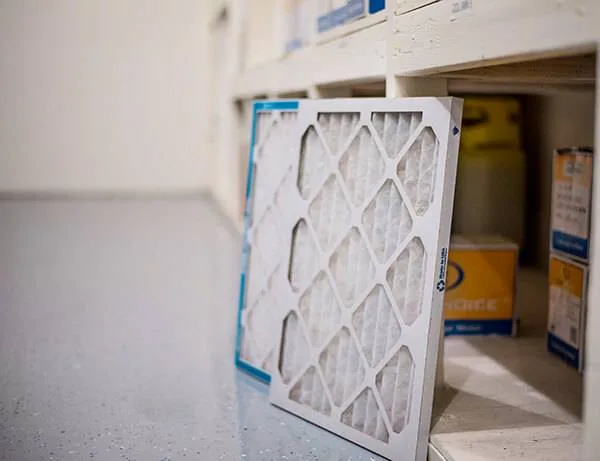
After you slide in a new filter, seat it fully so the frame sits flush with the cabinet opening. Check all edges and corners for gaps. If you find gaps, try another nominal size or add foam seals. After seating, close the access panel and run the fan for a few minutes to confirm normal airflow and check for odd sounds.
What PPE should you use?
Simple PPE keeps handling safer. Use disposable gloves to cut down on skin contact. A lightweight dust mask reduces inhalation of particles while you work. Safety glasses protect your eyes when you brush or vacuum near the return. These basic items are inexpensive and lower the chance of allergy flare ups during the swap.
How to seat the filter correctly?
Slide the filter fully into the slot so the frame sits flush with the cabinet opening. Ensure the airflow arrow points to the blower and that corners are not bent. If the frame does not sit flush, try the correct nominal size or add a thin foam gasket. After seating, close the access panel and run the system fan to verify proper airflow.
Can replacing the filter improve system life?
Regular filter changes reduce dust buildup on the blower motor, heat exchanger, and coils. Cleaner components run cooler and face less wear. Over time, this maintenance helps the system keep its rated efficiency and lowers the chance of stress‑related failures. Fresh filters also keep the blower from running longer than needed.
Replacing filters can prevent costly repairs. Shorter run times reduce electricity use and wear on controls. This routine care often delays component failures and can extend the service life of the furnace. Keep a simple record of filter changes and note any trends in runtime or airflow to catch problems early.
How does airflow affect blower lifespan?
Good airflow keeps the motor load within design limits and lets the fan move air without strain. Restricted flow forces the fan to work harder and run hotter. That can shorten bearing life and lead to early motor failure. Regular filter swaps and periodic static pressure checks reduce this risk and help the blower run cooler and longer.
How much can you save annually?
Savings depend on fuel type and local rates. Preventing a 5–15% energy penalty from dirty filters can save roughly $75 to $300 per year for a typical household. Exact saving varies with system efficiency and local utility costs. Small, regular savings accumulate and help offset maintenance costs over time.
Can neglected filters cause component failure?
Yes. Heavy dust can clog coils and reduce heat transfer. In gas furnaces, poor airflow can raise combustion temperatures and stress the heat exchanger and limit switches. If you notice soot, black dust, or erratic cycling after long filter neglect, call a technician. Early cleaning and repair often prevent more costly failures down the line.
Final checklist before you finish
Before you close the panel, confirm the power is off, the filter arrow points toward the blower, and the frame sits flush. Note the install date on the filter with a permanent marker. Run the system fan for a few minutes while checking for normal airflow and sounds. If airflow seems weak after a fresh filter, reinstall the old filter and call a technician for static pressure testing.
If you are in Las Vegas, Henderson, or North Las Vegas and want filter selection, static pressure testing, or a media rack installed, call The Cooling Company at (702) 567-0707. The team dispatches NATE‑certified techs who can test your system and fit approved filters or racks safely. Outside the Las Vegas area, ask for NATE‑certified technicians when you schedule service.
Why might the furnace smell after replacement?
A new or replacement filter can stir up settled dust and make a brief dusty smell. Removing an old filter may release trapped pet or cooking odors. These odors typically fade after a few hours of running the fan. Persistent or musty smells that last more than a day suggest moisture, mold, or a contaminated return and should prompt a professional inspection.
When should I call a technician?
Call a technician if airflow is low after installing a fresh filter. Also call when you plan to upgrade to high‑MERV media or thicker media that might require a cabinet rack. A tech can test static pressure, recommend safe filter options, inspect for leaks or condensation, and protect indoor air quality. Document maintenance and test results when you change filter strategy.
You Might Also Like
This aspect deserves careful consideration as you evaluate your options. Understanding the details helps you make more informed decisions. Consulting with qualified professionals provides additional insights specific to your situation. Take time to consider how this information applies to your particular needs and circumstances. Making well-informed choices typically leads to better long-term outcomes and greater satisfaction.
- "rheem service professionals vegas"
- "troubleshooting hvac odors"
- "ruud furnace problems"
- "trane furnace repair henderson"
- "how much to install hvac system in old house"
Need HVAC service help in Las Vegas?
While many homeowners can handle basic HVAC maintenance, some tasks require professional expertise. If you're in the Las Vegas area and need help beyond DIY solutions, The Cooling Company is here for you.
Call (702) 567-0707 to schedule a professional assessment. Our licensed technicians can identify issues that might not be obvious and ensure your system runs efficiently.
About The Cooling Company
The Cooling Company has been serving the Las Vegas valley with professional HVAC services for over a decade. Our team of licensed, NATE-certified technicians specializes in air conditioning repair, heating system maintenance, and complete HVAC installations. We're committed to providing honest, reliable service with upfront pricing and a 100% satisfaction guarantee on all work performed.
- Phone: (702) 567-0707
- Reviews: 4.8/5 stars (780+ reviews) - See reviews
Service Areas
We proudly serve homeowners and businesses throughout the Las Vegas metropolitan area, including Las Vegas, Henderson, and North Las Vegas. Our service technicians are available for same-day appointments in most areas, with emergency service available 24/7 for urgent HVAC issues.
References
- U.S. Department of Energy (Energy.gov) (accessed 2026-01-03)
- U.S. Environmental Protection Agency (EPA) (accessed 2026-01-03)
- ASHRAE (Standards and guidance) (accessed 2026-01-03)
- ENERGY STAR (Heating & cooling) (accessed 2026-01-03)
Share This Page
Need HVAC Service in Las Vegas?
The Cooling Company provides expert HVAC service throughout Las Vegas, Henderson, and North Las Vegas. Our licensed technicians deliver honest assessments, upfront pricing, and reliable results.
Call (702) 567-0707 or visit heating, furnace repair, heat pump installation, or heating maintenance for details.