
Short answer: Discover HVAC maintenance tips to troubleshoot a heater not turning on with 7 safe, quick checks that save time and money and help get heat back today.
Start with safety: check power, gas smell, and carbon monoxide alarms. Confirm the thermostat calls for heat and batteries are fresh. Inspect the breaker, furnace switch, filter, vents, and condensate drain. Note any control board error codes before calling a technician. See ASHRAE Technical Resources for background on safe HVAC practices.
Key Takeaways
- Do quick safe checks first: power, thermostat, filter, condensate, ignition, vents, and control codes.
- Leave and call the gas company or 911 if you smell gas or a CO alarm sounds.
- Expect small fixes to cost $0–$150, parts $150–$1,200, and replacements $3,000–$7,500.
Heater Not Turning on in House? Where should you start troubleshooting?
Start at the simplest and safest points in your home. Confirm the thermostat calls for heat and that batteries are fresh. Check the furnace service switch and the breaker. These steps catch many common causes and avoid wasted time or unsafe attempts. Start here to rule out the easy stuff before moving to combustion or electrical checks.
Next, look for visible signs like error LEDs, unusual smells, or tripped safety switches. If you see an error code on the control board, write it down or take a photo. These details speed up technical diagnosis when you call a pro. Also, note how long you waited between actions and whether the unit made any sounds when you attempted to run it.
Is the thermostat set correctly?
Make sure the thermostat is set to HEAT and that the set point is higher than the current room temperature. Check for HOLD or SCHEDULE settings that may prevent immediate heating. On smart thermostats, confirm the screen shows HEAT mode and that the device indicates an active call for heat.
If the thermostat shows no call for heat while you expect it should, try switching it to a manual heat mode or temporarily setting a higher temperature. Wait at least 10 to 15 minutes for the furnace to respond. If nothing happens, move to electrical and furnace checks.
Have you replaced the thermostat batteries?
Replace alkaline batteries at least yearly or when the display dims. A dead thermostat can make the system appear dead even if the furnace is fine. Batteries cost only a few dollars and are the quickest, lowest-cost fix for many no-heat calls.
Keep an extra pair of batteries with your thermostat manual. When you remove the thermostat cover, check for loose wiring and signs of corrosion. If the thermostat is hardwired but unresponsive, that points to a different issue in the furnace system.
Could a schedule or geofence be blocking heat?
If you use programmable schedules or geofencing, disable them for a quick test. Set the thermostat to HEAT and a fixed temperature five degrees higher than the room. Wait fifteen minutes to see if the furnace starts. Schedules and remote controls can sometimes override manual requests and cause confusion.
Also check if any energy-saving features are active that limit runtime. Some smart thermostats may delay heat calls when they detect short absences. Turning these features off briefly helps diagnose whether the thermostat is the culprit.
How to document error codes and status lights?
If the furnace control board shows blinking LEDs or an error code, note the pattern and any numeric code. Take a clear photo of the board and note the time and conditions when the error appeared. Include whether the blower attempted to run and if any lights flickered prior to failure.
These photos and notes are valuable when you call a technician. They cut diagnostic time and help the pro bring the right parts. Keep the furnace manual nearby, or look up the code in the manual before the tech arrives to get context.
Could power or electrical issues be the cause?
Electrical faults cause many no-heat calls, especially during heavy use in winter. Start with basic checks: the service switch at the furnace, the outlet near the unit, and the breaker panel. Confirm that the furnace service switch is ON and that the outlet has power. Use a small lamp or plug-in tester to confirm outlet voltage if you can.
If the outlet is dead, check the breaker panel for a tripped breaker labeled for heating or HVAC. Flip a suspect breaker fully off, then on. If a breaker trips again immediately, do not reset it repeatedly. That is a sign of a short or unsafe condition. Call a licensed electrician or HVAC technician to diagnose further.
How to check the furnace switch and outlet?
Locate the service switch near the furnace, often inside a conduit box with a red or white switch. Make sure it is in the ON position. Next, plug a known working lamp into the nearby outlet to confirm power. If the lamp does not light, the outlet may be on a different breaker.
Avoid opening live electrical panels unless you are qualified. If the outlet has no power and the breaker appears fine, call an electrician. Never work on wiring if you are unsure, and never use metal tools around live terminals.
Are breakers labeled for your furnace?
Clear labels speed troubleshooting and prevent accidental shutoffs. If breakers are unlabeled, map them one at a time while someone watches the furnace. Turn one breaker off and watch which devices lose power. Label each circuit after you identify it.
Proper labeling helps future service calls and emergency shutdowns. If the HVAC circuit shares a panel with other loads, note those too. Consider having an electrician install a dedicated breaker for the furnace if it shares a circuit with heavy loads.
What is a hard reset and how to do it?
A hard reset removes power to the unit at both the service switch and the breaker for 30 to 60 seconds. This can clear minor electronic faults and reset ignition lockouts. Turn the furnace switch OFF, turn the breaker OFF, wait a minute, then restore power. Note any error codes that appear after the reboot.
Record what happens after you restore power. If the unit attempts to start and then shuts down repeatedly, you may have a persistent fault. Do not attempt repeated resets more than once. If the fault persists, call a licensed technician to inspect the control board and safety devices.
When should you call an electrician?
Call an electrician if a breaker trips repeatedly, if there are burning smells, visible sparks, or hot breaker boxes. Also call an electrician if you find loose or charred wiring near the furnace. These are signs of serious electrical issues that can be dangerous.
If the furnace makes humming noises but will not start, or if the blower motor hums without spinning, you may have a motor start capacitor failure. This is an electrical repair that is best handled by a pro with HVAC experience.
What about the ignition or pilot?
If the furnace receives power and the thermostat calls for heat but the burners do not light, the issue may be ignition or gas supply related. Modern furnaces use hot surface igniters or intermittent pilot systems. Older units may have a standing pilot. A failing igniter or a dirty flame sensor often prevents ignition and stops the furnace from heating.
Never work on gas lines or burners unless you are trained. If you smell gas, leave immediately and call the gas company or 911 from a safe location. Combustion appliances require careful handling to avoid leaks, explosions, or carbon monoxide hazards.
Is the pilot light out or the igniter failing?
Standing pilot lights can go out and require relighting per the manufacturer instructions. Newer furnaces use hot surface igniters that glow orange when operating. If an igniter appears cracked or does not glow, it will need replacement. Igniter replacements commonly cost $100–$400 depending on model and labor.
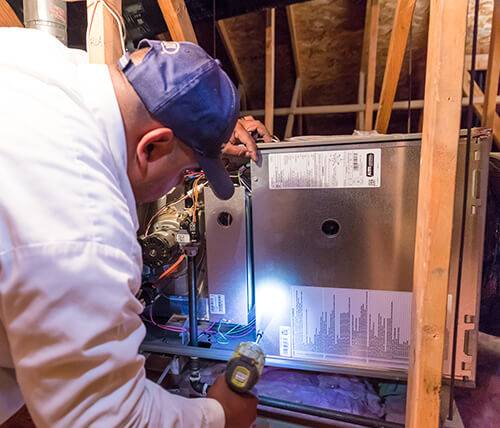
Also inspect the flame sensor if the burner tries to light but shuts off. A dirty sensor can cause the control board to kill the flame. Cleaning or replacing the flame sensor is a common repair that many technicians perform quickly. Our heater blowing cold air guide covers related ignition and flame sensor issues in detail.
Have you smelled gas or detected a leak?
If you smell gas, do not use electrical switches, phones inside the house, or open flames. Leave the premises immediately and call the gas company or emergency services from a safe distance. Utility crews and qualified technicians should handle any suspected leak or meter issues.
Strong gas smells, hissing sounds near the furnace, or dead vegetation near a buried line are all reasons to evacuate and get professional help. Do not attempt to tighten or alter gas fittings yourself.
How to safely check the gas shutoff valve?
Locate the manual gas shutoff valve near the furnace. It should be parallel to the gas pipe when open. Only operate this valve if you are trained and there is no strong gas odor. Turning the valve off can stop gas to the appliance in an emergency, but improper handling can cause other issues.
If you are unsure or detect any signs of a leak, leave and call the gas company. They can inspect the meter, lines, and fittings safely. Never use tools to force a stuck valve; call a pro instead.
Could airflow or filters be preventing heat?
Poor airflow leads to overheating and safety shutdowns. Check the air filter, supply vents, and return grilles. A clogged filter restricts air and can trip a limit switch that shuts off the burners to protect the heat exchanger. Change disposable filters every 1–3 months based on use and filter type.
Also inspect supply vents and returns in each room. Furniture, drapes, and rugs can block airflow and create cold spots. Closing many vents at once can unbalance the system and reduce overall performance. Leave most vents open and consider rebalancing with a technician if needed.
How do dirty filters affect heating?
A dirty filter reduces airflow and forces the furnace to run hotter. This can make heat exchangers and limit switches trip. In extreme cases, a clogged filter can damage the blower motor or cause the unit to cycle frequently. Use the filter size printed on the old filter and match the MERV rating to avoid over-restricting flow.
If you find a very dirty filter, replace it and then try running the system. Note whether the blower runs and if warm air appears at the registers. If the furnace still does not start, continue troubleshooting other areas.
Are vents and registers open and unblocked?
Walk through the home and inspect each supply and return register for dust, debris, or blockage. Vacuum visible dust and remove obstructions. If one room stays cold, check for closed dampers in the ductwork or blocked registers behind furniture.
If certain rooms are consistently cold, consider a duct balancing or zoning check by a professional. Simple cleaning often improves flow, but serious duct restrictions or leaks need a technician.
Could closed zone dampers stop warm air?
Homes with zoning systems use motorized dampers to route air. A damper stuck in the closed position will keep heat out of a zone. Check the zone controller and thermostat settings. Sometimes a failed damper motor or controller board prevents air from reaching certain rooms.
Damper motor repairs and balancing should be done by an HVAC technician. They have the tools to test damper positions and to rebalance air flows without risking equipment damage.
When should you call a professional?
Call a licensed technician for gas, electrical, or combustion issues. If basic checks fail or if you smell gas or a CO alarm sounds, get help right away. Trained techs can safely test heat exchangers, ignition systems, and control boards. They have meters and combustion analyzers to confirm safe operation.
Also call a pro when repairs repeat or if the repair cost approaches half the price of a new unit. Older furnaces often have failing parts in groups and may be better candidates for replacement. Request written estimates and ask about efficiency gains with new equipment before deciding.
Check our heating repair cost guide for current cost estimates.
What makes a situation unsafe for DIY?
Leave combustion adjustments, burner access, and wiring work to licensed pros. Smelled gas, audible CO alarms, burning smells, visible sparks, or hot electrical panels are immediate safety signs. Evacuate and call emergency services plus a licensed HVAC technician to secure the system.
Do not bypass safety switches or float switches to force operation. These devices protect you and the equipment. For any work that exposes gas lines, burners, or high-voltage wiring, hire a licensed contractor.
How to estimate repair versus replacement costs?
Ask for a written quote that itemizes parts and labor. A common rule is to consider replacement if a single repair costs more than 50 percent of a new installed unit. Factor in the age of the furnace, its efficiency, and likely future repairs when weighing options.
Also consider energy savings from a newer, high-efficiency model and whether ductwork needs upgrading. A tech can provide lifecycle cost estimates and options for different efficiency tiers. Learn more in our heater not working troubleshooting guide.
You may qualify for rebates and promotions that reduce your upfront cost.
What are typical costs for common fixes?
Small items like batteries, filters, and condensate clearing often cost $0–$150. Igniters, flame sensors, and control board repairs range $150–$1,200 depending on part and labor. Full furnace replacements commonly run $3,000–$7,500 for mid-efficiency units when installed by a licensed contractor.
Get two or three written estimates when possible. Ask about warranties on parts and labor, and request a clear scope of work. This helps you compare offers and avoid surprise charges.
Need help or want step-by-step guides?
If you want hands-on help, hire NATE certified technicians and verify local licensing. For Las Vegas area readers call The Cooling Company at (702) 567-0707. They serve Las Vegas, Henderson, and North Las Vegas and offer emergency service with NATE certified techs. Homeowners outside the area should ask contractors for NATE certification and proof of local licensing before hiring.
See why homeowners trust us — view our why homeowners trust us.
Use manufacturer manuals for model-specific steps such as pilot relight or condensate clearing. Keep error codes and photos to speed any service call. If you own a Rheem unit, contact rheem service professionals vegas for local support and model-specific guidance.
How to contact a licensed technician?
Las Vegas, Henderson, and North Las Vegas homeowners can reach The Cooling Company at (702) 567-0707 for fast service. Ask for NATE certification, written estimates, and emergency availability. Have your furnace model and age handy when you call to speed diagnosis and parts checks.
When you contact a pro, describe the steps you already took and share any photos or error codes. This saves dispatch time and helps the technician bring the right parts on the first visit.
Where to find step-by-step repair guides?
Start with the furnace manual and manufacturer support for safe, model-specific steps. Look for guides on thermostat checks, condensate clearing, and filter replacement that include clear photos and cautions. Trusted resources like ASHRAE Technical Resources provide safety background, while manufacturer pages give exact procedures.
If you attempt simple tasks, follow the manual closely, use proper tools, and stop immediately if you encounter gas smells, sparks, or unclear instructions. When in doubt, call a licensed technician.
Quick safety reminders before you proceed
Never bypass safety switches or defeat float switches to force operation. Use a flashlight, not an open flame, for inspecting vents. If a CO alarm sounds or you smell gas, leave and call emergency services and the gas company without delay. Keep basic notes like model number, age, and error codes to help technicians diagnose faster.
A quick photo of the control board or error LED pattern can cut a technician’s troubleshooting time. Also keep records of maintenance and past repairs; these details help pros identify recurring problems and recommend long-term fixes.
Final checklist: seven quick checks to run now
Power: Confirm the service switch and breaker are on. Thermostat: Set to HEAT and raise the set point by five degrees. Batteries: Replace if the display looks dim. Filter: Replace if dirty. Vents: Ensure supply and return openings are clear. Condensate: Clear clogged traps on high-efficiency units. Ignition: Note pilot or igniter behavior and any error codes. Keep a list of how long each step took and what you found.
Doing these checks first can save time, reduce diagnostic fees, and avoid unnecessary part replacements. Share that list and any photos when you call for service. Need immediate help? Las Vegas area homeowners should call The Cooling Company at (702) 567-0707 for NATE certified technicians. We serve Las Vegas, Henderson, and North Las Vegas with emergency and scheduled HVAC service.
You Might Also Like
This aspect deserves careful consideration as you evaluate your options. Understanding the details helps you make more informed decisions. Consulting with qualified professionals provides additional insights specific to your situation. Take time to consider how this information applies to your particular needs and circumstances. Making well-informed choices typically leads to better long-term outcomes and greater satisfaction.
About The Cooling Company
The Cooling Company has been serving the Las Vegas valley with professional HVAC services for over a decade. Our team of licensed, NATE-certified technicians specializes in air conditioning repair, heating system maintenance, and complete HVAC installations. We're committed to providing honest, reliable service with upfront pricing and a 100% satisfaction guarantee on all work performed.
- Phone: (702) 567-0707
- Reviews: 4.8/5 stars (780+ reviews) - See reviews
Service Areas
We proudly serve homeowners and businesses throughout the Las Vegas metropolitan area, including Las Vegas, Henderson, and North Las Vegas. Our service technicians are available for same-day appointments in most areas, with emergency service available 24/7 for urgent HVAC issues.
References
- U.S. Department of Energy (Energy.gov) (accessed 2026-01-02)
- U.S. Environmental Protection Agency (EPA) (accessed 2026-01-02)
- ASHRAE (Standards and guidance) (accessed 2026-01-02)
- ENERGY STAR (Heating & cooling) (accessed 2026-01-02)
Need Heating Service in Las Vegas?
The Cooling Company provides expert heating service throughout Las Vegas, Henderson, and North Las Vegas. Our licensed technicians deliver honest assessments, upfront pricing, and reliable results.
Call (702) 567-0707 or visit heating, heating repair, furnace repair, or installation for details.