

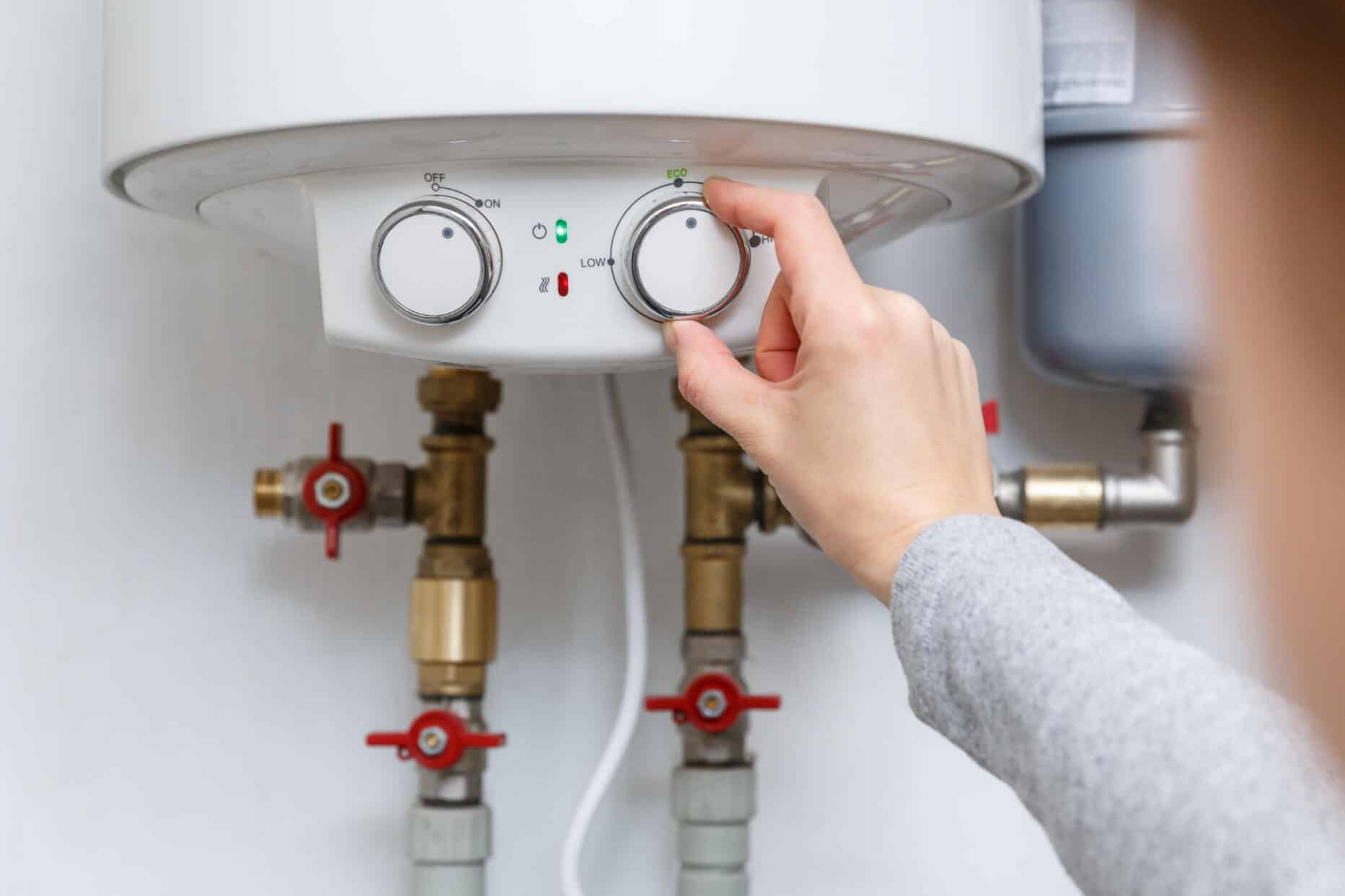
Short answer: Power anodes (impressed current anodes) use a small electrical current to protect your water heater tank instead of sacrificial metal that dissolves. In Las Vegas hard water, standard anode rods fail in 2–3 years and most homeowners never replace them, causing tanks to corrode and fail at 7–8 years instead of 12. A power anode can add 5+ years to your water heater's life.
Most Las Vegas homeowners don't think about their water heater until it fails. By then, the tank has already corroded from the inside out — a direct result of the valley's notoriously hard water. We see this constantly on service calls: tanks that should have lasted 12 years that gave out at 7 or 8 because the corrosion protection was depleted and nobody replaced it. A power anode is one of the most cost-effective ways to prevent that outcome, and it's still one of the least-known tools in the plumber's kit.
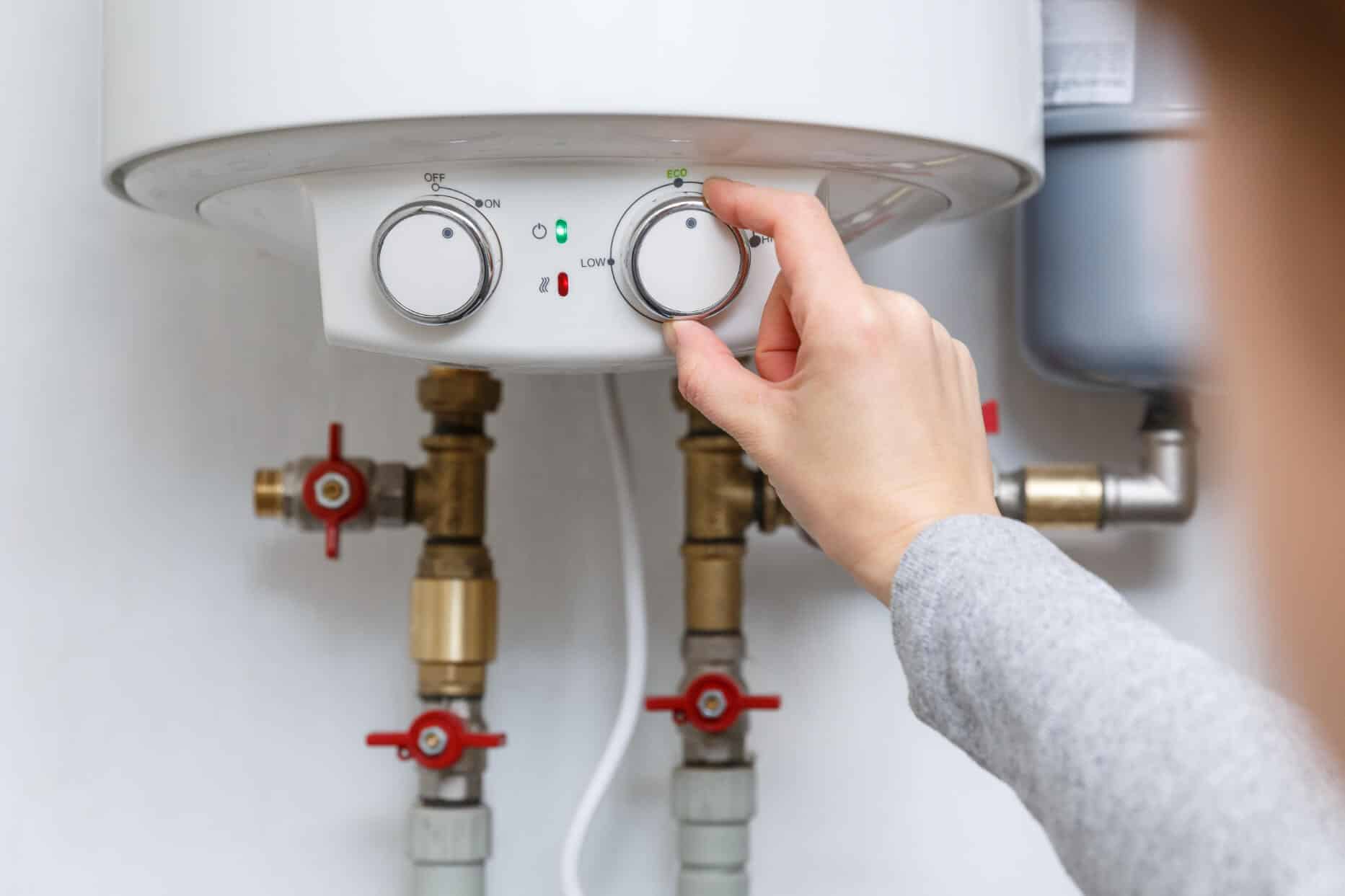
What is a sacrificial anode and why does it fail fast in Las Vegas?
Every storage tank water heater ships from the factory with a sacrificial anode rod — typically a long magnesium or aluminum core threaded into the top of the tank. The chemistry is straightforward: the anode rod is a more reactive metal than the steel shell of the tank, so when corrosive water chemistry attacks, it attacks the rod first. The rod corrodes so the tank doesn't. That's where the word "sacrificial" comes from.
Under normal conditions, a magnesium anode lasts roughly 3 to 5 years. In Las Vegas, that timeline compresses. Our water comes primarily from Lake Mead via the Colorado River and registers between 16 and 25 grains per gallon of hardness — well above the 7 grains per gallon threshold where water is considered "hard." High mineral content, particularly calcium and magnesium bicarbonate, makes the water more corrosive and accelerates anode depletion. We've pulled rods from two-year-old tanks in Henderson and Summerlin that were already down to a thin wire core.
The problem with sacrificial anodes isn't the concept — it's the maintenance demand. Once the rod is depleted, the tank has no protection. Most homeowners have no idea when to check it or that it even exists. The manufacturer recommends inspection every two to three years, but we'd argue every year is appropriate in the Las Vegas Valley. Most people never do it. That's why we see so many tanks failing well short of their rated lifespan.
How impressed current cathodic protection works
A power anode — sometimes called an impressed current anode or an electronic anode — takes a fundamentally different approach to corrosion protection. Instead of relying on a consumable metal rod that gradually disappears, a power anode uses a small electrical current to create the same electrochemical protection effect without any sacrificial material wearing away.
Here's the underlying science. Corrosion in a steel water tank is an electrochemical process: dissolved oxygen and minerals in the water pull electrons away from the steel, causing it to oxidize (rust). A sacrificial anode works by being more eager to donate electrons than the steel, so the attack goes to the rod instead of the tank. A power anode accomplishes the same thing by using a titanium or mixed-metal-oxide electrode connected to a small power source — typically a plug-in transformer drawing 1 to 4 watts. That current keeps a continuous, controlled flow of electrons moving from the electrode into the water, which neutralizes the corrosive pull on the tank walls. The electrode itself doesn't deplete, because it's not being consumed — electricity is doing the work instead of metal.
The result is continuous, uninterrupted corrosion protection that doesn't degrade over time. There's no rod to replace, no depletion schedule to track, and no window of vulnerability between when the old anode is spent and when a new one gets installed. As long as the unit is plugged in, it's protecting the tank. That's the core reason we recommend power anodes to customers who want to maximize their water heater's useful life — particularly in a market like ours where the water chemistry is working against you from day one.
It's worth noting that power anodes are not a substitute for a softener if scaling is the primary concern. Impressed current cathodic protection stops corrosion, but it does not prevent the calcium deposits that build up in the tank bottom and on heating elements. A whole-home water softener addresses scaling. A power anode addresses rust and tank wall degradation. In the worst hard-water situations, you may want both — but for most homeowners, the power anode alone delivers a dramatic improvement in tank longevity.
Hard water and your tank: the Las Vegas factor
Las Vegas sits at the end of one of the hardest water supplies in the country. The Southern Nevada Water Authority reports hardness levels that routinely exceed 250 to 400 milligrams per liter (roughly 15 to 23 grains per gallon depending on the season and source blend). For comparison, water hardness above 180 mg/L is classified as "very hard" by the U.S. Geological Survey. We're well above that threshold most of the time.
What that means for your water heater is accelerated wear on three fronts. First, the anode rod depletes faster, as described above. Second, calcium scale builds up on the tank floor and heating elements, reducing efficiency and creating hot spots that stress the tank lining. Third, the mineral-laden water is more chemically aggressive, which means even small gaps in cathodic protection — periods when an anode is spent and hasn't been replaced — cause damage that would take months longer in softer-water markets.
We've seen tanks in our service area develop pinhole leaks as early as six years in. The standard warranty on most residential storage tanks is six to twelve years, but warranty coverage and actual tank failure are two different things. Warranty claims require proof the anode was maintained — which most homeowners can't provide because they never serviced it. A power anode sidesteps that issue entirely: it's always on, always protecting, and requires no periodic replacement to keep doing its job.
If you notice your water heater making popping or rumbling sounds, that's sediment — calcium scale flaking off the tank bottom — getting churned up by the heating element. It's a sign that both scaling and corrosion are underway. At that stage, a power anode can still slow the degradation, but it won't undo existing damage. Earlier is always better.
The ROI math: power anode vs. premature replacement
Let's run the numbers, because this is where the power anode decision becomes straightforward for most homeowners.
A quality power anode — brands like Corro-Protec or Powered Anode Rod — runs $200 to $350 for the unit. Installation on a standard tank takes about an hour of labor. All in, you're typically looking at $350 to $550 installed. The unit draws 1 to 4 watts continuously, which at Nevada Energy's residential rates adds roughly $3 to $10 per year to your electric bill. That's the full ongoing cost. There's no replacement rod to purchase. The electrode itself is rated to outlast the tank it's protecting.
Now consider the alternative. A premature water heater replacement — a tank that fails at year 7 instead of year 12 to 14 — costs $1,500 to $3,000 installed for a standard 40- to 50-gallon gas or electric tank in the Las Vegas market. That's for a comparable replacement unit, including labor, permit, and disposal of the old tank. If you upgrade to a tankless water heater at that point, costs climb to $3,000 to $5,000 or more.
The math pencils out clearly:
- Power anode cost: $350–$550 installed, plus ~$5/year in electricity
- Potential tank life added: 5 to 8 years in Las Vegas conditions
- Cost of premature replacement avoided: $1,500–$3,000
- Net savings: $1,000–$2,500 or more over the extended tank life
Even in a conservative scenario — where the power anode adds only three years to your tank's life — you come out significantly ahead. And this doesn't account for the disruption cost of an emergency replacement, which is what most Las Vegas homeowners face when a tank fails suddenly. Emergency weekend calls, water damage cleanup, waiting for a new unit to come in — the indirect costs add up fast.
If you're already enrolled in a maintenance plan, anode inspection and replacement is something we build into the annual service visit. Adding a power anode at that point eliminates the ongoing maintenance task entirely and locks in protection for the life of the tank.
Installation and maintenance: what to expect
Installing a power anode is a straightforward plumbing job, but it does require some preparation. Most tanks have a hex-head anode port — typically 1-1/16 inch — threaded into the top of the unit. In some tanks it's a separate dedicated port; in others the hot-water outlet serves double duty. The installer removes the existing sacrificial rod (if it hasn't already been removed) and threads in the power anode in its place. A short wire runs from the anode to a small transformer that plugs into a standard outlet near the water heater.
A few considerations for Las Vegas homes specifically:
Access. Some tanks are installed in tight alcoves or closets with limited overhead clearance. Because the anode rod is threaded vertically into the top of the tank, you need at least 6 to 8 inches of clearance above the unit to remove the old rod and thread in the new one. If clearance is tight, a licensed plumber can often work around it, but it may add to the labor time. In extreme cases, the tank may need to be temporarily moved, which is uncommon but worth knowing.
Existing anode condition. If you're retrofitting a power anode to an older tank, we'll inspect the existing rod first. If it's severely depleted, it means the tank has been unprotected for some period and we'll assess whether there's already corrosion damage inside. A power anode will prevent further degradation going forward, but it can't reverse existing rust. On tanks over 10 years old, the calculus shifts toward evaluating a full replacement versus extending the life of a compromised tank.
Outlet availability. The transformer needs a standard 120-volt outlet within reach of the water heater. Most utility closets and garages have this, but if yours doesn't, a simple outlet addition from an electrician is the answer — typically $100 to $200 and worth factoring into the total project cost.
Once installed, the power anode requires essentially no maintenance. We recommend confirming the indicator light is on (most units have one) during your annual plumbing checkup, but there's no service interval, no rod to replace, and no depletion to track. That's a significant advantage over sacrificial anodes for homeowners who want to set it and forget it.
Our plumbing team handles power anode installations throughout the Las Vegas Valley, including Henderson, North Las Vegas, Summerlin, and the surrounding communities. Call us at (702) 567-0707 to schedule a water heater inspection and get a quote.
When a power anode is not enough
A power anode is an excellent corrosion prevention tool, but it's not a solution to every water heater problem and it's not always the right call for every tank.
If your tank is already leaking, that's a structural failure — corroded steel that has breached. No anode, powered or sacrificial, can seal a leak or reverse existing corrosion damage. At that point, replacement is the right answer. We can help you evaluate whether a conventional tank replacement or a tankless upgrade makes more sense given your household's hot water demand and budget.
If your tank is over 10 to 12 years old and you've never had the anode serviced, it's worth having us do a full inspection before investing in a power anode. We'll check for signs of internal corrosion, test the sacrificial rod condition, flush the sediment, and give you an honest assessment of the tank's remaining useful life. If it's already significantly compromised, putting $400 into a power anode to extend a failing tank by a year or two may not be the best use of your money.
For newer tanks — anything under 8 years old — or as part of a new installation, a power anode is one of the smartest investments you can make. Pair it with an annual maintenance plan that includes sediment flushing and anode checks, and a properly protected tank in Las Vegas can realistically reach 14 to 16 years of service life. That's nearly double what we see from neglected tanks in our hard-water environment.
Frequently Asked Questions
What is the difference between a power anode and a sacrificial anode rod?
A sacrificial anode rod is a consumable metal rod — typically magnesium or aluminum — that corrodes in place of the steel tank. It physically wears away over time and must be replaced every 2 to 5 years (sooner in Las Vegas hard water). A power anode uses a non-consumable electrode and a small electrical current to create the same cathodic protection effect without any material being consumed. It doesn't deplete, doesn't need periodic replacement, and provides continuous, uninterrupted protection as long as it's plugged in.
How much does a power anode cost installed in Las Vegas?
Expect to pay $350 to $550 fully installed, which includes the power anode unit ($200 to $350 for a quality product) and about an hour of licensed plumber labor. Ongoing electricity cost is minimal — typically $3 to $10 per year. Compare that to a premature tank replacement at $1,500 to $3,000, and the math strongly favors the power anode for tanks that are in reasonable condition. Call us at (702) 567-0707 for a specific quote based on your tank and access situation.
Can a power anode be installed on any water heater?
Most standard storage tank water heaters — gas or electric — can accommodate a power anode. The unit threads into the existing anode port on top of the tank, so it's compatible with nearly all residential tanks. The main requirements are adequate overhead clearance (6 to 8 inches above the tank top) and a nearby 120-volt outlet for the transformer. Tankless water heaters do not use anode rods and don't require cathodic protection. If you're unsure whether your tank is a good candidate, we'll assess it during an inspection.
Does a power anode also prevent scale buildup from Las Vegas hard water?
No — and this is an important distinction. A power anode prevents corrosion (oxidation of the steel tank walls) through cathodic protection. It does not prevent calcium scale from depositing on the tank floor and heating elements, which is a separate problem caused by mineral precipitation at high temperatures. For scale control, a whole-home water softener or descaler is the solution. In severe Las Vegas hard-water conditions, we sometimes recommend both: a power anode for corrosion protection and a softener or scale inhibitor for mineral management. Annual sediment flushing also helps manage scale accumulation.
How do I know if my current sacrificial anode rod is depleted?
The only reliable way is physical inspection — shutting off the water supply, relieving pressure, and unthreading the anode rod to examine it. A healthy rod is roughly the diameter of a standard marker and has significant metal remaining. A depleted rod is thin, wire-like, heavily coated in calcium, or missing sections entirely. In Las Vegas, we recommend checking the rod every 12 to 18 months given local water hardness. If you've never had it checked and your tank is more than 3 years old, assume it needs attention. Our plumbing team can inspect and replace it — or install a power anode — during a service visit.
Ready to Protect Your Water Heater?
The Cooling Company serves Las Vegas, Henderson, North Las Vegas, and the surrounding communities with licensed plumbing and water heater services. Whether you need a power anode installed, an anode rod inspection, a full water heater service, or a quote on a tankless upgrade, our team is ready to help.
Call (702) 567-0707 to schedule a water heater inspection or get a quote on power anode installation. Ask about our maintenance plans — annual plumbing and HVAC service that keeps your systems protected year-round.