

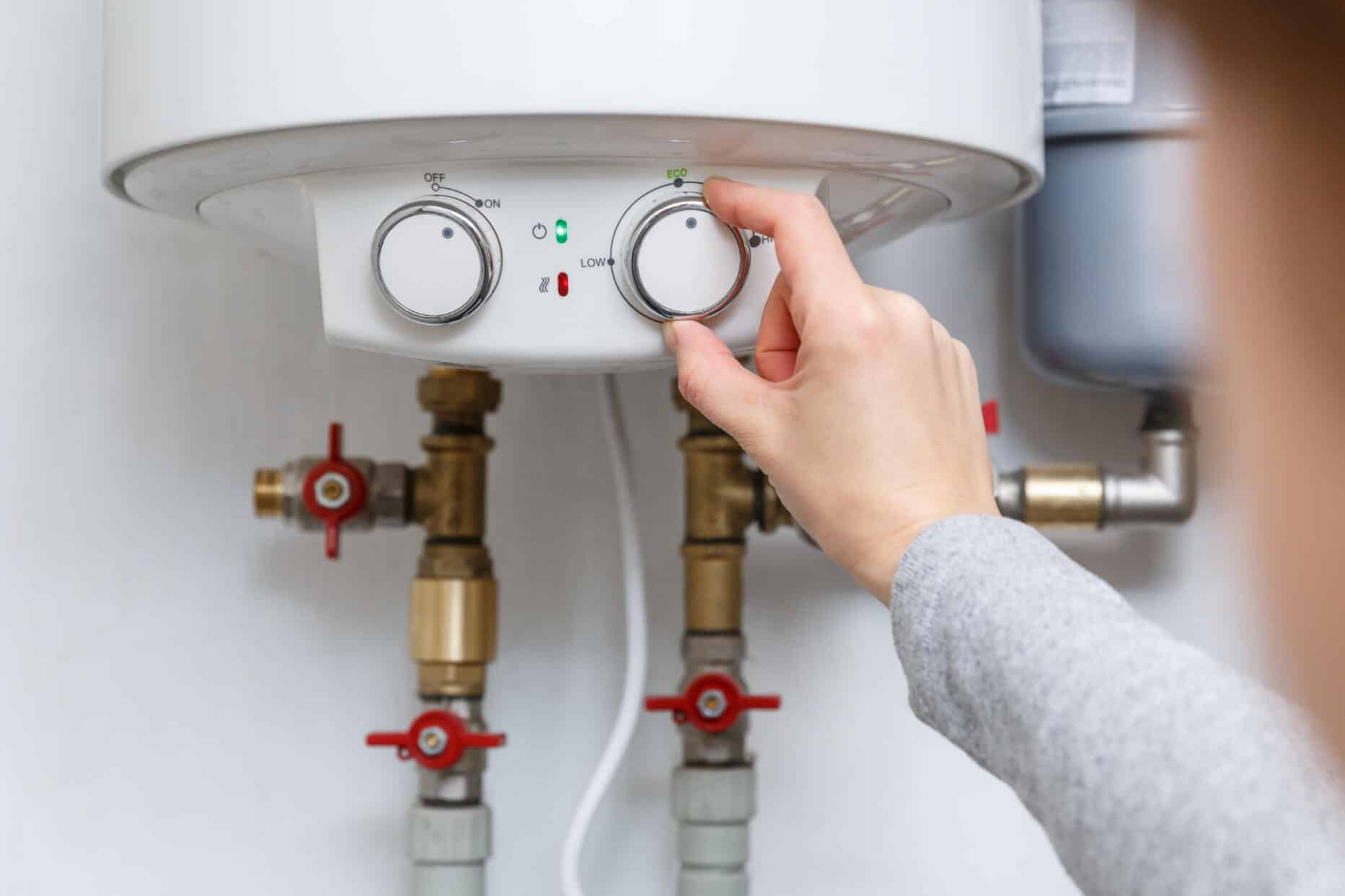
Short answer: If you notice banging pipes, running toilets, leaking faucets, or premature appliance failure, your Las Vegas home likely has water pressure above the safe 60 PSI limit. Municipal pressure in the valley commonly runs 80–130 PSI. A $10 hose-bib pressure gauge gives you a definitive reading in 30 seconds. PRV installation costs $350–$650.
Last week we pulled a failed water heater from a home in Summerlin that was only four years old. The tank lining had cracked, the T&P relief valve was caked with mineral deposits, and the homeowner had been through two sets of supply hoses in that time. The incoming water pressure tested at 112 PSI. That house had no pressure reducing valve. The municipal supply was slowly destroying every fixture and appliance connected to the water line, and the homeowner had no idea until the water heater flooded the garage.
This is not an unusual story in Las Vegas. It is one of the most common plumbing issues we diagnose in the valley. The Las Vegas Valley Water District (LVVWD) delivers water at pressures that regularly exceed what residential plumbing systems are designed to handle, and without a functioning pressure reducing valve — a PRV — that excess pressure hammers your pipes, fittings, appliances, and fixtures every minute of every day.
Key Takeaways
- Las Vegas municipal water pressure commonly runs 80 to 130 PSI at the meter — well above the 60 PSI maximum recommended for residential plumbing.
- Warning signs include banging pipes, running toilets, leaking faucets, premature appliance failure, and high water bills.
- A $10 hose-bib pressure gauge from any hardware store gives you a definitive reading in 30 seconds.
- PRV installation typically costs $350 to $650 in Las Vegas; replacing a failed PRV runs $250 to $500.
- A working PRV protects thousands of dollars in plumbing infrastructure and extends appliance life by years.
Why Las Vegas water pressure is so high
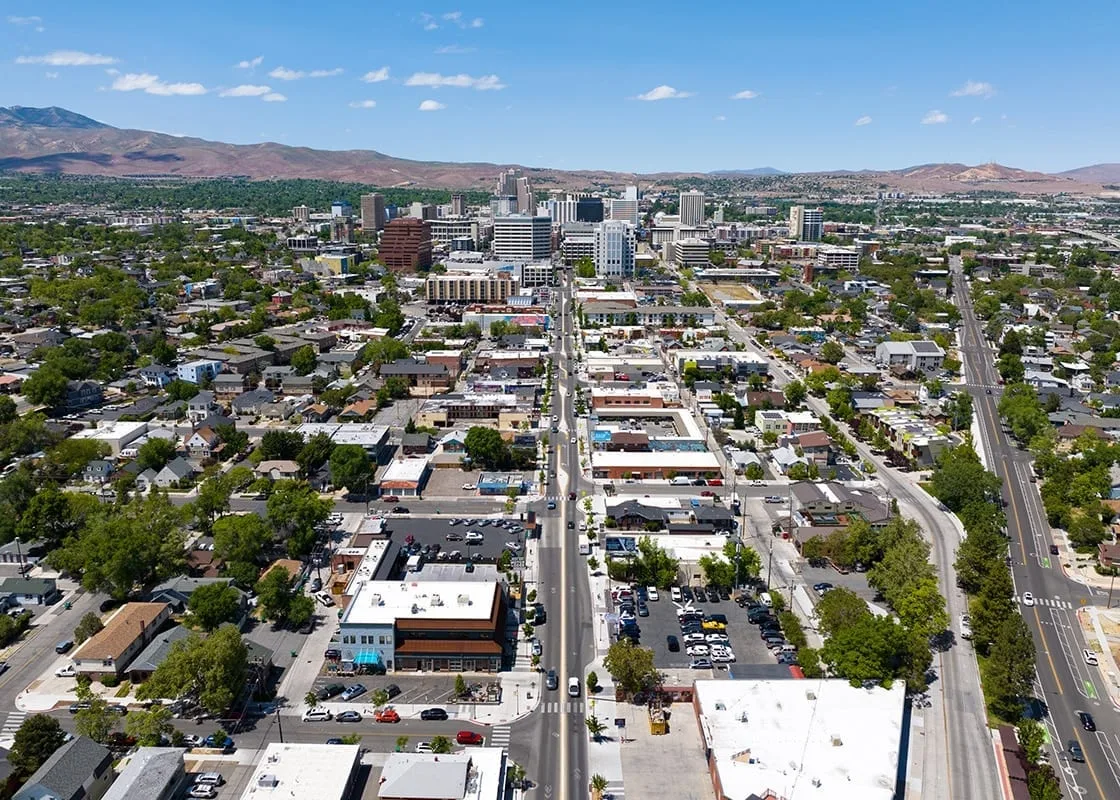
The Las Vegas Valley Water District pumps water from Lake Mead through a massive distribution network that serves over 400,000 connections across a wide range of elevations. Maintaining adequate pressure at the highest points in the system — places like the upper reaches of Summerlin, Anthem, and the foothills neighborhoods — means pumping at pressures that overshoot what homes at lower elevations actually need. Water pressure at the meter in many Las Vegas neighborhoods runs between 80 and 130 PSI. Some areas near major transmission mains or booster stations see spikes above 140 PSI during off-peak hours when demand drops and system pressure climbs.
The Uniform Plumbing Code (UPC) and most manufacturers rate residential plumbing components for a maximum working pressure of 80 PSI. Many fixtures, supply hoses, and appliance connections are tested and warranted for pressures no higher than 60 to 80 PSI. When your incoming pressure sits at 100, 110, or 120 PSI around the clock, every connection in your house is operating well beyond its rated capacity. It is not a question of whether something will fail — it is a question of what fails first.
What a PRV does and how it works
A pressure reducing valve is a brass or bronze body installed on the main water line just after the meter and before the first branch in the house plumbing. Inside the valve is a spring-loaded diaphragm that restricts flow to maintain a set downstream pressure — typically 50 to 60 PSI on residential installations — regardless of how high the incoming pressure climbs. When you open a faucet, water flows through the valve body and past the diaphragm, which adjusts automatically to maintain the set outlet pressure. When all fixtures are closed, the PRV holds static pressure at its setpoint.
Most residential PRVs are adjustable via a bolt on top of the valve body. Turning the bolt clockwise increases the outlet pressure; counterclockwise decreases it. Factory settings usually ship at 50 PSI. In Las Vegas, we typically set them to 55 to 60 PSI — high enough for good shower flow on two-story homes, low enough to protect the system.
PRVs are not permanent. The internal spring and diaphragm degrade over time, especially in Las Vegas where the hard water (averaging 16 to 22 grains per gallon) deposits mineral scale on the valve seat and diaphragm. Typical PRV lifespan in Las Vegas conditions is 7 to 12 years. Some fail sooner if the incoming pressure is extremely high or if the valve was undersized for the home's flow demand.
Signs your water pressure is too high
High water pressure does not announce itself with a single dramatic failure. It creates a pattern of small problems that most homeowners attribute to aging fixtures, cheap parts, or bad luck. Here is what to watch for:
Banging or hammering pipes
Water hammer — a sharp banging sound when a valve closes — happens because high-velocity water slams to a stop inside the pipe. Higher pressure means higher velocity, which means harder impacts. If you hear a bang every time the washing machine valve shuts, the dishwasher cycles, or you turn off a faucet quickly, pressure is almost certainly part of the equation. Sustained water hammer loosens fittings, stresses solder joints, and can eventually crack pipes at connection points.
Running toilets
A toilet fill valve is a simple pressure-sensitive device. When incoming pressure exceeds the valve's rated capacity — typically 80 PSI — the valve cannot seat fully and allows water to trickle past the seal into the tank. The toilet "runs" intermittently or constantly. Homeowners replace the fill valve, the new one runs too, and they assume they got a defective part. The part was fine. The pressure is the problem. We see this pattern constantly in homes without a functioning PRV.
Dripping faucets and leaking fixtures
Faucet cartridges, O-rings, and valve seats wear faster under high pressure because the water exerts more force against the sealing surfaces every time the fixture is used. A kitchen faucet cartridge rated for 10 to 15 years of service at 60 PSI may fail in 3 to 5 years at 110 PSI. If you find yourself replacing faucet cartridges and supply hoses more often than seems reasonable, test your pressure before buying another repair kit.
Premature appliance failure
Washing machines, dishwashers, ice makers, and water heaters all have internal solenoid valves, seals, and hose connections designed for normal residential pressure. When those components see 100+ PSI continuously, they wear out far ahead of schedule. Dishwasher solenoid valves leak. Washing machine hoses bulge and burst. Ice maker lines develop pinhole leaks behind the refrigerator where you will not notice them until the floor is damaged. Water heaters are especially vulnerable — more on that below.
High water bills with no obvious leak
Excessive pressure pushes more water volume through every fixture opening. A toilet that runs for 30 seconds after each flush at 50 PSI runs noticeably longer at 100 PSI because more water passes through the valve before it seats. Faucet aerators pass more water per minute. Small drips behind walls or under slabs — barely perceptible at normal pressure — become steady flows at high pressure. If your water bill creeps up and you cannot find a visible leak, test the pressure.
Spitting or splashing at faucets
When you turn on a faucet and the stream hits the sink with noticeable force, sprays sideways out of the aerator, or spits air bubbles violently, the pressure behind it is too high. This one is easy to dismiss as normal, especially if you have lived with high pressure your entire time in the house. It is not normal. Residential faucets should produce a smooth, controlled stream at 40 to 60 PSI.
Signs your existing PRV has failed
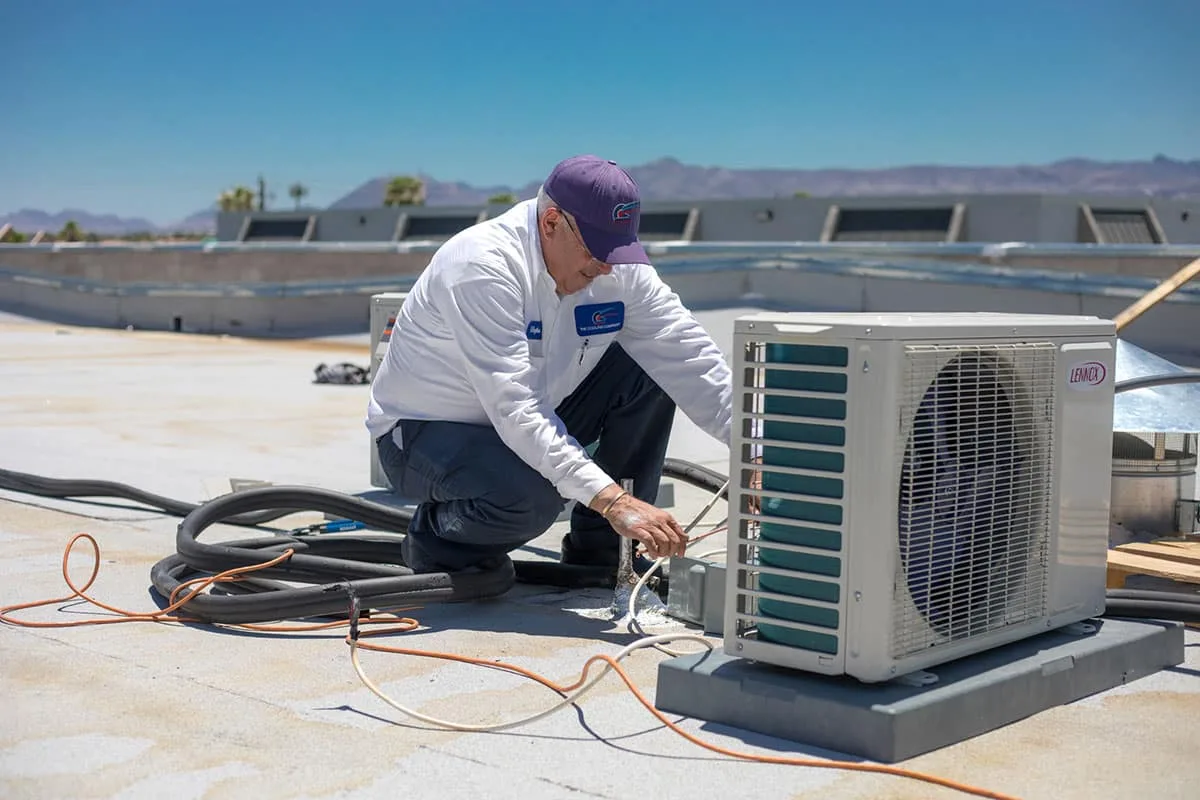
Many Las Vegas homes were built with a PRV installed at original construction. If your home was built in the 1990s or 2000s, that PRV may be 20 to 30 years old — well past its service life. A failed PRV passes full municipal pressure straight through to the house plumbing. Here is how to tell it has given up:
- Sudden onset of symptoms: Everything was fine for years, then suddenly you have water hammer, running toilets, and dripping faucets. The PRV held pressure down for a long time and then failed. The transition can be gradual or happen almost overnight when the diaphragm tears.
- Pressure gauge reads the same on both sides: If you test pressure at a hose bib (downstream of the PRV) and get a reading above 80 PSI, the PRV is either failed, out of adjustment, or not present. A working PRV set to 55 PSI should read close to 55 PSI downstream regardless of what the street pressure is doing.
- Visible corrosion or weeping at the PRV body: Look at the valve itself, usually located near the main shutoff where the water line enters the house. If you see green corrosion, mineral buildup, or water weeping around the adjustment bolt or body seams, the valve is failing internally.
- T&P relief valve on your water heater discharges: The temperature and pressure relief valve on your water heater is a safety device that opens when pressure exceeds 150 PSI or temperature exceeds 210 degrees Fahrenheit. If you see water dripping or flowing from the T&P discharge pipe, and the water heater thermostat is set correctly, excessive incoming pressure — passed through a failed PRV — is a likely cause. This is a safety issue that needs same-day attention.
How to test your water pressure
This is a test any homeowner can do in under a minute. Buy a hose-bib pressure gauge from Home Depot, Lowe's, or any hardware store — they run about $8 to $12 and screw directly onto any standard outdoor hose faucet.
Step 1: Make sure no water is running anywhere in the house. Turn off the dishwasher, washing machine, and any irrigation timers. You want a static pressure reading.
Step 2: Thread the gauge onto a hose bib (outdoor faucet) and hand-tighten it.
Step 3: Open the faucet fully and read the gauge. The needle will jump to your static pressure and hold.
Step 4: Interpret the reading:
- 40 to 60 PSI: Normal range. Your PRV is working correctly, or you are in a rare low-pressure zone.
- 60 to 80 PSI: Acceptable but on the high side. Monitor for symptoms. A PRV adjustment may help.
- 80 to 100 PSI: Too high. If you have a PRV, it needs adjustment or replacement. If you do not have one, you need one installed.
- 100+ PSI: Dangerously high. Active damage is occurring to your plumbing system. Address this promptly.
For the most accurate picture, test at different times of day. Municipal pressure fluctuates — it typically peaks during low-demand hours (late night and early morning) and drops during peak use (early evening). A reading of 85 PSI at 6 PM may climb to 110 PSI at 2 AM. The highest pressure is the number that matters because that is the pressure your system endures while you sleep.
PRV installation and replacement costs
PRV work is straightforward plumbing. Here is what it costs in Las Vegas as of 2026:
- New PRV installation (no existing valve): $350 to $650. Includes the valve ($40 to $120 for a quality Watts or Zurn unit), fittings, and 1 to 2 hours of labor. Location matters — a PRV on an accessible water line near the meter is simpler than one buried behind drywall in a utility closet.
- PRV replacement (existing valve): $250 to $500. Faster because the plumbing connections already exist. Cut out the old valve, solder or press-fit the new one in place, set the pressure, and test.
- Thermal expansion tank (often required with PRV): $150 to $300 installed. When a PRV creates a "closed system" — preventing backflow into the municipal supply — heated water has nowhere to expand. A small expansion tank on the water heater cold-water inlet absorbs that pressure safely. Clark County building code typically requires one when a PRV is installed or replaced.
Compare those numbers to the cost of the damage high pressure causes: a burst washing machine hose can cause $5,000 to $20,000 in water damage. A failed water heater floods a garage or utility room. Chronic leaks behind walls create mold. A $400 PRV installation is one of the highest-return investments in residential plumbing.
What high pressure does to your water heater
Water heaters take the worst beating from excessive pressure, and they are one of the most expensive fixtures to replace. Here is the specific damage:
- Tank stress: A standard residential tank water heater is rated for 150 PSI maximum working pressure. That sounds like plenty of headroom above 80 PSI municipal supply, but thermal expansion changes the math. When the burner heats 40 or 50 gallons of water and a failed PRV has created a closed system, pressure inside the tank can spike well above the incoming static pressure. Repeated pressure cycling fatigues the tank lining and welds.
- T&P relief valve cycling: The relief valve opens repeatedly to dump excess pressure, wasting hot water and eventually failing to reseat properly — which then creates a steady leak or, worse, a relief valve that cannot open when it is actually needed.
- Supply line and fitting failure: Flexible supply lines and threaded fittings on the water heater are rated for 80 PSI. At 110 PSI, the braided stainless supply hose expands under pressure and the rubber liner inside degrades faster. A burst supply line on a water heater releases 40 to 50 gallons immediately, plus continuous flow until someone shuts the main off.
- Shortened lifespan: A water heater that should last 10 to 12 years in Las Vegas (already shorter than the national average due to hard water) may last only 5 to 7 years when operating under chronic high pressure. That is a $1,200 to $2,500 replacement cost that a $400 PRV would have prevented.
If your water heater is showing early signs of trouble, visit our water heater repair page. We diagnose pressure-related damage as part of every water heater service call.
PRV maintenance and lifespan
A PRV is not a set-it-and-forget-it part. In Las Vegas conditions, annual testing is the right interval. Test the downstream pressure with a gauge once a year — if it has crept above your target setting, the valve needs adjustment or replacement. Most PRV failures are gradual. The diaphragm stiffens, the spring weakens, and the outlet pressure creeps up a few PSI per year until it is no longer reducing anything meaningful.
Hard water accelerates PRV wear significantly. Calcium and magnesium scale deposits on the valve seat prevent the diaphragm from seating fully, allowing pressure to creep through. In areas with particularly aggressive water chemistry — and Las Vegas qualifies — some plumbers recommend replacing the PRV proactively every 8 to 10 years rather than waiting for symptoms to appear. Given that a replacement costs $250 to $500 and the damage from a failed PRV can run into thousands, the math works.
Including a PRV pressure check in your annual maintenance plan is the simplest way to catch a failing valve before it causes downstream damage.
Frequently Asked Questions
How do I know if my Las Vegas home already has a pressure reducing valve?
Look at the main water line where it enters your home, usually near the water meter or main shutoff valve. A PRV is a bell-shaped or cone-shaped brass fitting, typically 3 to 4 inches long, with a bolt or screw on top for adjustment. If you see only a straight pipe from the meter to the house with a shutoff valve and nothing else, you likely do not have one. Homes built after the mid-1990s in Las Vegas were generally required to have a PRV at installation, but older homes and some builder-grade installations may not have one.
What PSI should my PRV be set to?
For most Las Vegas homes, 50 to 60 PSI is the right range. Two-story homes with fixtures on the upper floor may benefit from the higher end of that range (55 to 60 PSI) to maintain adequate flow upstairs. Single-story homes do well at 50 PSI. Setting the PRV below 40 PSI can result in weak flow at fixtures and poor appliance performance. Above 80 PSI defeats the purpose of having the valve.
Can high water pressure cause a slab leak?
Yes. Copper pipes embedded in or under a concrete slab flex under pressure changes. Chronic high pressure accelerates wear at bends, joints, and any point where the pipe contacts the concrete or rebar. Combined with Las Vegas hard water, which corrodes copper from the inside, high pressure significantly increases slab leak risk. Many of the slab leak repairs we perform in the valley trace back to homes running without a functional PRV.
Is a PRV required by code in Las Vegas?
The Uniform Plumbing Code requires a PRV when the incoming water pressure exceeds 80 PSI. Since most Las Vegas neighborhoods receive water well above that threshold, a PRV is effectively required for the majority of new construction. Existing homes that predate the requirement are not forced to retrofit, but the practical need is the same. If your incoming pressure exceeds 80 PSI — and in Las Vegas it almost certainly does — a PRV is not optional, it is essential protection for your entire plumbing system.
How long does it take to install a PRV?
A straightforward PRV installation on an accessible main water line takes 1 to 2 hours. If a thermal expansion tank is added at the same time — which is standard practice — add another 30 to 45 minutes. Replacement of an existing failed PRV is typically faster, around 45 minutes to 1.5 hours. The water supply is shut off during the work, so plan accordingly.
Protect your Las Vegas plumbing
The Cooling Company is a licensed plumbing and HVAC contractor serving Las Vegas, Henderson, and North Las Vegas. We install, replace, and adjust pressure reducing valves every week and include pressure testing as part of our standard plumbing diagnostics. If you are seeing the warning signs — banging pipes, running toilets, premature fixture failure, or a water heater that is aging too fast — call (702) 567-0707 to schedule a pressure test. Visit our plumbing services, water heater repair, or maintenance plans pages to learn more. Upfront pricing. Licensed technicians. No surprises.