

Short answer: Las Vegas homeowners should service their AC twice per year, set thermostats to 78 degrees F when home, replace units older than 15 years or requiring repairs exceeding 50 percent of replacement cost, and use MERV 8-11 filters changed monthly during summer. For system replacements, always get written estimates, verify contractor licensing, and ensure sizing follows ACCA Manual J calculations.
Las Vegas puts extraordinary demands on HVAC systems. Summer temperatures regularly exceed 115 degrees F, and your air conditioner may run 10 to 16 hours per day from May through September. That workload means homeowners here face questions that people in milder climates never consider. Below are the most common HVAC questions we hear from Las Vegas, Henderson, and North Las Vegas residents, along with direct answers from our licensed technicians.
How Often Should I Service My AC in Las Vegas?
Schedule professional AC maintenance twice per year: once in early spring before cooling season and once in fall before heating season. In Las Vegas, the spring tune-up is critical. Your system is about to handle five months of near-continuous operation, and a technician can catch refrigerant leaks, worn capacitors, and dirty coils before they cause a mid-July breakdown.
Between professional visits, check your air filter monthly and replace it when it looks gray or clogged. For a step-by-step guide to what technicians inspect, see our HVAC maintenance checklist. During peak summer, most Las Vegas homes need a new filter every 30 days due to dust and continuous airflow.
What Temperature Should I Set My Thermostat?
The U.S. Department of Energy recommends 78 degrees F when you are home and awake. In Las Vegas, this is a practical target that balances comfort and energy costs. For every degree you lower the thermostat below 78, expect roughly a 3 percent increase in your cooling bill.
When you leave for work, raise the thermostat to 85 degrees F rather than turning the system off entirely. Shutting the AC off in a Las Vegas summer forces the unit to work much harder to recover, which uses more energy than maintaining a higher set point. A programmable or smart thermostat automates this and can reduce cooling costs by 10 to 15 percent annually. Learn more in our guide to smart thermostat energy savings.
What About Nighttime Settings?
Desert temperatures drop significantly after sunset. Set your thermostat to 75 to 78 degrees F at night. If you use ceiling fans, you can keep the thermostat a few degrees higher and still sleep comfortably.
When Should I Replace My AC vs. Repair It?
Use the 50 percent rule: if a repair costs more than 50 percent of the price of a new system, replace it. Also consider replacement if your unit is over 15 years old, uses R-22 refrigerant (phased out and expensive), or requires frequent repairs. In Las Vegas, a system that breaks down twice in one summer is telling you it cannot handle the heat load anymore.
For a detailed cost breakdown, see our HVAC pricing guide.
Other signs that point toward AC replacement rather than repair:
- Energy bills have increased steadily over the past two to three years with no change in usage
- Some rooms stay significantly warmer than others despite ductwork being intact
- The system uses R-22 Freon, which now costs $100 to $200 per pound
- Your unit has a SEER rating below 14 (current minimum standard is 15 for the Southwest)
What Size AC Do I Need for My Las Vegas Home?
AC sizing is measured in tons, and the correct size depends on far more than square footage. A qualified contractor performs a Manual J load calculation that accounts for your home's insulation, window orientation, ceiling height, ductwork condition, number of occupants, and local climate data. In Las Vegas, most homes need between 3 and 5 tons of cooling capacity.
An oversized unit short-cycles, which means it turns on and off frequently without completing a full cooling cycle. This wastes energy, fails to dehumidify properly, and wears components faster. An undersized unit runs constantly and never reaches the set temperature. Both scenarios increase your utility bills and shorten equipment life. This is why ACCA Manual J calculations matter, and why you should be skeptical of any contractor who sizes your system based on square footage alone.
Use our energy savings calculator to estimate your potential savings.
How Long Do AC Units Last in Las Vegas?
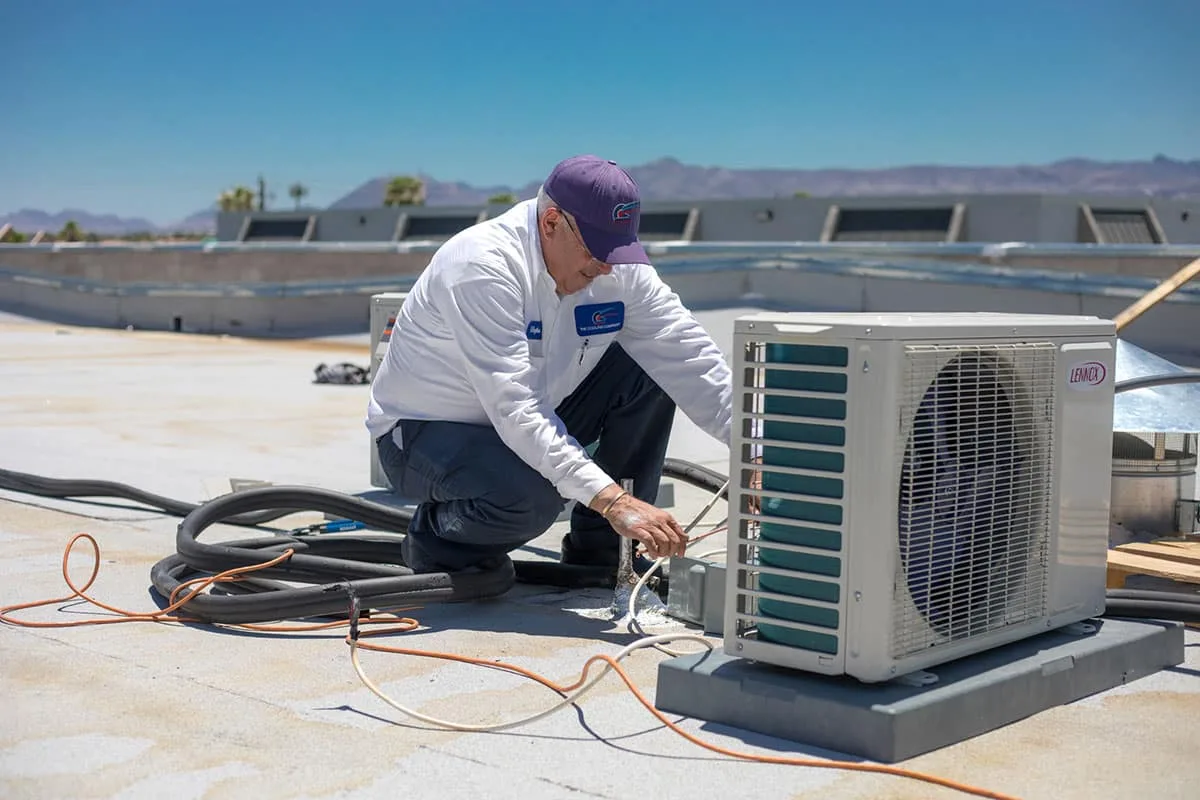
The national average lifespan for a central air conditioner is 15 to 20 years. In Las Vegas, expect 12 to 15 years with proper maintenance. The extreme heat, UV exposure, and dust reduce equipment life compared to milder climates. Units that are poorly maintained or incorrectly sized may fail in as few as 8 to 10 years.
Factors that extend your system's life in the desert:
- Twice-yearly professional maintenance
- Monthly filter changes during summer
- Shade structures or awnings over the outdoor condenser unit
- Keeping the area around the condenser clear of debris, rocks, and landscaping
- Prompt repair of minor issues before they cascade into major failures
Why Is My AC Running Constantly?
In Las Vegas, some continuous running is normal on days above 110 degrees F. However, if your AC runs nonstop on moderate days (95 to 100 degrees F) and struggles to maintain the set temperature, there is likely a problem. Common causes include:
- Low refrigerant: A leak reduces cooling capacity and forces the compressor to run longer
- Dirty condenser coils: Desert dust and debris insulate the coils, blocking heat transfer
- Undersized system: The unit lacks the capacity for your home's heat load
- Duct leaks: Cooled air escapes into the attic before reaching your living spaces, and attic temperatures in Las Vegas can exceed 150 degrees F
- Aging equipment: Compressors and fans lose efficiency over time
- Poor insulation: Heat infiltration overwhelms the system's capacity
If your AC runs continuously, schedule an AC repair appointment. Our AC repair guide explains what to expect during a service call. A technician can diagnose the specific cause and recommend the most cost-effective solution.
What Is the Best Air Filter for Las Vegas Dust?
Use a pleated filter rated MERV 8 to MERV 11. This range captures dust, pollen, mold spores, and pet dander effectively without restricting airflow to the point where your system works harder. MERV 13 and higher filters provide superior filtration but can reduce airflow in older systems not designed for that resistance. Check with your technician before upgrading beyond MERV 11.
In Las Vegas, dust is a year-round challenge. Haboobs, construction activity, and desert winds load filters faster than in most cities. During summer, inspect your filter every two to three weeks and replace it when it appears gray or clogged. A dirty filter forces the blower motor to work harder, increases energy consumption, and can cause the evaporator coil to freeze.
Do I Need a Humidifier in Las Vegas?
Las Vegas humidity regularly drops below 10 percent in summer. This extreme dryness causes cracked wood furniture, static electricity, dry skin, and irritated sinuses. A whole-home humidifier integrated with your HVAC system adds controlled moisture to the air as it circulates. Target indoor humidity between 30 and 45 percent for comfort and health.
A humidifier is not essential for every home, but it is worth considering if you experience frequent nosebleeds, notice gaps in hardwood flooring, or find static shocks are a daily occurrence. Consult with your heating technician about whether a whole-home unit or portable humidifiers best suit your situation.
Should I Consider a Heat Pump for Las Vegas?
Heat pumps are an excellent option for Las Vegas. They provide both cooling and heating from a single unit, and modern heat pumps operate efficiently even at desert temperature extremes. Because Las Vegas winters are mild, a heat pump handles heating season easily without a backup furnace in most cases. High-efficiency heat pumps can also reduce energy costs compared to a traditional AC and furnace combination.
You may qualify for federal tax credits that reduce your upfront cost.
Learn more about our heat pump installation services and whether a heat pump is the right fit for your home.
10 Questions to Ask Before Replacing Your HVAC System
When it is time for a full system replacement, ask these questions before signing any contract:
- Has an energy assessment been performed? A professional energy assessment checks for leaks, insulation gaps, and ductwork issues that affect your new system's performance. Fix these first to get the most from your investment.
- What type of system does my home need? Central AC, heat pump, or ductless mini-split? The right choice depends on your home's layout, existing ductwork, budget, and whether you need both heating and cooling.
- Is the contractor qualified? Verify Nevada contractor licensing, insurance, bonding, and NATE certification. Ask for references and check online reviews.
- Have I contacted references? Speak with previous customers about work quality, timeliness, and professionalism before committing.
- Does the contractor carry proper insurance and licensing? Confirm coverage protects you from liability during installation. Check with the Nevada State Contractors Board.
- Is the system sized using Manual J calculations? Reject any contractor who sizes your unit based solely on square footage. Proper ACCA Manual J load calculations are the industry standard.
- Is my ductwork in good condition? Leaky or deteriorated ducts waste 20 to 30 percent of conditioned air. Address duct issues before or during installation.
- Is the estimate detailed and in writing? Get written estimates from at least three contractors. Each estimate should itemize equipment, labor, permits, and warranty terms.
- Will the contractor pull the required permits? Legitimate contractors handle permits for your AC installation. Unpermitted work can create problems when you sell your home.
- What maintenance will the new system require? Budget for biannual AC maintenance from day one. Consistent upkeep protects your warranty and extends equipment life.
Need HVAC Service in Las Vegas?
The Cooling Company provides expert HVAC service throughout Las Vegas, Henderson, and North Las Vegas. Our licensed technicians deliver honest assessments, upfront pricing, and reliable results.
Call (702) 567-0707 or visit AC repair, maintenance, heating, or installation for details.