

Short answer: Learn HVAC maintenance tips for Lennox defrost sensors to prevent ice buildup by diagnosing and replacing faulty sensors before winter; learn how today.
Check Lennox defrost sensors now to avoid ice buildup, energy waste, and freezer failures this winter. Test the probe resistance, inspect mounting and connectors, and log readings. Replace corroded probes and poor connectors. Adaptive controls can cut defrost runs and save energy in high-use cold rooms.
Key Takeaways
- Use a room-by-room Manual J load calculation (not a square-foot rule).
- Select equipment with Manual S and verify ducts with Manual D for comfort and efficiency.
- Avoid oversizing: short-cycling wastes fuel and can create uneven temperatures.
Why check Lennox defrost sensors before winter?
Winter brings higher refrigeration duty for many stores and kitchens. When load rises, weak sensors, loose connectors, and degraded mounting are more likely to show faults. A seasonal check finds these faults when you can plan the repair. Planned checks cut the chance of product loss, emergency service calls, and overnight shutdowns.
A bad sensor can cause extra defrost cycles or missed defrosts. Extra cycles add run time and heat. That heat stresses compressors and increases bills. Skipped defrosts let ice build on coils. Ice reduces cooling capacity and raises pull-down times. Treating this inspection as preventive insurance is a low-cost step to avoid bigger bills in cold months.
Most sites benefit from a pre-winter walk-through. Team members can log readings, note loose clamps, and set aside parts. That preparation shortens service time and limits lost sales or spoiled product if a sensor fails during peak hours.
What happens if sensors fail?
When a sensor fails, the controller gets wrong temperature data. It may start too many defrost cycles or skip needed ones. Both outcomes harm capacity and raise energy use. In walk-in freezers, this can lead to ruined stock and urgent repairs.
Staff often notice frost, longer pull-down times, or product warming before a tech arrives. Those signs point to sensor or control issues. Catching the sensor problem early can avoid a full compressor or evaporator repair.
How often should you inspect sensors?
Inspect sensors at least twice a year for commercial sites and quarterly for high-use locations. Seasonal checks before winter and summer help spot wear caused by humidity and heavy load swings.
Record each check and track resistance trends. Trend logs catch slow drift. For high-risk sites, keep a spare probe on site. A spare avoids long downtime when a failing sensor causes an emergency during peak hours.
How do Lennox defrost sensors work?
Sensors sit on the evaporator coil or suction line to sense surface temperature. The controller reads sensor resistance and uses that number to decide when to start or stop a defrost cycle. Accurate readings allow adaptive controls to run fewer, shorter defrost events than fixed-time programs.
Different Lennox models use distinct probe types and resistance curves. Some models use thermistors, while others use RTDs such as PT100 or PT1000. Matching the sensor curve to the controller input is essential for reliable defrost logic and consistent operation.
What is a Lennox defrost sensor?
A Lennox defrost sensor is a temperature probe that reports coil temperature to the control board. The board expects a specific resistance-versus-temperature curve. If the probe type does not match the controller, readings will be wrong and the defrost logic will behave poorly.
Sensors usually come as a small metal capsule with lead wires and a mounting clamp. Proper thermal contact and secure wiring are as important as probe type for accurate readings.
How do thermistors and RTDs differ?
Thermistors are low-cost and exhibit a nonlinear resistance change with temperature. They work well in many cases but can drift faster than RTDs. RTDs, such as PT100 or PT1000, change resistance nearly linearly and typically stay stable longer.
Each type requires the controller to use the right conversion curve. Mixing types on one input yields wrong readings and poor defrost control. Always confirm the expected sensor type from the unit documentation before replacing a probe.
What causes defrost sensors to fail?
Sensors commonly fail from corrosion, moisture intrusion, or mechanical damage due to vibration. Thermal cycling can crack solder joints and weaken lead wires. Poor mounting or old adhesive can leave air gaps that cause readings to lag or jump compared to the coil surface.
Outdoor or coastal sites face faster corrosion and seal failure than dry indoor locations. Washdown areas and sites using harsh cleaners also shorten probe life. Operators should pick probes and connectors rated for their site conditions to reduce these failures.
Which failure modes cause extra defrost cycles?
High or intermittent resistance often looks like a cold coil. That false reading can trigger unnecessary defrosts. Open circuits may disable adaptive logic and force default timed defrosts. Loose connectors and poor thermal contact are common causes.
Vibration or a weak clamp lets the probe move away from the coil. That motion causes false temperature readings that confuse the controller. Fixing mounting and contact is a low-cost move that often stops extra defrost cycles.
Can wiring faults mimic bad sensors?
Yes. Corroded connectors, damaged conductors, or poor splices can show as high resistance or open circuits. Shield damage or stray shorts cause intermittent readings that look like probe failure. Bench testing the sensor often rules out harness problems.
Tracing the harness back to the controller is key. Verify continuity, check grounds, and swap connectors before replacing a probe. Many unnecessary replacements happen because the wiring, not the probe, was the fault.
How do you diagnose sensor problems?
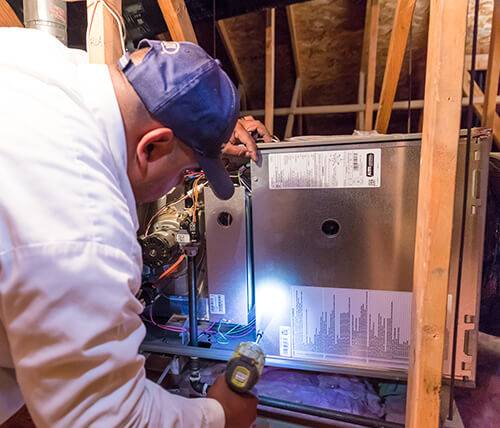
Begin with a visual inspection of the probe, clamp, wiring, and connector. Look for green corrosion, brittle insulation, or pinched wires. Cleaning and reseating connectors often restores contact and avoids a part swap.
Next, measure resistance at a known temperature, typically 25°C (77°F). Compare values to the Lennox resistance-temperature table for that sensor type. If the reading matches the table, then trace wiring and check the controller input for faults.
What tools do technicians need?
A reliable multimeter with low-ohm accuracy is essential for resistance checks. A calibrated contact thermometer or dry-block provides a solid temperature reference for the probe. A clamp meter is helpful for verifying circuit currents during broader troubleshooting.
Technicians should also carry insulated hand tools, connector grease or contact cleaner, replacement terminals, and a spare sensor of the correct type. These items speed repairs and reduce downtime.
How to read resistance and voltage readings?
Measure resistance at the sensor pins with the harness disconnected to isolate the probe. Use the Lennox table to interpret the reading at the measured temperature. If the probe reads within tolerance, the cable or controller is likely at fault.
Voltage checks at the controller input confirm proper supply and absence of shorts. Low supply or leakage to ground can skew readings. Always de-energize when possible and follow lockout-tagout procedures for safety during tests.
What diagnostic steps isolate sensor vs control issues?
Test the sensor on the bench and verify resistance at known temperatures to confirm probe health. Then measure at the controller to check wiring continuity and connector condition. If the controller input reads differently from the bench reading, suspect wiring or the control input.
Swap in a known-good probe if you have one. If the controller still shows wrong values with a good probe, the board input may be at fault and needs further testing or replacement.
When should you repair versus replace sensors?
Replace sensors when resistance drifts beyond OEM tolerance, the capsule shows corrosion, or lead wires are damaged. Repair or re-mount when the probe reads in spec but mounting is poor. Re-mounting is a low-cost fix that often restores proper operation.
Consider downtime costs and product risk when deciding. Critical freezers and high-value stores should favor replacement and keeping a spare on hand. Lower-risk display cases can often be re-mounted and monitored before swapping parts.
What is typical sensor lifespan in commercial units?
Sensor life varies by type and environment. Typical ranges are three to ten years. Thermistors are cheaper but may drift earlier. RTDs tend to remain accurate longer in stable cold environments.
Sites with heavy humidity, coastal salt, or aggressive washdown shorten sensor life. Proper installation and sealed connectors extend life. Logging resistance trends helps catch slow drift and avoid failures during busy periods.
How much do replacements cost?
Basic OEM thermistors usually cost $25 to $75. RTDs and sealed probes range from $75 to $200. Smart sensors with diagnostics and network outputs can cost $200 to $600 depending on features and connector style.
Labor varies with access and location, but many sensor swaps take an hour or less for experienced techs. Always include downtime and product risk when estimating total repair expense.
How do you choose sensors and plan retrofits?
Match the sensor type to the controller input and the expected resistance curve first. Then choose IP rating, connector style, and mounting that suit the environment. A sealed probe with strain relief is vital for humid or wet sites.
Evaluate diagnostic needs and payback for smart sensors. Large stores and cold-storage sites often see faster ROI from adaptive controls. Smaller sites usually get the best value from rugged analog probes and good mounting practice.
Which sensor type suits cold storage?
Cold storage often benefits from RTDs for long-term accuracy at low temperatures. PT100 or PT1000 probes keep calibration and show less drift in steady cold environments. Choose sealed probes and solid strain relief to resist condensation and handling damage.
Make sure the chosen probe matches the controller input. If a retrofit requires a different probe type, consider adding a compatible input module or use a converter when feasible.
How to estimate energy savings and payback?
Log current defrost cycles and calculate kWh per defrost to get annual defrost energy. Estimate reductions from adaptive controls based on current settings and measured cycle counts. Many sites see 10% to 50% fewer defrosts depending on conditions.
Use our energy savings calculator to estimate your potential savings.
Divide upgrade cost by annual energy and maintenance savings to estimate simple payback years. Include avoided product loss and lower emergency service fees for a fuller ROI picture. That full view often shortens the payback time.
What maintenance and documentation should you keep?
Regular checks and clear records cut downtime and speed repairs. Inspect sensors every three to six months and log resistance trends to detect drift. Clean connectors, secure clamps, and renew thermal adhesive during planned downtime.
Keep a spare sensor for each critical evaporator and note part numbers for quick reorder. Good documentation includes the Lennox unit manual, controller wiring diagrams, and the sensor resistance-temperature table. Store these for fast reference.
What maintenance steps reduce sensor failures?
Secure sensor clamps tightly and avoid sharp bends in probe leads near the capsule. Replace dried thermal adhesive and use sealed clips when re-mounting. Clean and lightly grease connectors to prevent corrosion, especially in humid sites.
Make sensor checks a routine part of preventive maintenance. Mark probe health in the unit log so slow drift is visible over time. These steps catch wear before failure and reduce emergency repairs.
What documentation should you keep on file?
Store the Lennox unit manual, controller wiring diagram, and sensor resistance tables either on site or in a shared drive. Note part numbers, connector types, and cross-reference details for replacement parts.
Keep service dates and readings in the unit history. Photograph probe locations and harness routes during service. Those images help techs avoid mistakes when replacing probes and speed restoration.
What safety steps matter during testing?
Use lockout-tagout when accessing control panels. Avoid live work near moving fans and de-energize when possible. Use meters rated for the system voltage and wear eye protection when cleaning corroded connectors.
If you are unsure of panel work, call a licensed HVAC/R technician. Safety actions prevent injury and protect control boards from accidental shorts.
How can The Cooling Company help me now?
For Las Vegas area customers, The Cooling Company offers factory-authorized Lennox service, diagnostics, and sensor swaps. Expert techs test probes, inspect wiring, and give clear quotes for replacement or retrofit work.
Same-day help is often available for urgent freezer failures. Call The Cooling Company at (702) 567-0707 to get prioritized service in Las Vegas, Henderson, or North Las Vegas. Technicians can dispatch with common sensor SKUs, supply OEM parts, and plan smart-sensor retrofits to cut defrost energy and prevent product loss.
What should you ask when scheduling a site visit?
Ask the technician to verify sensor type, measure resistance at 25°C, and test the controller input. Request a report with readings, event logs, and recommended next steps. Those items help you track health and plan parts.
Also ask for estimated downtime, part lead times, and warranty terms to prepare for the job. Have unit model and serial numbers ready to speed diagnosis and parts sourcing. That detail helps techs bring the right probe on the first trip.
How fast can The Cooling Company respond to emergencies?
Response windows vary by call volume and time of day. The Cooling Company aims for fast dispatch for urgent freezer failures and often carries common sensor SKUs. Calling (702) 567-0707 and describing the product risk helps prioritize your job.
Technicians stage parts and tools to limit downtime. For critical food loss risk, ask for emergency dispatch and note any access constraints when you call.
Final checklist before winter?
Verify sensor type and resistance at ambient temperature for each evaporator. Check connectors for corrosion, confirm clamp tightness, and renew thermal adhesive if needed. Ensure proper strain relief and secure routing to avoid chafing and water traps.
Keep at least one spare sensor per critical freezer and record part numbers for quick reorder. Consider adaptive controls and smart sensors for high-risk or high-value sites. Those upgrades can reduce defrost energy and prevent emergency repairs.
Call to action
Las Vegas area readers: call The Cooling Company at (702) 567-0707 to book a Lennox defrost sensor check, on-site diagnosis, or an adaptive retrofit. Service areas include Las Vegas, Henderson, and North Las Vegas. The team can test sensors, replace parts, and provide savings estimates.
If you are outside our service area, ask local contractors for NATE-certified technicians and confirm Lennox authorization before hiring. Request the expected sensor type and the resistance table to avoid mismatched parts and control logic errors.
You Might Also Like
Keep learning to make better repair and upgrade choices. Read guides on repair costs, common smells, and furnace fixes to compare service needs. Consulting qualified pros helps you match repairs to your business risk and budget.
Thinking through options before work starts saves time and money. Keep records, ask for parts details, and plan retrofits during slow seasons to cut disruption and get the best pricing.
Related reading: what to explore next?
This aspect deserves careful consideration as you evaluate your options. Understanding the details helps you make more informed decisions. Consulting with qualified professionals provides additional insights specific to your situation.
Take time to consider how this information applies to your particular needs and circumstances. Making well-informed choices typically leads to better long-term outcomes and greater satisfaction.
Sources and notes: content follows Lennox control practices and standard refrigeration diagnostics. For general cooling energy guidance see the U.S. Department of Energy guidance on cooling and efficiency at Energy Saver. For indoor environment considerations consult the EPA indoor air quality resources at EPA Indoor Air Quality. For HVAC/R technician standards, consult ASHRAE materials at ASHRAE technical resources. For commercial HVAC best practices see the Better Buildings Solution Center reference on HVAC technologies at Better Buildings HVAC solutions.
About The Cooling Company
The Cooling Company has been serving the Las Vegas valley with professional HVAC services for over a decade. Our team of licensed, NATE-certified technicians specializes in air conditioning repair, heating system maintenance, and complete HVAC installations. We're committed to providing honest, reliable service with upfront pricing and a 100% satisfaction guarantee on all work performed.
- Phone: (702) 567-0707
- Reviews: 4.8/5 stars (780+ reviews) - See reviews
Service Areas
We proudly serve homeowners and businesses throughout the Las Vegas metropolitan area, including Las Vegas, Henderson, and North Las Vegas. Our service technicians are available for same-day appointments in most areas, with emergency service available 24/7 for urgent HVAC issues.
References
- U.S. Department of Energy (Energy.gov) (accessed 2026-01-02)
- U.S. Environmental Protection Agency (EPA) (accessed 2026-01-02)
- ASHRAE (Standards and guidance) (accessed 2026-01-02)
- ENERGY STAR (Heating & cooling) (accessed 2026-01-02)
Related reading: Lennox defrost board errors, and Lennox heat pump repair guide.
Need HVAC Service in Las Vegas?
The Cooling Company provides expert HVAC service throughout Las Vegas, Henderson, and North Las Vegas. Our licensed technicians deliver honest assessments, upfront pricing, and reliable results.
Call (702) 567-0707 or visit heating, furnace repair, heat pump installation, or heating maintenance for details.