


Short answer: Discover HVAC maintenance tips to optimize your Lennox dual fuel setup and save hundreds on energy this winter so you can keep bills lower starting now.
A Lennox dual‑fuel system pairs an electric heat pump with a gas or propane furnace and smart controls. The heat pump heats in mild weather for better efficiency. The furnace starts in deep cold to protect comfort and reduce electric demand during spikes. (ASHRAE Technical Resources)
Key Takeaways
- Use a room-by-room Manual J load calculation (not a square-foot rule).
- Select equipment with Manual S and verify ducts with Manual D for comfort and efficiency.
- Avoid oversizing: short-cycling wastes fuel and can create uneven temperatures.
What is a Lennox dual fuel system?
A Lennox dual‑fuel system links a variable‑speed heat pump to a gas or propane furnace. Lennox models often communicate with iComfort thermostats and compatible air handlers. The goal is a coordinated control sequence that runs the most efficient heat source for current outdoor conditions and cost inputs.
A typical sequence lets the heat pump run in milder weather and the furnace take over at an installer‑selected swapover temperature. When the heat pump runs alone it provides both heating and cooling, plus dehumidification benefits in warm months. Proper wiring and compatible controls are required to prevent the two sources from fighting each other.
How does a heat pump work in winter?
Heat pumps move heat from outdoor air into the house using a refrigerant cycle. Even cold air holds usable heat down to quite low temperatures with modern cold‑climate designs. Variable‑speed compressors adjust capacity to match load, which improves comfort and reduces cycling.
In practice, the outdoor coil absorbs heat and the indoor coil releases it to the living space. Longer, steadier runs at reduced speed benefit humidity control and raise seasonal efficiency. That performance is why a heat pump can replace much furnace runtime in the right climate.
When does the furnace take over?
The furnace starts when the heat pump cannot meet the home’s load within the chosen efficiency threshold. Installers use a fixed outdoor temperature, runtime rules, or a cost calculator to select that swapover point. Typical temperatures fall between 30°F and 40°F, but they depend on climate and fuel prices.
Swapover logic includes timers and hysteresis to avoid rapid switching after defrost cycles or short term load spikes. Technicians tune these parameters during commissioning so the system runs smoothly and reliably in the homeowner’s local weather.
Thermostat compatibility and wiring
Lennox communicates with controls like iComfort to provide staged operation and coordinated swapover. Compatibility matters because some older thermostats cannot send the right signals to both the heat pump and furnace at once. Mismatched wiring can cause short cycling or simultaneous calls for heat from both units.
Always confirm thermostat model compatibility in the Lennox installation manual. If pairing a new Lennox heat pump with an older furnace, get written confirmation from the dealer that controls and warranties will remain valid.
How does swapover logic work?
Swapover logic decides which heat source runs and when. The simplest method uses a fixed outdoor temperature. More advanced controllers consider runtime, defrost cycles, and current fuel costs. Lennox communicating equipment and some iComfort thermostats can use outdoor sensors and staged logic to reduce switching and protect equipment.
Field tuning is important. Even a well‑designed control can perform poorly if not set for local load and occupancy patterns. Commissioning ensures swapover points, delays, and hysteresis are tuned for your home and your utility rates.
What swapover strategies exist?
Contractors commonly set fixed temperature swapover, runtime differential, or cost‑based switching. Fixed temperature is easy to set and understand. Runtime differential waits to see if the heat pump reaches setpoint before calling the furnace, which reduces unnecessary starts.
Cost‑based switching uses current electricity and fuel prices to choose the least expensive source. That method requires accurate tariff data and sometimes a communication link to the utility or a smart thermostat. Installers often use a hybrid approach to balance reliability and savings.
How does energy cost affect swapover temp?
Local rates can push the swapover warmer or colder. If electricity is expensive relative to gas, the system will favor furnace operation at higher outdoor temperatures. Conversely, low gas prices let the heat pump run deeper into winter before swapover.
Installers can calculate a crossover point using your bills and equipment efficiencies. Simple math compares the cost per useful heat unit from the heat pump (kWh divided by HSPF) to fuel cost adjusted by furnace AFUE. Ask your contractor for a modeled recommendation using your rates.
Use our energy savings calculator to estimate your potential savings.
What equipment and ratings matter?
Equipment selection and matching determine seasonal performance. Heat pump SEER and HSPF show cooling and heating efficiency. Furnace AFUE shows the fraction of fuel converted to heat. Matching indoor coils, air handlers, and communicating controls avoids lost efficiency and warranty issues.
Ask for AHRI match certificates and written confirmation of Lennox model pairings. Mismatched components can lower capacity, reduce efficiency, and in some cases void warranties. Properly matched systems deliver the performance assumed in payback calculations.
How to read SEER, HSPF and AFUE ratings?
SEER is a seasonal measure of cooling efficiency. Higher SEER uses less electricity for the same cooling. HSPF measures heat pump heating across a season. Higher HSPF gives more heating per kWh. AFUE reports furnace efficiency as a percentage; a 95% AFUE furnace converts 95% of fuel to heat under test conditions.
Use these ratings to compare operating costs across products. Remember that real‑world performance depends on installation quality, duct losses, and local climate. Ratings give a standardized baseline, not a final savings number.
What Lennox models support dual fuel?
Lennox offers variable‑speed heat pumps and communicating air handlers that work with iComfort and select furnaces. Cold‑climate heat pump models extend electric heating into lower temperatures and can change the economics of swapover points. Review Lennox literature and dealer guidance to confirm model compatibility.
If you plan to pair a new heat pump with an existing furnace, ask the dealer for written compatibility confirmation. That protects warranties and avoids control conflicts after installation.
Are Lennox retrofits compatible with existing ductwork?
Many retrofits reuse existing ducts after sealing and balancing. Ducts must provide adequate flow and low leakage for variable‑speed heat pumps to perform well. Technicians measure airflow and static pressure to confirm suitability and determine if register or return upgrades are needed.
Older systems often require targeted sealing and minor cabinet changes. In extreme cases a full duct replacement helps achieve the expected efficiency. Always request a duct test and a written plan before the installer proceeds.
How should a retrofit be sized and installed?
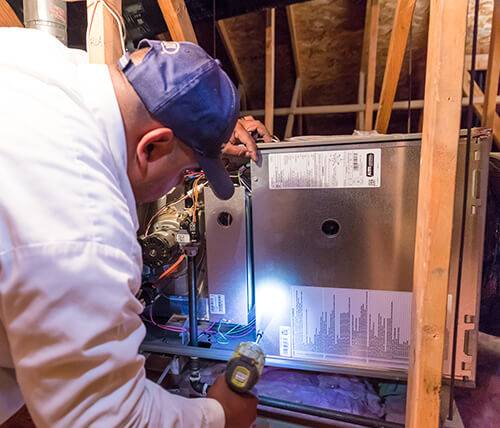
Correct sizing begins with Manual J load calculations and continues with Manual S equipment selection and Manual D duct design. These steps prevent oversizing, which causes short cycling and poor humidity control. Installers must verify airflow, correct refrigerant charge, combustion safety, and electrical capacity.
Commissioning is part of the install. It includes airflow measurements, refrigerant charge verification, and swapover testing. Documenting these steps helps with rebate applications and future warranty claims. Do not accept a contract without these tests and a commissioning report.
You may qualify for federal tax credits that reduce your upfront cost.
How to size equipment for dual fuel?
Sizing sets how much of the heating season the heat pump will cover. Many contractors size the heat pump to address 60–90% of peak hours. The furnace then handles extreme cold and peak loads. This balance reduces overall fuel runtime and keeps costs down.
Insist on a Manual J. Oversized heat pumps run short cycles and lose part‑load efficiency. Properly sized systems run longer at lower speeds, improving comfort and reducing energy use.
How to match heat pump capacity to furnace size?
The furnace should meet peak Manual J load so the home stays safe and comfortable during severe cold. Many installers size the furnace for peak loads even when the heat pump covers most hours. This practice prevents under‑capacity during multi‑day cold snaps.
Discuss staging and sequencing with your installer so the two systems do not operate against one another. Proper staging reduces wear on compressors and burners and keeps cycles orderly.
What ductwork checks are required?
Technicians measure supply and return flows and static pressure. Typical design airflow for many systems is near 350–450 cfm per ton, although your home may vary by coil and blower. Sealing major leaks is a priority to preserve system capacity and efficiency.
Balancing registers and improving return paths are common retrofit tasks. Ask for written airflow numbers in the commissioning report so future techs understand the design targets.
How much can homeowners expect to save?
Savings vary by climate, equipment efficiency, duct condition, and utility rates. In mild climates a heat pump can handle most heating and cut gas consumption significantly. In mixed climates the largest seasonal gains occur during shoulder months when the heat pump is most efficient.
Poor ductwork or mismatched controls can erase projected savings. A disciplined approach - Manual J, proper commissioning, and duct sealing - helps ensure the system meets modeled performance. Ask dealers for modeled annual costs using your utility bills.
How long is the payback period?
Payback often ranges from about four to twelve years. Mild climates, high‑efficiency equipment, and available incentives shorten payback. In colder regions without rebates, payback can take longer. Dealers should provide a local estimate using your energy bills and assumed fuel prices.
Ask for sensitivity cases showing different fuel price futures. That helps you understand payback risk if energy prices change in the coming years.
How do electricity and gas rates change savings?
Small differences in kWh and fuel prices can alter payback substantially. Higher electricity costs push swapover to the furnace at warmer temperatures, reducing heat pump runtime. Conversely, higher gas prices let the heat pump run deeper into winter.
Some utilities offer off‑peak rates or specific heat pump incentives. Ask your installer to model annual costs using current local tariffs and any time‑of‑use programs to which you have access.
Are rebates available for Lennox installs?
Many utilities and state programs provide rebates for high‑efficiency heat pumps and combined systems. Federal tax credits may also apply. Dealers can help gather required documents such as AHRI match numbers and commissioning reports.
Always check rebate rules and pre‑approval requirements before ordering equipment. Some programs require pre‑approval or specific installation steps to qualify. Ask if the dealer will handle rebate paperwork for you.
Installation and commissioning
Professional installation removes old equipment, places the new outdoor unit, and installs indoor coils or air handlers. Technicians run refrigerant lines, wire controls, and verify gas and electrical connections. They follow manufacturer manuals and local codes to ensure safety and performance.
Commissioning tests refrigerant charge, airflow, combustion safety, and swapover behavior. The installer documents readings and provides a report. That paperwork helps with rebates, warranties, and future service calls. Keep a copy in your home file.
What does installation and commissioning involve?
Installation includes physical placement, line sets, control wiring, and any duct repairs. Commissioning verifies Manual J results, airflow, refrigerant charge at operating conditions, and thermostat programming. Technicians also run combustion tests and confirm venting for the furnace.
A full commissioning report lists the measurements and settings used during startup. This record is essential for warranty disputes and rebate claims. Do not accept a system without documented test results.
Ready to get a dual fuel estimate?
If you are in the Las Vegas area and want a clear, local estimate, call The Cooling Company at (702) 567-0707. We serve Las Vegas, Henderson, and North Las Vegas with NATE‑certified technicians experienced in Lennox systems and dual‑fuel setups. Our team will run Manual J, test ducts, and present rebate‑ready paperwork.
For readers outside our area, ask any installer for NATE certification, Manual J load calculations, AHRI match numbers, and a written commissioning report. Those items show disciplined work and protect your investment. Request references and a detailed scope that includes permits and post‑install documentation.
You Might Also Like
This aspect deserves careful consideration as you evaluate your options. Understanding the details helps you make more informed decisions. Consulting with qualified professionals provides additional insights specific to your situation. Take time to consider how this information applies to your particular needs and circumstances. Making well‑informed choices typically leads to better long‑term outcomes and greater satisfaction.
- ac repair costs
- troubleshooting hvac odors
- ruud furnace problems
- trane furnace repair henderson
- how much to install hvac system in old house
About The Cooling Company
The Cooling Company has been serving the Las Vegas valley with professional HVAC services for over a decade. Our team of licensed, NATE-certified technicians specializes in air conditioning repair, heating system maintenance, and complete HVAC installations. We're committed to providing honest, reliable service with upfront pricing and a 100% satisfaction guarantee on all work performed.
- Phone: (702) 567-0707
- Reviews: 4.8/5 stars (780+ reviews) - See reviews
Service Areas
We proudly serve homeowners and businesses throughout the Las Vegas metropolitan area, including Las Vegas, Henderson, and North Las Vegas. Our service technicians are available for same-day appointments in most areas, with emergency service available 24/7 for urgent HVAC issues.
References
- U.S. Department of Energy (Energy.gov) (accessed 2026-01-01)
- U.S. Environmental Protection Agency (EPA) (accessed 2026-01-01)
- ASHRAE (Standards and guidance) (accessed 2026-01-01)
- ENERGY STAR (Heating & cooling) (accessed 2026-01-01)
Need HVAC Service in Las Vegas?
The Cooling Company provides expert HVAC service throughout Las Vegas, Henderson, and North Las Vegas. Our licensed technicians deliver honest assessments, upfront pricing, and reliable results.
Call (702) 567-0707 or visit heating, furnace repair, heat pump installation, or heating maintenance for details.