

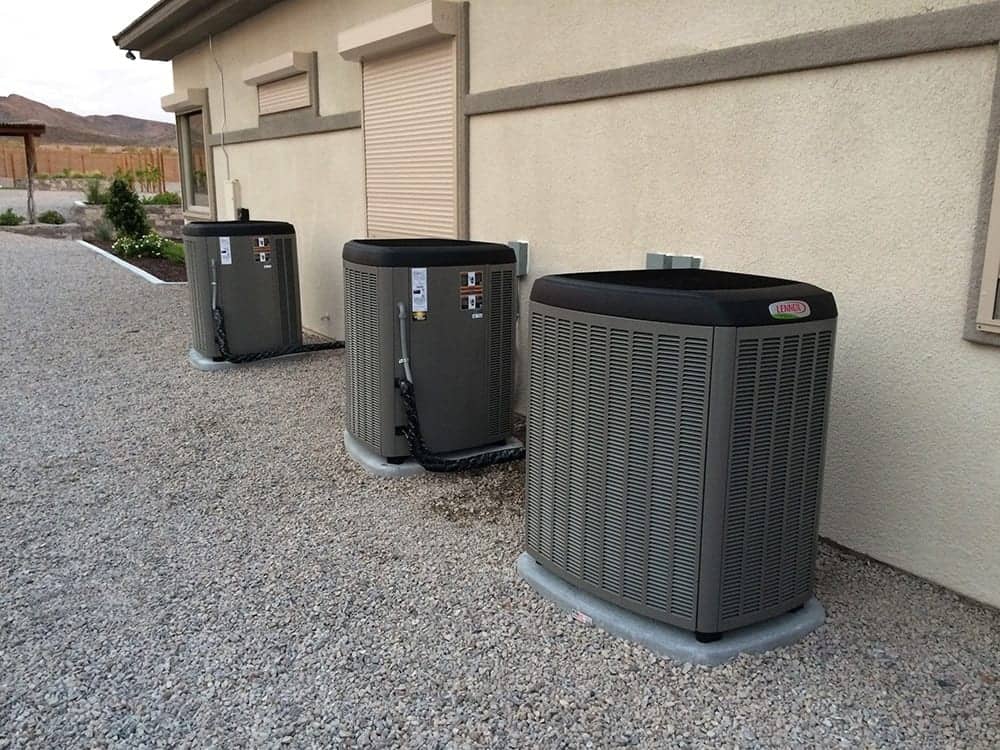
Short answer: New construction HVAC costs average $3.50–$7.00 per square foot for a standard central system, $6.00–$12.00 for heat pumps, and $7.00–$15.00 for multi-zone ductless. These ranges include equipment, ductwork, labor, permits, and commissioning for Las Vegas climate conditions.
Expect new-construction HVAC to cost about $3.50–$15.00 per square foot for planning. Use these ranges only as early allowances. Final price needs a Manual J load, Manual D duct plan, and detailed bids. Get site-specific quotes to avoid underbudgeting and poor comfort outcomes. (Source: ASHRAE Technical Resources)
Key Takeaways
- Typical planning ranges: central gas furnace + AC $3.50–$7.00/sq ft.
- All-electric heat pump planning range: $6.00–$12.00/sq ft.
- Multi-zone ductless minisplit planning range: $7.00–$15.00/sq ft.
- Require Manual J and Manual D for firm bids and fair comparisons.

How much does HVAC cost per sq ft?
Per-square-foot numbers help builders and owners set an early budget. They work best as rough allowances during schematic design. Expect big swings when final choices and site conditions arrive. Always follow up with a load calculation and firm quotes before locking budgets.
A single number hides many variables that change price. Climate, equipment class, duct complexity, and ventilation needs all matter. Some regions need corrosion protection or cold-climate heat pumps. Treat per-sq-ft figures as a starting point only.
What variables change the per-sq-ft number?
Climate impacts both heating and cooling needs and the equipment chosen. Hot-humid areas often need stronger dehumidification and higher SEER units. Cold climates may require higher heating capacity or cold-climate heat pumps, which cost more up front.
House shell performance also matters. Higher insulation, tighter air sealing, and better windows cut loads. That lets designers specify smaller equipment and simpler duct systems. The result lowers per-sq-ft costs in many cases.
What are typical range examples?
Use these planning ranges only for early budgets. For a central gas furnace with split AC, a typical range is $3.50–$7.00 per square foot. That covers mid-efficiency equipment and standard ductwork in moderate climates. (Source: ASHRAE Technical Resources)
All-electric heat pump plans commonly range $6.00–$12.00 per square foot. Ductless multisplits sit around $7.00–$15.00 per square foot. Higher-efficiency models and complex zoning push numbers upward toward the high end.
What system types and price ranges should I expect?
System choice sets both equipment and labor costs. Central gas furnaces need gas lines, flues, and controls. Heat pumps need electrical capacity and sometimes larger disconnects. Ductless systems require multiple indoor units and line sets.
Packaged rooftop units add curb work and rooftop support, which raises labor and crane costs. Match the system class to climate and layout. The right match lowers both upfront cost and long-term bills.
How do furnaces and split AC compare?
A central furnace plus split AC often costs less per ton than high-end heat pumps. Installation is familiar for many contractors. Typical installed costs for a 2,000 sq ft house range from $7,000 to $14,000, depending on efficiency and duct complexity.
Check our new construction HVAC cost guide for Las Vegas for current cost estimates.
Higher AFUE furnaces and higher SEER air conditioners raise initial cost. They can cut fuel bills over years. Check payback with local utility rates and expected daily use patterns.
For SEER and efficiency details, see our SEER rating guide.
What costs come with heat pumps?
Heat pump installs often cost more up front than basic gas furnaces. For a 2,000 sq ft home, expect $12,000–$24,000 in many cases. Cold-climate models and high-efficiency units push the price to the top end of the range.
You may qualify for rebates on new HVAC systems that reduce your upfront cost.
Heat pumps may need electrical upgrades. Some homes require a service panel increase or dedicated circuits. Check local utility rebates and tax credits to reduce net cost.
How expensive are ductless minisplits?
Ductless multisplit systems can be more costly per ton than ducted systems. For a 2,000 sq ft home the installed cost often runs $14,000–$30,000. Price depends on number of indoor heads, aesthetics, and model efficiency.
They save on ductwork but add line sets and wall penetrations. Homeowners like room-level control. Budget for visible indoor heads if appearance matters.
How do design and ductwork affect cost?
Duct design often drives material and labor dollars. Long or complex runs need more trunkwork, fittings, and balancing dampers. Tight framing and finished spaces add access time and increase labor rates for installers. [Point 1] (Source: ASHRAE Technical Resources)
Correct duct sizing and low friction targets improve airflow and comfort. Manual D plans may require extra framing, shafts, or soffits. Those items increase material and carpenter costs, which inflate per-sq-ft totals.
How does duct design change labor and materials?
Short, straight runs with accessible joist space cost less to build. Complex layouts in two-story homes or open-ceiling plans need more trunk lines and larger plenums. Each extra fitting raises friction and labor time on installation.
Rigid, insulated ducts cost more than flex duct in many cases. Rigid duct can also perform better when done right. Ask bidders for the tradeoffs and model the outcomes in the design phase.
Why does duct sealing matter?
Leaky ducts waste conditioned air and reduce system efficiency. That increases run time and shortens equipment life. Sealing ducts during rough-in is cheaper than repairing leaks after finish work is done.
Duct sealing and testing add labor but protect comfort and savings. Require a duct leakage target in the bid. Common targets are under 6–8% of system fan flow, depending on design and code.
How to get accurate bids and compare contractors?
Accurate bids rest on clear scope and proper design documents. Provide floor plans, insulation levels, window schedules, and preferred thermostat locations. Ask bidders to include Manual J and Manual D work in their quotes.
Require itemized pricing for equipment, ductwork, labor, permits, and testing. That lets you compare bids apples to apples. Check lead times and who will handle commissioning and permit pulls.
What should a bid include?
A complete bid lists equipment model numbers, efficiencies, and capacities. It also shows duct sizes, materials, and insulation levels. Include labor, permits, testing, and warranty details as separate line items.
Ask bidders to include commissioning and TAB. That ensures the installed system will be tested and balanced. Excluded items should be clearly marked to avoid surprises at the change-order stage.
Which tests and documents prove quality?
Manual J load calculations and Manual D duct plans are the core design documents. Manual S helps match equipment to the calculated loads. Ask for signed and dated files with the bid. [Point 2] (Source: ASHRAE Technical Resources)
Testing and balancing reports, duct leakage test results, and commissioning checklists show performance. Require these reports before final payment. They offer proof of proper installation and protect warranties.
How to verify installer qualifications?
Check contractor licenses, insurance, and local registrations. Ask for NATE certification or other training records for technicians. Request references from recent new-construction projects of similar size.
Confirm factory training on chosen brands. Ask for examples of past duct designs and test reports. Local, experienced teams often meet schedules and field issues faster.
Which system is best for my build?
The best system fits the climate, owner goals, and house layout. Heat pumps work well for low-carbon and all-electric homes. Central furnace and AC systems remain sensible where gas is cheap and available.
Ductless minisplits fit homes with limited space for ducts or rooms needing separate control. Consider ventilation and filtration needs early. The distribution approach should match the shell and owner priorities.
When should you choose a heat pump?
Choose a heat pump for all-electric builds or when high seasonal efficiency matters. Modern cold-climate heat pumps work well in many colder areas. They often cut annual fuel costs but cost more to install.
Plan for electrical service upgrades when needed. Look into utility rebates and tax incentives. Those can lower net cost and shorten payback times for higher-efficiency models.
When choose a central furnace and AC?
Pick a central furnace and AC when gas service exists and ducts are planned. Upfront costs are often lower for basic systems. Installation is usually faster on new builds with framed duct chases.
Consider long-term fuel price trends and maintenance costs. High-efficiency furnaces and AC units reduce operating bills but raise initial spend. Balance first cost with expected lifecycle costs.
When choose ductless minisplits?
Consider ductless minisplits for additions, rooms without duct space, or homes wanting room-level control. They avoid ductwork and can be less invasive to install in finished spaces. Expect higher per-ton costs. [Point 3] (Source: ASHRAE Technical Resources)
Plan indoor head locations early to reduce wall repairs. Budget for multiple heads and more complex control strategies when designing whole-home systems with minisplits.
Ready to get a local estimate and next steps?
A firm, actionable HVAC quote depends on design documents and a site review. Schedule a Manual J and a site walk to identify access issues, duct paths, and electrical needs. Early coordination with the builder reduces change orders and delays.
Allow time for equipment lead times and permit reviews. Add a 10–15% contingency for unknowns on complex builds. Require commissioning and TAB so the system performs as intended and qualifies for rebates.
How to contact The Cooling Company in Las Vegas?
The Cooling Company offers Manual J-based sizing, duct design oversight, and itemized new-construction bids. For Las Vegas area builds, call The Cooling Company at (702) 567-0707 to schedule a site review and get a firm proposal. Ask for local references and recent new-build reports.
We serve Las Vegas, Henderson, and North Las Vegas. The team can provide a written scope that includes Manual J, Manual D, duct leakage targets, and commissioning. Request a free HVAC bidding checklist when you call.
What if I am outside Las Vegas?
If you are outside our service area, look for NATE-certified technicians for quality installs. NATE lists certified techs and useful training resources at natex.org. Ask local contractors for the same documents required here to compare bids fairly.
Remote guidance can help too. Share plans and load files with a trusted local contractor. The goal is the same: proper sizing, duct design, and commissioning to protect comfort and efficiency.
FAQs
What common homeowner questions should I ask contractors? Ask for Manual J and Manual D reports and duct leakage targets. Request blower door numbers if the shell is tested. Inquire about warranties, expected operating costs, and who will do commissioning.
How should builders use per-sq-ft estimates? Use per-square-foot numbers only for early budgets and change them once design documents and firm bids arrive. Keep allowance contingency of 10–15% for unknowns and update the budget as the project firms up.
Call to action
Ready to get a site review and a Manual J-based estimate in Las Vegas? Call The Cooling Company at (702) 567-0707. We schedule fast design reviews and produce clear, itemized bids that include duct plans, testing, and commissioning details for Las Vegas, Henderson, and North Las Vegas.
Outside our area, use the NATE resource at natex.org to find certified technicians. If you need remote help with specs or commissioning checklists, The Cooling Company can advise on design documents and testing expectations before you hire locally.
Related reading: what to explore next?
- AC Monitoring System: Catch Problems Early with Smart Alerts
- New Build HVAC Cost: Save Thousands with Smart Design Choices
- HVAC Cost for New Construction: How to Estimate and Save
About The Cooling Company
- Phone: (702) 567-0707
References
- U.S. Department of Energy (Energy.gov) (accessed 2025-12-29)
- U.S. Environmental Protection Agency (EPA) (accessed 2025-12-29)
- ASHRAE (Standards and guidance) (accessed 2025-12-29)
- ENERGY STAR (Heating & cooling) (accessed 2025-12-29)
Need HVAC Service in Las Vegas?
The Cooling Company provides expert HVAC service throughout Las Vegas, Henderson, and North Las Vegas. Our licensed technicians deliver honest assessments, upfront pricing, and reliable results.
Call (702) 567-0707 or visit AC repair, maintenance, heating, or installation for details.