

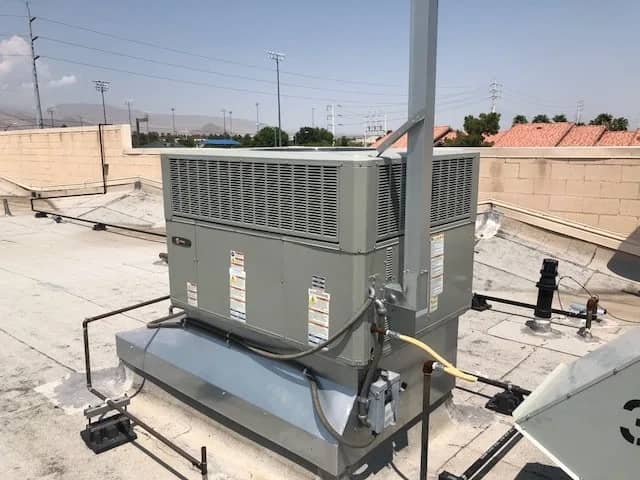
Short answer: NV Energy's PowerShift rebate program pays Las Vegas homeowners up to $3,200 toward qualifying heat pump installations in 2026. The rebate amount depends on the system's efficiency rating and whether you are replacing an existing air conditioner or upgrading from a gas furnace. PowerShift rebates are applied directly to your installation cost — you do not wait for a tax refund. With the federal 25C tax credit expired as of January 1, 2026, PowerShift is currently the single largest financial incentive available for Southern Nevada homeowners upgrading their HVAC systems. Additional federal HEEHR rebates of up to $8,000 are expected to become available in Nevada later this year, potentially allowing you to stack both programs. Call The Cooling Company at (702) 567-0707 or Schedule Now to find out exactly which rebates apply to your home.
Key Takeaways
- Up to $3,200 in NV Energy PowerShift rebates for qualifying heat pump systems installed in 2026 — available to all residential NV Energy customers in Southern Nevada.
- The federal 25C tax credit expired December 31, 2025. There is no federal tax credit for HVAC equipment in 2026. PowerShift is your primary incentive right now.
- HEEHR federal rebates (up to $8,000 for heat pumps) are expected in Nevada in 2026. These are point-of-sale rebates, not tax credits, and may stack with PowerShift.
- Your HVAC contractor files the PowerShift paperwork. The Cooling Company handles all rebate documentation as part of every qualifying installation.
- Rebate funds are limited. NV Energy allocates a fixed annual budget for PowerShift. Once it runs out, the program pauses until the next funding cycle. March and April installations have the best chance of full funding availability.

What Is NV Energy PowerShift? The $3,200 Heat Pump Rebate Explained
PowerShift is NV Energy's residential energy efficiency rebate program. It is funded through a small charge on every NV Energy customer's monthly bill — which means you have already been paying into this program. When you install qualifying high-efficiency equipment, PowerShift pays you back a portion of that investment as a direct rebate applied to your installation cost.
The program is not new. NV Energy has offered efficiency rebates for years. But the 2026 rebate amounts for heat pumps are among the most generous the utility has ever offered, reflecting Nevada's push to reduce peak summer electrical demand. Heat pumps are a priority because they use significantly less electricity than conventional air conditioners and gas furnaces combined, reducing strain on the grid during the months when Las Vegas temperatures push past 115 degrees.
Here is what makes PowerShift different from the federal tax credits most homeowners are used to hearing about:
- It is a direct rebate, not a tax credit. You do not need to wait until you file your taxes. The rebate reduces your installation cost at the time of purchase or is paid out within weeks of installation.
- Your contractor handles the paperwork. A participating contractor like The Cooling Company submits the rebate application on your behalf. You sign the form, and we handle the rest.
- There is no income limit. Unlike some federal programs, PowerShift does not care about your household income. If you are an NV Energy residential customer in Southern Nevada, you qualify.
- It applies to the installed system, not just the equipment. The rebate is tied to the complete installation — equipment, labor, and materials — not just the price of the heat pump unit itself.
The catch? PowerShift operates on a fixed annual budget. NV Energy receives approval from the Public Utilities Commission of Nevada (PUCN) for a specific dollar amount each year. Once those funds are committed, the program stops accepting new applications until the next cycle. This is not a hypothetical risk — the program has run out of funds in previous years before December. In 2025, several rebate tiers were exhausted by late summer.
That is why timing matters. If you are considering a heat pump installation in 2026, applying early gives you the best chance of capturing the full rebate amount. Not sure whether to repair your current system or replace it? Use the $5,000 rule and our replacement timeline to find out.
How Much Can You Save? Full Breakdown by System Type
PowerShift rebate amounts vary based on the type of system you install and its efficiency rating. Here is the current rebate structure for residential heat pump systems in 2026:
Central Ducted Heat Pumps (Split Systems)
These are the most common residential installations in Las Vegas. A split system heat pump replaces your outdoor air conditioning unit and, in many cases, your indoor air handler or gas furnace. The heat pump provides both cooling and heating from a single system.
| Efficiency Tier | Efficiency Requirement | Estimated Rebate |
|---|---|---|
| Standard efficiency | SEER2 ≥ 15.2, HSPF2 ≥ 7.5 | $500–$750 |
| High efficiency | SEER2 ≥ 18.0, HSPF2 ≥ 8.0 | $750–$1,500 |
| Premium efficiency | SEER2 ≥ 20.0, HSPF2 ≥ 9.0 | $1,500–$2,000 |
Higher rebates are available for dual-fuel configurations that pair a high-efficiency heat pump with a modulating gas furnace. NV Energy's published maximum of up to $3,200 applies to the top-tier dual-fuel systems with variable-speed compressors.
Ductless Mini-Split Heat Pumps
Mini-splits are ideal for room additions, casitas, converted garages, and homes without existing ductwork. They are also used as supplemental cooling and heating for problem rooms. Rebates are typically $300–$600 per qualifying indoor head depending on efficiency.
Additional PowerShift Rebates You Can Stack
Beyond the heat pump rebate, PowerShift offers additional incentives that can be combined with your system installation:
- Smart thermostat: $75–$125 rebate (Ecobee, Google Nest, Honeywell T-series, or equivalent ENERGY STAR models)
- Professional duct sealing: $100–$300 rebate (requires documented leakage reduction)
- Attic insulation (R-30 or higher): varies by scope
- Home energy audit: $100–$150 rebate (BPI or HERS certified auditor)
By stacking a high-tier heat pump rebate with thermostat, duct sealing, and insulation incentives, homeowners can often exceed $3,200 in combined PowerShift savings.
Important: NV Energy rebate amounts and efficiency tier thresholds change periodically. The figures above reflect current program parameters as of early 2026 and are sourced from NV Energy's published PowerShift schedule. Always verify exact rebate amounts at nvenergy.com/save-with-powershift or ask your installing contractor to confirm current availability before making purchasing decisions.
PowerShift vs. the Expired Federal 25C Tax Credit: What Changed in 2026
If you have been researching HVAC rebates online, you have probably seen articles and advertisements touting the "25C Energy Efficient Home Improvement Credit" as a way to save up to $2,000 on a heat pump. Here is what you need to know: that credit expired on December 31, 2025.
The 25C credit was part of the Inflation Reduction Act. It allowed homeowners to claim up to $2,000 per year on their federal tax return for qualifying heat pump installations. It was a genuine incentive, and tens of thousands of Nevada homeowners benefited from it between 2023 and 2025. But Congress did not extend it, and as of January 1, 2026, the credit is no longer available.
This is important because many national HVAC websites and even some local contractors are still advertising the 25C credit as if it is active. It is not. If someone tells you that you can claim $2,000 on your 2026 federal taxes for a heat pump, they are either misinformed or being deliberately misleading.
Here is how the two programs compare:
| Feature | 25C Tax Credit (Expired) | PowerShift Rebate (Active 2026) |
|---|---|---|
| Status in 2026 | Expired Dec 31, 2025 | Active and funded |
| Maximum amount | $2,000/year | $3,200 per installation |
| How you receive it | Tax return (wait months) | Direct rebate (weeks) |
| Income limit | None (but must owe taxes) | None |
| Who files paperwork | You (with your accountant) | Your contractor |
| Requires tax liability | Yes (credit, not refund) | No |
| Geographic limit | All US states | NV Energy service territory |
One detail many homeowners missed about the 25C credit: it was a nonrefundable tax credit. If you owed less than $2,000 in federal taxes, you could not claim the full amount. Retirees, part-time workers, and homeowners with significant deductions often received far less than the advertised $2,000. PowerShift has no such limitation. If you qualify for a $3,200 rebate, you get $3,200 — regardless of your tax situation.
The practical takeaway for 2026 is straightforward. PowerShift is your primary incentive, it pays more than 25C ever did for the best systems, and you receive the money faster. The only thing missing is the ability to stack it with a federal tax credit — which is where HEEHR enters the picture.
HEEHR Federal Rebates: Up to $8,000 More Coming to Nevada
The High-Efficiency Electric Home Rebate (HEEHR) program is a separate federal initiative, also created by the Inflation Reduction Act. Unlike the 25C tax credit, HEEHR provides point-of-sale rebates — meaning the discount is applied at the time of purchase, just like PowerShift. And the amounts are substantial: up to $8,000 for a heat pump system.
Here is the current status as of March 2026:
- Federal funding has been allocated. Nevada's share of HEEHR funds has been approved by the Department of Energy.
- State implementation is in progress. The Nevada Governor's Office of Energy is finalizing the administrative framework for distributing HEEHR rebates.
- Expected launch in Nevada: mid-to-late 2026. Several states launched HEEHR programs in late 2025 (New York, Wisconsin, Maine). Nevada is expected to follow within the next several months.
- Income-qualified program. Unlike PowerShift, HEEHR rebates are income-dependent. Households earning less than 80% of Area Median Income (AMI) receive the highest rebates. Households between 80% and 150% of AMI receive reduced amounts. Above 150% of AMI, you may not qualify.
What are the HEEHR income limits for Las Vegas?
The income limits are based on the Las Vegas-Henderson-Paradise Metropolitan Statistical Area (MSA) Area Median Income. For 2026, these thresholds are approximately:
- 80% AMI (maximum rebate tier): ~$58,000 for a single person, ~$83,000 for a family of four
- 150% AMI (reduced rebate tier): ~$109,000 for a single person, ~$155,000 for a family of four
Household sizes between 1 and 8 members each have their own threshold. Your HVAC contractor or the program administrator will verify your eligibility at the time of application.
Can you stack HEEHR and PowerShift together?
This is the question every Las Vegas homeowner should be asking. Based on the federal program guidelines and how other states have implemented HEEHR, the answer is likely yes. The Department of Energy has stated that HEEHR rebates can be combined with utility rebates, as long as the total incentives do not exceed the cost of the project.
If stacking is confirmed for Nevada, here is what the math could look like for a qualifying household:
- PowerShift rebate: up to $3,200
- HEEHR rebate: up to $8,000
- Combined potential savings: up to $11,200
For a household at or below 80% AMI installing a high-efficiency heat pump system, the combined rebates could cover 40-70% of the total installation cost. That is a generational opportunity to upgrade from an aging, inefficient system to a modern heat pump at a fraction of the out-of-pocket price.
We are tracking the HEEHR rollout closely and will update this post as Nevada's program details are finalized. If you install a system now with PowerShift, ask your contractor about whether retroactive HEEHR claims may be possible once the program launches.
The 3-Step Process to Claim Your PowerShift Rebate
One of the best features of PowerShift is how simple it is for homeowners. You do not need to fill out a 20-page application, submit invoices to a government agency, or wait for a check that may or may not arrive. Your participating HVAC contractor handles nearly everything.
Step 1: Schedule a Free In-Home Consultation
A licensed technician visits your home to assess your current system, measure your cooling and heating needs using Manual J load calculations, and recommend equipment options that qualify for the highest available rebates. This is a critical step that many homeowners skip when shopping on price alone. An undersized or oversized system — even if it technically qualifies for a rebate — will cost you more in energy bills and repairs over its lifetime than the rebate saves you up front.
At The Cooling Company, every installation consultation includes a load calculation, ductwork assessment, and a line-item quote showing the PowerShift rebate as a separate credit. You see the rebate amount deducted before you sign anything.
Step 2: Installation by a Participating Contractor
The system must be installed by a contractor registered with NV Energy's PowerShift program. This is non-negotiable. If your installer is not a participating contractor, the rebate application will be denied regardless of how efficient the equipment is.
The Cooling Company is a registered NV Energy PowerShift participating contractor. We handle installations across all of Southern Nevada — Las Vegas, Henderson, North Las Vegas, Summerlin, Green Valley, Enterprise, Centennial Hills, and every community in between.
During installation, your contractor documents the equipment model numbers, serial numbers, efficiency ratings, and installation details required for the rebate application. A proper installation also includes system commissioning — verifying refrigerant charge, airflow, electrical connections, and thermostat calibration — which is required for the quality installation verification (QIV) bonus.
Step 3: Your Contractor Submits the Rebate Application
After installation, your contractor submits the completed PowerShift application to NV Energy on your behalf. The application includes equipment specifications, proof of installation, your NV Energy account number, and your signature authorizing the rebate.
Processing typically takes 4 to 8 weeks. The rebate is either applied as a credit to your NV Energy bill or issued as a check, depending on the rebate amount and your preference. For larger rebates (over $1,000), most homeowners opt for a check.
That is the entire process from your perspective: consultation, installation, signature. Your contractor does the rest.
Why March-April Is the Best Time to Replace Your AC in Las Vegas
Every HVAC company in Las Vegas will tell you that spring is the best time to replace your system. This is not just a sales pitch — there are real, measurable reasons why March and April installations deliver better outcomes than summer or fall replacements.
Rebate funding is at its highest
PowerShift operates on an annual budget cycle. In March, the current year's funding is fully available. By July, the most popular rebate tiers often start running low. By September or October, some tiers may be exhausted entirely. Installing in March or April virtually guarantees that your rebate application will be funded at the full amount.
You avoid emergency pricing
When your AC fails on a 118-degree day in July, you are not shopping — you are surviving. Emergency replacements come with expedite fees, limited equipment selection (whatever is in stock), and the pressure to make a decision in hours rather than weeks. Homeowners who replace proactively in spring have time to compare quotes, choose the right equipment, and negotiate the best value. A planned replacement in March typically costs 10-15% less than an identical emergency installation in July, simply because of scheduling flexibility and equipment availability. For a complete breakdown of the best replacement timing, see our spring AC tune-up checklist.
Installation quality is higher
HVAC installation crews in Las Vegas work grueling schedules during the summer. Rooftop temperatures exceed 150 degrees. Attic temperatures can reach 160 degrees or more. These conditions are brutal on both technicians and equipment. A spring installation means your crew is working in 75-85 degree conditions, they are not fatigued from six straight weeks of emergency calls, and they have time to commission the system properly rather than rushing to the next job.
You lock in summer savings from day one
A high-efficiency heat pump installed in March starts saving you money the moment your first summer electric bill arrives. NV Energy's summer rates are the highest of the year. A system with a SEER2 rating of 20 or higher can use 30-50% less electricity than the 10-year-old unit it replaces. Over a full Las Vegas summer (June through September), that difference can amount to $400 to $800 in reduced electricity costs. If you wait until June to install, you have already missed two months of peak savings.
Scheduling is flexible
During spring, most reputable HVAC companies can schedule your installation within 1-2 weeks of signing your agreement. During summer, that lead time stretches to 3-6 weeks for non-emergency installations. If you want to choose your installation date rather than take whatever is available, spring is the window.
Real Example: A 3-Ton Heat Pump in Henderson After All Rebates
Let us walk through a specific, realistic scenario for a Henderson homeowner replacing a 12-year-old 3-ton central AC and gas furnace with a new dual-fuel heat pump system.
The home
- 1,800 square feet, single story
- Built in 2008 in Green Valley Ranch
- Existing system: 3-ton 14-SEER AC with 80% AFUE gas furnace
- Existing ductwork in good condition (recently sealed)
- NV Energy residential customer
The new system
- 3-ton variable-speed heat pump (SEER2 21.0 / HSPF2 10.5)
- Matching variable-speed air handler with electric backup heat strips
- Smart thermostat (Ecobee Premium)
- New refrigerant line set and disconnect
- Permits, inspection, and old equipment removal included
The cost breakdown
| Line Item | Amount |
|---|---|
| Complete installed system (equipment + labor + materials) | $15,200 |
| PowerShift rebate (premium-tier heat pump, SEER2 20+) | -$1,500 to -$2,000 |
| PowerShift smart thermostat rebate | -$75 to -$125 |
| PowerShift duct sealing / insulation rebates | -$100 to -$450 |
| Estimated net cost after PowerShift | $12,625–$13,525 |
That is a savings of approximately $1,675–$2,575 from PowerShift alone — the exact amount depends on which tier your equipment qualifies for and which additional incentives you claim. And if this household qualifies for HEEHR when it launches in Nevada later this year, the additional rebate could reduce the net cost further.
The monthly math
With financing at a representative $130 per month, the net cost after rebates is manageable for most budgets. But what makes this upgrade truly compelling is the energy savings:
- Old system summer electric cost (June-September): Approximately $280-$350/month with a 14-SEER unit running in peak Las Vegas heat
- New system summer electric cost: Approximately $160-$220/month with a 21-SEER2 variable-speed heat pump
- Monthly savings: $100-$150 during peak summer months
- Annual energy savings: $600-$1,000 depending on usage patterns and NV Energy rate tier
When you factor in $600–$1,000 per year in energy savings, the rebate effectively pays for itself immediately — the system saves more annually than what you would have spent without the rebate. Over a 15-year system lifespan, a Henderson homeowner in this scenario saves an estimated $9,000 to $15,000 in reduced energy costs compared to keeping their old system running until it fails.
Common Mistakes That Cost You Rebate Money
We have helped hundreds of Las Vegas homeowners navigate the PowerShift rebate process. Here are the mistakes we see most often — and every one of them is avoidable.
Choosing a non-participating contractor
This is the single most common and most costly mistake. NV Energy requires that the installing contractor be registered with the PowerShift program. There is no exception, no appeal, and no way to retroactively qualify an installation done by a non-participating contractor. Before signing any agreement, verify with your contractor that they are currently registered with NV Energy PowerShift. Ask for their participant ID number.
Installing equipment that falls just below the efficiency threshold
A heat pump that falls even slightly below a qualifying efficiency threshold earns $0 in rebates, while one that barely meets the threshold could qualify for $500 or more. A fraction of a SEER2 point could cost you hundreds of dollars. Some contractors recommend the cheapest equipment that meets code minimums without checking whether a slight efficiency upgrade would qualify for a rebate that more than offsets the price difference. Always ask your contractor to show you the rebate-qualifying options and the math behind each one.
Waiting until summer to start the process
As discussed above, PowerShift funding is finite. Homeowners who wait until their AC dies in July often find that the most generous rebate tiers are already depleted. Even if funding remains, the rushed timeline of an emergency replacement increases the chance that paperwork gets overlooked or equipment substitutions disqualify the rebate. Start the conversation in spring, even if you are not sure you want to replace yet. A free consultation costs you nothing and gives you all the information you need to make a decision on your timeline, not the desert's.
Not asking about duct sealing and insulation rebates
Many homeowners focus exclusively on the heat pump rebate and ignore the $200 duct sealing and $400 attic insulation rebates that can be claimed at the same time. If your ductwork is leaking or your attic insulation is below R-30, these upgrades will improve the performance of your new heat pump and pay for themselves faster through reduced energy bills. Ask your contractor to inspect your ducts and attic during the initial consultation.
Failing to provide accurate NV Energy account information
The rebate application requires your NV Energy account number — not your address, not your meter number. If the account number is wrong or does not match the installation address, the application is rejected. Have a recent NV Energy bill available during your consultation. Your contractor will record the account number during the initial visit.
Skipping the quality installation verification
The $150 QIV bonus requires that your contractor perform and document a third-party quality installation check. Some contractors skip this step because it takes an extra 30-60 minutes. That is 30 minutes that earns you $150. Ask your contractor specifically whether they will perform QIV and include the bonus in your rebate application.
Assuming every contractor gets you the same rebate
Two contractors can install the same equipment and get you different rebate amounts. Why? Because the rebate also depends on proper system sizing, correct installation procedures, and complete documentation. A contractor who installs a 4-ton system in a home that only needs 3 tons may still get the rebate approved — but you will pay more for the equipment and more for the electricity to run it, erasing the rebate savings within a year or two. Proper load calculation and system sizing is not optional — it is the foundation of a worthwhile installation.
Frequently Asked Questions
Who qualifies for the NV Energy PowerShift rebate in 2026?
Any residential customer of NV Energy in Southern Nevada qualifies. This includes homeowners in Las Vegas, Henderson, North Las Vegas, Summerlin, Green Valley, Enterprise, Centennial Hills, Boulder City, Pahrump, and all other communities within NV Energy's service territory. You must own the home (renters are not eligible for equipment rebates), and the installation must be performed by a registered participating contractor. There are no income requirements.
How long does it take to receive the PowerShift rebate?
After your contractor submits the completed application, NV Energy typically processes rebates within 4 to 8 weeks. Processing times can vary based on application volume. During peak summer months, processing may take closer to 8-10 weeks due to the higher volume of installations and applications. Spring installations generally see faster turnaround.
Can I get the PowerShift rebate if I just replaced my AC last year?
PowerShift rebates are only available for new installations. If you replaced your system in 2025, you are not eligible for a 2026 rebate on that same installation. However, if you install additional equipment in 2026 — such as a ductless mini-split for a room addition or a smart thermostat — you may qualify for those specific rebates. Each eligible installation is evaluated independently.
Is the PowerShift rebate the same as a tax credit?
No. A tax credit reduces the amount of federal income tax you owe. A rebate is a direct payment or credit that reduces your out-of-pocket cost. PowerShift is a rebate program administered by NV Energy, not a tax credit from the IRS. You do not need to file anything with your taxes to receive a PowerShift rebate. However, you should consult your tax advisor about whether rebate amounts affect the cost basis of your home improvement for tax purposes.
What SEER2 rating do I need for the maximum PowerShift rebate?
The maximum $3,200 rebate requires a dual-fuel heat pump system with a SEER2 rating of 20 or higher, an HSPF2 of 10.0 or higher, and a gas furnace with 97% or higher AFUE. For a standard (non-dual-fuel) heat pump, the maximum rebate is $2,400 for systems with SEER2 20+ and HSPF2 10.0+. Your contractor can recommend specific equipment models from brands like Lennox, Carrier, and Trane that meet these thresholds.
Can I combine PowerShift with financing?
Yes. The PowerShift rebate reduces your total project cost. If you finance the remaining balance, your loan amount is lower, and your monthly payment is lower. For example, if your heat pump installation costs $15,200 and you receive $2,000 in PowerShift rebates, your financed amount is $13,200 instead of $15,200. The Cooling Company offers financing options with monthly payments starting at approximately $130 per month for qualified buyers through Service Finance Company.
Does the PowerShift rebate apply to commercial properties?
PowerShift has separate rebate programs for residential and commercial properties. The rebate amounts and qualifying equipment differ. This article covers residential rebates only. If you own a commercial property, contact NV Energy's commercial energy efficiency team or call The Cooling Company's commercial HVAC division for current commercial rebate details.
What happens if PowerShift funding runs out before my installation?
If you have already received a rebate reservation (pre-approval), your rebate amount is typically held for 90 days. If you have not yet applied and the funding is depleted, you will need to wait until the next funding cycle or explore whether HEEHR federal rebates have become available. This is the primary reason we recommend starting the process early in the year rather than waiting until summer.
Do heat pumps work in Las Vegas summers?
This is the most common misconception we encounter. Modern heat pumps are air conditioners — they use the exact same refrigeration cycle to cool your home. The only difference is that a heat pump can reverse the cycle to provide heating in winter, eliminating the need for a separate gas furnace in most applications. A heat pump with a SEER2 rating of 20 will cool your home just as effectively in 115-degree Las Vegas heat as any traditional air conditioner. In fact, the variable-speed compressors in high-efficiency heat pumps typically provide more consistent temperatures and better humidity control than single-stage AC units. For more details, read our heat pump vs. central AC comparison.
How much does a heat pump cost to install in Las Vegas without any rebates?
Heat pump installation costs in Las Vegas range from approximately $14,000 to $30,000 depending on the system size, efficiency rating, brand, and installation complexity. A typical 3-ton residential heat pump system runs $13,000 to $18,000 fully installed. High-efficiency variable-speed systems in larger homes (4-5 tons) can reach $22,000 to $30,000. These prices include equipment, labor, materials, permits, and old system removal. For a detailed breakdown, see our heat pump cost guide.
Should I wait for HEEHR rebates or install now with PowerShift?
If your current system is working but aging (8-12 years old), waiting a few months for HEEHR clarity is reasonable — especially if you want to maximize your total savings. However, if your system is failing, unreliable, or more than 12 years old, we recommend installing now with PowerShift rather than risking a midsummer breakdown. PowerShift rebates may not be available later in the year if funding runs low. You can always ask The Cooling Company whether retroactive HEEHR applications may be possible for systems installed before the program launches in Nevada.
Get Your PowerShift Rebate Before Funding Runs Out
The NV Energy PowerShift program is the single most valuable financial incentive available to Las Vegas homeowners upgrading their HVAC systems in 2026. With the federal 25C tax credit expired and HEEHR rebates still months away, PowerShift is your best path to reducing the cost of a new heat pump right now.
The Cooling Company is a registered NV Energy PowerShift participating contractor. We handle every step of the rebate process — from the initial load calculation and equipment recommendation to the final rebate application submission. Our team installs heat pumps across Las Vegas, Henderson, North Las Vegas, Summerlin, and every community in Southern Nevada.
Here is how to get started:
- Call us at (702) 567-0707 — that is seven-oh-two, five-six-seven, oh-seven-oh-seven — to schedule a free in-home consultation.
- Book online to choose a date and time that works for your schedule.
- Have your NV Energy bill handy so we can verify your account number during the visit.
There is no cost and no obligation for the consultation. We will assess your current system, recommend equipment options that qualify for the maximum PowerShift rebate, and provide a written quote with the rebate amount clearly deducted. If HEEHR becomes available before your installation, we will update your quote to include both incentives.
Spring is the best time to replace your AC in Las Vegas — and 2026 offers more rebate money than any year in the last decade. Do not leave $3,200 or more on the table.
Related Guides
- When to Replace Your AC in Las Vegas — the 2026 homeowner's replacement timeline
- Las Vegas AC Questions Answered — the $5,000 rule, costs, and ideal temperatures
- Spring AC Tune-Up Checklist — 10 DIY steps plus the 21-point pro inspection