

Key Takeaways
- Use a room-by-room Manual J load calculation (not a square-foot rule).
- Select equipment with Manual S and verify ducts with Manual D for comfort and efficiency.
- Avoid oversizing: short-cycling wastes fuel and can create uneven temperatures.
Top Furnace Companies Near Vegas: Compare Quotes and Hire Today?
Short answer: When you search for top furnace companies near Vegas, begin with what each bid actually includes. A low price is not useful if the work scope is incomplete. Ask for the exact model numbers, AFUE ratings, blower type, permit fees, duct repairs, testing tasks, and labor warranty terms. Written detail makes bids comparable and reduces surprises.
How to Compare Furnace Companies Near Las Vegas
When comparing companies, create a simple spreadsheet that lists scope items for each bid. Put Manual J inclusion, AFUE rating, blower motor type, duct repairs, permit fees, and warranty terms into columns. This makes it easy to spot missing items and inconsistent assumptions. Use local heating-degree days (HDD) and current fuel prices for lifecycle estimates. Ask each contractor to provide a timeline with milestones and an explanation of who will supervise the job. Know whether subcontractors will do any part of the work and who will be your point of contact. Also get the bid in writing with a clear change order policy so you can compare not only price but process and protections.Start with a consistent scope?
A consistent work scope is the core of a fair comparison. Require each bid to list model numbers, efficiency ratings, permit fees, duct repairs, and testing tasks. If a bid omits something another bid includes, ask the contractor to update the proposal. Consistency prevents choosing a low bid that leaves out critical work or materials.Permits, timelines, and inspections
Verify who will pull permits and how inspections will be scheduled. Proposals should state whether permit fees are included and how inspection timing might affect the schedule. Unpermitted work can void warranties and complicate resale. A trustworthy contractor will manage permits and inspections in their name and provide proof when required.Compare lifecycle cost, not just price
Price is only part of the story. Ask contractors for a simple lifecycle model that shows expected annual energy use, maintenance, and projected repairs. Use local HDD values and current utility rates. A higher initial cost can be justified by lower operating cost and fewer repairs, but only if the model is realistic and uses local data.How many bids should I get?
Get at least three bids to understand the local market range. Three offers show normal pricing without overwhelming you. After you receive three comparable bids, shortlist two or three for deeper background checks and reference calls. Reject bidders who refuse to provide a written, itemized scope.Red flags to watch for
Watch for missing Manual J calculations, omitted permit fees, or no combustion testing for gas systems. Vague warranty language and bundled fees without itemization are also red flags. High-pressure sales tactics or demands for large deposits up front deserve close scrutiny. If a bid seems too low, ask detailed questions and verify references.What technical details should be verified on equipment?
Confirm exact model numbers, AFUE or SEER ratings, and blower motor type (ECM vs PSC). Ask for AHRI or manufacturer spec sheets if they are available. Check venting type, condensate routing for condensing units, and whether the unit size matches the Manual J output. These technical details affect comfort, efficiency, and installation cost.How do I find qualified furnace companies near Vegas?
Begin with public registries and local references before you agree to work. The Nevada State Contractors Board lists license numbers and classifications. Confirm that the contractor’s license covers HVAC or mechanical work and that the status is active with no suspensions or open disciplinary actions. Licensing reduces legal and financial risk. After verifying the license, request current insurance certificates for general liability and workers' compensation. Ask for local references and recent Las Vegas job photos. Local references show experience with regional venting routes, permit flows, and inspection practices. A reliable company will readily share references and explain inspection requirements.Start with the Nevada State Contractors Board
Check the contractor’s license number and classification on the Nevada State Contractors Board site. Confirm that the business name matches the license and that the license is active. If you find complaints, contact the board for details. Licensing gives you a route to file complaints if work is substandard or unsafe.Ask for local references and photos
Request names and contact details for recent Las Vegas installations and ask to see photos or job descriptions. Local project references show experience with regional venting, roof penetrations, and permit inspection flows. Call at least two references and ask about timeliness, cleanup, and the contractor’s responsiveness to follow-up issues.Verify insurance and business identity
Ensure the name on the insurance certificate matches the licensed business. Check coverage dates and policy types for general liability and workers' comp. If coverage appears old or mismatched, call the insurer listed on the certificate. This step prevents you from being liable for on-site injuries or damage during the project.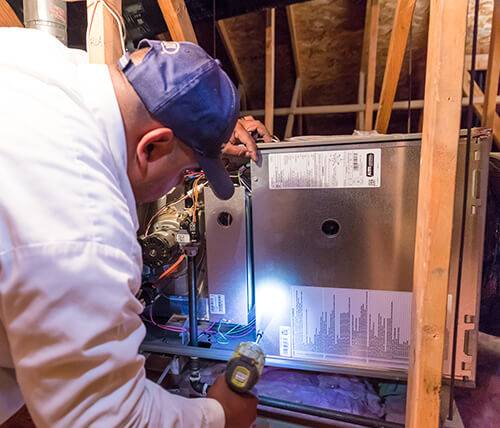
What should be in a proper bid and proposal?
A quality bid is detailed and itemized. It lists equipment model numbers, AFUE or SEER ratings, blower motor type, and AHRI references when available. The proposal must itemize equipment, labor, permit fees, duct repairs, materials, and testing work. Itemization helps you compare bids and spot missing scope. Do not accept vague lump-sum proposals without detail. Your written proposal should state whether a Manual J load calculation was performed and include any Manual D duct notes. For gas systems, the proposal should also list combustion testing and post-install CO readings as included tasks. A clear change-order policy reduces disputes.Required equipment and performance details
Look for exact model numbers, rated AFUE for furnaces, and blower motor type. Ask for manufacturer spec sheets and AHRI references where possible. Confirm the selected unit size is appropriate for the Manual J output. These details help you compare efficiency, sound levels, and expected operating costs across bids.Itemized costs and responsibilities
Ask contractors to break out equipment, labor, permit fees, ductwork, condensate routing, and testing as separate line items. Itemization prevents surprises and makes it easier to reconcile invoices. Confirm which tasks are included in the base bid and which are change orders, and require a written change-order approval process.Manual J and testing statements
The proposal should note that a Manual J load calculation was performed. It should state whether Manual D duct design or duct leakage testing is included. For gas appliances, ask for combustion testing and CO measurements to be listed as included tasks. Request that test results be provided in the closeout packet.How does Las Vegas climate affect system choice?
Las Vegas has mild winters and relatively low heating-degree days. Furnaces in this climate run fewer hours than they do in colder regions. That affects the economics of high-efficiency condensing furnaces versus standard-efficiency furnaces or heat pumps. Because heating hours are low, annual fuel savings from high-AFUE units can be modest. Contractors should model lifecycle costs using local HDD values and current fuel prices. If a contractor uses northern HDD assumptions, their payback numbers will be misleading. Consider how long you plan to stay in the home and local rebates when choosing between a condensing gas furnace, standard gas furnace, or a heat-pump-first strategy.Should I choose condensing 95% AFUE units?
A 95% AFUE condensing furnace can reduce fuel use, but it costs more up front. In Las Vegas, where heating hours are limited, the annual dollar savings may be small. Also consider installation complexity: condensate routing, trap sizing, and PVC venting can add cost. Evaluate whether the incremental savings match your payback expectations.When is a heat pump or hybrid better?
Heat pumps perform well in mild climates and can offer lower seasonal energy use than gas furnaces. A hybrid approach uses a heat pump for most of the season and a gas furnace for the coldest hours. Compare electric and gas prices, available rebates, and maintenance needs. A hybrid system can balance comfort, cost, and efficiency in Las Vegas.How do 300–500 HDD values change savings?
Using local HDD values of 300–500 for Las Vegas means fewer heating hours and smaller absolute savings from higher AFUE equipment. Ask each bidder to present payback scenarios using local HDD inputs. Request sensitivity analyses that show outcomes if fuel prices rise or if you plan to stay in the home longer than expected.How to evaluate installers' technical process?
A strong technical process includes a pre-install inspection, a Manual J load calculation, combustion testing, duct leakage checks, and final commissioning. Require each contractor to list these steps in the proposal and to include documentation at each stage. Proper documentation reduces callbacks and safety issues after installation. For larger jobs, expect drawings, submittals, and trade coordination. For typical homes, insist on documented load calculations, signed startup checklists, and final combustion reports in the closeout packet. Certified technicians usually follow these steps and provide signed paperwork.Do they perform combustion testing and CO checks?
Combustion analysis and CO testing are required for gas-fired furnace installs to verify safe venting and proper combustion. Request written test results and copies of calibration stickers for test instruments. Require these reports as part of the final documentation and make testing a condition of final payment.Will contractors perform Manual J load calculations?
Manual J is the industry standard for residential load sizing and should be completed before equipment selection. Ask for the calculation files and the assumptions used for insulation, windows, and infiltration. If a bidder uses rule-of-thumb sizing, request a formal Manual J or seek another estimate. Proper sizing improves comfort and reduces short-cycling.How do certified technicians improve outcomes?
Technician training and certification reduce installation errors. Certified techs follow startup checklists, verify gas pressures, test for proper draft, and complete combustion checks. These actions lower callbacks and warranty claims. Ask for the lead technician’s name and certifications, and require signed test reports at the job closeout.What technical details should be verified on equipment?
Before installation, verify AFUE or SEER ratings, blower motor type, exact model numbers, and AHRI listings when available. Confirm venting type and condensate routing for condensing units. Ensure the proposed unit matches the Manual J output and that register locations and return sizes are adequate for the design.Need HVAC service help in Las Vegas?
If you're facing an HVAC emergency in Las Vegas, Henderson, or North Las Vegas, The Cooling Company offers fast, reliable service from licensed technicians. We understand that heating and cooling emergencies don't wait for business hours. Call us now at (702) 567-0707 for emergency service. Our team is ready to help restore your comfort quickly and safely.Emergency service and contact
If your system fails, act quickly. Turn off gas appliances if you suspect a gas leak and evacuate until the issue is resolved. For urgent furnace or HVAC failures, contact a licensed provider. The Cooling Company provides emergency service from trained technicians who can assess safety, secure the site, and recommend short-term and long-term repairs.What to expect during an emergency call
On an emergency call, expect the technician to check for safe operation first. They should perform basic diagnostics, look for gas or electrical hazards, and advise whether a temporary fix or immediate replacement is required. Ask for a written scope before any non-emergency work begins. If you're facing an HVAC emergency in Las Vegas, Henderson, or North Las Vegas, The Cooling Company offers fast, reliable service from licensed technicians. We understand that heating and cooling emergencies don't wait for business hours. Call us now at (702) 567-0707 for emergency service. Our team is ready to help restore your comfort quickly and safely. Sources and notes:- Efficiency and air-conditioning basics: U.S. Department of Energy - Energy Saver
- HVAC best practices and solutions: Better Buildings Solution Center - HVAC
- Indoor air quality considerations: EPA - Indoor Air Quality (IAQ)
- Require documentation for Manual J, Manual D, and Manual S where applicable.
- For gas systems, require combustion testing and CO readings in writing prior to final payment.
- Confirm licensing and insurance through the Nevada State Contractors Board and request current certificates from the contractor.
Related reading: what to explore next?
Expand your knowledge with these related guides from our experts. Each article provides in-depth information to help you make informed decisions about your HVAC system and home comfort needs.- VRF System Maintenance: What You Need to Know
- Furnace Installation in Las Vegas: What to Expect
- What to Expect During a Professional Furnace Inspection
- Troubleshooting Gas Furnace Problems
About The Cooling Company
The Cooling Company has been serving the Las Vegas valley with professional HVAC services for over a decade. Our team of licensed, NATE-certified technicians specializes in air conditioning repair, heating system maintenance, and complete HVAC installations. We're committed to providing honest, reliable service with upfront pricing and a 100% satisfaction guarantee on all work performed.- Phone: (702) 567-0707
- Reviews: 4.8/5 stars (780+ reviews) - See reviews
Service Areas
We proudly serve homeowners and businesses throughout the Las Vegas metropolitan area, including Las Vegas, Henderson, and North Las Vegas. Our service technicians are available for same-day appointments in most areas, with emergency service available 24/7 for urgent HVAC issues.References
- U.S. Department of Energy (Energy.gov) (accessed 2026-01-03)
- U.S. Environmental Protection Agency (EPA) (accessed 2026-01-03)
- ASHRAE (Standards and guidance) (accessed 2026-01-03)
- ENERGY STAR (Heating & cooling) (accessed 2026-01-03)
Need HVAC Service in Las Vegas?
The Cooling Company provides expert HVAC service throughout Las Vegas, Henderson, and North Las Vegas. Our licensed technicians deliver honest assessments, upfront pricing, and reliable results.
Call (702) 567-0707 or visit heating, furnace repair, furnace installation, or heat pump installation for details.