

Short answer: NOx (nitrogen oxides) are combustion byproducts that fuel ground-level ozone — the same smog that earns Clark County failing air quality grades year after year. Low-NOx furnaces and water heaters use premixed burner technology to cut NOx output by 65 to 80 percent compared to standard equipment. They cost $300 to $800 more upfront but help reduce the ozone precursors trapped inside the Las Vegas Valley's basin geography.
What NOx Actually Is and Why It Matters Here
NOx is shorthand for two gases: nitric oxide (NO) and nitrogen dioxide (NO2). Both form when fuel burns at high temperatures — above roughly 2,500 degrees Fahrenheit, the nitrogen and oxygen molecules in combustion air start recombining into these reactive compounds. The hotter the flame, the more NOx you get. On their own, NOx emissions are an irritant. Nitrogen dioxide inflames airways and worsens asthma. But the real damage happens after these gases leave your flue pipe. When NOx meets volatile organic compounds (VOCs) in the presence of ultraviolet light, the reaction produces ground-level ozone — the primary ingredient in smog. Las Vegas has the UV exposure part covered. The Valley averages 294 sunny days per year and summer surface temperatures that regularly exceed 115 degrees. Those conditions are a catalyst factory for ozone formation. Add in vehicle exhaust, industrial emissions, and roughly 2.3 million residents generating combustion byproducts inside a topographic bowl surrounded by mountains, and you get the air quality grades Clark County has been collecting. The EPA designated the Las Vegas Valley as a marginal non-attainment area for the 2015 ozone standard in 2018. The Valley missed its marginal deadline and was reclassified to moderate non-attainment in 2023. It missed that deadline too. As of January 2025, Clark County is classified as a serious ozone non-attainment area with a deadline of August 2027. Each reclassification tightens the planning requirements and pushes the Division of Air Quality to identify additional emission reduction strategies — including residential combustion sources.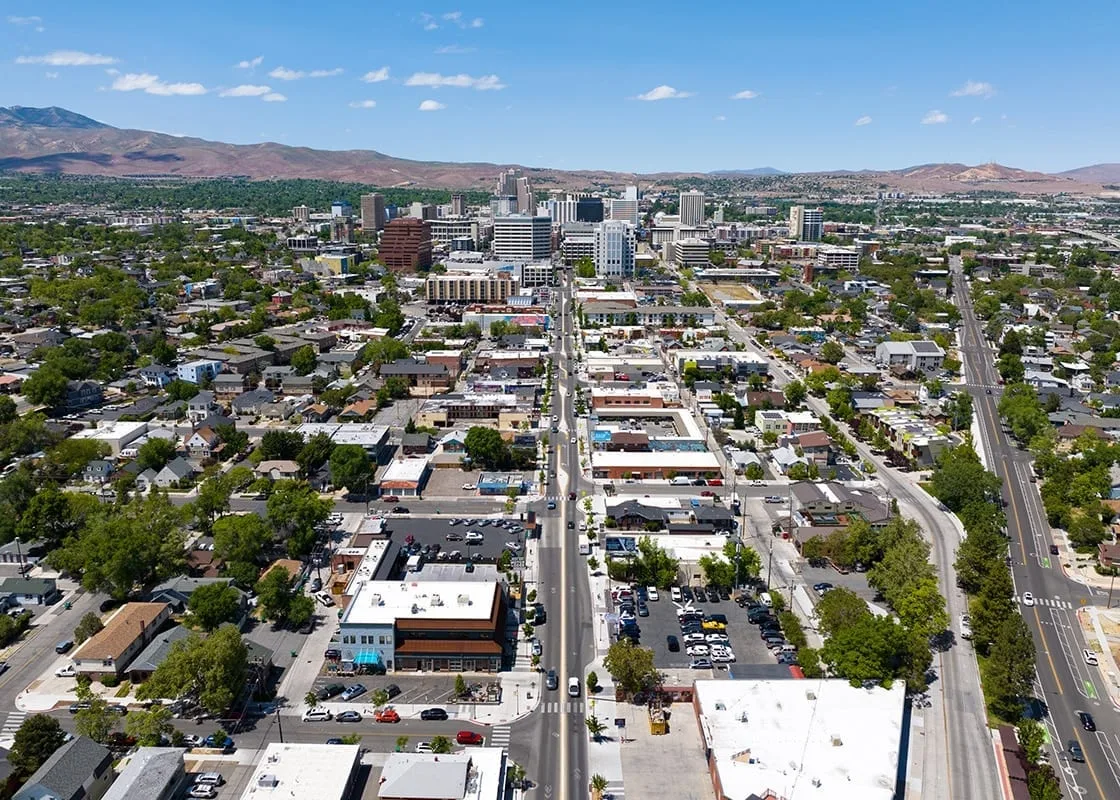
How Standard Burners Create Excess NOx
A conventional gas furnace uses an atmospheric or induced-draft burner. Natural gas and combustion air mix at or near the burner face, and the flame burns in an open chamber. The flame temperature in a standard residential burner reaches 3,000 to 3,500 degrees Fahrenheit. At those temperatures, thermal NOx formation accelerates rapidly. Standard residential furnaces typically produce NOx emissions in the range of 40 to 60 nanograms per joule (ng/J) of heat output. Some older units run higher. A standard atmospheric water heater operates in a similar range. The problem is not that any single appliance is a major polluter. It is that the cumulative load from hundreds of thousands of standard-emission appliances across the Valley adds measurable tons of NOx to the airshed every heating season. Clark County's Division of Air Quality tracks these sources as part of its emission inventory for the ozone State Implementation Plan.How Low-NOx and Ultra-Low-NOx Burners Work
Low-NOx burner technology attacks the root cause: flame temperature. The two primary approaches are premixed combustion and staged combustion. Premixed combustion blends natural gas and air thoroughly before ignition, creating a lean fuel-to-air mixture that burns at a lower, more uniform temperature. Instead of a concentrated hot flame, you get a distributed, cooler burn across a larger surface. Lower peak temperatures mean dramatically less thermal NOx formation. Staged combustion splits the burning process into two phases. The first stage burns fuel-rich with limited air, producing lower temperatures. The second stage introduces additional air to complete combustion. By never allowing a single high-temperature zone, staged burners keep NOx production low. Modern low-NOx residential furnaces combine these approaches — often using a sealed combustion chamber with a premixed burner and a secondary heat exchanger — to achieve NOx emissions at or below 14 ng/J. That is a 65 to 80 percent reduction from standard equipment. Ultra-low-NOx equipment pushes further, targeting emissions below 10 ng/J. These units use surface-stabilized premixed burners where the flame sits just above a porous ceramic or metal-fiber surface, spreading the combustion reaction across hundreds of tiny flame fronts rather than a single concentrated jet. The performance difference is not theoretical. When California's South Coast Air Quality Management District (SCAQMD) adopted Rule 1111, it set the low-NOx furnace standard at 14 ng/J — a threshold that forced manufacturers to redesign burner assemblies entirely. The equipment that resulted from that regulation is now available nationwide.
SCAQMD Rule 1111: Where the Standard Came From
Rule 1111 was originally adopted in 1978 to limit NOx from residential furnaces in the South Coast basin — the Los Angeles, Orange County, Riverside, and San Bernardino area that suffers the worst ozone pollution in the country. The initial limit was 40 ng/J. In 2009, SCAQMD amended Rule 1111 to drop the limit to 14 ng/J and phased in compliance by furnace type: condensing furnaces by October 2014, non-condensing by October 2015, and weatherized units by October 2016. Every furnace sold in the South Coast district has met the 14 ng/J standard for nearly a decade. The Bay Area Air Quality Management District followed with similar requirements. Colorado adopted ultra-low-NOx furnace mandates taking effect in 2026. The trend line is clear: what starts in Southern California's air quality districts does not stay there. Nevada has not adopted a residential low-NOx furnace mandate yet. But Clark County's escalating ozone non-attainment status puts pressure on the Division of Air Quality to consider every viable reduction strategy. Residential combustion equipment is a known, controllable source. Homeowners who install low-NOx equipment now are getting ahead of regulations that may arrive within the next code cycle.Equipment Options Available Today
Low-NOx technology is no longer a niche California product. Major manufacturers build compliant units for nationwide distribution, and the equipment is readily available through Las Vegas HVAC distributors. Furnaces: Brands including Lennox, Carrier, Rheem, Goodman, and Bryant offer furnace models rated at or below 14 ng/J. Most are available in both 80 percent AFUE (standard efficiency) and 95-plus percent AFUE (high efficiency) configurations. Variable-speed blower options pair well with low-NOx burners because they match airflow to heating demand, preventing the short-cycling that can spike emissions during startup. If your furnace needs repair and is more than 15 years old, replacement with a low-NOx unit is worth evaluating against continued repair costs. Water heaters: Rheem's Performance Platinum line and Bradford White's Eco-Defender series both offer ultra-low-NOx tank water heaters with emissions below 10 ng/J for some models. Standard residential gas water heaters typically emit 40 ng/J or more, so the reduction is substantial. If your water heater is failing, a low-NOx replacement costs modestly more than a standard unit while cutting emissions by 75 percent or better. Tankless water heaters: Most condensing tankless units from Rinnai, Navien, and Noritz already produce low NOx emissions because their premixed burner designs were developed with efficiency as the primary goal — and premixed combustion inherently generates less NOx. If you are considering tankless, you are likely getting low-NOx performance as a built-in benefit. Pool and spa heaters: For homes with heated pools — common in Las Vegas — Raypak and Pentair offer low-NOx pool heater models. Given that pool heaters can run significant hours during shoulder seasons, their cumulative NOx contribution is not trivial.Cost and Benefit Analysis for Las Vegas Homeowners
The cost premium for low-NOx equipment is real but moderate — and shrinking as production volume increases. Furnaces: A low-NOx furnace typically adds $300 to $800 to the installed cost compared to an equivalent standard-emission model of the same efficiency rating and capacity. The premium covers the redesigned burner assembly and sealed combustion components. On a $4,500 to $7,000 furnace installation, that is a 5 to 15 percent increase. Water heaters: Low-NOx tank water heaters carry a $100 to $300 premium over standard models. On a $1,200 to $2,000 installed water heater, the percentage increase is modest. Operating costs: Low-NOx equipment does not inherently cost more or less to operate than standard equipment at the same efficiency rating. The NOx reduction comes from burner design, not from burning more or less fuel. A 95 percent AFUE low-NOx furnace uses the same amount of gas as a 95 percent AFUE standard furnace — it just produces fewer emissions per therm. The honest payback question: Unlike high-efficiency equipment that pays back through lower utility bills, low-NOx equipment at the same efficiency level does not generate direct energy savings. The benefit is environmental and regulatory. You are paying a modest premium to reduce your home's contribution to ozone precursors in a Valley that is failing federal air quality standards. There is no monthly bill reduction to calculate against the upfront cost. That said, if you are already replacing equipment, the incremental cost of choosing low-NOx is small enough that it rarely changes the overall project economics. And if Clark County eventually adopts residential low-NOx requirements — following California and Colorado's lead — equipment installed today will already be compliant.What This Means for Your Next Equipment Decision
When your furnace or water heater reaches end of life in a Las Vegas home, the replacement decision now involves more than capacity, efficiency, and brand preference. The emissions profile of the equipment matters — both for air quality in the Valley and for potential future compliance. Here is a practical framework:- If you are replacing a furnace: Request low-NOx models from your contractor. The price difference is small, and you get a cleaner-burning unit that aligns with where regulations are heading. Pair it with proper duct sealing — leaky ducts waste conditioned air and force the system to run longer, producing more total emissions per heating season.
- If you are replacing a water heater: Ask about ultra-low-NOx tank models or consider condensing tankless, which offers both efficiency gains and inherently low NOx output. The combination of lower gas bills and reduced emissions makes tankless a strong option for Las Vegas homes with natural gas service.
- If you are building new: Specify low-NOx for every gas appliance — furnace, water heater, pool heater. The incremental cost across all appliances is marginal when rolled into construction financing, and you are building a home that meets tomorrow's standards.
- If your equipment still has life left: No need to replace functioning equipment solely for NOx reduction. Maintain it well, change filters on schedule, and plan for low-NOx when replacement time comes. Our heating services team can assess remaining useful life and help you plan the timing.
Frequently Asked Questions
Does Nevada require low-NOx furnaces or water heaters?
Not yet. Nevada and Clark County have not adopted residential low-NOx combustion equipment mandates as of mid-2024. California's SCAQMD Rule 1111 has required 14 ng/J furnaces since 2014-2016, and Colorado adopted ultra-low-NOx furnace requirements taking effect in 2026. Given Clark County's escalating ozone non-attainment status — reclassified from moderate to serious in January 2025 — the regulatory pressure to address all NOx sources, including residential combustion, is increasing. Installing low-NOx equipment now positions your home ahead of potential future requirements.
Will a low-NOx furnace lower my gas bill?
Not by itself. Low-NOx technology reduces emissions through burner design, not by changing fuel consumption. A low-NOx furnace at 80 percent AFUE uses the same gas as a standard furnace at 80 percent AFUE — it just produces 65 to 80 percent fewer nitrogen oxides per therm burned. If you want lower gas bills, choose a higher-efficiency rating (95 percent AFUE versus 80 percent). You can get both low-NOx and high-efficiency in the same unit, which gives you reduced emissions and reduced fuel costs. In Las Vegas's short heating season, the energy savings from a high-efficiency upgrade are modest — typically $80 to $150 per year — so the primary reason to choose low-NOx here is emissions reduction, not energy savings.
How much more does a low-NOx furnace cost compared to a standard model?
The typical premium is $300 to $800 on a furnace and $100 to $300 on a water heater, comparing models at the same efficiency rating and capacity. On a full furnace installation running $4,500 to $7,000 in Las Vegas, the low-NOx premium is roughly 5 to 15 percent of the total project cost. As more states adopt low-NOx mandates and production volumes increase, prices continue to converge with standard equipment. Some manufacturers have already made low-NOx their default production line for gas furnaces.
Why does Clark County keep failing ozone standards?
Three factors compound in the Las Vegas Valley. First, the metro area's 2.3 million residents and 40-plus million annual visitors generate heavy vehicle traffic and combustion emissions, producing the NOx and VOC precursors that form ozone. Second, Las Vegas sits in a topographic bowl ringed by mountains, which traps pollutants instead of dispersing them. Third, the Valley receives intense UV radiation across 294 sunny days per year, aggressively driving the photochemical reaction that converts NOx and VOCs into ground-level ozone. Wildfire smoke transported from California and the Pacific Northwest adds additional ozone precursors during summer months. The EPA reclassified Clark County from marginal to moderate non-attainment in 2023, then to serious in January 2025, with an August 2027 attainment deadline.
Can I retrofit my existing furnace with a low-NOx burner?
In almost all cases, no. Low-NOx performance depends on the complete burner and heat exchanger assembly — the sealed combustion chamber, the premixed gas-air delivery, and the flame distribution pattern. These components are engineered as an integrated system. You cannot bolt a low-NOx burner onto a furnace designed for standard atmospheric combustion. When your current furnace reaches end of life, that is the time to step into low-NOx equipment. Until then, keep your existing system maintained, ensure the burners are clean, and verify the gas-air mixture is properly adjusted — a well-maintained standard furnace produces less NOx than a neglected one.
Talk to The Cooling Company About Low-NOx Equipment
The Cooling Company installs low-NOx furnaces and water heaters across Las Vegas, Henderson, and North Las Vegas. Our technicians can walk you through the equipment options, explain the cost differences for your specific situation, and help you choose equipment that meets both your comfort needs and the Valley's air quality reality. Whether your furnace is due for replacement or you are planning a new build, we will give you an honest assessment of what low-NOx means for your home and budget.
Call us at (702) 567-0707 to schedule a consultation, or explore our services below.