

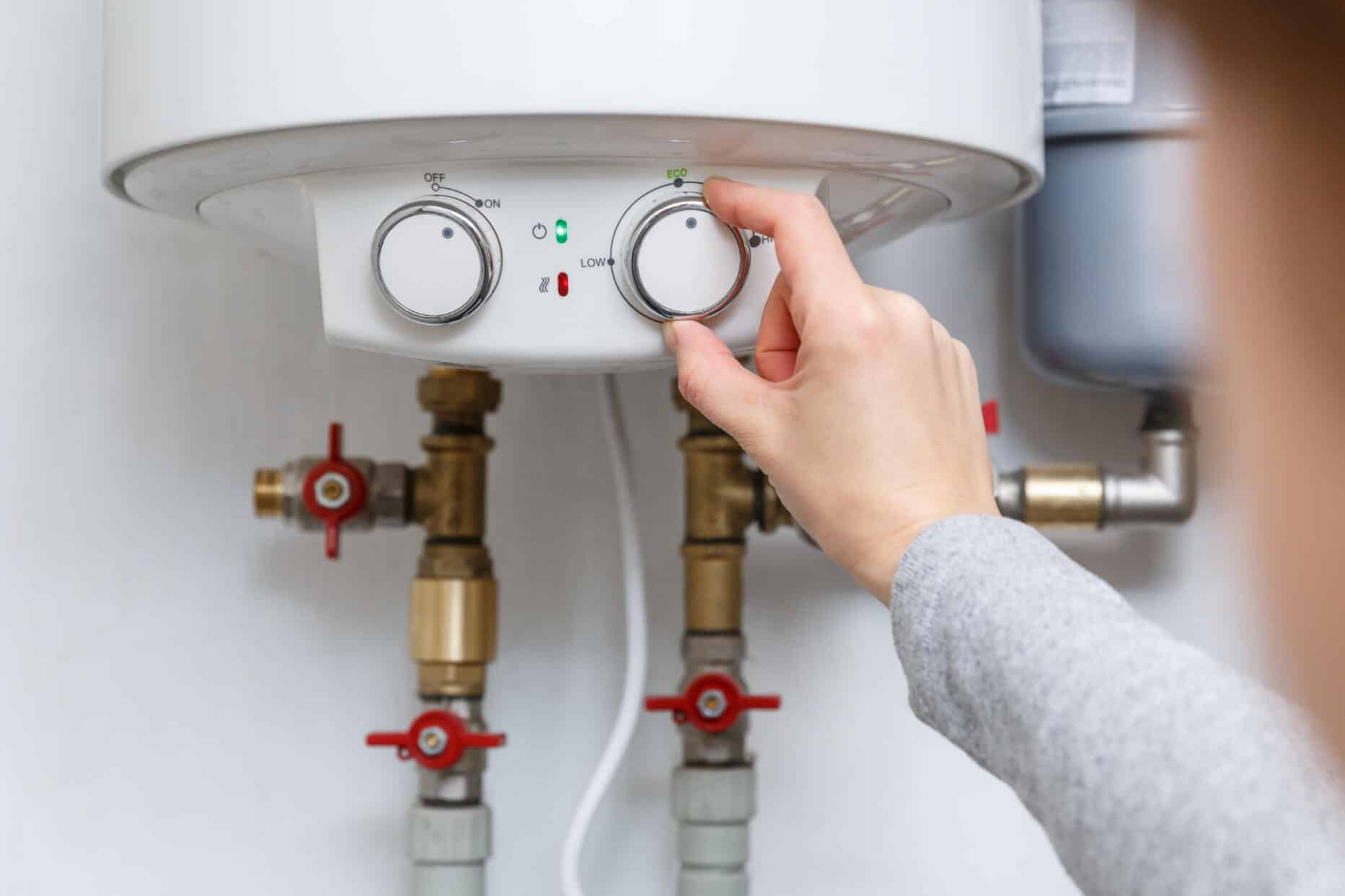
Short answer: Most tankless water heaters require 0.4 to 0.75 GPM of water flow before the burner activates — a slow trickle at the faucet will not trigger heating. Las Vegas groundwater enters at about 65°F, meaning you need less temperature rise than colder climates, so a smaller unit can often handle the load. Hard water scale can also coat flow sensors over time, reducing activation sensitivity.
Key Takeaways
- Most tankless water heaters require 0.4 to 0.75 GPM of flow before they activate — a trickle at the tap won't trigger the burner.
- Las Vegas groundwater comes in around 65°F, which means you need less temperature rise than homeowners in colder climates, and a smaller unit can often handle the load.
- Hard water in the Las Vegas Valley can coat flow sensors and restrict the internal pathways that measure activation flow — regular descaling keeps performance where it should be.
We get this call more than once a week: a homeowner just had a tankless water heater installed, and now they can't get hot water at a slow drip from the bathroom sink. The unit isn't broken. The installation isn't wrong. The problem is almost always that the flow rate at that fixture falls below the heater's minimum activation threshold. Understanding the difference between a unit's minimum trigger flow and its maximum capacity is the single most important concept in tankless water heater sizing — and it's one most people never hear about until something feels off.
What is minimum flow rate and why does it matter?
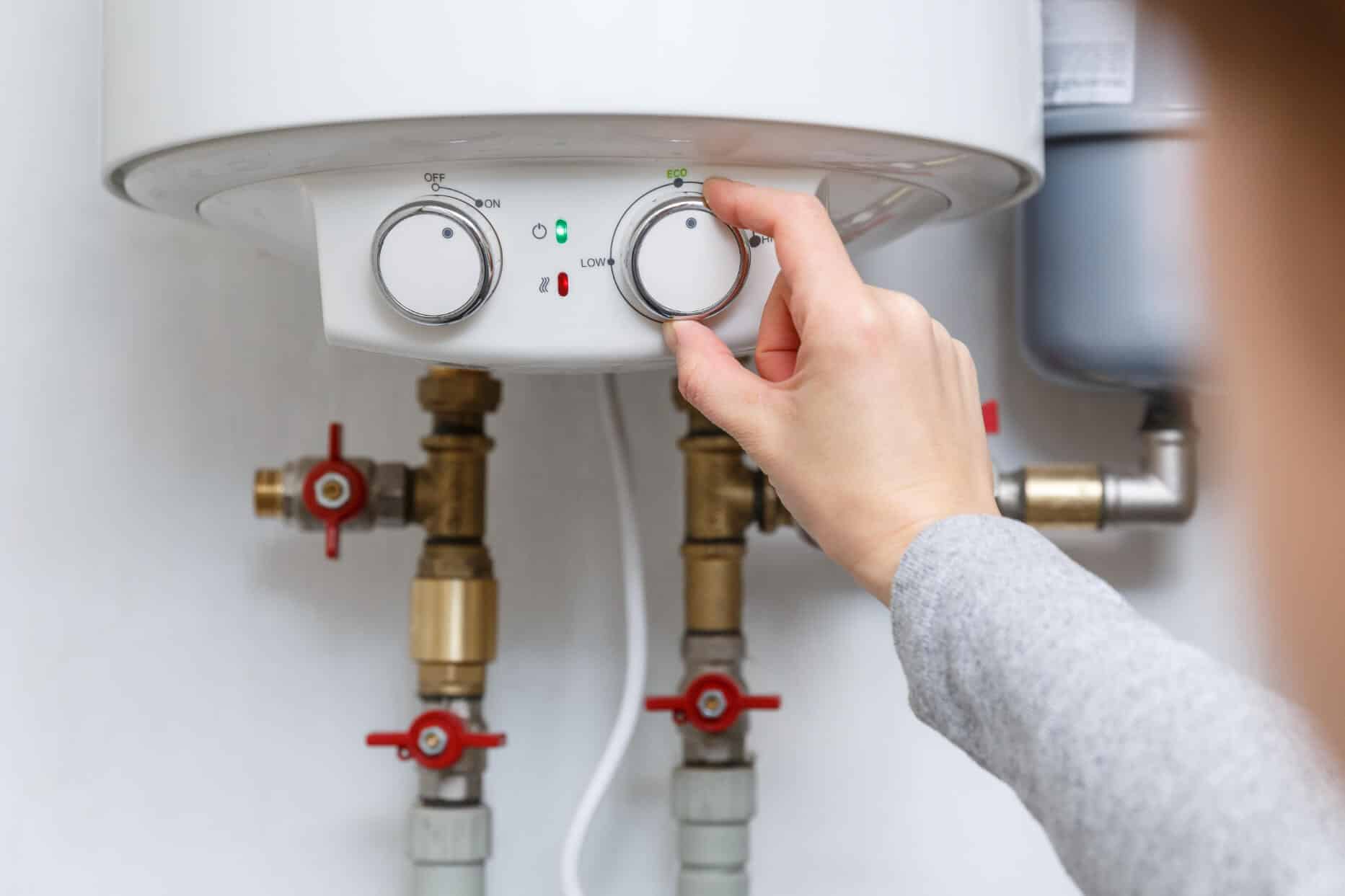
A tankless water heater is not like a tank. There's no reservoir of heated water sitting ready to deliver. Instead, the unit has a flow sensor — usually a turbine or hall-effect paddle — that detects water moving through the heat exchanger. When flow crosses a set threshold, the sensor signals the control board to open the gas valve and ignite the burner. Below that threshold, the sensor reads nothing and the burner never fires. You get cold water at the tap.
That activation threshold is the minimum flow rate, typically expressed in gallons per minute. Most residential tankless water heaters set this threshold between 0.4 GPM and 0.75 GPM. Budget units and some commercial models sit closer to 0.75 GPM. Premium residential models from manufacturers like Rinnai, Navien, and Noritz have pushed this number down to 0.4 GPM or even lower, which matters when you're filling a bathtub slowly or running a low-flow bathroom faucet.
Why does this create problems in practice? Modern low-flow faucet aerators restrict flow to 0.5 GPM or even 0.35 GPM to meet WaterSense standards. If your faucet aerator is delivering 0.4 GPM and your unit won't trigger until 0.55 GPM, you'll never get hot water from that tap alone. The fix is sometimes as simple as removing the aerator or replacing it with a 1.0 GPM model. Other times, the solution is a unit with a lower activation threshold. Either way, you can't solve the problem until you understand what's causing it.
The minimum flow rate also matters for small point-of-use applications. A single bathroom sink, a kitchen pot filler, or an outdoor utility sink may not push enough water to keep the burner running consistently. We always ask customers what they plan to run simultaneously before we recommend a unit — not just how many fixtures, but the actual flow rates those fixtures produce.
Maximum GPM ratings explained
The number prominently displayed on every tankless water heater box is the maximum flow rate: the highest volume of water the unit can heat while still hitting the target output temperature. Residential units typically range from 5 GPM on the low end to 10 GPM or more for whole-home gas models. Electric tankless heaters generally top out around 3 to 4 GPM for whole-home use.
This maximum rating is not a fixed number. It's a function of how much temperature rise the water needs. If your incoming groundwater is cold, the unit has to add more heat energy to reach your set point — which means it can move less water per minute while still hitting the target. If your incoming water is warmer, the same unit can push a higher flow rate to the same output temperature because it has less heating work to do per gallon.
This is the relationship that makes Las Vegas an unusually favorable market for tankless water heaters. We'll cover the math in the next section, but the short version is that our groundwater temperature gives local homeowners a real capacity advantage over the same unit installed in Minneapolis or Denver.
When you see a spec sheet that says "6.6 GPM at a 35°F rise," that means the unit can deliver 6.6 gallons per minute when it only needs to raise the water temperature by 35 degrees. If you need a 55°F rise, that same unit might only deliver 4.2 GPM. The manufacturer's documentation usually includes a flow rate table at multiple temperature rises — always look at the row that matches your actual incoming water temperature, not the best-case scenario.
Temperature rise calculations for Las Vegas
Temperature rise is simple math: your desired output temperature minus your incoming groundwater temperature. Most people set their tankless unit to deliver water at 120°F, which is the standard recommended by the Consumer Product Safety Commission to prevent scalding while also discouraging Legionella growth.
Las Vegas groundwater comes out of the tap at roughly 65°F year-round, with some seasonal variation between about 60°F in winter and 70°F in summer. For our calculation, we'll use 65°F as a conservative baseline.
120°F target minus 65°F incoming = 55°F temperature rise required.
Now compare that to a homeowner in Chicago, where groundwater sits closer to 45°F in winter:
120°F target minus 45°F incoming = 75°F temperature rise required.
That 20-degree difference is significant. A unit rated for 7.0 GPM at a 55°F rise might only deliver 5.2 GPM at a 75°F rise. For Las Vegas homeowners, this means we can often size down one model tier and still cover the same number of simultaneous fixtures. It also means a unit that "can't keep up" in Chicago may work perfectly here under identical installation conditions.
Here's a practical example of how we run this calculation for a typical Las Vegas home. A family of four wants to run a master shower at 2.0 GPM, a kitchen faucet at 1.5 GPM, and a dishwasher at 1.0 GPM simultaneously. Total demand: 4.5 GPM.
We need a unit that delivers at least 4.5 GPM at a 55°F rise. We typically recommend sizing to 110–120% of peak demand to avoid the unit running flat-out at maximum capacity during simultaneous draws, so we'd look at units rated for 5.0 to 5.5 GPM at a 55°F rise. For a Las Vegas home, that's very achievable with mid-range residential gas units.
For larger homes or households with multiple bathrooms running simultaneously, 7.0 to 9.5 GPM units are common. We work through the calculation on every job rather than defaulting to the largest unit available — oversizing a tankless heater wastes money on equipment and can actually cause short-cycling in some configurations.
Fixture GPM reference guide
Accurate sizing starts with knowing the actual flow rates of your fixtures. Here are typical values we use in the field. These are real-world numbers, not manufacturer maximums — flow restrictors, aerators, and water pressure all affect actual delivery.
- Standard showerhead: 2.0–2.5 GPM (WaterSense certified models drop to 1.75 GPM or lower)
- Bathtub faucet (filling): 3.0–4.0 GPM
- Kitchen faucet: 1.5–2.2 GPM (1.0 GPM with a restrictor aerator)
- Bathroom lavatory faucet: 0.5–1.5 GPM (WaterSense models at 0.5 GPM)
- Dishwasher: 0.9–1.5 GPM
- Clothes washer (hot cycle): 1.5–3.0 GPM
- Utility/mop sink: 1.5–2.5 GPM
- Outdoor kitchen or hose bib (hot): 2.0–3.0 GPM
The numbers that matter most for sizing are the fixtures you realistically expect to run at the same time. We ask homeowners to think about their morning rush: who's in the shower while someone's making coffee and the dishwasher is running its heated dry cycle. That scenario, not the theoretical maximum, is the load the unit needs to handle.
The fixtures that matter most for minimum flow rate are the low-demand ones used alone: the bathroom sink at a trickle, the kitchen faucet at a slow stream. If those fixtures produce less flow than your unit's activation threshold, you'll get cold water every time you use them independently. That's the complaint we hear most often from homeowners who bought a tankless unit without understanding this spec.
How Las Vegas hard water affects flow sensors
Las Vegas water is some of the hardest in the country. The Las Vegas Valley Water District reports hardness levels commonly between 278 and 400 parts per million, well above the 120 ppm threshold that starts causing noticeable scale buildup. That hardness is calcium and magnesium carbonate — the same minerals that leave white spots on your shower door and that ring around the toilet bowl.
Inside a tankless water heater, those minerals do two things that directly affect flow rate performance.
First, scale builds up inside the heat exchanger. The heat exchanger is a coiled copper or stainless steel pathway where water absorbs heat from the burner. As scale accumulates on the interior walls of that coil, the effective diameter of the pathway shrinks. The unit has to work harder to move the same volume of water, pressure drop across the heat exchanger increases, and the unit may struggle to deliver its rated maximum GPM without a pressure drop at the fixture.
Second, and more directly relevant to flow rate triggering, scale affects the flow sensor. The turbine or paddle that detects water movement can become sluggish or stuck as mineral deposits coat the sensor housing and bearing surfaces. A sensor that was calibrated to trigger at 0.5 GPM may now require 0.7 or 0.8 GPM before it reads a reliable signal — because the mechanical resistance from scale means the sensor doesn't spin freely at low flow rates anymore. The result is that the unit's effective minimum activation threshold creeps upward over time, even though the manufacturer's spec hasn't changed.
We recommend annual descaling for Las Vegas tankless water heaters — more frequently for households with particularly hard water or high usage. The process involves flushing the heat exchanger with a food-grade descaling solution (white vinegar or citric acid works, commercial descalers work better) using a small pump and hose kit. It takes about 45 minutes and makes a measurable difference in both flow rate performance and energy efficiency. A scaled heat exchanger requires more gas to produce the same output temperature, so descaling also keeps operating costs down.
Installing a whole-house water softener or a dedicated tankless water heater pre-filter can reduce scale formation significantly. Some homeowners in areas with extreme hardness opt for a sediment pre-filter combined with a scale inhibitor cartridge — these don't remove hardness minerals but coat them so they're less likely to adhere to heat exchanger surfaces. We see this used most in the 89002, 89074, and 89052 zip codes where hardness levels tend to run high. Visit our plumbing services page if you want us to evaluate your water quality and recommend the right pre-treatment approach for your situation.
Sizing a tankless unit for your home
Pulling together everything above, here's how we approach sizing for a Las Vegas home.
Step one: list every hot water fixture in the home and its realistic flow rate. Don't use the manufacturer's maximum for the fixture — use what actually comes out at normal operating pressure. If you're not sure, put a one-gallon container under the tap, turn it on to your normal position, and time how long it takes to fill. Divide 60 by that number of seconds to get GPM.
Step two: identify the peak simultaneous load. Which fixtures would realistically run at the same time on a busy morning? Add those flow rates. That's your design load.
Step three: apply the Las Vegas temperature rise. Incoming water at 65°F, target output at 120°F, temperature rise of 55°F. Look up the unit's rated flow at a 55°F rise in the manufacturer's specification table — not the headline number on the box.
Step four: size the unit to 110–120% of the design load to give yourself a performance buffer. A unit running at 80% of maximum capacity delivers more consistent results than one constantly at its limit.
Step five: check the minimum activation flow rate against your lowest-demand fixture. If that fixture can't produce enough flow to trigger the burner on its own, consider a unit with a lower activation threshold or accept that you'll need to open the tap further when using it alone.
For most Las Vegas single-family homes, a natural gas tankless unit rated for 6.5 to 8.0 GPM at a 55°F rise handles two to three simultaneous fixtures without strain. Larger homes with four or more bathrooms and consistent simultaneous demand sometimes need a 9.5 GPM unit or two smaller units piped in series or parallel. We've done both configurations in Henderson and Summerlin — parallel units in particular are useful when you have a large master suite on one side of the home and a kitchen and secondary bathroom on the other, because it reduces the pipe run distance and improves response time.
If you'd like us to walk through the sizing calculation for your home, our water heater service team does this as part of every consultation. We don't upsell to the largest unit — we find the unit that actually fits your usage pattern.
Frequently asked questions
Why does my tankless water heater work fine in the shower but not at the bathroom sink?
The shower produces enough flow — typically 1.75 to 2.5 GPM — to exceed the unit's minimum activation threshold. The bathroom sink faucet with a low-flow aerator may only produce 0.5 GPM, which falls below the trigger point. The burner simply never fires. The fix is either a unit with a lower minimum flow rate (look for models rated at 0.4 GPM or below) or replacing the faucet aerator with a higher-flow model in the 1.0–1.5 GPM range. Removing the aerator entirely is a quick test to confirm this is the issue before you invest in either solution.
Does the Las Vegas climate actually make a difference for tankless sizing?
Yes, meaningfully. Our groundwater enters the system at roughly 65°F, compared to 40–50°F in cold-winter markets. That 15 to 25 degree advantage translates directly into available capacity. A unit rated for 6.6 GPM at a 35°F rise produces noticeably less at a 55°F rise — but in Las Vegas, that 55°F rise is already a favorable scenario compared to northern climates where homeowners need 70°F or more of rise. You can often meet the same fixture load with a smaller unit here than you could in a colder market, which reduces equipment cost and can improve efficiency.
How often does hard water actually cause flow rate problems in Las Vegas?
We see scale-related flow sensor issues on units that haven't been descaled in two or more years. The symptoms are gradual: the unit that used to trigger reliably at the kitchen sink starts requiring the faucet to be opened a bit further. Or the unit starts showing error codes related to flow detection. In severe cases, the sensor stops reading accurately and the unit won't activate at all. Annual descaling prevents this. If you've never flushed your tankless unit with a descaling solution, and it's been more than 18 months since installation, call us at (702) 567-0707 — it's a straightforward service call that extends equipment life significantly.
Can I run a whole house on one tankless unit, or do I need two?
For most Las Vegas single-family homes under 2,500 square feet with two to three bathrooms, one properly sized gas tankless unit handles the load without issue. Larger homes with four or more bathrooms, or any home where simultaneous demand regularly exceeds 7 to 8 GPM, benefit from two units. The two-unit approach also provides redundancy — if one unit needs service, you still have hot water. Some builders and high-end remodels we work on in Summerlin and Henderson spec dual units as a standard practice regardless of square footage, precisely for that redundancy reason. We're happy to run the numbers for your specific floor plan and tell you definitively which approach makes sense.
What maintenance does a tankless water heater actually need in Las Vegas?
Given our hard water, more than in most markets. Annual descaling of the heat exchanger is the primary task — it takes 45 to 60 minutes and should be done by a licensed plumber using a proper descaling pump kit. The inlet filter screen should be checked every six months and cleaned if sediment has accumulated. The pressure relief valve should be tested annually to confirm it opens and reseats properly. And if you have a gas unit, the burner and venting should be inspected every two to three years to confirm combustion is clean and venting is unobstructed. We offer maintenance packages for tankless units that cover all of this on a scheduled basis — contact us at (702) 567-0707 to set one up.
Get Tankless Water Heater Help in Las Vegas
The Cooling Company installs, services, and maintains tankless water heaters throughout Las Vegas, Henderson, and North Las Vegas. Our licensed plumbers work through the flow rate math with you, account for Las Vegas groundwater conditions, and size units to your actual usage — not the spec sheet maximum.
Call (702) 567-0707 or visit tankless water heaters, water heater repair, or plumbing services for more information.