

Short answer: Particulate matter (PM) is microscopic airborne particles classified by size: PM10 (dust, pollen, mold spores) irritates upper airways, while PM2.5 (wildfire smoke, vehicle exhaust) penetrates deep into lung tissue and enters the bloodstream. Clark County exceeded the EPA's 24-hour PM10 standard on 22 days in 2023. MERV 13 filters and HEPA air purifiers are the most effective indoor defenses.
Clark County exceeded the EPA's 24-hour PM10 standard on 22 days in 2023. On several of those days, the AQI pushed past 200 — the "Very Unhealthy" threshold — and the particulate causing it was not factory smoke or industrial soot. It was the desert itself. Wind-driven alkaline dust from dry lake beds, construction grading in new master-planned communities, and wildfire smoke drifting east from California's Sierra Nevada combined to create the kind of air quality that sends emergency room visits for asthma and COPD spiking across the valley.
If you live in Las Vegas, particulate matter is not an abstract environmental concept. It is the gritty film on your windowsills after a spring windstorm. It is the brown haze hanging over the 215 beltway on a still August afternoon when California fires are burning. It is the reason your white HVAC filter turns dark gray in three weeks instead of the three months printed on the packaging. Understanding what particulate matter actually is — the specific sizes, the specific sources, the specific health consequences — is the first step toward protecting your household from it.
What particulate matter actually is
Particulate matter (PM) is a catch-all term for microscopic solid particles and liquid droplets suspended in the air. The EPA classifies it by diameter because size determines how deep into your respiratory system a particle can travel and how long it stays airborne.
PM10 refers to particles with a diameter of 10 micrometers or less — roughly one-seventh the width of a human hair. These are the coarse particles: desert dust, pollen, mold spores, and road grit. Your nose and throat can filter some PM10, but a significant portion reaches the upper lungs. PM10 causes the visible haze you see during Las Vegas dust events and is the particulate category where Clark County most frequently exceeds federal limits.
PM2.5 refers to fine particles with a diameter of 2.5 micrometers or less. These are the dangerous ones. At that size, particles bypass the nose and throat entirely and penetrate deep into the alveoli — the tiny air sacs in your lungs where oxygen enters the bloodstream. Wildfire smoke, vehicle exhaust, and combustion byproducts dominate the PM2.5 category. PM2.5 particles are so small they can pass through the alveolar membrane and enter the bloodstream, which is why long-term PM2.5 exposure is linked to cardiovascular disease, not just respiratory problems.
There is also an ultrafine category — PM0.1, particles smaller than 0.1 micrometers — generated primarily by vehicle exhaust and combustion. These are the least studied but potentially most damaging, as they can cross biological barriers that larger particles cannot. If your home sits within a quarter mile of I-15, US-95, or the 215 beltway, ultrafine particulate exposure is a legitimate concern.
Where Las Vegas particulate matter comes from
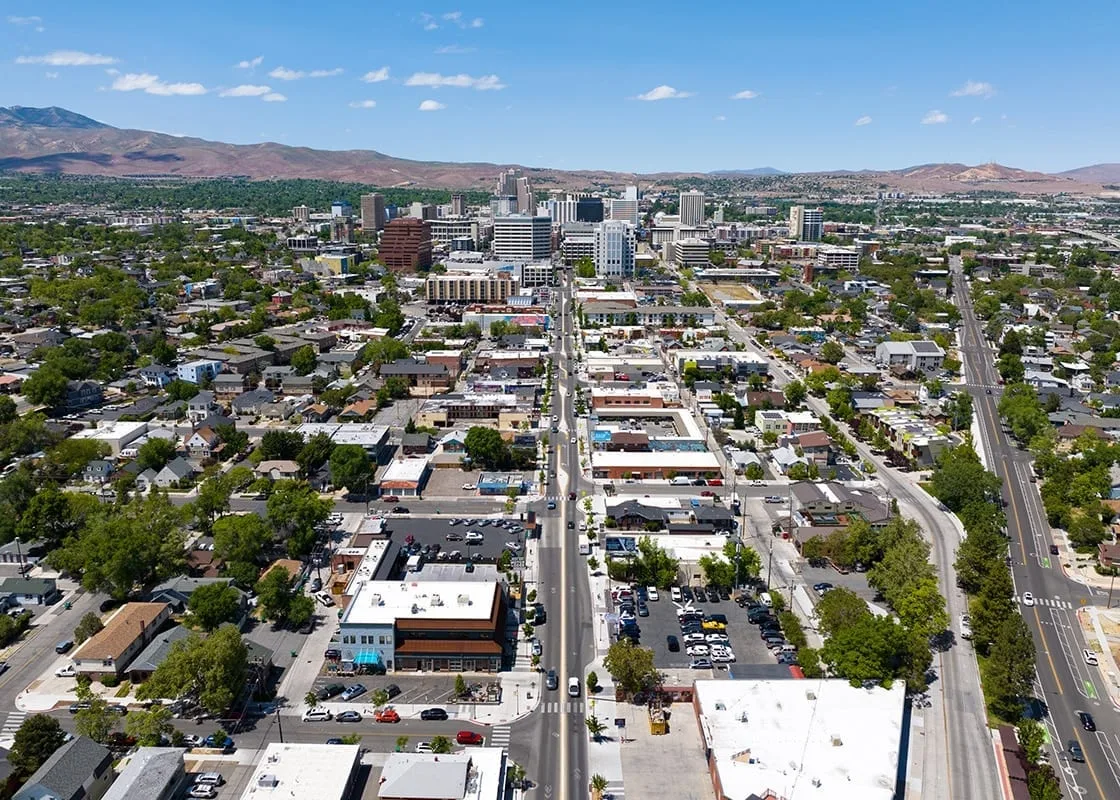
Every city has particulate sources. Las Vegas has more of them, more intensely, more often than almost any other major metro in the country. The American Lung Association has ranked the Las Vegas-Henderson-Paradise metro area among the top 10 most polluted U.S. cities for short-term particle pollution in multiple recent reports. Here is where the particles originate.
Desert dust and disturbed soil
The Las Vegas valley sits in the Mojave Desert, surrounded by thousands of square miles of exposed, unvegetated soil. The valley floor consists largely of caliche — a calcium carbonate-ceite hardpan that, when broken by construction or weathering, produces fine alkaline dust. The dry lake beds at Jean, Ivanpah, and the remnants of Las Vegas Wash add additional exposed sediment that wind events lift into the atmosphere.
Spring wind season — roughly March through June — brings sustained winds of 25 to 40 MPH with gusts exceeding 60 MPH. These events generate PM10 concentrations that can exceed 300 micrograms per cubic meter. The EPA's 24-hour PM10 standard is 150 micrograms per cubic meter. A single spring windstorm can blow the valley past that limit before noon.
Haboobs and dust storms
Las Vegas experiences haboobs — massive dust walls associated with monsoon thunderstorm outflows — primarily between June and September. A haboob hits fast. A wall of dust 1,000 to 3,000 feet tall can cross the valley in under an hour, driving PM10 concentrations to extreme levels and depositing a visible layer of fine sediment on every outdoor surface. During a haboob, visibility can drop below a quarter mile. The particulate does not disappear when the wall passes. Suspended dust from a significant haboob can keep AQI readings elevated for 24 to 48 hours afterward, especially in neighborhoods with minimal landscaping or near active construction zones where the deposited dust is easily re-entrained by traffic and wind.
Wildfire smoke from California and the West
Las Vegas is downwind of California's fire-prone landscapes. When major wildfires burn in the Sierra Nevada, the Mojave National Preserve, or Southern California's chaparral zones, prevailing westerly and southwesterly winds carry smoke plumes directly into the Las Vegas valley. This smoke is predominantly PM2.5 — the fine particulate that penetrates deepest into the lungs.
During the 2020 and 2021 California wildfire seasons, Las Vegas experienced multiple days where PM2.5 readings exceeded 55 micrograms per cubic meter — more than four times the EPA's annual PM2.5 standard of 12 micrograms per cubic meter. The smoke was visible as a brown-yellow haze that obscured the Spring Mountains from view and gave the valley an acrid smell that lasted for days. These are not once-in-a-generation events anymore. Western wildfire seasons are growing longer and more intense, and Las Vegas catches the smoke nearly every summer and fall.
Vehicle exhaust on I-15, US-95, and the 215 beltway
Las Vegas is a car-dependent city with over 2 million residents and 40 million annual visitors. I-15 carries 200,000 to 300,000 vehicles per day through the metro area. US-95 and the 215 beltway handle another 100,000 to 200,000 combined. Diesel trucks on I-15 between Las Vegas and Southern California are a particularly significant source of PM2.5 and ultrafine particles from combustion exhaust.
The valley's bowl-shaped topography — ringed by mountains on three sides — traps vehicle emissions during temperature inversions, which occur frequently in fall and winter. On inversion days, a layer of warm air sits above cooler surface air and acts like a lid, preventing pollutants from dispersing vertically. The result is a visible brown layer of smog that settles over the valley floor, concentrating PM2.5 from vehicle exhaust at breathing level. Homes near major interchanges — the Spaghetti Bowl, the I-15/215 interchange, the US-95/Summerlin Parkway junction — face the highest concentrations.
Construction activity
With billions of dollars in residential and commercial construction ongoing at any given time, Las Vegas has enormous volumes of airborne construction dust. Grading undeveloped desert lots, cutting concrete, hauling fill dirt, and demolishing older structures all generate PM10 and PM2.5. Clark County's Department of Environment and Sustainability regulates construction dust through dust-control permits and requires water trucks, chemical stabilizers, and track-out prevention — but enforcement lags behind the pace of development. If you live in or near Skye Canyon, Cadence, the south end of the 215, or any major corridor with active development, construction dust is a daily contributor to your particulate exposure.
EPA standards and what the AQI numbers mean
The EPA sets National Ambient Air Quality Standards (NAAQS) for particulate matter in two forms:
- PM2.5 annual standard: 12.0 micrograms per cubic meter (annual mean, averaged over 3 years)
- PM2.5 24-hour standard: 35 micrograms per cubic meter (98th percentile, averaged over 3 years)
- PM10 24-hour standard: 150 micrograms per cubic meter (not to be exceeded more than once per year on average over 3 years)
Clark County has been designated a nonattainment area for PM10 by the EPA, meaning it regularly fails to meet the federal standard. PM2.5 levels in the valley generally stay within the annual standard but exceed the 24-hour standard during wildfire smoke events and severe dust storms.
The Air Quality Index (AQI) translates raw particulate concentrations into a 0-to-500 scale with color-coded health categories:
- 0-50 (Green, Good): Satisfactory air quality. Uncommon in Las Vegas during spring wind season or wildfire events.
- 51-100 (Yellow, Moderate): Acceptable for most people. Unusually sensitive individuals may experience symptoms. This is the baseline for many Las Vegas days.
- 101-150 (Orange, Unhealthy for Sensitive Groups): People with asthma, heart disease, or lung disease should reduce prolonged outdoor exertion. Common during moderate dust events.
- 151-200 (Red, Unhealthy): Everyone may begin to experience health effects. Sensitive groups should avoid outdoor exertion. Occurs during significant windstorms and wildfire smoke events.
- 201-300 (Purple, Very Unhealthy): Health alert — everyone should reduce outdoor activity. Las Vegas hits this range during major haboobs and heavy wildfire smoke intrusions.
You can check real-time Las Vegas AQI at AirNow.gov or through the EPA's AirNow app. Clark County also operates its own monitoring network with stations throughout the valley. On days when the AQI exceeds 100, your HVAC system's filtration becomes the primary barrier between outdoor particulate and the air your family breathes indoors.
Health effects of particulate matter exposure
Particulate matter does not just irritate your sinuses. Decades of epidemiological research have established clear, dose-dependent relationships between PM exposure and a range of serious health outcomes.
Short-term effects (hours to days of elevated exposure)
- Aggravated asthma attacks — the Clark County Health District reports measurable spikes in ER asthma visits within 24 hours of high-AQI days
- Coughing, wheezing, and shortness of breath, even in people without diagnosed lung conditions
- Eye, nose, and throat irritation
- Chest tightness and reduced lung function, measurable on spirometry testing
- Increased susceptibility to respiratory infections — PM2.5 impairs the mucociliary clearance mechanism that keeps pathogens out of the lower lungs
Long-term effects (months to years of chronic exposure)
- Reduced lung function development in children, which may be permanent
- Increased risk of cardiovascular disease — PM2.5 triggers systemic inflammation and promotes arterial plaque formation
- Higher incidence of chronic bronchitis and COPD
- Association with increased lung cancer risk, particularly for PM2.5 from combustion sources
- Elevated risk of premature death — the EPA estimates that PM2.5 exposure contributes to tens of thousands of premature deaths annually in the United States
People most vulnerable to particulate matter include children under 14 (whose lungs are still developing), adults over 65, anyone with existing heart or lung disease, outdoor workers, and athletes who exercise outdoors. In Las Vegas, construction workers, landscapers, and the hundreds of thousands of hospitality workers who spend time on outdoor gaming floors, pool decks, and valet areas face higher-than-average exposure.
How your HVAC system fits into particulate protection
Your HVAC system circulates the entire volume of air in your home 5 to 7 times per day. Every cubic foot of air passes through the return duct and across a filter before being conditioned and pushed back into your living spaces. The quality of that filter — and the integrity of your ductwork — determines whether your HVAC system is cleaning particulate out of your indoor air or just recirculating it.
Air filtration is the frontline
Standard builder-installed fiberglass filters (MERV 1-4) catch lint and large debris. They do virtually nothing for PM10 and absolutely nothing for PM2.5. A MERV 8 pleated filter catches most PM10 but lets the majority of PM2.5 pass through. For effective particulate protection in Las Vegas, a MERV 13 filter is the minimum recommendation. MERV 13 captures approximately 85% of particles in the 1.0 to 3.0 micrometer range and over 90% of particles in the 3.0 to 10.0 micrometer range. That covers the critical PM2.5 and PM10 categories that matter for health. For more on choosing the right filter for Las Vegas conditions, see our air filtration guide.
In Las Vegas, filter replacement intervals must be shorter than the manufacturer's recommendation. The standard 90-day guidance assumes moderate dust environments. Las Vegas is not moderate. During spring wind season, wildfire smoke events, or if you live near active construction, filters can load up in 20 to 30 days. A loaded filter restricts airflow, forces the blower motor to work harder, increases energy consumption by 5 to 15%, and eventually allows dirty air to bypass the filter through gaps in the filter housing. Check your filter monthly. Replace it when it is visibly gray or when airflow across it feels restricted.
Ductwork integrity matters
Leaky ductwork — especially in unconditioned attic spaces, which hit 150 degrees F or higher during Las Vegas summers — pulls in unfiltered attic air containing dust, insulation fibers, and whatever has accumulated in the attic over the years. A duct system with 20 to 30% leakage (common in homes built before 2010) undermines even the best filter because a significant portion of your supply air never passes through the filter at all. Professional duct sealing closes these leaks and ensures that all air entering your living space has been filtered.
Whole-house air purification
For households with members who are especially vulnerable to particulate matter — children with asthma, elderly residents, anyone with COPD or cardiovascular disease — a whole-house air purification system adds a second layer beyond filtration. These systems install in the ductwork and use technologies like HEPA-grade media, photocatalytic oxidation, or bipolar ionization to capture or neutralize particles that pass through the primary filter. Combined with MERV 13 filtration, a whole-house purifier can reduce indoor PM2.5 concentrations to levels well below outdoor ambient air — even on high-AQI days.
Keeping the system running during bad air days
On days when the AQI is elevated — wildfire smoke events, dust storms, post-haboob settling periods — keep your HVAC system running in "fan on" mode even if the house is at temperature. This continuously circulates indoor air through the filter, steadily reducing particulate concentrations. Every pass through a MERV 13 filter removes another percentage of suspended particles. Running the fan costs roughly $0.50 to $1.00 per day in electricity. That is a small price compared to an ER visit or a week of aggravated asthma symptoms.
Keep windows and doors closed during elevated AQI periods. Every door opening introduces a slug of unfiltered outdoor air. If you must open doors for entry and exit, do so quickly and consider running the fan continuously for 30 minutes afterward to clear the particulate that entered.
Practical steps for Las Vegas homeowners
- Monitor the AQI daily — bookmark AirNow.gov or download the EPA AirNow app. Check it every morning like you check the temperature.
- Upgrade to MERV 13 filters — confirm your system can handle the airflow restriction (most systems built after 2005 can; older systems may need a filter housing upgrade). Your HVAC tech can confirm during a routine maintenance visit.
- Change filters every 30 to 45 days during spring wind season (March-June) and wildfire season (July-November). Extend to 60 days during mild winter months if the filter still looks clean.
- Schedule professional duct inspection — have your ductwork tested for leakage and sealed if necessary. This is especially important if your home was built before 2010 or if you have never had the ducts inspected.
- Run the fan continuously on high-AQI days — set the thermostat fan switch to "on" instead of "auto" to keep air cycling through the filter.
- Consider whole-house air purification if anyone in the household has asthma, COPD, cardiovascular disease, or compromised immunity. Visit our indoor air quality page for a breakdown of system options and costs.
- Maintain your system — a dirty evaporator coil, a blower motor running at reduced speed, or a cracked filter housing all reduce the system's ability to clean your air. Twice-yearly professional maintenance catches these issues before they compromise filtration.
Frequently Asked Questions
What is the difference between PM2.5 and PM10?
PM10 refers to particles 10 micrometers or smaller in diameter — coarse particles like desert dust, pollen, and mold spores. PM2.5 refers to fine particles 2.5 micrometers or smaller — primarily combustion byproducts like wildfire smoke and vehicle exhaust. The critical difference is penetration depth: PM10 reaches the upper lungs and airways, while PM2.5 penetrates deep into the alveoli and can enter the bloodstream. PM2.5 is considered more dangerous for long-term health, but PM10 causes more immediate respiratory irritation during Las Vegas dust events.
Does my HVAC system filter PM2.5 from wildfire smoke?
Only if you have a sufficiently rated filter. Standard fiberglass filters (MERV 1-4) and basic pleated filters (MERV 8) do not capture PM2.5 effectively. A MERV 13 filter captures approximately 85% of particles in the PM2.5 range per pass. Over multiple cycles — and your system cycles all the air in your home 5 to 7 times per day — cumulative removal is very effective. During wildfire smoke events, run the fan continuously and make sure your filter is fresh. A loaded filter loses efficiency and can allow particles to bypass.
How often should I check the AQI in Las Vegas?
Daily, at minimum. During spring wind season (March through June) and fire season (July through November), check it every morning before deciding on outdoor activities. AirNow.gov and the EPA's AirNow app provide real-time readings from monitoring stations across the valley. Clark County also publishes daily forecasts. When the AQI exceeds 100, take protective measures: close windows, run the HVAC fan continuously, and limit outdoor exertion. When it exceeds 150, sensitive individuals should stay indoors entirely.
Can I use a portable air purifier instead of upgrading my HVAC filter?
Portable HEPA air purifiers are effective for single rooms — a bedroom or home office — but they cannot protect an entire house. A typical portable unit rated for 300 to 400 square feet does nothing for the kitchen, hallway, or other bedrooms. Your HVAC system already circulates air through every room in the house, so upgrading to a MERV 13 filter turns the existing system into a whole-house particulate filter at a cost of $15 to $25 per filter. A portable purifier makes sense as a supplement for a bedroom during severe smoke events, but it is not a replacement for proper HVAC filtration.
Is Las Vegas air quality getting worse?
PM10 levels in the valley have been relatively stable over the past decade — desert dust is a constant, and construction activity fluctuates with the housing market. PM2.5, however, has trended worse during fire seasons due to increasingly severe Western wildfire activity. The 2020 and 2021 fire seasons produced PM2.5 levels in Las Vegas that exceeded anything recorded in the prior decade. Climate projections suggest longer, more intense wildfire seasons ahead, which means Las Vegas homeowners should expect more frequent and more severe smoke intrusion events in coming years. Investing in proper HVAC filtration and air purification now is preparation for a worsening trend, not a one-time fix.
Protect your Las Vegas home from particulate matter
The Cooling Company provides comprehensive indoor air quality solutions for Las Vegas homeowners, including MERV 13 filter upgrades, duct sealing and inspection, whole-house air purification systems, and air filtration assessments tailored to your home's specific exposure risks. Our NATE-certified technicians understand the unique particulate challenges of living in the Mojave Desert and recommend solutions based on your household's health needs, your home's proximity to major particulate sources, and your budget.
Call (702) 567-0707 to schedule an indoor air quality assessment. We serve Las Vegas, Henderson, North Las Vegas, Summerlin, Green Valley, Mountains Edge, Centennial Hills, Aliante, Anthem, Southern Highlands, Skye Canyon, Cadence, and all Las Vegas valley communities. Upfront pricing. Licensed technicians. No surprises.