

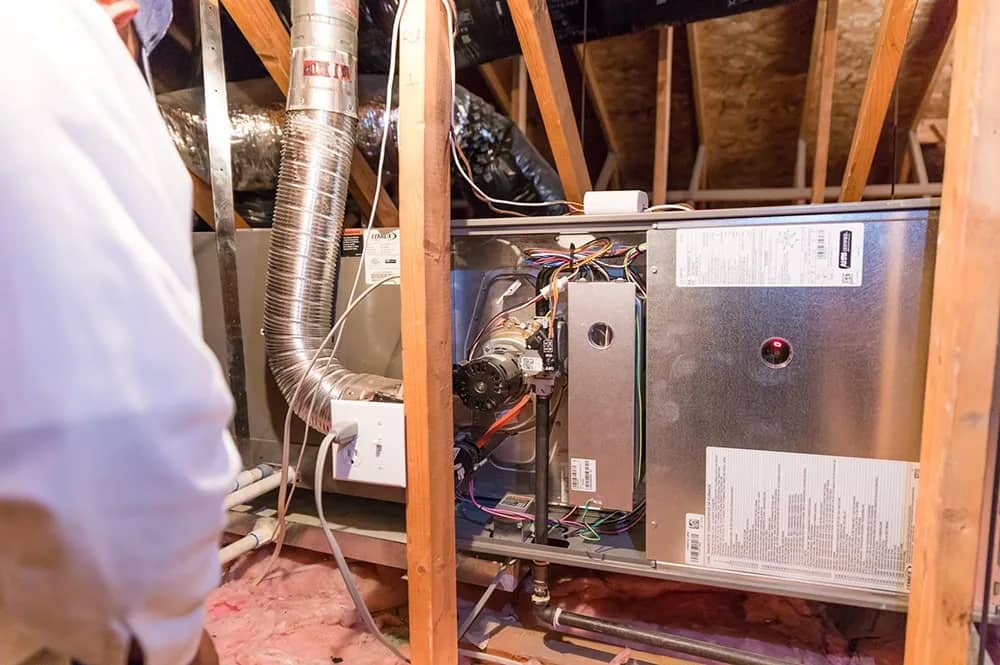
Short answer: Three HVAC performance ratings directly affect your Las Vegas utility bills: SEER (cooling efficiency for air conditioners), HSPF (heating efficiency for heat pumps), and AFUE (fuel efficiency for furnaces). In a city where cooling accounts for most of your annual energy spend, upgrading from a 14 SEER to a 20 SEER system can cut summer electric bills by 30 percent or more.
Try our energy savings calculator to see how much you could save.
Heating and cooling account for roughly half of a typical Las Vegas home's annual energy bill. With summer electric bills regularly exceeding $300-$400 per month, understanding the efficiency ratings on HVAC equipment is one of the most practical steps you can take to control costs.
Three performance ratings determine how much energy your system consumes for every unit of comfort it delivers. Once you understand SEER, HSPF, and AFUE, you can compare equipment on equal terms and make purchasing decisions based on long-term savings rather than sticker price alone.
SEER Rating Explained
SEER stands for Seasonal Energy Efficiency Ratio. It measures the total cooling output of an air conditioner or heat pump over a full season (in BTUs) divided by the total electricity consumed (in watt-hours). A higher SEER number means the unit produces more cooling per unit of electricity.
What SEER Numbers Mean in Real Dollars
In Las Vegas, where cooling systems run six or more months per year, SEER differences translate directly to your NV Energy bill. Here is a rough comparison for a typical 3-ton system cooling a 2,000-square-foot Las Vegas home:
- 14 SEER (current federal minimum): approximately $180-$220 per month during peak summer
- 16 SEER: approximately $155-$190 per month, saving roughly $25-$30 monthly
- 20 SEER: approximately $125-$155 per month, saving roughly $55-$65 monthly
- 25+ SEER (variable-speed): approximately $100-$130 per month, saving $80+ monthly
Over the 15-to-20-year lifespan of an AC unit, even a modest SEER upgrade can save thousands of dollars. The higher your current usage, the more dramatic the savings. For a deeper look at efficiency ratings across brands, see our guide to what makes an HVAC system energy efficient. If you are considering a new system, visit our AC installation page for current options and pricing.
SEER2: The Updated Standard
As of January 2023, the Department of Energy introduced SEER2, which uses a revised testing procedure that accounts for higher static pressure in ductwork. SEER2 numbers run slightly lower than legacy SEER numbers for the same equipment. A unit rated at 16 SEER might test at approximately 15.2 SEER2.
The current federal minimum for the Southwest region (including Nevada) is 15 SEER2 for split-system air conditioners. When comparing units, make sure you are comparing SEER2 to SEER2, not mixing the old and new scales.

Why SEER Matters Most in Las Vegas
Las Vegas has one of the longest and most intense cooling seasons in the country. From May through October, daytime highs regularly exceed 100 degrees Fahrenheit, and many homeowners run their AC from April into November. That is six to seven months of continuous cooling demand.
In contrast, the heating season is relatively short and mild. Most Las Vegas homes need heat for only two to three months, and overnight lows rarely drop below freezing. This means the SEER rating on your cooling equipment has a far greater impact on your annual utility costs than any heating metric.
A homeowner in Minneapolis might prioritize furnace efficiency above all else. In Las Vegas, the air conditioner or heat pump you choose is the single biggest lever for controlling energy bills.
HSPF for Heat Pumps
HSPF stands for Heating Season Performance Factor. It applies specifically to heat pumps operating in heating mode. The calculation is similar to SEER but measures heating output (in BTUs) divided by electricity consumed (in watt-hours) over an entire heating season.
An HSPF of 8.2 or higher is considered high-efficiency. Because Las Vegas winters are mild, heat pumps perform exceptionally well here. They lose efficiency in extremely cold climates, but our winter temperatures stay well within the range where heat pumps deliver strong performance.
If you are evaluating a heat pump installation, look for equipment with both a high SEER2 and a high HSPF2 rating. In the Las Vegas climate, a heat pump can handle both cooling and heating efficiently, potentially eliminating the need for a separate furnace.
AFUE for Furnaces
AFUE stands for Annual Fuel Utilization Efficiency. It applies to gas furnaces and measures the percentage of fuel (natural gas) that is converted into usable heat. An AFUE of 95 means the furnace converts 95 percent of the gas it burns into heat, with only 5 percent lost through exhaust.
AFUE Tiers to Know
- 80 AFUE: Standard efficiency. Twenty percent of fuel is wasted. Common in older units.
- 90-95 AFUE: High efficiency. These condensing furnaces extract more heat from combustion gases.
- 96-98 AFUE: Ultra-high efficiency. Maximum fuel conversion available today.
The federal minimum is 80 AFUE for non-weatherized gas furnaces. For Las Vegas homes, upgrading from an 80 AFUE furnace to a 95 AFUE model reduces gas consumption by roughly 19 percent during the heating months. Given our short winter, the annual dollar savings on gas are smaller than in colder climates, but the comfort improvement is noticeable. Explore our heating services for furnace options.
How to Use Ratings When Shopping for HVAC Equipment
1. Compare Within the Same Rating System
Always compare SEER2 to SEER2 and HSPF2 to HSPF2. Mixing old and new scales leads to inaccurate comparisons. Ask your contractor to provide SEER2 ratings for every option they quote.
2. Calculate Payback Period
A higher-rated unit costs more upfront. Divide the price difference by the estimated annual energy savings to find how many years it takes to break even. In Las Vegas, high-SEER equipment often pays for itself within five to eight years because of the extended cooling season.
3. Prioritize Cooling Efficiency
For Las Vegas homeowners, SEER2 is the most impactful number. A jump from 15 SEER2 to 20 SEER2 will save far more money annually than a jump from 90 AFUE to 96 AFUE on a furnace, simply because you run the AC far more hours per year.
4. Look for ENERGY STAR Certification
ENERGY STAR-certified units exceed federal minimums. For central air conditioners, ENERGY STAR currently requires a SEER2 of 16 or higher. This certification simplifies comparison shopping and may qualify you for utility rebates through NV Energy.
5. Match Equipment to Your Home
A high-SEER unit installed in an undersized or oversized configuration will not deliver its rated efficiency. Proper load calculations, correct refrigerant charge, and well-sealed ductwork are essential. A qualified technician will perform a Manual J load calculation before recommending equipment size. Our guide on what size AC unit you need explains this process in detail.
Beyond Ratings: Other Ways to Lower Utility Bills
Efficiency ratings only tell part of the story. The following steps work alongside a high-efficiency system to maximize savings.
Programmable and Smart Thermostats
A programmable thermostat that raises the set point while you are away can reduce cooling costs by 10 percent or more. Smart thermostats learn your schedule and adjust automatically. In Las Vegas, setting your AC to 78 degrees when home and 85 degrees when away is a reliable strategy.
Regular Maintenance
Dirty coils, clogged filters, and low refrigerant force your system to work harder and consume more electricity. Annual AC maintenance keeps your system operating at or near its rated efficiency. Skipping maintenance can degrade performance by 5 to 15 percent per year. See our HVAC tune-up checklist for the full list of maintenance steps.
Air Sealing and Insulation
Gaps around windows, doors, and ductwork allow conditioned air to escape and hot desert air to infiltrate. Sealing these leaks and adding attic insulation can reduce the load on your HVAC system by 20 to 30 percent. This is one of the highest-return improvements you can make in a Las Vegas home.
LED Lighting
Traditional incandescent bulbs convert most of their energy into heat, which adds to your cooling load. Switching to LED lighting reduces both your lighting costs and the amount of heat your AC must remove. For a typical home, this can save $50 to $100 per year.
Address Repairs Promptly
A system that short-cycles, blows warm air, or makes unusual noises is wasting energy. Prompt AC repair prevents small problems from compounding into large efficiency losses and costly breakdowns.
The Bottom Line
Understanding SEER, HSPF, and AFUE gives you a factual basis for comparing HVAC equipment and projecting long-term energy costs. In Las Vegas, SEER is the dominant factor because of our extended cooling season. Pair a high-efficiency system with proper maintenance, smart thermostat use, and air sealing to get the lowest possible utility bills year-round.
Need HVAC Service in Las Vegas?
The Cooling Company provides expert HVAC service throughout Las Vegas, Henderson, and North Las Vegas. Our licensed technicians deliver honest assessments, upfront pricing, and reliable results.
Call (702) 567-0707 or visit AC repair, maintenance, heating, or installation for details.