

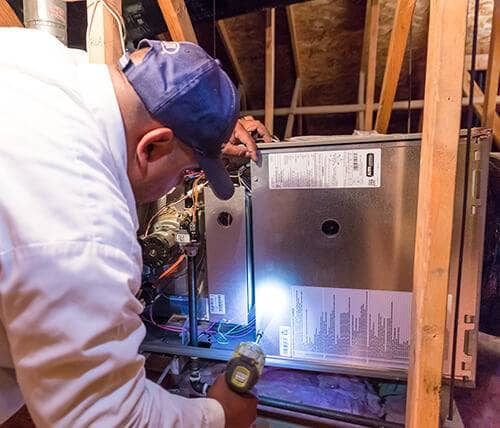
Short answer: Las Vegas winters are mild by national standards but brutal on furnaces that have sat idle since March. Temperatures regularly drop into the low 30s°F in December and January, and a furnace that hasn't run in six months can fail on the coldest night of the year. The complete prep checklist: schedule a furnace tune-up ($89–$150), change your air filter ($15–$40), test your thermostat, clean monsoon dust off the outdoor unit, inspect ductwork for leaks, check weatherstripping, flush your water heater, and test every carbon monoxide detector. Do it in October, before the first cold snap.
1. Schedule a Professional Furnace Tune-Up
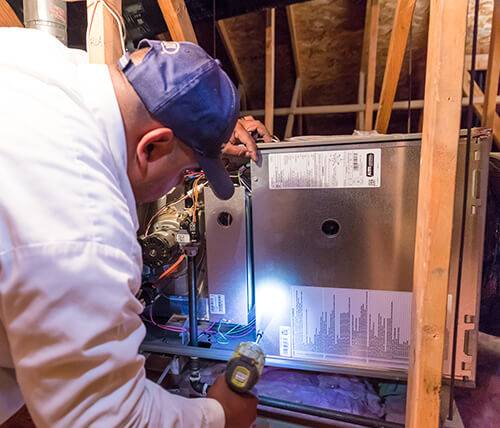
This is the non-negotiable item on the list. A professional furnace tune-up runs $89–$150 in Las Vegas and covers everything a homeowner can't safely check alone: combustion analysis, heat exchanger inspection, burner cleaning, ignition system test, gas pressure verification, and flue inspection. Why does it matter more here than in, say, Denver? Because your furnace sat in a 150°F attic all summer. Attic installs are standard in Southern Nevada, and that heat accelerates wear on control boards, inducer motors, and capacitors. When a technician opens up a Vegas furnace in October, they often find components that look like they've been through twice the cycles a same-age furnace in a cooler climate would show. What a tune-up catches before it becomes a $500–$2,000+ repair:- Cracked heat exchangers, A crack lets combustion gases including carbon monoxide leak into your living space. Invisible to homeowners, caught easily with combustion analysis. Replacement costs $800–$1,500+ depending on the unit.
- Failing ignition systems, Hot surface igniters degrade with heat cycling. A furnace that won't light on the first cold night of December is often a $150–$300 repair if caught early. An emergency call on a Saturday night in January costs more.
- Dirty burners, Desert dust and monsoon particulates build up on burners over the summer. Dirty burners cause delayed ignition (that alarming "thump" when the furnace starts) and incomplete combustion.
- Blocked or damaged flue venting, Birds and rodents love exhaust vents in the off-season. A blocked flue is a carbon monoxide risk.
2. Change the Air Filter
A clean filter is the single best thing you can do yourself. In Las Vegas, we recommend changing your filter every 30–60 days during active heating and cooling seasons, not the 90-day interval printed on most filter packaging. Here's why: monsoon season (July–September) kicks enormous amounts of fine desert dust into the atmosphere. That dust loads up filters faster than anywhere in the country, and a filter that's only 45 days old in October can already be significantly restricted. What to buy:- MERV 8–11 for most homes, catches pollen, dust mites, and fine particles without over-restricting airflow on typical residential systems.
- MERV 13+ only if your system can handle it, higher-MERV filters have more resistance. On older equipment, a high-MERV filter can cause the heat exchanger to overheat. Check your system manual or ask a tech.
- Cost: $15–$40 per filter depending on size and MERV rating. A fiberglass one-inch filter for $2 is false economy, it barely catches anything.
- Turn the furnace off at the switch or breaker.
- Locate the filter slot, usually at the return air grille or the blower compartment door.
- Note the size printed on the existing filter's frame.
- Slide out the old filter and slide in the new one with the airflow arrow pointing toward the furnace.
- Write the date on the filter edge with a marker and set a phone reminder for the next change.
3. Test Your Thermostat and Set It for Winter
Before the first cold night arrives, do a manual test. Set your thermostat to "heat" and raise the setpoint five degrees above current room temperature. Your furnace should respond within a few minutes, you'll hear the ignition sequence, then feel warm air at the registers. If nothing happens within five minutes, or you hear repeated clicking with no ignition, call a technician. Thermostat settings for Las Vegas winter:- 68°F while home, the Energy Star recommended winter setpoint. Comfortable for most people, and for a desert climate where you're not fighting sub-zero outside temps, it's plenty warm.
- 62–65°F while away or asleep, no need to heat an empty house to 70°F. A programmable or smart thermostat handles this automatically and can cut heating costs 10–15%.
- Replace batteries, if your thermostat runs on batteries, change them now. A dead thermostat battery is a surprisingly common reason for a "furnace failure" call in winter.
4. Clean the Outdoor Unit After Monsoon Season
Most Las Vegas homeowners think the outdoor unit (condenser) is only relevant in cooling season. But the dust, debris, and buildup from monsoon season directly affects how well your system starts up in heating mode, especially if you have a heat pump rather than a split gas/AC system. Even for straight gas furnace homes, the outdoor AC condenser sits idle all winter but needs to be clean and clear for when you transition back to cooling in March. Starting spring with a clogged condenser costs you efficiency from day one. Post-monsoon outdoor unit cleanup:- Clear debris, Remove leaves, seed pods, dirt, and anything that's blown against or into the unit during summer storms. Keep two feet of clearance on all sides.
- Rinse the coil fins, Use a garden hose on low pressure to rinse from the inside out if you can access the inside, or spray down the outside fins to push loose debris through. Do not use a pressure washer, it bends the delicate aluminum fins.
- Check for bent fins, Monsoon-driven debris can dent coil fins. A fin comb ($10–$15 at any hardware store) straightens them. Severely bent sections need a technician.
- Inspect the refrigerant lines, The insulated copper lines running into the house should have intact insulation. Cracked or missing insulation is a common finding after an active monsoon season and leads to energy loss and potential moisture intrusion.
5. Inspect Ductwork and Seal Air Leaks
Las Vegas homes lose a significant amount of heated and cooled air through leaky ductwork, industry estimates put the average at 20–30% duct loss for existing homes. That's money leaving your house before the air ever reaches your living room. What to look for yourself:- Disconnected joints, In attic-mounted duct systems, connections can work loose over time, especially after summer heat expansion. Check accessible runs for gaps where sections have separated.
- Torn duct insulation, Duct insulation in hot attics degrades faster than anywhere else. If you can access the attic, look for sections where insulation has fallen off or deteriorated. Uninsulated attic ducts in a Las Vegas August add real dollars to your cooling bill.
- Weak airflow at registers, Walk room to room with your hand near each supply register when the furnace is running. Significant variation between rooms often points to a duct leak between the air handler and that section of the house.
6. Flush Your Water Heater and Check Anode Rod
Winter prep isn't only about the heating system. Las Vegas has notoriously hard water, mineral content here averages 250–400+ parts per million, among the hardest municipal water supplies in the country. That calcium and magnesium scale builds up inside water heaters, settling on the tank bottom and around the heating elements. The symptoms of scale buildup:- Rumbling or popping sounds when the water heater runs (sediment heating up and expanding)
- Longer recovery times, the tank takes more time to reheat after use
- Higher gas or electric bills as the heating element fights through an inch of insulating scale
- Shorter equipment life, scale-clogged tanks fail years earlier than properly maintained ones
7. Test Carbon Monoxide Detectors and Check Gas Connections
Carbon monoxide (CO) is produced by any combustion appliance, gas furnaces, gas water heaters, gas stoves, and fireplaces. The risk rises in winter when homes are sealed tighter and combustion appliances run more. In Las Vegas, the specific concern is furnaces that have sat idle for six months: accumulated dust on burners and any venting issues that developed over the off-season can cause incomplete combustion. Carbon monoxide detector requirements:- At least one detector on every occupied level of the home
- One outside each sleeping area, CO exposure during sleep is the most dangerous scenario because it can incapacitate before you wake
- Replace detectors every five to seven years, the sensors degrade and older units may not alarm reliably at low but dangerous CO concentrations
- Test every detector monthly by pressing the test button
- Change batteries when you change your clocks, or use 10-year sealed-battery units
Frequently Asked Questions
When is the best time to do winter HVAC prep in Las Vegas?
September through mid-October is the ideal window. The cooling season wraps up, outside temperatures are tolerable for outdoor work, and you're ahead of the first cold snap that usually arrives in November. More importantly, HVAC companies are between their peak seasons, scheduling a furnace tune-up is much easier in October than the week before Thanksgiving when everyone suddenly realizes they haven't serviced their furnace. Don't wait until December. If your furnace fails on the coldest night of the year, you're looking at an emergency service call premium on top of the repair cost.
Do Las Vegas homeowners really need to winterize their HVAC if it barely gets cold here?
Yes, and the idle period is precisely the reason. Las Vegas furnaces run fewer hours per year than furnaces in cold climates, but they go through a brutal summer sitting in a 150°F attic while completely off. That thermal stress degrades components faster than steady use would. When you fire a furnace up in October after seven months off, you're essentially starting it cold from a stressed state. A furnace in Minneapolis gets a tune-up every year and runs constantly; a Vegas furnace gets a tune-up and then nothing until it's needed, which is exactly when you can't afford a failure.
What does a furnace tune-up cost in Las Vegas, and what's included?
A professional furnace tune-up in Las Vegas typically runs $89–$150. It should include: cleaning and inspecting the burners, testing the ignition system and flame sensor, inspecting and measuring the heat exchanger for cracks, checking gas pressure and combustion efficiency, testing the blower motor and capacitor, inspecting the flue and venting, and verifying safety controls. If a company charges significantly less and skips the combustion analysis or heat exchanger inspection, you're not getting a real tune-up. Those two checks are what catch the problems that can make your furnace dangerous, not just inefficient.
My furnace worked fine last winter. Do I still need to prep it every year?
Yes. "Worked fine last winter" means it ran correctly during a short heating season that likely ended in February. It's now been through a full summer in an attic that hit 150°F. Components wear with heat cycling regardless of how many heating cycles the furnace itself logged. The igniter that was at 80% life in March is now at 70%, and igniters fail at inconvenient moments. Annual maintenance is cheaper than any single emergency repair, and significantly cheaper than the worst outcome: a cracked heat exchanger that goes undetected.
How do I know if my furnace needs repair or replacement before winter?
Age is the first factor. If your furnace is 15 years or older, get a replacement quote alongside any repair quote. In Las Vegas, attic-mounted furnaces age faster than national averages suggest due to extreme thermal stress. If a repair is going to cost more than $500–$700 on a system that's 12 or more years old, replacement math often wins. The other signals: you've had multiple repairs in the past two years, your heating bills have crept up without explanation, or the furnace makes banging noises on startup (delayed ignition from dirty burners). A technician can assess during the tune-up whether your system has a few good years left or is approaching the replacement window. See our furnace repair page for more on what repairs typically cost.
Build These Tasks Into Your Annual Calendar
The simplest way to make sure winter prep actually happens: put it in your calendar right now. Here's the annual schedule we recommend for Las Vegas homeowners:- September–October: Furnace tune-up, air filter change, thermostat test, CO detector test, outdoor unit cleaning, water heater flush
- November–February: Filter check every 30–45 days, monitor for any unusual smells or noises on furnace startup
- March–April: AC tune-up before cooling season, outdoor condenser inspection, thermostat switch to cooling mode
- July–August: Post-monsoon outdoor unit check, filter inspection (may need mid-season replacement)
Share This Page